




Mental health
New hospital for women’s mental health opens in Manchester


A new mental health hospital for women has opened its doors in Oldham, Manchester, UK for women in the North West – enabling women from the region closer access to mental health care.
The new 44-bed hospital at Cygnet Kenney House is on the redeveloped site of a former nursing home on Wester Hill Road, Fitton Hill, and has been designed with Cygnet’s in house interior design team in collaboration with existing service users and carers.
The service users and carers were consulted on artwork, furniture, flooring, wallpaper and soft furnishings to ensure the hospital environment is optimum for recovery.
Cygnet Kenney House says that the hospital has brought 135 new jobs to the Greater Manchester area.
Dr Tony Romero, CEO of Cygnet, said: “Today marks a significant milestone in our commitment to delivering high-quality, compassionate care to those who need it most. Cygnet Kenney House will provide a safe and supportive care pathway for women with mental health needs, and will allow people from the north-west to be treated closer to home.

“At Cygnet, we are driven by a singular purpose – to make a positive difference to the lives of the individuals we care for, their loved ones and all those who work with us. Cygnet Kenney House will bring multiple benefits, most notably to help more women with their mental health needs, providing care closer to home, alleviating pressure on the NHS by helping to reduce waiting times for those in need of support, and deliver economic growth for the local Oldham area.
“With the increase in need for specialist mental health services, we want to be part of the solution and work together with the NHS to provide the best treatment and facilities to help people on their recovery journey.”
Former Cygnet Hospital Sheffield patient, Mia McGowan, said: “I was once a patient in a hospital similar to this, and it was a place that changed my life. This new hospital will give many others the same opportunity. It’s more than just a building; it’s a safe space, a place where people can heal, learn, and grow.
“It’s not just the patients who will benefit. This hospital will be a support system for families too. We know how important it is for loved ones to be part of the recovery process, and this hospital will ensure they are involved, informed, and empowered every step of the way.
“Let’s not forget the impact this will have on our local community. This is a place where stigma is replaced with understanding, where people can come together to talk openly about mental health, and where we can foster a culture of compassion and support.
“As this hospital opens its doors, it opens up a future of hope, healing, and positive change – for the patients, their families, and our community as a whole.”







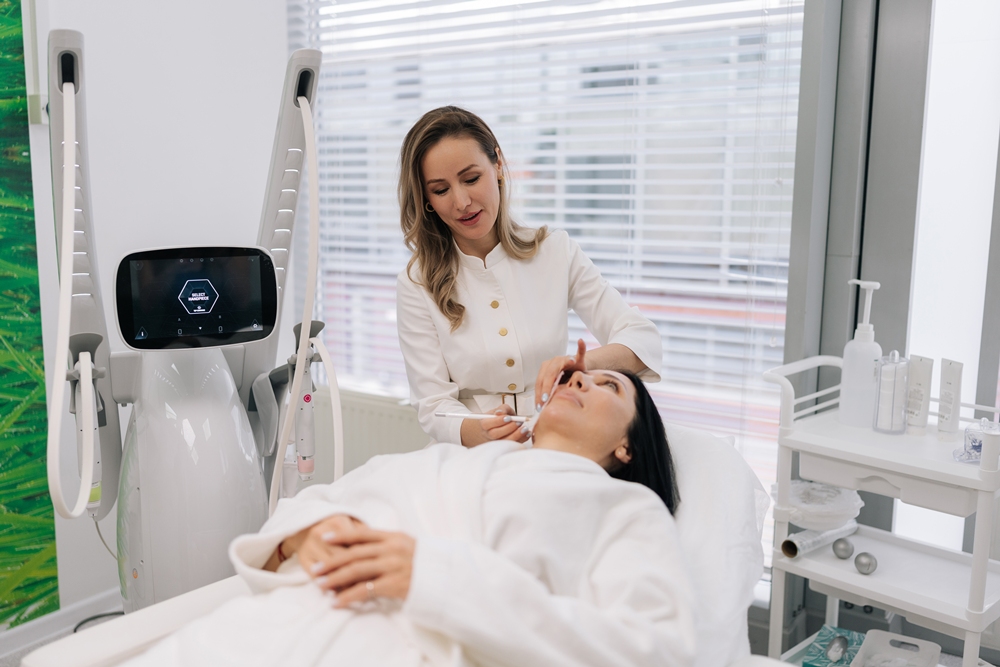
Cosmetic procedures may become addiction-like for some women, with low body esteem and problematic social media use linked to higher risk, new research suggests.
A study of 1,614 women aged 25 to 71 found that one in five who had undergone treatments met the threshold for moderate to severe risk of addictive cosmetic procedure use.
Low body esteem and problematic social media use emerged as the strongest risk factors.
Researchers from the Hebrew University of Jerusalem and the Israel Center for Addiction and Mental Health examined what they described as addictive cosmetic procedure use, or ACPU, among Jewish Israeli women.
ACPU refers to repeated cosmetic treatment behaviour that may resemble addiction, including feeling unable to stop, continuing despite negative effects or craving further procedures.
The study was led by Vera Skvirsky alongside Uri Lifshin, Dvora Shmulewitz and Mario Mikulincer, from the department of psychology at the Hebrew University of Jerusalem and the Israel Center for Addiction and Mental Health.
The researchers surveyed women from the general population rather than focusing only on patients at cosmetic clinics.
Among women who had undergone cosmetic procedures, 20 per cent met the threshold for moderate to severe lifetime risk, while more than 15 per cent reported symptoms within the previous year.
Across the full sample, nearly nine per cent of women showed moderate to severe signs of problematic cosmetic procedure use.
The researchers adapted questions based on mental health criteria used to assess substance-related disorders.
Participants were asked whether they had tried unsuccessfully to stop having cosmetic procedures, felt compelled to continue despite negative consequences or experienced cravings linked to treatment.
Previous research has linked cosmetic procedures with body-image concerns and body dysmorphic disorder.
Body dysmorphic disorder is a mental health condition in which a person becomes highly distressed by perceived flaws in their appearance, often flaws that others may not notice.
The new study examined whether repeated cosmetic procedures may, in some cases, resemble a behavioural addiction.
Women with lower body esteem were more likely to report addiction-like patterns, particularly when this was combined with high levels of problematic social media use.
Participants who reported problematic or excessive social media behaviour appeared especially vulnerable when they also felt dissatisfied with their appearance.
The researchers also found smaller links between addictive cosmetic procedure use and lower feminist attitudes, lower attachment security and more negative attitudes towards ageing.
However, those links were less consistent when several factors were analysed together.
The findings come amid a sharp global rise in cosmetic procedures, with international estimates cited by the researchers suggesting interventions increased by around 40 per cent between 2019 and 2023.
The researchers stressed that the study does not suggest cosmetic procedures are inherently harmful.
Instead, they said repeated engagement may, for some people, take on characteristics similar to behavioural addictions already recognised in mental health research.
The researchers said: “Cosmetic procedures have become deeply normalised in many societies, and for many people they may be a positive experience.
“But our findings suggest that for a meaningful minority, the behaviour may begin to resemble other compulsive patterns we see in addiction research, especially when low body esteem and problematic social media use are involved.”
The study was cross-sectional, meaning it captured a single point in time and cannot prove cause and effect.
Researchers said it remains unclear whether problematic social media use contributes to addiction-like cosmetic procedure behaviour, whether treatments influence body image and online engagement, or whether other psychological factors drive both.
SSRIs may help women with depression tolerate extreme heat, with responses more like those without depression, a laboratory study suggests.
Selective serotonin reuptake inhibitors, or SSRIs, are medicines commonly used to treat mental health conditions including depression and anxiety.
Media reports, social media posts and the US Centers for Disease Control and Prevention have suggested SSRIs may increase vulnerability to heat-related illness.
However, researchers found that women with clinical depression who took an SSRI may withstand extreme heat better than those not treating their depression with medication.
The study was carried out by researchers in the Penn State Department of Kinesiology.
Kathleen Fisher, first author of the study, said: “The human body primarily cools itself in two ways, by sweating and by increasing blood flow to the skin so that heat can be released to the environment.
“This study showed that depression interferes with how women’s bodies regulate their temperatures in the heat. Fortunately, SSRIs seem to largely restore the body’s ability to respond to increases in internal temperature.”
The team compared women without depression with those diagnosed with the condition, including women taking different types of antidepressants.
When their body temperatures rose, women with untreated depression were slower to begin sweating and increasing blood flow to the skin.
Their bodies were also less efficient at pumping blood to the skin than those of women without depression and women taking an SSRI.
Depression affects about 10 per cent of the US population and is twice as common among women, the researchers said.
SSRIs, including sertraline and fluoxetine, and serotonin and noradrenaline reuptake inhibitors, or SNRIs, including duloxetine and venlafaxine, are commonly prescribed alongside counselling to treat depression.
Previous research suggests depression disrupts the body’s ability to regulate temperature.
Penn State researchers had previously found that blood vessels dilated less effectively in women with depression. Dilation allows blood vessels to widen, helping more blood reach the skin to cool the body.
Women taking SSRIs showed improved blood vessel dilation similar to that seen among people without depression.
The latest study examined whether the same improvement occurred during heat stress.
Researchers recruited 64 women, almost all in their 20s. The group included 16 without depression and 16 with depression who were not taking medication.
A further 16 had depression and were taking an SSRI, while 16 had depression and were taking an SNRI.
Participants swallowed a small capsule that transmitted their internal body temperature throughout the experiment.
They then wore a suit fitted with tubes that allowed researchers to pump heated water through it.
After 10 minutes of adjusting to water at 91°F, around 33°C, the temperature was raised to 125°F, around 52°C.
The experiment ended when each participant’s internal temperature had risen by 1.8°F, or 1°C. This took an average of 45 minutes.
Researchers also measured skin temperature on the arm, calf, chest and thigh, along with heart rate, blood pressure, blood flow to the skin and sweating.
Professor W Larry Kenney, a study co-author, said: “The water pumped into the suit was 125 F, causing skin temperature to rise to about 100 F.
“As the skin continued to be heated to temperatures similar to sitting in a hot tub, the women’s internal temperature continued to rise.”
Women with untreated depression were slower to begin sweating and increasing blood flow to the skin than women without depression.
When blood flow to the skin increased, it was less efficient. Despite beginning to sweat later, women with untreated depression did not sweat less overall.
Women taking SSRIs responded to heat in a similar way to women without depression.
By contrast, women taking SNRIs responded similarly to those with untreated depression. SSRIs therefore normalised responses to heat stress, while SNRIs did not.
Researchers found no differences in blood pressure between the four groups.
Fisher said: “Up until now, there has been very little data on how depression or any of these classes of antidepressive drugs affect people’s responses to heat stress.
“This study took the first step toward understanding how women with depression, whether taking medications or not, may respond to extreme heat.”
Kenney said the findings challenged common beliefs that SSRIs increase vulnerability to heat.
He said: “In prior studies, my collaborators and I have identified how several factors, especially age, sex, and activity level, contribute to risk from extreme heat.
“Additionally, there has been widespread concern that many medications contribute to heat vulnerability, but the research evidence behind the risks of many medicines is often thin or nonexistent.
“Both physicians and people taking SSRIs should be aware that these medications do not seem to contribute to heat vulnerability. Rather, SSRIs improve heat tolerance in depression.”

By Somayeh McKian, a member of the clinical advisory board of Vea, the AI-powered mental health journal app
The danger of efficiency culture in women’s mental tech is that we are inadvertently optimizing the very patterns that drive our collective burnout.
When we look at the explosive growth of the femtech sector, the dominant narrative remains focused on speed, tracking, and passive compliance.
We build apps that treat a woman’s emotional state like a broken supply chain or a medical deficit that needs to be optimised, streamlined, or forced into submission.
But true psychological resilience cannot be quantified by a simple mood slider or an algorithmic checkmark.
As a psychotherapist and gender studies scholar, my research into the lived experiences of women, particularly how cultural mandates and bodily surveillance are pathologised, reveals a deep-seated form of suffering.
When women constantly say “yes” while meaning “no,” or ignore a chronically depleted body to maintain a rigid role, they are living out what I call an “inkless life.”
It is a blank manuscript in which their physical and emotional existence has been entirely authored by external critics, medical charts, and the “Discourse of the Other.”
They aren’t suffering from an efficiency problem; they have been stripped of the agency to author their own skin.
If femtech platforms simply digitise these rigid, externalised “shoulds,” they risk becoming high-tech tools of compliance rather than portals of liberation.
The investment community and health tech innovators need to realise that the next frontier of mental health tech isn’t about managing symptoms on the fly; it is about existential archaeology.
We must build digital spaces that serve as a “corporeal pen,” transforming self-reflection from a passive hobby into a defiant, existential act.
True innovation lies in helping women find the meaning, the latent metaphors, and the unique tasks already written into their struggles and transforming inherited pain into a human achievement.
This is exactly the structural paradigm shift we are anchoring at Véa. Instead of building superficial tracking logs, our architecture treats life as a manuscript.
We design clinical narrative journeys that help women decode where their internal boundary scripts were written, recognize how somatic depletion is a truth-teller, and wield phrases like “stop it” not as external policing, but as internal, defiant boundaries.
If we want to build a sustainable ecosystem for women’s health, we must stop funding platforms that merely help women endure their exhaustion more efficiently.
In the intersection of meaningful life and technology, we look at the human spirit not by its current restrictions but by its latent potential for change.
It is time to back technologies that give the fluent soul a sharp new set of instruments to rewrite its own narrative.
Somayeh McKian is a certified psychotherapist, in-training logotherapist, gender studies scholar, published author and part of Véa’s clinical advisory board.








 Diagnosis2 weeks ago
Two “gamechanger” tests set to speed up endometriosis diagnosis on the NHS

 Insight2 weeks ago
Women with PMOS should have annual NHS checks, new guidance says

 Menopause3 days ago
New menopause drug approved for use by NHS in Scotland

 Cancer1 week ago
Thousands of women could avoid painful cancer exam with new AI blood test

 Entrepreneur1 week ago
Applications open for the third W Accelerate with Merck KGaA and M Ventures

 Fertility2 weeks ago
Older women face lower chance of fertility treatment working, even with donor eggs, study finds

 News1 week ago
We built Ema like a nurse: Here’s why that matters

 News2 weeks ago
Experts call for regulation of toxic period product chemicals