




Fertility
Cell atlas of the endometrium in women with PCOS may lead to better treatment


Women with polycystic ovary syndrome (PCOS) find it harder to get pregnant, have more frequent miscarriages and have a higher risk of developing endometrial cancer. Now, researchers have shown that the uterine lining of these women differs in terms of both the composition of individual cells and gene expression. The results open the door to new drug treatments.
PCOS is the most common hormonal disorder affecting 11 to 13 per cent of women of reproductive age. Women with the syndrome have difficulty getting pregnant and are at increased risk of miscarriage and uterine cancer, especially cancer of the endometrium. It is also common for affected women to be overweight and insulin resistant.
By studying endometrial tissue samples from five healthy women and 12 women with PCOS, the researchers created a cell map of individual cells.

The women were all of similar age, weight and BMI and the tissue samples were taken at the same phase of the menstrual cycle to eliminate factors that could influence the analyses. In the study, all women were overweight, but only the women with PCOS were insulin resistant and had elevated levels of male sex hormones.
In total, almost 250,000 cell nuclei from the women’s uterine linings were analysed. The researchers found a clear difference in the composition of cell types with a higher proportion of so-called epithelial cells and a lower proportion of stromal cells in the uteruses of women with PCOS.
“These results show that the growth of the cells is affected, which may explain why it can take longer for affected women to become pregnant and why they are more likely to miscarry, as well as contributing to the increased risk of endometrial cancer,” said Elisabet Stener-Victorin, professor of Reproductive Physiology at Karolinska Institutet and research leader of the current study.
In the detailed cell map, the researchers can show that many genes in specific cell types have a disturbed expression in women with PCOS. A large proportion of the affected genes are linked to difficulties for the early embryo to attach to the uterus, miscarriage and endometrial cancer with functions affecting cell-to-cell attachment and communication.
“Our analyses show that certain cell types in the endometrium have disrupted communication and interaction specific to PCOS,” said Gustaw Eriksson, one of the study’s first authors and a doctoral student in Elisabet Stener-Victorin’s research group.
The study also included a part where the women with PCOS underwent treatment with the diabetes drug metformin with or without lifestyle advice on diet and exercise. After 16 weeks of treatment, the researchers found that many gene expressions in specific cell types, especially in the epithelial and stromal cells, were normalised by metformin, but also by lifestyle changes, although not as pronounced.
“We can show that metformin seems to have many more functions in women with PCOS than lowering blood sugar. In the study, all the women were overweight, but it is likely that metformin has similar effects in affected women who are not overweight but insulin resistant if they have problems getting pregnant or have repeated miscarriages,” said Elisabet Stener-Victorin.
Another important finding was the correlation between gene expression in specific cell types and important clinical features of PCOS, such as elevated levels of male sex hormone and insulin resistance, highlighting the complex relationship between hormonal and metabolic factors and endometrial dysfunction.
“As we identified changes in gene expression in specific cell types, this study provides crucial guidance for developing more targeted treatments for PCOS-related endometrial dysfunction,” said Elisabet Stener-Victorin.
The study is a collaboration with Dr Congru Li as joint first author, and Associate Professor Qiaolin Deng and Associate Professor Sophie Petropoulos with joint senior and corresponding authorship.
The research was funded by the Swedish Research Council, the Novo Nordisk Foundation, the Diabetes Foundation and the Knut and Alice Wallenberg Foundation, among others. The researchers declare that there are no conflicts of interest.








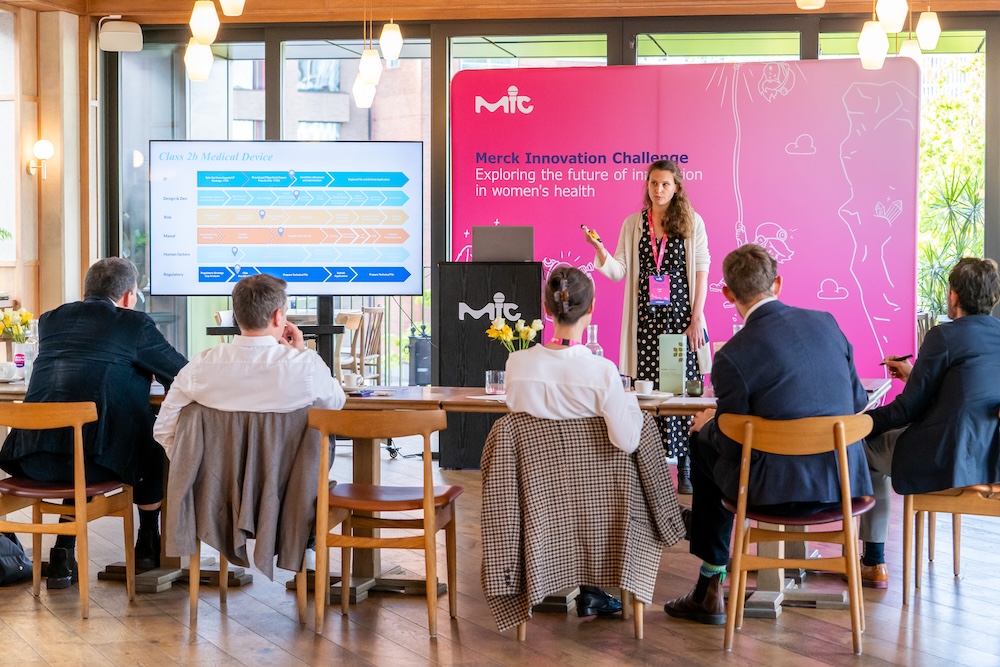
Applications close 2 September at 12pm BST for W Accelerate with Merck KGaA and M Ventures, a fast-track programme offering startups, scaleups and spinouts in reproductive and maternal health direct access to decision-makers at one of the world’s leading reproductive health companies.
With a single application, innovators connect with Merck KGaA’s partnership team and investment professionals from M Ventures, Merck’s corporate venture arm.
Selected companies will be notified on 11 September and invited to pitch at W Accelerate in London, at One Hundred Shoreditch, on 5 October.
During the event, they will receive a private 30-minute session with Merck and M Ventures leadership, small-group guidance from regulation and investment specialists, an “Ask Merck Anything” roundtable, and access to a VIP networking reception.
Applications are open to companies working on breakthrough solutions across reproductive and maternal health, including fertility, endometriosis, adenomyosis, ovarian health, preeclampsia and pregnancy comorbidities.
Applicants can choose one of three lanes, depending on whether they’re seeking strategic collaboration, investment, or both: Partnership Lane, Investment Lane, or Dual Lane. Direct-to-consumer and over-the-counter products are outside the programme’s scope.
Thang Vo-Ta, CEO & co-founder of Calla Lily Clinical Care and participant of a previous edition of W Accelerate with Merck Healthcare and M Ventures, said: “The opportunity to pitch directly to senior leadership at Merck and M Ventures sparked conversations that became the foundation of relationships leading to our eventual strategic collaboration with Merck. I’ve yet to see another event run with this level of excellence.”
For more information, visit W Group’s website: wplatform.co
Applications close 2nd September 2026, 12pm BST
W Accelerate event: 5th October 2026 at One Hundred Shoreditch, London (travel and accommodation not provided)
Apply here


Chelsea FC Women is to launch a fertility fund giving players access to assessments, treatments, counselling and workshops.
The initiative is part of a new partnership with London fertility clinic Fertility Plus, which has been named the club’s official fertility partner.
Chelsea said the fund will be available to every player in its women’s team, with support tailored to individual needs.

Giulia Mazzia, commercial director for Chelsea FC Women, said: “At Chelsea FC Women we are never done pushing for progress for our players and our community.
“This first-of-its-kind partnership with Fertility Plus will open up the conversation about fertility, help to raise awareness for our incredible fanbase and beyond, and give practical support to our players off the field as well as on it.”
Support through Fertility Plus will include fertility assessments and treatments, as well as counselling and workshops.
The partnership will also provide evidence-based information about reproductive health and address misconceptions around fertility.
Chelsea cited previous research on fertility knowledge which found that 41 per cent of respondents actively trying to conceive did not know when their fertile window was.
The club and Fertility Plus plan to provide educational content, resources comparing fertility myths with medical evidence and insights from Chelsea FC Women ambassadors.
Dr Amit Shah and Dr Anil Gudi, co-founders of Fertility Plus, said: “Elite sport asks a lot of women during the very years when fertility matters most, yet it’s a conversation the game has rarely had.
“Partnering with Chelsea FC Women allows us to help change that by giving players, staff and supporters access to trusted fertility expertise and compassionate, consultant-led care.
“We’re proud to work alongside a club that’s setting a new standard for supporting women’s health, both on and off the pitch.

Higher cumulative doses of common fertility drug clomiphene citrate may increase pregnancy loss risks, according to new research.
Around one in six people experience infertility, with irregular or absent ovulation among the most common causes.
Clomiphene citrate has long been a mainstay of fertility treatment, but Adelaide University research has raised concerns about higher cumulative doses.
The new study found that high doses of clomiphene citrate accumulated over multiple fertility treatment cycles could increase the risk of pregnancy loss.
Lead author associate professor Sheree Boulet said the findings showed a clear dose-response relationship, meaning the risks increased as cumulative exposure rose.
She said: “Women who received higher cumulative doses of clomiphene citrate experienced progressively greater risks of adverse pregnancy outcomes.
“We examined more than 21,000 embryo transfer cycles across four cumulative dose categories and found that increasing the dose did not significantly improve the chance of a live birth.
“Our findings suggest there may be a point where increasing the dose offers little additional benefit while exposing women to greater risk, highlighting the importance of carefully balancing effectiveness with safety when making treatment decisions.”
Supported by the NHMRC and conducted in partnership with Boston University and the Centers for Disease Control and Prevention, researchers analysed 21,004 IVF embryo transfer cycles in the US.
Women receiving cumulative doses of 500mg to 749mg of clomiphene citrate had a 12 per cent higher risk of miscarriage, while those receiving 750mg to 999mg had a 38 per cent higher risk.
Women receiving cumulative doses of 750mg or more were also more than twice as likely to have twins or other multiple births.
Rates of spontaneous abortion, another term for miscarriage, increased as the dose rose.
Researchers also recorded more than a threefold increase in stillbirth at the highest dose, although the finding was not statistically significant because that dose was rare. Larger studies are needed to confirm the association.
The finding is consistent with an earlier Adelaide University study that showed a doubling of neonatal death in pregnancies involving clomiphene citrate. Neonatal death means the death of a baby shortly after birth.
Higher cumulative doses did not improve the chance of a live birth, but did increase twinning, which raises the risk of adverse outcomes for both mother and child.
Clomiphene citrate is one of the world’s most widely prescribed fertility drugs. It has been prescribed to millions of women worldwide since 1967 and remains a recommended first-line treatment for ovulation induction.
The drug is recognised as an essential medicine by the World Health Organization. It works by stimulating the ovaries to release eggs, increasing the chance of pregnancy.
Women who do not respond to lower doses, or who require multiple treatment cycles, may receive progressively higher cumulative doses over time.
The findings build on a series of studies from Adelaide University’s Robinson Research Institute linking clomiphene citrate with increased risks of pregnancy loss, stillbirth, perinatal death and some birth defects.
Experimental studies in mice supported these findings, showing that higher doses reduced successful pregnancies and were associated with pregnancy loss, impaired fetal growth and developmental abnormalities.
Professor Michael Davies, senior researcher and co-author of all the studies, said the latest work builds on more than two decades of Adelaide-led research into the safety of fertility treatments.
He said: “Clomiphene citrate has been used by many women since 1967, but it has never been comprehensively evaluated in large prospective clinical trials.
“Our studies indicate that women respond differently to clomiphene citrate and that increasing cumulative doses may increase the risk of adverse pregnancy outcomes without improving the likelihood of a live birth.
“The findings confirm and extend our previous studies in both human and mouse models which highlight the need to better understand the dose-response relationship and whether more personalised dosing strategies could improve safety.
“Until we can better understand these differences, it remains important that clinicians rigorously follow manufacturer’s safety recommendations and avoid unnecessarily increasing cumulative doses.
“The same questions are now being asked of newer ovulation-inducing medications, so any move away from clomiphene citrate should also be guided by robust evidence rather than assumptions about safety.”












 Entrepreneur2 weeks ago
Applications close August 18 for Women’s Health Innovation Summit 2026 Innovation Showcase

 Menopause2 weeks ago
Third of women unaware of perimenopause mental health impact

 Fertility1 week ago
Chelsea FC Women to launch first-of-its-kind player fertility fund

 Menopause2 weeks ago
Menopausal hormone therapy may lower dementia risk, study suggests

 Opinion1 week ago
anna perimenopause app launches across 39 markets

 Diagnosis2 weeks ago
Chemicals in plastics may be linked to high blood pressure during pregnancy

 Sponsored Content6 days ago
The perfect ‘period pair’: WUKA launches first-ever Teen Starter Kit in Tesco

 News2 weeks ago
Women with endometriosis may lose a month’s salary each year – study