




Fertility
How data collection can change fertility treatment now and in years to come
Is data collection the answer to better reproductive health research?


Cecilie Hvidberg Jakobsen, wawa fertility founder, tells FemTech World why data has the power to change fertility treatment.
The prevalence of infertility is more common than most people would think. According to the World Health Organisation (WHO), this global health issue is affecting millions of people of reproductive age worldwide. Available data suggests that between 48 million couples and 186 million individuals have infertility globally.
A report published in 2016 in the Oxford Academic journal suggested that one in eight women aged 16–74 years had experienced infertility, defined by unsuccessfully attempting pregnancy for a year or longer.
Cecilie Hvidberg Jakobsen has seen the devastating emotional and psychological consequences of infertility among her friends, after she struggled herself with pregnancy loss.
“I was so confused that no one was speaking about this subject when actually, so many people suffer from infertility and have to pause everything in their lives to put all of their energy into treatment,” she tells me.
“After a lot of research, I found out that infertility was actually the biggest chronic disease in people in the reproductive age and the biggest problem, as in many other parts of the women’s health tech sector, was the very big data gap.”
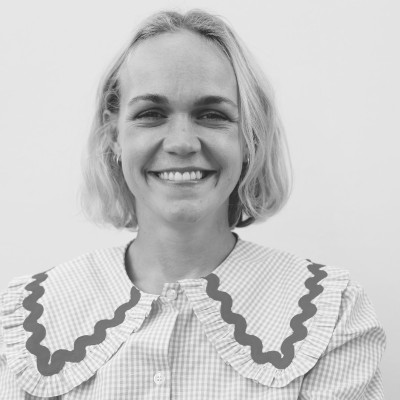
Cecilie experienced pregnancy loss herself
Along with her co-founder, Barbara Saouma, Jakobsen has launched wawa fertility, a Danish app designed as a personal assistant that offers medical and mental health support for fertility patients. “We spoke to around 250 couples, fertility clinics and pharma companies and we found out that the only right way [to close the data gap] was to empower women, because they are the only ones who have all the knowledge about the process that they’re going through,” the founder says.
“Our app is handling everything for women and couples going through fertility treatment, from diagnostics, all the way to the live birth of a child.
“We are helping them understand the treatment that they’re going through, what is happening in the diagnostic process, how to pick the right clinic, what questions to ask their doctor and how to prepare for different procedures.”
The amount of data collected helps founders like Cecilie to personalise insights and offer tailored advice. While wawa does not use personal data and complies with data regulators, the founder explains that collecting so much information will be beneficial for many generations to come. “That data can help us do better research, and come up with better fertility treatments,” she says.
“Many women experiencing infertility or pregnancy loss, like myself, don’t want anyone to suffer from this in the future. Right now, the numbers that we’re looking at are saying that more than half of people are going to need help getting pregnant in the future.
“I really want to do something about it,” Jakobsen continues. “If my kids are going to need fertility treatment, I definitely want to make sure it’s going to be an easier journey than what I experienced and I feel like a lot of the women are thinking the same.”
An integral part of that is understanding the infertility symptoms. wawa’s research found that more than 80 per cent of women going through treatment suffer from mental health conditions such as depression and anxiety.
Cecilie says that: “Women have no clue what they’re going through. They have no clue if they’re taking the right medication the right way because most of the clinics are very busy and don’t have the time to give the right information to patients.”
Wawa offers medical and mental health support, such as writing therapy and daily check-ups, as well as financial advice that can help people navigate their fertility journey more easily.
“The app is research-based,” the founder points out. “So, everything is made by experts we’ve been working with from psychologists to gynaecologists and fertility experts. That was very important for us because as a woman, becoming pregnant is your number one wish, and we wanted to create an app based on real research and backed by people in this sector.”

wawa uses AI to support patients and improve treatment
Considering a significant increase in fertility apps, I ask Cecilie what makes hers different. “I think what makes wawa different is that it is data-driven and everything you put into it will give you feedback immediately. So, we are making sure that we are empowering women at a personal level and give them insights on how they can improve their treatment. We are here to handle everything, so they can try and relax in some way, because our aim is to make the very hard journey just a little bit easier.
She adds that: “We’re also focusing on things that would help reduce the time of the treatment, making sure that women are not experiencing hyperstimulation, for example, and trying to create more transparency between doctor and patient.”
Wawa’s aim is going global and with enough data, the team are hoping to reduce fertility treatment and symptoms and minimise the use of medication.
“We are also hoping to make fertility treatments more accessible,” Jakobsen says. “Right now, in Europe alone, 25 million people are suffering from infertility, but we’re only treating 10 per cent and that is because it’s too expensive and way too tough. Our big mission is to change that in the future.
“Currently women can’t even learn from their previous cycles because much of the information collected is still on paper. This is why we want to own our own data and make sure that we use it to improve fertility treatment. More importantly, we give women the chance to forever have access to their own data and everything else they need within the app.”
For more info, visit wawafertility.com.





A weight loss jab may improve fertility outcomes in women with PMOS, early findings from an ongoing clinical trial suggest.
The proof-of-concept analysis found that injectable semaglutide may offer reproductive benefits while also addressing obesity and metabolic dysfunction.
It is the first report to examine how injectable semaglutide may improve reproductive outcomes in women with PMOS while also addressing obesity and metabolic dysfunction.

The work forms part of the ongoing RESTORE clinical trial.
Melanie Cree, professor at CU Anschutz and first author of the report, said: “Women with PMOS frequently face a frustrating choice between treatments that target reproductive symptoms and those that address metabolic health.
“Our early findings suggest injectable semaglutide may have the potential to improve both, offering a more comprehensive approach to care.
“This medication is incredibly promising when someone responds with 10 per cent weight loss.”
The trial is examining whether semaglutide can restore ovulation and improve reproductive health in adolescents and adults with polyendocrine metabolic ovarian syndrome, known as PMOS.
PMOS, formerly known as polycystic ovary syndrome or PCOS, is a hormone and metabolic condition linked to irregular periods, raised testosterone levels, infertility risk, obesity and increased cardiometabolic disease.
Cardiometabolic disease refers to conditions linked to the heart and metabolism, such as heart disease, high blood pressure and type 2 diabetes.
Existing treatments, including metformin and hormonal contraceptives, often do not fully address reproductive and metabolic complications at the same time.
The analysis focused on participants aged 12 to 35 who lost at least 10 per cent of their body weight during treatment.
Researchers said reproductive improvements appeared earlier than expected, prompting them to report preliminary findings while the wider study continues.
Cree is also a paediatric endocrinologist at Children’s Hospital Colorado.
Endocrinologists are doctors who specialise in hormones and hormone-related conditions.
Cree said: “What makes this work particularly important is that it focuses specifically on women with PMOS receiving injectable semaglutide.
“Although GLP-1 medications have transformed obesity treatment, there remains a significant need for rigorous data examining how these therapies affect fertility and reproductive function in this population.”
The RESTORE study is evaluating semaglutide treatment in girls and women with PMOS and obesity.
Its broader aim is to determine whether weight loss and metabolic improvements can restore ovulation and improve reproductive outcomes.
Ovulation is the release of an egg from the ovary, a key part of the menstrual cycle and fertility.
The authors said the findings are from an early proof-of-concept analysis and that larger, longer-term studies will be needed to confirm whether the reproductive benefits last.
The findings suggest injectable semaglutide may become a treatment option for women with PMOS seeking improvements in both metabolic and reproductive health, if future studies confirm the results.

Peers have called for law reform after two House of Lords debates on fertility treatment, surrogacy, embryo research and declining birthrates.
The first debate was put forward by crossbench peer Baroness Ruth Deech, who previously chaired the UK’s fertility regulator, the Human Fertilisation and Embryology Authority.
She discussed proposals from the HFEA to reform the Human Fertilisation and Embryology Act, along with proposals from the Scottish Law Commission and the Law Commission of England and Wales to reform the Surrogacy Arrangements Act.

She called for parliamentary scrutiny of possible changes to regulatory powers, consent rules, donor information and future scientific developments.
Baroness Deech said: “Parliament should plan by setting up a Select Committee to examine the HFEA’s proposals to expand regulatory powers, simplify consent rules, modernise donor information provisions and create a flexible framework for future scientific developments.”
Former fertility professionals were among those contributing to the debate.
Professor Lord Robert Winston, a Labour peer who founded the IVF service at Hammersmith Hospital in London, said: “Infertility is not a disease; it is actually a symptom of something wrong.”
Professor Baroness Geeta Nargund, a Labour peer, current HFEA member and former medical director of CREATE Fertility, disagreed.
She said: “Infertility is a disease, as stated by the World Health Organisation.”
Liberal Democrat peer Baroness Caroline Pidgeon highlighted regional differences in access to NHS-funded fertility treatment.
She cited figures from the Progress Educational Trust’s NHS Fertility Funding Tracker showing that only two of England’s 42 integrated care boards comply with the recently updated fertility guideline published by the National Institute for Health and Care Excellence.
Integrated care boards are local NHS organisations responsible for planning and funding healthcare services in their areas.
Baroness Pidgeon said many boards were offering only a partial IVF cycle rather than a full cycle as defined by NICE.
A full IVF cycle generally includes ovarian stimulation, egg collection and the transfer of all suitable fresh and frozen embryos created during treatment.
Crossbench peer Professor Baroness Clare Gerada, a former president of the Royal College of General Practitioners, said: “The proportion of NHS-funded IVF cycles has fallen to just under 30 per cent, the lowest level since 2008.”
She added that, in relation to IVF, “the NHS system has collapsed”.
Liberal Democrat peer Lord Monroe Palmer said it was “very ironic that it is difficult for many patients to access publicly funded fertility treatment in the very country where IVF was originally pioneered”.
Conservative peer Edward Howard, Earl of Effingham, also raised concerns about the NICE fertility guideline.
He said: “Access remains highly variable across England, because ICBs are not required to implement that guidance.”
He described the situation as “a clear gap between guidance and enforceable entitlement”.
Baroness Deech called for “automatic record sharing between clinics and the NHS central records system”.
Baroness Nargund supported this and linked the ambition to the Single Patient Record in the government’s Ten-Year Health Plan for England and the Health Bill currently before Parliament.
Baroness Pidgeon said such ambitions were at odds with the exceptional degree of medical secrecy that currently applies to IVF.
She also pointed to “a clear desire for the HFEA to be able to permit patients to give generic consent for the use of their embryos in research”.
Patients cannot currently give broad consent for unspecified future research involving their embryos.
Responding for the government, Labour peer Baroness Judith Blake said “immediate legislative reform” was not possible because “the legislative programme for this Parliamentary session is very full”.
Baroness Deech replied: “It might well take some years, but the Government really needs to set up that Select Committee and do the legislative scrutiny right now.”
A second debate on related issues followed immediately afterwards.
Baroness Nargund asked the government “what assessment they have made of the UK’s declining birthrates in an ageing population”.
She also said: “We still have a postcode lottery for IVF provision, with nearly 70 per cent of ICBs funding only one cycle of treatment.”
Responding for the government, Labour peer Lord Philip Wilson said: “The Government are committed to improving fair and equitable access to fertility services, recognising the significant emotional and health impacts of infertility.”


Article produced in association with Spital Clinic
AMH has become one of the most-requested blood tests in private women’s health. The number it gives back is useful, but only when it is read in context.
AMH testing in the UK has gone mainstream over the past few years. Home-testing kits sell it as a snapshot of “your fertility”.
Private clinics include it in screening packages. On social media, individual AMH results are now routinely treated as a verdict on whether a woman will be able to have children.
That reading isn’t accurate. Anti-Müllerian Hormone (AMH) does carry useful information, but only inside a wider clinical picture.
Looked at on its own, it produces a lot of unnecessary anxiety, and often hides the questions that matter more.
What AMH measures
AMH is a hormone produced by the small follicles in the ovaries, the ones that haven’t yet been recruited for ovulation. Because these follicles are relatively stable across the menstrual cycle, the test can be done on any day, without needing to be timed to a period.
A higher AMH level tends to indicate a larger pool of these follicles. A lower level suggests the pool is smaller. That, broadly, is what the result shows.
The HFEA, the UK’s independent regulator of fertility treatment, describes AMH as an indicator of ovarian reserve, while making clear that fertility test results of this kind “are not guaranteed” as a predictor of fertility outcomes.
Put simply: AMH is a count of what is there. It says nothing about how well the body will use it, and it cannot predict if or when conception will happen.
Where AMH fits in a modern fertility assessment
In current UK private practice, AMH is rarely tested in isolation. A meaningful fertility assessment will pair it with a fuller hormone profile (FSH, LH, oestradiol, prolactin and thyroid function), along with markers such as Day 21 progesterone, vitamin D and rubella immunity where relevant.
This is the structure used in a trying-to-conceive screening, and there is a reason for it: each of these tests answers a different question that AMH on its own cannot.
It is this combination, not the AMH number on its own, that gives a clinician enough information to say anything meaningful about an individual’s reproductive picture.
Misconception 1: “A low AMH means natural pregnancy isn’t possible”
This is the misconception that causes the most distress, and it is consistently wrong.
Several large prospective studies of women in their 30s and 40s trying to conceive naturally have found that women whose biomarkers, including AMH, pointed to a diminished ovarian reserve were no less likely to conceive within twelve cycles than women with reassuring results.
That is why neither UK regulators nor national guidance treat AMH as a test that can predict natural fertility in women who have no known infertility issue.
The reason is simple. Natural conception only requires one good egg, released in a normal cycle, in the right window.
AMH doesn’t measure egg quality, and it doesn’t reveal whether ovulation is happening. A woman with low AMH may still ovulate every month with high-quality eggs.
A woman with high AMH (often the pattern seen in polycystic ovary syndrome) may not be ovulating regularly at all.
The NHS emphasises that age is the strongest single predictor of natural fertility. A 35-year-old with a low AMH and regular cycles is, on average, more likely to conceive naturally than a 40-year-old with a normal AMH and irregular ones.
If AMH comes back low for someone who is trying to conceive, the more useful question isn’t whether pregnancy is still possible (the answer is almost always yes), but whether there is reason to investigate the wider picture now rather than waiting twelve months.
Misconception 2: “A normal AMH means everything is fine”
The opposite assumption is just as risky.
AMH tells you about egg quantity. It does not tell you about:
- Egg quality, which is closely tied to age
- Whether ovulation is happening regularly
- Whether the fallopian tubes are open
- Whether there are structural issues such as fibroids, polyps, ovarian cysts or endometriosis
- Sperm parameters in a male partner
- Whether implantation will succeed
A reassuringly normal AMH at 38 still sits alongside age-related changes in egg quality. A slightly lower-than-average AMH at 28 may carry no real-world implications at all.
That is why no UK clinical body recommends AMH as a routine screening test for healthy women who have no fertility concerns. NICE’s fertility guideline, NG73, treats AMH as one component of a broader investigation, not as a verdict in itself.
Imaging is the natural counterpart to the blood test. A transvaginal pelvic ultrasound directly visualises the small follicles that produce AMH, the antral follicle count. It also picks up structural findings a blood test will never reveal, including ovarian cysts, fibroids, polycystic ovarian morphology, and abnormalities in the uterine cavity. A full ovarian reserve assessment normally includes both.
Where the AMH number actually matters
There are three settings in which AMH carries real, decision-relevant information.
Before IVF or egg freezing. AMH is one of the better predictors of how the ovaries are likely to respond to stimulation medication.
A higher AMH usually predicts more eggs collected per cycle, and a very low AMH may shape decisions about protocol or whether to bank cycles before treatment.
During a fertility investigation. If a couple has been trying for twelve months, or six months if the woman is over 35, AMH becomes part of a wider assessment that should also include ovarian ultrasound, a fuller hormone profile, semen analysis and an assessment of tubal patency.
As context for women planning ahead. Women who want to understand their reproductive options before they are ready to conceive (for example, ahead of a decision about egg freezing) can find AMH informative, provided it is interpreted alongside age, antral follicle count, and other markers, by a clinician who can place the number in context.
Reading the number properly
For anyone who has had an AMH test, three things make the result more useful:
- Pair it with age. A “normal” AMH at 25 means something very different from the same number at 38. Age is doing more work in the equation than the AMH value itself.
- Pair it with imaging. Ultrasound shows what is actually in the ovaries today, rather than relying on a single biochemical marker.
- Read it with a clinician. A number on a screen, with no context, no follow-up and no plan, is the worst way to use a test that, properly interpreted, can be very informative.
AMH is a useful tool. It just isn’t the headline it has often been turned into.
Disclaimer
This article is produced for informational purposes only and does not constitute medical advice, diagnosis or treatment. Clinical guidance referenced reflects published HFEA, NHS and NICE information available as at May 2026. Individual circumstances vary; readers are advised to consult a qualified healthcare professional before acting on any information in this article. This piece was produced in association with Spital Clinic, which provided background clinical information for editorial purposes. Hyperlinks to external sources are included for reference only and do not represent an endorsement of any product, service or organisation.












 Menopause3 weeks ago
Perimenopause misinformation ‘putting women at risk’

 Hormonal health3 weeks ago
NHS urged to update website following renaming of PCOS

 News2 weeks ago
Women still being failed when they reach menopause, experts say

 Entrepreneur2 weeks ago
Women’s Health Innovation Summit opens submissions for 2026 Innovation Showcase

 Insight1 week ago
British women among angriest in Europe, health survey reveals

 News2 weeks ago
Three menopause innovators shortlisted for Femtech World Award
 Fertility4 weeks ago
AI could transform ovarian care through personalisation, study finds

 News3 weeks ago
Low insulin diet and avoiding four food groups may prevent menopause weight gain
Pingback: Danish women’s health start-up wawa fertility launches in the UK - FemTech World