




News
Natural Cycles gets FDA clearance to integrate birth control app with Apple Watch data
Users who own an Apple Watch Series 8, 9, Ultra, or Ultra 2 will be able to import their temperature data from their watch


The fertility-tracking app Natural Cycles has received clearance from the US Food and Drug Administration (FDA) for its use of wrist temperature data from Apple Watch.
The Natural Cycles app is used to help women plan or prevent a pregnancy “naturally”. There are six days each cycle a woman can become pregnant and the app, its developers say, uses an algorithm that analyses daily hormone-driven temperature changes to confirm if the user is fertile that day or not.
To receive their daily fertility status, users can manually take their body temperature or sync temperature data from a wearable device.
With the latest Apple Watch integration, Natural Cycles says users who own an Apple Watch Series 8, 9, Ultra, or Ultra 2 will be able to import their temperature data straight from their device.
Dr Elina Berglund Scherwitzl, Natural Cycles co-founder and CEO, said: “Immediately following the addition of temperature-sensing capabilities to Apple Watch Series 8 and Apple Watch Ultra, our users began asking for this integration so our team began clinical evaluations to validate the quality of the wrist temperature data to determine whether we could deliver Natural Cycles birth control using data from Apple Watch.
“We were thrilled with the results, submitted them to the FDA, and with this clearance are excited to give our users the ability to seamlessly measure using a device many already own and love.
“At a time when birth control accessibility has never been more important, we’re excited to give millions of women who already own a supported Apple Watch access to deeper fertility insights.”
In September 2022, Apple introduced temperature-sensing capabilities to Apple Watch with the release of Apple Watch Series 8 and Apple Watch Ultra.
The smart watch uses the temperature-sensing capabilities to enable users to receive retrospective ovulation estimates and period predictions. However, Apple’s cycle tracking experience is not intended to be used as a form of birth control.
Natural Cycles is currently the only app that has been cleared by the FDA to be used and marketed as birth control.
It received clearance to be marketed as birth control in 2018 through the FDA’s de novo premarket review pathway and was certified in the European Union in 2017. In the UK, however, the NHS does not recommend the app as a birth control method.
While Natural Cycles claims a typical use effectiveness rate of 93 per cent and a perfect use effectiveness of 98 per cent, some argue that the body’s basal temperature must be taken carefully for the algorithm to be correct, and for the app’s result to be effective.
Jana Abelovska, a superintendent pharmacist at Click Pharmacy, encourages users to use the app alongside condoms for extra protection.
“If users miss a temperature reading close to their predicted fertility window, barrier contraception, such as condoms, should be used to avoid accidental pregnancy,” Abelovska told the Independent.





Congress is being urged to invest US$20bn over 10 years to close the women’s health gap.
The American College of Obstetricians and Gynecologists, the Society for Women’s Health Research and the Women First Research Coalition have unveiled the National Strategy to Close the Women’s Health Gap.
The framework calls for a coordinated national effort to improve women’s health research, care and outcomes.

It says women make up more than half of the US population, but their health needs across conditions and life stages have been understudied and underserved for decades.
The strategy notes that Congress required women to be included in National Institutes of Health-funded clinical research through the NIH Revitalization Act in 1993.
However, it says major gaps remain in women’s health research, clinical care and how evidence is put into practice.
The plan proposes US$7bn for research and innovation, including expanded federal investment in women’s health research across the NIH, VA, DoD and the Advanced Research Projects Agency for Health.
It would also establish a Women’s Health Research Interdisciplinary Fund at the NIH and create a national network of Women’s Health Centers of Excellence.
The centres would aim to accelerate the translation of research into clinical care and serve as training sites for researchers and clinicians.
A further US$1bn would be used for regulatory coordination and modernisation, including cross-agency collaboration and work to address sex differences in drug and treatment approvals.
Sex differences are biological differences between females and males that can affect disease risk, symptoms, treatment response and side-effects.
The funding would also support updated NIH tracking systems for women’s health research investment and publication standards on how sex as a biological variable is considered in research.
The strategy calls for US$4bn for data and evidence infrastructure, including a public-private partnership focused on women’s midlife health data.
It would also convene a public workshop to review existing women’s health research datasets and develop common data elements to fill gaps and make datasets more widely available.
Another US$7bn would go towards strengthening the clinical and research workforce.
This would include career pathways, loan repayment programmes, a women’s health clinical workforce loan repayment programme modelled on the National Health Service Corps and interdisciplinary training.
The workforce measures would include particular emphasis on rural and underserved areas.
The final US$1bn would support public awareness and education campaigns to improve health literacy, preventive care and participation in women’s health research.
Health literacy means a person’s ability to find, understand and use health information to make decisions about care.
The campaigns would use digital and traditional media developed in consultation with patient advocacy organisations and relevant medical societies.
Kathryn Schubert, president and chief executive of the Society for Women’s Health Research, said: “The women’s health gap has persisted for far too long.
“This strategy offers Congress a road map to improve health outcomes, drive innovation, and build a healthier future for women, families, and communities.”
Sandra E Brooks, chief executive of the American College of Obstetricians and Gynecologists, said: “Closing the women’s health gap requires not only funding research, but also investment in the people who conduct that research and those who translate research findings and discoveries into better patient care.
“Strengthening the women’s health research and clinical workforce is critical to accelerating the innovation needed to improve health outcomes for women.”
The strategy says women have higher annual out-of-pocket healthcare costs than men and live 25 per cent of their lives in poorer health.
Supporters say this strengthens the economic and public health case for long-term congressional investment.
The framework has been endorsed by organisations across women’s health, ageing, heart disease, autoimmune disease, cancer, reproductive medicine and neurological conditions, including the Women’s Alzheimer’s Movement at Cleveland Clinic, the National MS Society and UsAgainstAlzheimer’s.

Stardust shared sensitive period tracking data with third-party analytics firms, according to new privacy research from Mozilla.
The findings expose a privacy divide in femtech, where users often trust apps with highly sensitive reproductive health information.
The research was carried out by Mozilla’s Privacy Not Included team, which tested several period tracking apps.
It found that Stardust, a period tracker used by millions, shared users’ reproductive health data with analytics companies, a practice the research said contrasted with its privacy-first marketing.
Analytics companies collect and examine information about how people use digital products, often to help businesses understand user behaviour or improve marketing.
The findings raise questions about whether privacy promises made by health apps match what happens to users’ data.
According to research reported by TechCrunch, one other period tracking app tested by Mozilla received what researchers called a “squeaky clean” rating, suggesting similar services can operate without sharing sensitive health data in the same way.
Period tracking apps have come under greater scrutiny in the US since the 2022 overturning of Roe v Wade, which removed federal constitutional protection for abortion.
Some users and privacy advocates have warned that menstrual and reproductive health data could potentially be sought in legal cases.
The research also points to a broader regulatory problem for consumer health apps.
In the US, many health apps are not covered by HIPAA, the health privacy law that applies to medical providers and some healthcare organisations.
That means some consumer apps may be able to collect, share or monetise sensitive health data under rules that differ from traditional healthcare privacy protections.
The femtech market, estimated in the report at US$50bn, has grown quickly, but privacy regulation has not always kept pace with app development.
Stardust had not publicly responded to Mozilla’s findings at the time of the original report, and its privacy policy remained live on its website.
The issue is particularly sensitive for period tracking because the data can reveal patterns around fertility, pregnancy, contraception and reproductive health.
Mozilla’s wider Privacy Not Included initiative has examined consumer technology products for privacy and security concerns since launching in 2017, including connected devices, children’s toys and health apps.
The findings come as US lawmakers continue to debate stronger federal privacy rules for sensitive health information collected by consumer apps.
The American Data Privacy and Protection Act, which has been stalled in Congress since 2023, includes provisions addressing sensitive health information collected by consumer apps.
Experts have also warned that anonymised health data can sometimes be re-identified when combined with other information, such as location data.
Re-identification means linking supposedly anonymous data back to a specific person.
A 2019 study found that menstrual cycle data combined with location information could identify individual users with high accuracy.
State-level privacy laws in places such as California, Virginia and Colorado have also given consumers new rights around personal data, although enforcement can vary.
Privacy advocates say the research underlines the need for clearer data practices, stronger safeguards and greater transparency in femtech.
For users, the findings are a reminder that health apps do not automatically protect health information in the same way as healthcare providers.
The report suggests period tracker companies that put privacy first may be better placed to build trust in a market where long-term use depends on confidence.
Mozilla’s investigation suggests privacy promises in femtech do not always match practice, and that period trackers can function without sharing sensitive user data in the same way.
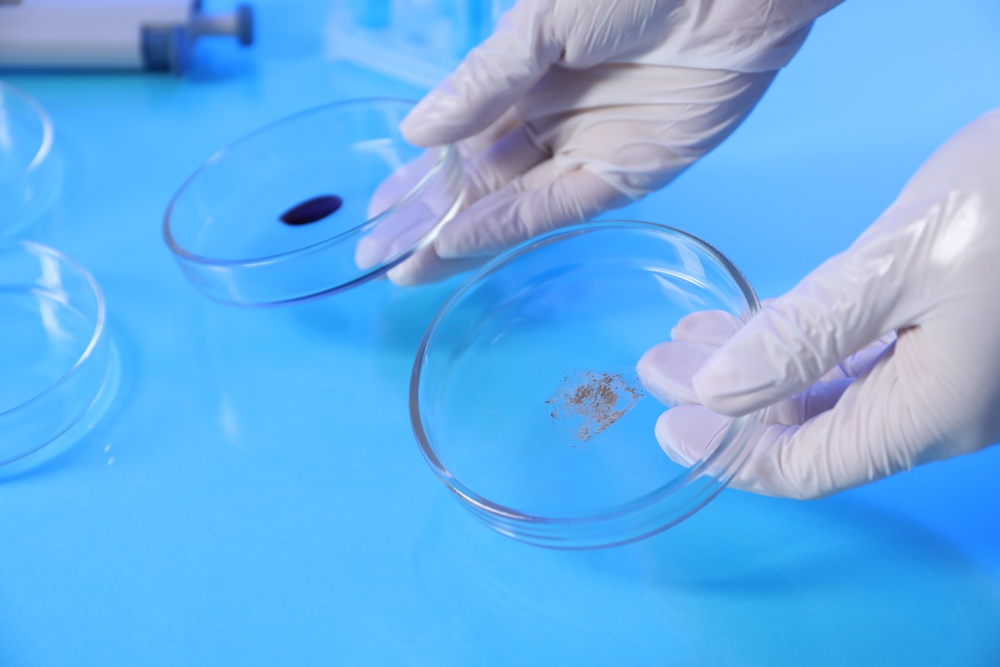
Juno Bio has secured US$3.8m to expand its diagnostics platform for vaginal health and reproductive care.
The funding round was led by Ada Ventures, with participation from Artesian, Entrepreneur First and Illumina Accelerator.
The women’s health startup said the seed funding will support the launch of its first CLIA-certified sequencing laboratory in Oakland, California, and a new clinical vaginal microbiome and STI test for healthcare providers.
CLIA certification refers to US laboratory standards for testing human samples used in diagnosis, prevention or treatment decisions.
Dr Leighton Turner, co-founder and chief scientific officer of Juno Bio, said: “The vaginal microbiome is still one of the least understood systems in the body at a clinical scale.
“With our lab, we’re starting to build a measurement standard that clinicians can actually use.
“We believe the level of detail from this kind of testing can meaningfully improve how vaginal healthcare is provided.”
The company is developing precision diagnostics for vaginal health, where patients can experience recurring symptoms, inconsistent diagnoses and treatments based on trial and error.
Juno Bio said bringing testing in-house gives it greater control over the process, from sample handling to results, while allowing it to refine its technology and build what it says is one of the largest datasets focused on the vaginal microbiome.
The vaginal microbiome is the community of bacteria and fungi that naturally live in the vagina. Changes in this balance can be linked to infections, symptoms and wider reproductive health issues.
Juno Bio’s newly launched clinical test examines the wider vaginal microbiome and screens for four common sexually transmitted infections, or STIs.
Rather than looking for a single cause, the test is intended to give clinicians a broader picture of what may be contributing to symptoms.
Juno Bio says this matters because multiple infections can occur at the same time and microbiome changes may be linked to fertility, menopause or recurrent infections.
Dr Anna Powell of Johns Hopkins said: “Vaginal microbiome testing has the potential to significantly reshape how we understand and manage vaginal health, particularly for patients with recurrent or unexplained symptoms.
“While the field is still evolving, advances in sequencing and data interpretation are moving us closer to a future where more personalised, microbiome-informed care can complement existing diagnostic approaches.”
Check Warner, co-founding partner at Ada Ventures, added: “Juno Bio is setting a new standard for how vaginal health is understood and managed.
“What they’ve built at this stage, with this level of capital efficiency, is exceptional.
“We’re proud to support the team as they scale their clinical infrastructure and continue leading innovation in this critically underserved category.”






 Insight2 weeks ago
Women with PMOS should have annual NHS checks, new guidance says

 Diagnosis1 week ago
Two “gamechanger” tests set to speed up endometriosis diagnosis on the NHS

 News2 days ago
New menopause drug approved for use by NHS in Scotland

 Cancer1 week ago
Thousands of women could avoid painful cancer exam with new AI blood test

 News2 weeks ago
Breast cancer biosensor and low-cost ultrasound startups win women’s health AI competition

 Entrepreneur1 week ago
Applications open for the third W Accelerate with Merck KGaA and M Ventures

 News2 weeks ago
Clue spotlights seven women’s health journeys in new campaign

 Fertility1 week ago
Older women face lower chance of fertility treatment working, even with donor eggs, study finds
1 Comment