




Entrepreneur
GenM expands to Australian market


GenM is taking its menopause certification to Australia with TerryWhite Chemmart, Australia’s largest pharmacy network.
The tie-up marks the first time GenM’s MTick menopause-friendly shopping symbol and certification has been rolled out at national scale outside the UK.
It is GenM’s largest international expansion to date.

The MTick certification will be introduced across more than 620 TerryWhite Chemmart pharmacies.
The rollout includes dedicated in-store menopause bays, educational signage, online hubs and product discovery tools.
Heather Jackson, chief executive and co-founder of GenM, said: “Entering the Australian market is a major milestone for GenM and powerful validation of the MTick as a globally scalable and trusted retail category.
“Australia’s national pharmacy network, trusted community healthcare model, and underserved menopausal population make it a strategically significant market for our international growth.
“Partnering with TerryWhite Chemmart allows us to roll out menopause-friendly retail at scale for the first time outside of the UK, demonstrating how the MTick can deliver value for consumers, brands and retailers, and shining a light on how menopause support can improve the wellbeing of communities globally.
“Together, we’re creating an inclusive and accessible category of retail that has the power to transform the lived experience of menopause for over 4 million Australian women.”
Menopause affects more than one billion women worldwide and more than four million in Australia.
GenM research in the UK found 87 per cent of women feel overlooked and underserved by brands and retailers, while 66 per cent struggle to find menopause-friendly products in store and online.
In-store activations will feature products designed to support one or more of the 48 recognised signs of menopause, with pharmacists receiving specialised women’s health training.
By exclusively adopting the MTick, TerryWhite Chemmart becomes the first Australian retailer to formally introduce menopause-friendly certification nationwide.
Krystel Tresillian, pharmacist and general manager of professional practice at TerryWhite Chemmart, said: “Partnering with GenM enables us to respond to a clear and growing customer need.
“Rolling out the MTick across our national network of community pharmacies strengthens our commitment to inclusive healthcare and reinforces our role as a trusted health partner for women at every stage of life.”














Xella Health has launched what it calls the first AI precision health platform built for the XX chromosome.
The company says it aims to address a lack of diagnostic precision and clinical research focused on female biology.
Women make up half of the population and account for 80 per cent of consumer healthcare decisions, but research into women’s health has historically received less funding than male-focused studies.

Kelly Lacob, Xella Health co-founder and chief executive, said: “Women have been trapped in a diagnostic dark age experiencing debilitating symptoms like severe period pain, bloating and GI issues, exhaustion, and brain fog, routinely dismissed by the healthcare system.
“This dismissal results in women being diagnosed four years later than men, on average, for the same conditions, and a seven-to-10-year delay for women to receive an accurate diagnosis for conditions like endometriosis.
Stalling necessary care and treatment results in prolonged suffering with chronic pain, heightened infertility risks, and declining mental health.
Xella is here to replace the systemic medical gaslighting women have endured for generations.
We are handing women the evidence and information they need to advocate for themselves and secure faster, accurate diagnoses before early-stage conditions spiral.”
Xella says its AI examines billions of data points from clinical information and multi-omic biomarkers to assess the probability of more than 130 conditions specific to female biology.
Multi-omic data combines information from several biological areas, including genes, proteins and hormones.
The conditions assessed include polyendocrine metabolic ovarian syndrome, or PMOS, formerly known as polycystic ovary syndrome, as well as perimenopause and endometriosis.
Xella was founded by Lacob, Adriana Dantas and Dr Jesus Ching, who developed the concept while working together on molecular diagnostics at Mammoth Biosciences.
The founders say the platform is designed to provide information about possible underlying causes through advanced testing and long-term care of a kind often available only through expensive concierge services.
They drew on personal experiences to build a service intended to identify small changes in a woman’s biological baseline.
Members complete an initial health questionnaire before having blood taken at a local partner laboratory such as Quest or Labcorp.
A phlebotomist can also visit a member’s home for an additional charge.
The company’s AI analyses biomarker data from genomics, proteins and hormones alongside symptoms, lifestyle risks and medical history.
Xella says this information is used to screen for more than 130 female-specific conditions, including PMOS, Hashimoto’s disease, premenstrual dysphoric disorder, endometriosis and perimenopause timelines.
Hashimoto’s disease is an autoimmune condition in which the immune system attacks the thyroid gland.
Premenstrual dysphoric disorder, or PMDD, is a severe form of premenstrual syndrome that can cause significant emotional and physical symptoms.
The results are processed through Xella’s own dry laboratory, which the company says is certified under the US Clinical Laboratory Improvement Amendments and accredited by the College of American Pathologists.
A dry laboratory analyses data using computing and other non-experimental methods rather than carrying out traditional laboratory procedures.
The findings are turned into a personalised healthcare plan and reviewed with a certified telehealth doctor.
The doctor may recommend immediate clinical action, including personalised hormone therapy or referrals to genetic counsellors, pelvic floor physiotherapists and reproductive endocrinologists.
Reproductive endocrinologists are doctors who specialise in hormones, fertility and reproductive health conditions.
Dantas, co-founder and chief operating officer, said: “Women’s health data has historically been treated in isolated silos – a hormone test here, an ultrasound there – but no one was connecting the dots across the entire biology.
“By tracking unique biological patterns longitudinally across cycles and life stages, we aren’t just providing data, but a clear path forward.”
Xella’s clinical advisers include Dr Allison Kurian, director of Stanford Women’s Clinical Cancer Genetics Program and professor of medicine, epidemiology and population health at Stanford.
They also include Dr Lynn Westphal, a reproductive endocrinology and infertility specialist and chief medical officer of Kindbody.
Xella has received US$4.7m in angel and pre-seed funding from Precursor Ventures, Capital F, Ulu Ventures and Swizzle Ventures.
Other funds and angel investors from healthcare, diagnostics and consumer technology also participated.
Margaret Coblentz, co-founder and general partner of Capital F, said: “Women’s health is one of the highest-momentum categories in the market today, driven by a US$15tn female economy.
“Xella represents exactly how Capital F sees women’s health evolving: deep clinical expertise paired with a consumer-first mindset, and a genuine opportunity to unlock the next generation of healthcare.”

A screen time app that lets friends cut their phone use together has won the £15,000 top prize in a women-led startup competition.
Snitch, led by design engineering MEng graduate Asha Bakhai, took first place at WE Innovate, Imperial College London’s flagship competition for women-led startups.
The team aims to tackle excessive screen use among young people, which some research suggests may have a negative effect on mental and physical health.
The app lets users join accountability groups and set shared limits across their most-used apps.
When one person scrolls, the group’s combined timer counts down. Its founders say this helps build awareness, encourages reflection and supports small changes in behaviour by making screen use a shared responsibility.
Speaking at the WE Innovate Grand Final, Bakhai, co-founder and chief executive of Snitch, said: “Thank you to all the people who have been involved with thinking about what it could look like for young people to not be addicted to their phones.
“Whether that’s our friends who we started this with – exchanging screen time passwords and things like that – or the users along the way who beta tested with us, or our families and our friends who we’ve forced to use our app, even though it failed and bugged out and blocked all their apps. Thank you to all of them – and especially, thank you to WE Innovate for making all of this happen.”
Snitch’s team also includes co-founders Serena Sebastian and Yoshiki Berrecloth.
WE Innovate is a six-month pre-accelerator run by Imperial Enterprise Lab for teams led by female students, recent alumni and early career researchers.
The programme supports 25 women-led teams through masterclasses, business coaching, one-to-one expert support and peer mentoring.
The top five teams competed for a share of a £30,000 prize fund.
Professor Hugh Brady, president of Imperial College London, said: “WE Innovate was born out of the realisation that women founders were grossly underrepresented among our wider founder group across the university – so it was an imperative for Imperial to start such a programme.
“It was just last year that we heard Dame Alison Rose, author of the Rose Review, speak about the untapped economic opportunity and potential of women entrepreneurs in the UK.
“After 12 years, this programme has supported hundreds of women entrepreneurs, leading to exciting ventures across health tech, clean tech and all aspects of deep tech.”
The winning teams were selected by a panel including Kristen McLeod CBE, chief strategy officer at the British Business Bank, and Elizabeth Gooch MBE, founder and former chief executive of EGS plc.
The panel also included Pierre N. Rolin, founder and chief executive of Ankh Impact Ventures, and Professor Mary Ryan, vice-provost for research and enterprise at Imperial.
The final marked the second year of WE Innovate National, a UK-wide programme with separate Grand Final showcases held this month at Queen’s University Belfast, Swansea University and Loughborough University.
Joanna Jensen, founder of skincare brand Childs Farm, gave a keynote address about her experiences as an entrepreneur and co-writing The Rise Report of Female Entrepreneurship.
The report found that the UK economy would be £310bn larger if women started and scaled businesses at the same rate as men.
Jensen said 78 per cent of the founders surveyed reported that human connection had been central to their journey, while one in seven identified loneliness as their biggest challenge as an entrepreneur.
She said: “That is why what Imperial is doing matters so profoundly. Not just here in South Kensington but as WE Innovate goes national.
“Because a founder in Loughborough, Durham or Swansea deserves the same access to networks, mentors, capital and belief as a founder sitting in this room tonight.
“Talent is everywhere. Opportunity, until now, has not been.
“A nationwide network for female founders, being backed by women and men, having doors opened for them by women and men, and then paying that forward: that is how you close a £310 billion gap.
“Not with one programme. With a system of programmes, joined up across the country, and held to account on outcomes.”
Waypoint, led by innovation design engineering MSc student Bana Quronfuleh, received the £7,000 second prize.
The team is developing a video game controller that allows visually impaired players to hear and feel popular games.
AlphaVectors Biotech, led by Imperial alumnus Dr Apanpreet Kaur, received the £5,000 third prize for its lipid nanoparticle platform, which aims to improve the stability of RNA vaccines at room temperature.
Lipid nanoparticles are tiny fat-based particles used to protect and deliver genetic material, including the RNA found in some vaccines.
The other finalists, FluoroCycle and Epile-X, each received £1,500.
PHlora LABS received the Lauren Dennis Award, which was established in memory of a pioneering WE Innovate alumnus, for developing a synbiotic suppository intended to prevent recurrent vaginal infections.
Synbiotics combine beneficial microorganisms called probiotics with substances known as prebiotics, which help them grow.
The award recognises a team demonstrating exceptional entrepreneurial spirit in science, technology, engineering and mathematics and includes a six-month business coaching package.
DisoLens received the Engineers in Business Award, sponsored by the Engineers in Business Fellowship.
The award provides each winner with £1,500 in grant funding, mentorship and a professional CV package for entrepreneurs working across engineering sciences.
The team is developing a self-dissolving biodegradable contact lens intended to remove the need for lenses to be taken out each day.
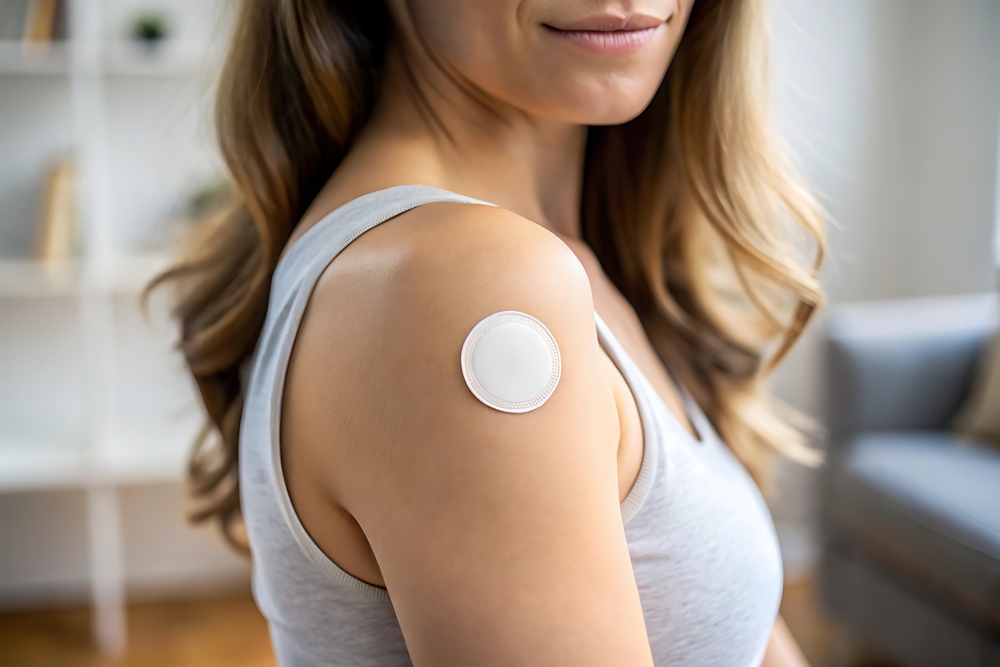
Impli has secured a £1.4m grant to begin clinical use of a real-time hormone patch for infertility treatment.
The startup, which is working with innovations from Imperial College London, is developing a continuous hormone monitoring system for use in in vitro fertilisation, known as IVF.
IVF is a fertility treatment in which eggs are fertilised outside the body before an embryo is transferred to the womb.

Timing is critical in IVF, the most common form of infertility treatment, but most patients are still monitored through blood tests taken every other day at best.
Hormone levels can change within hours, meaning important shifts may be missed.
These can include hormone surges linked to egg release, dips that may contribute to implantation failure and early signs of ovarian hyperstimulation syndrome.
Ovarian hyperstimulation syndrome is a potentially serious reaction to fertility medicines, where the ovaries over-respond and become swollen.
In a treatment with low success rates, these uncertainties can affect patient outcomes and wellbeing.
Impli’s system is based on research by Dr Salzitsa Anastasova in the department of mechanical engineering at Imperial.
The technology uses electrochemical biosensors to sample hormones in the fluid between cells.
These can be used in a subcutaneous implant, meaning one placed under the skin, or in Impli’s Bio-Endocrine Analysis Monitor, known as BEAM, which uses microneedles that pierce the skin.
Microneedles are tiny needles designed to enter the upper layers of the skin with minimal discomfort.
The biosensors continuously measure oestradiol, luteinising hormone and progesterone, which are hormones involved in the menstrual cycle and fertility treatment.
Data is transmitted wirelessly to a smartphone, where AI software converts raw signals into real-time hormone trends.
Sotirios Saravelos, consultant gynaecologist and reproductive medicine subspecialist at the Wolfson Fertility Centre, part of Imperial College Healthcare NHS Trust, said:
“Continuous hormone monitoring has the potential to change the landscape of fertility treatment, both in terms of clinical care and patient experience. Rather than snapshots taken at fixed points in time, with Impli we will have access to a live feed of each patient’s hormonal response, allowing us to personalise care in a way that has not been possible before.”
Saravelos is part of the research consortium that has won a £1.4m grant to take Impli’s BEAM device from prototype to its first human clinical validation for IVF.
The project was designed with support from Dr Simon Hanassab as part of a PhD on how AI can support decision making for IVF.
The work was carried out at the UKRI Centre for Doctoral Training in AI for Healthcare at Imperial, a collaboration between the department of computing and the department of metabolism, digestion and reproduction.
Hanassab is now working part-time as Impli’s head of AI.
The grant comes from the National Institute for Health and Care Research Invention for Innovation programme.
It will support a 30-month project bringing together Impli, Imperial College Healthcare NHS Trust, the London Institute for Healthcare Engineering at King’s College London and the patient advocacy network Fertility Europe.
Specialist medical device manufacturer TTP is also involved.
BEAM is the first step in Impli’s plan to develop a broader platform of fully implantable, long-duration monitoring systems.
Anna Luisa Schaffgotsch, founder and chief executive of Impli, said:
“We are not just building a device, we are building the evidence base to show that continuous hormone monitoring is possible, clinically meaningful and ready for the real world. With an exceptional consortium behind us, we now have the funding, the expertise and the clinical pathway to do that properly.”
According to the company, the same core technology could later have applications in hormonally driven cancers, polycystic ovary syndrome, endometriosis and menopause.
Polycystic ovary syndrome is a common hormonal condition that can affect periods, fertility and metabolism.
Endometriosis is a condition where tissue similar to the lining of the womb grows outside the uterus, often causing pain.
BEAM’s development builds on more than 15 years of biosensor research at Imperial, with intellectual property covering the sensing approach, device architecture and data interfaces.
Impli has so far delivered three functional prototypes, completed pre-clinical laboratory trials and begun animal trials, which the company said have shown positive results.
It also has a strategic partnership with Bayer on real-time hormone biosensing and relationships with IVF clinics internationally.












 Insight3 weeks ago
British women among angriest in Europe, health survey reveals

 News4 weeks ago
Women still being failed when they reach menopause, experts say

 Menopause3 weeks ago
Apple Health adds menopause and perimenopause tracking

 News2 weeks ago
Femtech World Awards 2026: Winners revealed
 News4 weeks ago
Three menopause innovators shortlisted for Femtech World Award

 News3 weeks ago
Menopause workplace toolkit launched to help UK employers support staff

 Features3 weeks ago
Elation Health acquires EHR startup Aster

 News3 weeks ago
Endometriosis documentary profiles stars including Marilyn Monroe and Amy Schumer