




pain conditions
Endometriosis advocate Padma Lakshmi to headline Women’s HealthX


To mark Endometriosis Awareness Month, Women’s HealthX is excited to announce that Padma Lakshmi will join the event as a keynote speaker, bringing one of the most influential voices in women’s health advocacy to the stage.
Boston, March 30 2026 – New York Times bestselling author and Emmy nominated host and executive producer of Hulu’s Taste the Nation, Padma Lakshmi, is widely recognized for her impact across media, culture, and advocacy.
Named one of Time Magazine’s 100 Most Influential People in 2023, she has become a leading voice in women’s health through her advocacy on endometriosis.
Having spoken openly about her own experience with the condition, Lakshmi has helped raise awareness of delayed diagnosis, chronic pain, and systemic gaps in care.
As co-founder of the Endometriosis Foundation of America, she has played a key role in advancing education, research, and policy attention for a disease that affects millions globally.
At Women’s HealthX, Lakshmi will headline a fireside chat titled The Invisible Disease: What Endometriosis Reveals About the Future of Women’s Health. Endometriosis remains widely misunderstood, underfunded, and frequently diagnosed years too late.
Using the condition as a case study, the session will explore broader systemic challenges across women’s health, from research inequities to clinical blind spots.
The discussion will focus on how to create a clearer roadmap for policymakers, payers, and innovators committed to accelerating earlier diagnosis, improving treatment options, and driving more equitable investment in women’s health.
Attendees will gain insight into how addressing endometriosis can unlock wider progress across the healthcare system.
Through her advocacy and public voice, Lakshmi continues to challenge stigma, amplify underrepresented experiences, and call for a healthcare system where women’s pain is recognised and addressed.
At Women’s HealthX, audiences will hear firsthand what endometriosis reveals about the future of women’s health from one of its most influential and fearless advocates.
Find out more about her session at Women’s HealthX.
As the leading global event in women’s health, the exhibition unites stakeholders across the full lifecycle of care, bringing together over 750 leaders from pharma, biotech, healthcare systems, insurers, and government, all focused on implementing solutions that close the sex difference data gap and improve outcomes for women worldwide.
Attendance is free for any medical officers and leaders within hospitals and healthcare systems, pharma, biotech, corporate enterprises and government officials.
More about Lakshmi:
Alongside being the cofounder of Endometriosis Foundation of America, Lakshmi is also the creator and host and executive producer of America’s Culinary Cup, a new culinary competition show premiering on CBS in spring 2026 following the 50th season premiere of Survivor.
She is the creator of the critically acclaimed and Emmy nominated Hulu series Taste the Nation, which won the James Beard Foundation Award top prize in Visual Media Long Form, and previously served as host and executive producer of Bravo’s two time Emmy winning series Top Chef for 19 seasons, earning five Emmy nominations for Outstanding Host for a Reality Competition Program.
Beyond television, she serves as an American Civil Liberties Union Artist Ambassador for immigrants’ rights and women’s rights and as a Goodwill Ambassador for the United Nations Development Program.
She is also a visiting scholar at the Massachusetts Institute of Technology.
Lakshmi is the author of several books, including Easy Exotic, Tangy, Tart, Hot & Sweet, and her New York Times bestselling memoir Love, Loss and What We Ate. Her other works include The Encyclopedia of Spices & Herbs, the children’s book Tomatoes for Neela, and Padma’s All American: Tales, Travels and Recipes from Taste the Nation and Beyond, launching in November 2025.











A UK study will build a menstrual fluid biobank to help women get faster, better treatment for heavy periods.
Thousands of participants will provide menstrual fluid samples over three cycles using specially designed period pads. They will also use a daily tracking app and complete detailed questionnaires.
Researchers from the Universities of Exeter and Bristol will work with participants from two UK birth cohort studies, Children of the 90s and Born in Bradford.

Professor Gemma Sharp, of the University of Exeter, said that the study is set to be a ‘real game-changer’ for menstrual health research.
Sharp said: “We know that menstrual health is a key indicator of overall health, but a lack of high-quality data means it remains poorly understood and under-supported in healthcare.
“We also know that heavy periods can affect many aspects of daily life – for example, our recent research revealed an association between heavy periods, school attendance and lower GCSE attainment – so we urgently need new ways to support the millions of women affected by heavy periods more promptly and effectively.”
The CycleTrack study aims to create the world’s largest menstrual fluid biobank for people in their mid-30s.
By combining these samples with long-term health and genetic data, researchers hope to identify biological signals linked to differences in periods and related conditions.
Researchers hope the findings could support earlier diagnosis, better care plans and tools to identify risks including iron deficiency.
The study is part of The Missed Vital Sign, a programme led by Wellcome Leap that contributes to a broader global effort to reduce the time it takes a woman to receive effective treatment for heavy menstrual bleeding from five years to five months.
Up to 50 per cent of women worldwide experience heavy periods, which can significantly affect physical, emotional and social wellbeing.
Researchers say the work could also improve understanding of menstrual health more broadly and help inform future school and workplace guidance.
pain conditions
Federal gov should fund drug to treat breast cancer and endometriosis, Aus committee says

Australia’s drug advisory committee has recommended wider funding of triptorelin for women with breast cancer or endometriosis.
The recommendation comes after AstraZeneca announced plans to remove Zoladex from the market, risking leaving more than 7,500 women with breast cancer without an alternative treatment.
Both medicines block the release of oestrogen and testosterone and can be used as part of treatment, or for fertility preservation, in some forms of cancer.
The Pharmaceutical Benefits Advisory Committee met urgently in July and recommended making triptorelin unrestricted under the Pharmaceutical Benefits Scheme (PBS), which would mean it was funded for all uses.
The drug has been listed on the PBS for prostate cancer since 2006.
Triptorelin and Zoladex can also be used to treat endometriosis and to block puberty for either precocious puberty or gender-affirming care.
Vicki Durston, director of policy and advocacy at Breast Cancer Network Australia, described the recommendation as “a significant step forward” and said access to the medicine could mean the difference between life and death for some patients.
She said some women had already chosen to have their ovaries removed because of uncertainty over Zoladex supplies.
Marilla Druitt, Victorian state chair of the Royal Australian and New Zealand College of Obstetricians and Gynaecologists, said it remained unclear whether triptorelin would work exactly the same way as Zoladex, but the recommendation was likely to be positive for patients with endometriosis and pelvic pain.
She said: “I’m glad we’ve got an alternative.”
“That’s fantastic, and it remains to be seen whether or not it will be as good, but pain is so complex, pain is a really hard thing to study because it’s got so many contributors.”
Druitt said further research would be needed after the medicine was introduced.
If accepted by the federal government, the recommendation would also allow PBS funding of triptorelin for puberty suppression in precocious puberty and gender-affirming care.
This would make gender-affirming care federally funded through the PBS for the first time and would remove a financial barrier for transgender children in Queensland and the Northern Territory.
Stuart Aitken, medical director of Gender Health Australia, said the recommendation had sparked “absolute joy” among his patients.
He said: “It takes away a huge barrier to accessing evidence-based care.”
“It means that the ban has a very limited effect.”
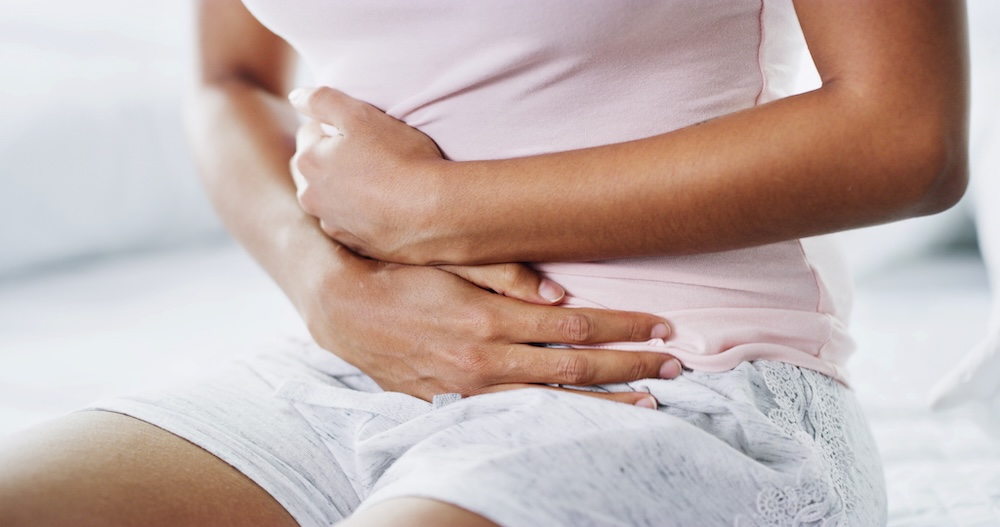
Women later diagnosed with endometriosis used more antidepressant and anxiety medication than other women, with the pattern emerging years before diagnosis, recent study found.
The difference was evident up to 10 years before diagnosis and continued for a decade afterwards, according to a large Danish registry-based study involving 136,842 women.
Women with the condition also had substantially more contact with psychiatric hospital departments than those without it.
Researchers at Aarhus University found that women with endometriosis redeemed 29 per cent more prescriptions for antidepressants and 16 per cent more for anxiety medication in the years before diagnosis.
After diagnosis, the differences rose to 40 per cent for antidepressants and 46 per cent for anxiety medication.
Marie Josiasen, PhD student at the department of public health and one of the researchers behind the study, said: “What surprised us was how clear and persistent the pattern was, and that the difference did not diminish over time.
“On the contrary.
“Women with endometriosis consistently redeemed more prescriptions for antidepressant medication than women without the disease throughout the entire period, from ten years before to ten years after diagnosis.”
The study does not provide an answer as to what causes the mental strain.
Josiasen said prolonged pain, uncertainty about the cause of symptoms and fertility problems could be among the factors contributing to psychological strain.
She said: “It’s possible that prolonged pain, uncertainty about the cause of the symptoms, and frustration over not being able to live the life one wants may be among the reasons. For some women, fertility problems can also be a major psychological burden.”
Researchers also found that the gap compared with women without endometriosis did not narrow after diagnosis. Instead, it became more pronounced in the years that followed.
Josiasen said: “A diagnosis can be a relief, but it also involves coming to terms with having a chronic illness.”
The study does not indicate whether diagnosing endometriosis earlier could reduce psychological strain.
As part of her PhD project, Josiasen will investigate the role hormonal contraception may play in the mental health of women with endometriosis.
She said: “We can see that many receive medication and are in contact with psychiatric services. But we still lack an understanding of what actually helps these women.
“That’s what I want to help find out.”






 Entrepreneur1 week ago
KOVE Medical raises €1.7 million to improve safety of foetal surgery

 Pregnancy1 week ago
UK study aims to transform maternity care for high-risk pregnancies

 Mental health2 weeks ago
PMDD after SSRIs or hormones: Why the brain may be the missing treatment target
 Diagnosis2 weeks ago
Ark Surgical secures further institutional backing to accelerate US expansion

 Entrepreneur4 days ago
Last chance to save on Women’s Health Week and Women’s Sport Summit: Early Bird pricing ends 11 September
 Hormonal health7 days ago
Menopause hormone treatment may ease brain fog, study suggests

 Motherhood2 weeks ago
Thousands of UK women develop undiagnosed PTSD after childbirth each year – study

 Cancer3 days ago
Cancer drug could tackle osteoporosis menopause weight gain