




Connect with us

Opinion

Why Embroidery Digitizing is the Safest Choice for Newborn Wear

Published

on

Clothing and other textiles for the newborn require extreme care. A newborn’s skin is very sensitive to cloths, and developing during the first few months of life. Healthcare practitioners scrutinize every material and substance that comes in contact with a baby directly. In the United States embroidery digitizing services has become one of the safest and most trusted decoration techniques provided by Digitizing Lord for garments and household décor.

Embroidery digitizing for clothing is widely preferred because it combines safety, durability, and comfort. Unlike printed designs that rely on chemical inks and adhesives, digitized embroidery uses soft threads stitched directly into fabric. This significantly reduces the risk of skin irritation and allergic reactions. As a result, many healthcare professionals consider embroidery digitizing the safest option for newborn clothing.

Understanding Embroidery Digitizing for Newborn Clothing

Before the digital era this technique was ancient and popular in communities.  The digital artwork, personalized image, and business logo transformation is done with the help of software which is known as embroidery digitizing. You just have to correct the fabric placement for stitches, keeping the tension of the threads balanced as well as the finished nature of the surface.

Every parent prioritize charming cloths with soft outcomes for their baby. They tend to have some personalization like image or written name on the cloths without harming the baby skin. This barrier is resolved by embroidery digitizing experts by having them clean and custom design solutions.

Why Newborn Skin Needs Extra Protection

Compare to adults the newborn skin is fragile and require additional care. Lacking the full and rich epidermal layer that adults possess, their skin is thinner and more quickly absorbs substances from surfaces it comes into contact with.

As a result, newborns have to be handled with care and clothing must be chosen carefully. Even mild exposure to contaminating chemicals or rough fabrics can lead to irritation and rashes on their skin.

According to healthcare professionals for customized designs on cloths embroidery digitizing is the safest process. Each fabric including designs and thread that is stitched onto the newborn’s body is carefully tested to ensure that it has no reaction on the skin.

Reduced Chemical Exposure

One of the most important safety benefits of embroidery digitizing for newborn garments is that it contains no chemicals. Printed baby clothes often use inks with a solvent, pigment, and bonding agents that can tend to deteriorate over time until they come into contact with a newborn’s skin.

For fashion and greater look logo embroidery digitizing removes this issue as artificial inks are replaced by fabric threads. Quality embroidery threads are manufactured for textile use and many companies are certified non-toxic and appropriate for sensitive skin. This orientation toward dangerous chemical exposure is one of the leading reasons why healthcare workers will utilize embroidery digitizing for newborn apparel.

Smooth and Comfort for Newborns

Reassurance is a matter of great comfort in infant health. Rough decorations in cloths can cause skin friction and soreness. Professional embroidery digitizing companies such as Digitizing Lord make certain that stitches are evenly spaced and compactly placed. The result is a smooth surface that runs with the cloth itself.

Unlike cracked prints or peeling vinyl designs, embroidered logos last forever as no damage occurs with each movement. Medical professionals who care for patients know that this feature cuts down on rubbing against skin. These details go a long way in preventing outbreaks of irritated skin when spending days in the hospital.

Embroidery Digitizing and Hospital Identification Safety

Accurate identification in the maternity ward or neonatal unit is paramount. Items of clothing for babies are often labelled with the name of the hospital. The staff ward number rank marked in some way to identify the ownership. Printed labels and tags will gradually fade or peel off. Embroidered identifiers are stitched for good into the clothing, eliminating the risk of its revealing grievous misidentification, as well as contributing to an increased degree of hospital security. For the health worker this sense of certain identification is a great value of the digitizing service.

Infection Control in Healthcare Settings

Infection control is vitally important in hospitals, particularly in newborn care units. Newborn clothing must be durable enough to be washed often at high temperatures. Any design techniques that leave behind traces or cracks on the fabric surface may become places for bacteria to cling to.

Embroidery digitizing, though, provides durability and will not degrade through repeated washings. Threads will not peel or flake. This helps maintain hygiene standards and reduces the chances of contamination. Healthcare staff also trusts embroidered textiles to meet strict infection control requirements for that season’s fashions.

Why Embroidery Digitizing Is Safer Than Printing Methods

Many things that could be put on the cloth involve adhesives or heat-applied materials. Heat transfer vinyl looks nice on the surface, but it can be cause problems to this sensitive skin after the first wash. To resolve the connection of skin sensitivity and fashion clothing for newborns embroidered apparel is the best choice.

Cloths with embroidery digitizing patterns avert all of that. The design becomes part of the cloth, not something just perched upon the surface.

Parents Concern And Embroidery Digitizing

Comfort and safety with a designer’s touch parents want to know that their baby’s clothes are fashionable but also safe, comfy and durable. Embroidery digitizing reassures parents with a gentle, long-lasting decoration method. Chemical inks that can because allergies are avoided, a must for babies with tender skin.

Preventing Common Newborn Clothing Issues

Some garments may contribute difficulty to breathing. In the world of embroidery digitizing, machine ready files with thread work avoids such difficulties. Longer term, digitized images help keep fabric breathable, thereby helping to reduce overheating or excessive wear that may expose rough edges.

Healthcare professionals who recommend embroidered newborn clothing take all these considerations into account.

Healthcare Branding

Healthcare institutions turn to logo embroidery digitizing for everything from uniforms to blankets to medical textiles. A clear embroidered brand logo further accentuates a professional appearance, thereby increasing identification of the caregivers and reinforcing trust.

Digitised embroidered logo maintains hospitals’ branding consistency while preserving a high level of safety. Most of the patient and parents in hospitals remember the staff names or brand name seeing their logo. As a result, many hospitals use digitised logo embroidery services in USA.

Sustainability

Sustainability is becoming increasingly important in healthcare even when it comes to garments for babies. Disposable clothing isn’t just a waste of money, but also a major source of textile waste. Embroidery digitizer help on this front too, because when done right the designs created make the clothes more durable, and thus, less likely to be tossed into landfill.

Why Healthcare Professionals Trust Embroidery Digitizing

Health care industry is built upon trust and evidence based practices. Embroidery digitizing yarns have been employed for medical textiles many times and for so long that they are trusted materials.

From neonatology through obstetrics, embroidered clothing has to pass the test of safety. It has to offer cuddly comfort without the weight of germs or confusion about to whom it belongs.

Conclusion

Embroidery digitizing is a safer choice for newborn hospital clothes. It reduces the risk of chemical exposure, skin reactions, and helps meet infection-control standards. Parents and loved ones get to enjoy durable clothes that are comfortable and keep their minds at ease.

Healthcare agencies get reliable solution of digitizing featuring high durability and safety. The focus on comfort and hygiene plus durability make embroidery digitizing the right decoration for newborn hospital clothing.
Continue Reading
Click to comment

Leave a Reply

Your email address will not be published. Required fields are marked *

Opinion

From platforms to people: The next era of femtech

Published

on

By Katrina Zalcmane, head of partnerships and growth, Véa

The next era of femtech shifts focus from platforms to people as women rethink how technology fits into wellness and social life.

Women are spending less time on ambient, always-on digital environments and more time in bounded, intentional, in-person settings.

This is not a rejection of technology but a reprioritisation of how and where it belongs. For femtech, this shift is not cosmetic. It signals a structural change in user expectations – one that has implications for product design, engagement models and long-term relevance. 

I explore three key signals underpinning this shift: reduced engagement with social media platforms, the resurgence of in-person, women-led communities and growing fatigue with fragmented digital tools.

Signal 1: Declining Engagement With Social Platforms Among Women

Multiple data sources point to a flattening or decline in engagement with traditional social media platforms, particularly among women:

  • Pew Research Center reports that adults are increasingly “actively limiting” their social media use, with women more likely than men to cite emotional exhaustion and reduced wellbeing as reasons.
  • Ofcom’s Online Nation report shows year-on-year declines in time spent on social platforms among UK women aged 25–44, alongside rising use of messaging and offline coordination tools.
  • Meta itself has acknowledged a shift away from “social graph” engagement toward private, smaller-group interactions in recent earnings calls.

While this is not mass abandonment, it does indicate selective withdrawal: fewer platforms, less ambient presence, more intentional use.

Signal 2: The Rise of In-Person, Women-Led Communities

At the same time, participation in physical, community-based activities has increased. Examples include:

  • the growth of women-led run clubs and fitness collectives across major cities, often operating independently of digital platforms;
  • the expansion of paid, small-scale retreats and circles focused on reflection, creativity or embodiment;
  • increased demand for local, recurring group experiences rather than one-off events.

While women are stepping back from social platforms, they are stepping into real-world communities. ONS data on social capital shows a post-pandemic rebound in in-person participation, particularly among women aged 25-45, with a preference for smaller, repeat gatherings over large social events.

What distinguishes this wave of community-building is intentionality. These spaces are bounded, often invitation-based and deliberately offline.

They are designed to counteract overstimulation rather than add to it.

Signal 3: Tool Fatigue and the Consolidation of Digital Habits

Alongside social media fatigue, there is growing evidence of “tool fatigue” across wellness and productivity categories:

  • App retention rates across health and wellness remain low, with industry benchmarks showing that fewer than 25 per cent of users remain active after 30 days.
  • Deloitte’s Digital Consumer Trends report notes a move toward app consolidation, with users preferring fewer, multi-purpose tools over fragmented stacks.
  • Qualitative studies show women are particularly sensitive to cognitive overload caused by managing multiple apps for mood, cycles, health, reflection and social coordination*.

The implication is not that women want less support but that they want smarter, simpler tools that can actually help manage their inner lives.

What This Means: A Shift in the Role of Technology

Taken together, these signals point to a clear trend: technology is moving from being a primary site of social life to a supporting layer around it.

Women are not asking apps to become communities. They are asking them to:

  • help them reflect and process privately;
  • reduce cognitive and emotional clutter;
  • support real-world relationships rather than replace them;
  • operate in bounded, intentional ways.

This reframes success metrics. Engagement time and daily active use become less meaningful than whether a tool genuinely increases capacity, clarity and presence outside the app.

Implications for Femtech

For femtech, this marks a decisive transition. The first phase of femtech focused on visibility: tracking cycles, symptoms and bodily data that had previously been ignored.

The next phase will focus on integration: helping women make sense of experience in ways that support how they live, relate and gather.

Femtech products that attempt to:

  • replicate community digitally,
  • build social feeds under the banner of wellbeing,
  • position AI as a substitute for real connection,

risk misaligning with where behaviour is actually moving. 

By contrast, femtech that treats technology as infrastructure, not destination, is better positioned for longevity.

Where Véa Fits

Véa was built with this shift in mind.

Rather than attempting to replace connection or build another social layer, Véa focuses on internal processing – neuroscience-backed journaling, emotional pattern recognition and reflective AI support – so that women can show up more clearly in their real lives.

Importantly, Véa is not only a digital tool.

It is designed to extend into physical space, through curated in-person experiences and community gatherings that prioritise presence, embodiment and shared reflection.

The digital layer exists to support the human one, not compete with it. In a context of tool fatigue and selective disengagement, this hybrid model – digital support paired with real-world interaction – aligns closely with how women are choosing to engage today.

Over the next decade, the most resilient femtech products will not be those that maximise time spent inside ecosystems but those that give women back the capacity to return to their lives – with greater clarity, energy and real-world connection.

It’s time to design femtech that empowers presence over engagement.

*Reich-Stiebert, N., Froehlich, L. and Voltmer, J.-B. (2023). ‘Gendered mental labor: A systematic literature review on the cognitive dimension of unpaid work within the household and childcare’, Sex Roles, 88, pp. 475–494.

Continue Reading

Opinion

How Women in Tech Switch Off Without Switching Off

Published

on

Modern tech work blurs the boundary between focus and fatigue. Notifications spill into evenings, side projects jostle for attention, and the same screens we use to ship code stream our downtime. The answer is not to disconnect completely. It is to design small, protective rituals that restore energy while keeping a gentle sense of control. Short, low pressure restorative online play can sit alongside other evening habits without draining tomorrow’s focus.

Make Recovery a Feature, Not a Fix

Burnout rarely arrives in a single moment. It builds through micro stresses that never get cleared. Treat recovery as a product feature you ship every evening, simple and reliable rather than grand and rare. Start with boundaries that mark the end of the workday. Close the laptop, write a one line note about tomorrow’s first task, and put your kit out of sight. That single gesture creates a clean edge the brain respects.

Then change the environment. Shift lighting from cool to warm, swap the chair for the sofa, and set your phone to a calmer home screen. These cues matter. They tell your nervous system the mode has changed so you can mix mental rest with light engagement that still feels intentional.

Short, Screen-literate Rituals That Actually Work

  • A ten minute mobility or stretch video resets posture after hours at a desk
  • A tidy loop, like clearing the downloads folder or filing screenshots, reduces digital noise
  • A breath guided practice that ends on the dot gives a measurable downshift
  • A single chapter of a book or a short podcast episode keeps attention light and finite

When energy is low, aim for the smallest possible win. Two minutes of breathing still counts. One drawer tidied is still progress. Preserve the shape of recovery rather than chasing perfection.

Where Light Online Play Fits

Play is a human need, not a teenage phase. In the right dose it helps down regulate stress and restores a sense of agency after a day of reacting to tickets and pings. Keep it light and bounded. Choose modes that resolve in fifteen to twenty minutes, mute work apps, and set a visible stop time before you start. The aim is a calm, finite session that ends cleanly.

Cosy builders, puzzles, or narrative adventures often deliver novelty without social pressure. If you prefer something social, co-op rounds that finish quickly provide connection without dragging the night. Headphones with a gentle volume limit protect shared spaces and evening quiet.

Pair play with tiny chores so life runs smoother. Start a short download, fold laundry while it completes, then enjoy your round guilt free because the house already feels calmer. This is deliberate energy management, not indulgence.

Design a Space That Calms On Sight

  • Put a warm lamp on a simple timer so evenings do not begin under harsh light
  • Keep controllers, headphones, and chargers in one tray so play starts cleanly and puts away fast
  • Use a standing phone dock during dinner to avoid reflex checks
  • Keep the bedroom device light and cool in tone so your brain associates the space with sleep

If you live with others, make the evening rhythm visible. A shared quiet hours note, a soft household wind down alarm, and a last call for dishwashing help everyone respect the boundary between work and rest.

A Weeknight Template That Holds Under Pressure

  • Shutdown: one line for tomorrow, close tabs, quick desk tidy
  • Reset: ten to fifteen minutes to settle the kitchen and lay out morning basics
  • Nourish: simple dinner that keeps cleanup minimal
  • Reward: one short activity on a timer, with light online play as an option
  • Wind down: warm lights, gentle stretch, phone on do not disturb, consistent lights out

If you miss a step, shrink it rather than skipping the whole routine. Small completions compound. Over a month they beat heroic bursts every time.

Leadership Starts With Example

Team norms shape personal wellbeing more than any tool. If you manage others, model sane hours and visible shutdowns. Delay send late emails, publish focus blocks, and praise outcomes over urgency theatre. Encourage short, restorative breaks through the day so evenings do not have to undo quite as much. When leaders normalise humane rhythms, teams follow and results improve because people are not running on fumes.

Continue Reading

Opinion

Why period pain feels worse in winter

Published

on

By Ruby Raut, founder and CEO, WUKA

If you have ever noticed that your cramps feel sharper, your mood dips harder, or your energy seems to disappear during the colder months, you are not imagining it. Winter can genuinely make periods feel more painful and more difficult to manage. The combination of cold weather, less sunlight, increased tension in the body, and reduced activity creates the perfect storm for stronger cramps and heavier emotional symptoms.

Understanding why this happens gives you the power to manage your cycle with more confidence. Here is the most digestible explanation of why winter and period pain are so closely linked.

Cold weather tightens blood vessels

When temperatures drop, your body goes into protection mode. To conserve heat, it tightens your blood vessels, especially around your hands, feet, and lower abdomen. While this is a smart survival response, it comes with an unwanted side effect for menstruation.

Your uterus is a muscle. Like any muscle, it needs good blood flow to relax and function smoothly. When the blood vessels around your pelvis tighten, circulation naturally becomes slower. Less blood flow means the uterus has to contract harder to shed its lining, and this can make cramps feel deeper, sharper, and more persistent.

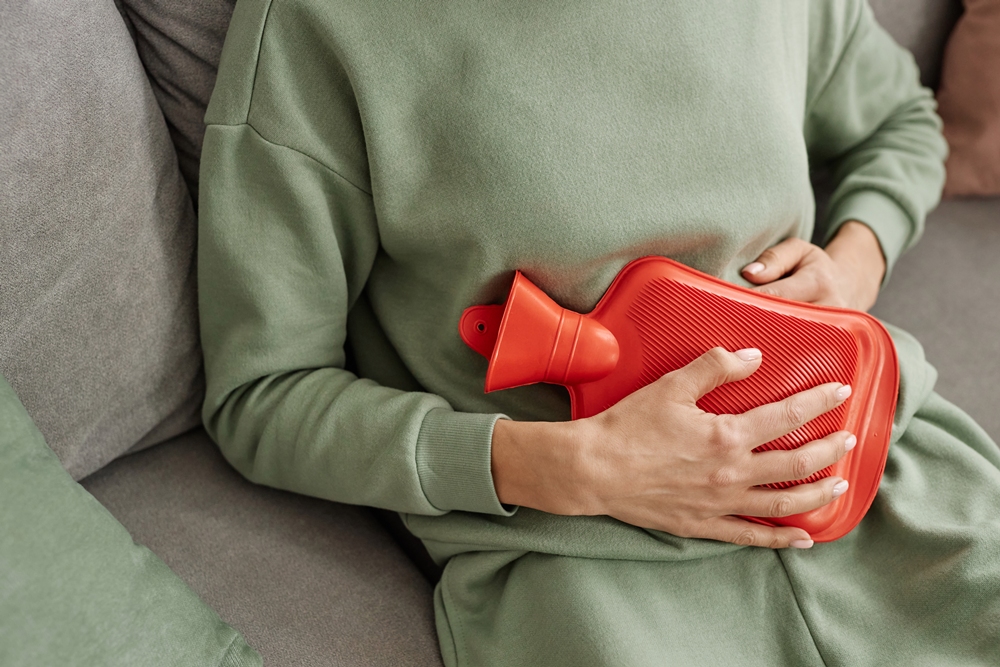
This is why heat has always been one of the most effective comfort tools during a period. Warmth helps blood vessels open again, improves circulation, and relaxes the muscle of the uterus.

Your muscles tense up in the cold

Cold weather does more than chill your skin. It makes your whole body tighten without you even realising it. Think about how your shoulders creep upward when you step into the winter air or how your spine curls slightly for warmth. The same tension can build in your abdomen and pelvic floor.

Tighter muscles mean more resistance against the natural contractions of the uterus. When everything around the uterus is tense, cramps can feel more intense and more difficult to soothe. Even mild pain can feel magnified when the surrounding muscles are already stiff.

This is one of the reasons gentle movement, stretching, and warm baths can make such a difference during winter periods. Anything that eases tension also eases pain.

Less sunlight affects your mood and pain perception

Winter brings shorter days and longer nights, and that naturally reduces your exposure to sunlight. Sunlight plays a key role in regulating serotonin, the hormone that helps stabilise mood and influences how we experience pain.

Lower serotonin can lead to lower energy, stronger mood swings, and more emotional sensitivity. Because serotonin also impacts the way the brain processes discomfort, low levels can make cramps feel more intense.

This emotional shift can make PMS symptoms feel heavier too. Irritability, sadness, and bloating can all feel amplified during the colder months, creating a cycle that feels harder to manage.

Winter usually means less movement

Colder months naturally lead to less physical activity. We walk less, we spend more time indoors, and many people find it harder to stay motivated to exercise. While rest is important, the lack of movement has a direct impact on period pain.

Moving your body improves blood circulation and reduces inflammation. When you sit for longer or avoid movement due to cold weather, blood flow becomes slower and inflammation can rise. Both of these factors contribute to stronger cramps.

Even gentle activity makes a difference. A short stretch, a ten minute walk, or simple breathing exercises that open the chest and abdomen can support circulation and ease pain.

Prostaglandins may spike in colder weather

Prostaglandins are natural chemicals that help the uterus contract during menstruation. Higher levels are linked to stronger cramps and heavier flow. Some research suggests that colder temperatures and lower physical activity may increase the production of prostaglandins, although this varies from person to person.

This means that the natural winter slowdown combined with the physical effects of cold weather can lead to more intense uterine contractions, which again results in more painful periods.

How to make winter periods easier

The good news is that small, accessible habits can make a big difference to how your body feels during winter.

Use warmth generously

Heat patches, warm showers, hot water bottles and cosy clothing help open up blood vessels and soothe the uterine muscle.

Move your body even a little

Short walks, stretching routines or low impact workouts help improve circulation and reduce inflammation.

Support your mood with sunlight

Get outside during daylight hours whenever possible. Sitting near windows or using a light therapy lamp can also support serotonin levels.

Eat warming and nourishing foods

Soups, ginger, turmeric and herbal teas help comfort the body and may reduce inflammation.

Choose period products that keep you comfortable

Secure, breathable period underwear can help you feel more relaxed and confident, especially when your body already feels tense from the cold.

Winter does not have to mean more painful cycles.

With warmth, gentle movement, and an understanding of how your body responds to the season, you can navigate cold month periods with more comfort and control.

Find out more about WUKA at wuka.co.uk

Continue Reading

Trending

Copyright © 2025 Aspect Health Media Ltd. All Rights Reserved.

