




News
Virtual care platform secures US$46m to address US maternal health crisis
Pomelo Care will use the funding to scale its care model and improve maternal and infant outcomes


The US virtual maternity care platform Pomelo Care has secured US$46m in funding to address the US maternal health crisis.
One in 10 babies born in the US today start their life in a neonatal intensive care unit.
Healthcare access continues to worsen, with one in eight births occurring in US counties with limited-to-no access to maternal care. Due to significant gaps in postpartum care, about half of pregnancy-related deaths in the US occur after hospital discharge.
The evidence exists for how to identify people at highest risk for complications and which interventions are most effective, but existing data gaps and provider capacity challenges make it difficult to apply these interventions at scale.
Pomelo has developed a care model that aims to address these challenges by analysing claims and health record data to identify individual risk factors and providing virtual pregnancy, postpartum, and infant care to patients to reduce those risks.
“We’ve long known what works to reduce maternal and infant complications,” said Marta Bralic Kerns, founder and CEO of Pomelo Care.
“The questions have always been: can you identify the patients who are at highest risk, can you deeply engage them in care to drive uptake of the prevention strategies we know work, and can you do it in the highest risk populations with the most limited access to care?”
“This data demonstrates that we absolutely can. And with this additional funding, we’ll have the opportunity to scale our care model to more pregnant people across the country.”
The funding, led by existing investors First Round Capital and Andreessen Horowitz (a16z) Bio + Health, is hoped to help Pomelo accelerate its partnerships with payors across the US and increase access to “evidence-based” care.
Josh Kopelman, partner at First Round Capital and Pomelo board member, said: “It’s rare to come across an opportunity where the incentives between patient, provider and payor are all aligned.
“Marta and the Pomelo team have found an incredible opportunity to dramatically improve outcomes for the highest risk populations, while helping payors reduce their avoidable costs.”
Vineeta Agarwala, general partner at a16z Bio + Health and Pomelo board member, added: “Pomelo is one among a small set of health tech companies that have earned true scale.
“This scale is evident in our partnerships with major Medicaid and commercial plans covering over three million lives, which create the opportunity to collaborate with OB providers, labour and delivery wards, and NICUs nationwide, while serving hundreds of thousands of expecting mothers and newborns with high quality, technology-enabled care.”
To receive the Femtech World newsletter, sign up here.











Sahar Abid is a Science Associate at Ema EQ, where she works on cultural sensitivity and bias in AI.
A woman asks an AI health assistant about postpartum depression.
She mentions that her in-laws are telling her to “push through” and skip medical help, even as her symptoms get harder to manage. She never says where she is from or names her background.
The assistant describes the condition and gives her a hotline number. It sounds correct, but it misses what she needs.
That gap is more common than the industry admits, and it points to a blind spot in how we test health AI for bias.
Most bias testing looks at what people explicitly say.
The typical way to check an AI for bias is to label a prompt with someone’s demographic details and see if the answer changes. That catches some problems but misses a bigger one.
Most people do not lead with their identity. They lead with their situation. The woman above told the assistant everything it needed to help her, just not in the form of a label.
Her real question was not only “what is postpartum depression?” It was “how do I get care when the people around me don’t want me to?
When family members hold sway over health decisions, and in many communities they do, advice that asks someone to overrule their family is not something they can act on.
The AI didn’t say anything factually wrong. It answered a different question than the one she was living.
We call this culturally implicit bias, meaning the AI misses the cultural context a situation implies rather than the context a person spells out.
When systems are trained to notice only the explicit cues, they fall back on a default answer built for the majority. For everyone else, the response can feel generic, off-target, or discouraging enough that they stop looking for help.
In health, that is not small. The people most likely to be missed are often the ones the system already underserves.
What we set out to test.
At Ema, we wanted to know how well AI picks up on cultural context that is implied but never stated. So we built our own way to test for it, across a range of communities and real situations like postpartum depression and fertility, using questions that carried cultural meaning without announcing it.
The patterns were consistent. Models often missed the meaning underneath the question. They dropped the specific details a person did share and smoothed them into something generic.
And even when they pointed toward real care, they tended to offer one option instead of choices that might actually fit a person’s life. Any one of those can be the difference between someone following the advice and walking away from care.
Why this matters for anyone building health AI.
Getting this right is the right thing to do, and it also works better.
When an answer reflects a person’s real context, people trust and act on the recommendations more, so they get the help and support they need.
Testing for it is harder than the shortcut most teams use. Swapping a name or a demographic label in and out is easy. Checking whether a model actually understands the human context around a question takes more care.
The shortcut teaches models to perform cultural competence instead of practicing it. No matter how much or how little someone chooses to share, they deserve an answer that is warm, complete, and usable.
A better question.
The bar for equitable health AI should be “does it serve someone who never told you who they are?” It is the harder test, but it determines whether real people get help.
The work of getting there is far from finished, and it is exactly what we are building toward at Ema.
Sources: Naidoo, V., & Chadha, K. K. (2025), Culturally responsive AI chatbots: from framework to field evidence, Computers in Human Behavior: Artificial Humans. Souligne, N., & Subbian, V. (2026), FairLogue: A toolkit for intersectional fairness analysis in clinical machine learning models.



Women accounted for 71.4 per cent of global health workforce growth between 1990 and 2023, according to a study covering 204 countries and territories.
The global workforce almost tripled over the period, rising from 40.9m to 122.1m workers.
Women represented 68.9 per cent of all health workers in 2023, but remained concentrated in professions that generally offer lower pay and fewer leadership opportunities.

The study analysed 20 groups of specially trained health personnel, including doctors, nurses, midwives, pharmacists, dentists and community health workers.
Between 1990 and 2023, the workforce grew by more than 81m people, including an additional 18.9m nurses and 8.7m doctors.
In 2023, there were 33.2m nurses, 15.1m doctors, 7.6m community health workers, 6.8m pharmacists and pharmaceutical assistants, and 6.1m dentists and dental assistants worldwide.
Women made up 80.7 per cent of nurses, 96 per cent of midwives and 89.5 per cent of community health workers, while fewer than half of doctors were women.
A similar pattern was seen in dentistry and pharmacy, where women were more likely to work as assistants than as dentists or pharmacists.
Megan Knight, lead author of the study and researcher at the Institute for Health Metrics and Evaluation, said: “Women have transformed the global health workforce over the past three decades, but they continue to be concentrated in professions that generally offer lower pay and fewer opportunities for leadership.
“Building stronger health systems will require not only expanding the workforce, but also creating equitable opportunities for career advancement, leadership, and safe, supportive working environments.”
Despite the growth, researchers estimated that an additional 34.4m doctors, nurses, midwives, dentists and pharmacists would be needed to achieve moderate levels of universal health coverage.
Universal health coverage means people can access essential health services without experiencing financial hardship.
The estimated global shortage includes 23.9m nurses and midwives, 7.1m doctors, 1.8m dentists and 1.6m pharmacists.
South Asia had the largest estimated shortages, requiring an additional 2.6m doctors and 10m nurses and midwives to reach the study’s benchmark for moderate universal health coverage.
Sub-Saharan Africa also had substantial shortages. Nursing density was estimated at 14.5 nurses per 10,000 people, compared with 121.8 per 10,000 in high-income countries.
At country level, there were 3.2 nurses per 10,000 people in Chad and 3.3 in Madagascar, compared with 171.7 in Belgium and 161.4 in the US.
Dr Annie Haakenstad, senior author of the study and assistant professor of health metrics sciences at the Institute for Health Metrics and Evaluation, said: “Health workers are the foundation of every health system.
“Although the global workforce has expanded dramatically, millions more doctors, nurses, midwives, dentists, and pharmacists will be needed to ensure people everywhere can access essential health services.
“These findings provide countries with minimum thresholds for planning the workforce needed to strengthen health systems and move toward universal health coverage.”
The study estimated that moderate universal health coverage was associated with minimum workforce densities of 23.8 doctors and 64.5 nurses and midwives per 10,000 people, alongside 5.2 dentists and 5.6 pharmacists per 10,000.
Researchers said closing workforce gaps would require continued investment in education, recruitment, retention and working conditions.
They also highlighted gender-responsive policies, including leadership development, workplace protections, paid parental leave and flexible work arrangements, as measures that could support a predominantly female workforce.
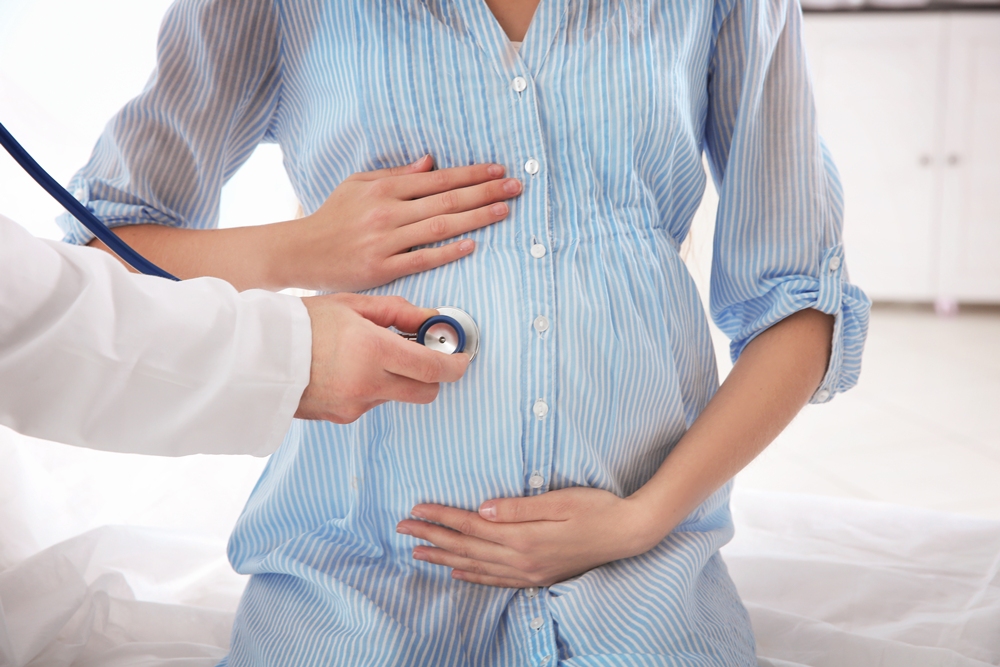
Women entering pregnancy with multiple conditions face a 20 per cent higher miscarriage risk and around four times the risk of anxiety and depression, new research has revealed.
The observational study found women with two or more pre-existing long-term physical or mental health conditions also had a 69 per cent higher risk of severe nausea and vomiting.
They had more than double the risk of venous thromboembolism, when a blood clot forms inside a vein, and a 42 per cent higher risk of pre-eclampsia, a pregnancy complication involving high blood pressure.
Dr Steven Wambua, research fellow in health data science at King’s College London and joint first author, said: “Maternity care is still largely organised around single health conditions, but one in five women now enters pregnancy with two or more.
“By harmonising five datasets covering all four UK nations, we could show consistently and across a much broader range of outcomes than before, that these women face higher risks and that risk climbs with every additional condition.”
Researchers from King’s College London, Queen’s University Belfast, Bristol NHS Foundation Trust, the University of Birmingham, Swansea University and the University of St Andrews analysed more than 2.2m pregnancies and birth events recorded between 2000 and 2022.
The data came from five datasets covering England, Scotland, Wales and Northern Ireland.
Around one in five pregnant women in the UK live with multiple long-term conditions, but their combined impact on pregnancy is poorly understood.
The study found risks rose with each additional condition. Women with three or more conditions had more than three-and-a-half times the risk of venous thromboembolism compared with women without long-term health conditions.
Women with multiple conditions also had a 32 per cent higher risk of placental abruption, when the placenta separates from the womb before birth, and a 26 per cent higher risk of gestational diabetes.
The researchers said maternity care pathways vary considerably and, where they exist, are often organised around individual conditions.
They said the findings highlight a need to restructure these pathways to address the complex needs of women living with multiple conditions.
Professor Krishnarajah Nirantharakumar, clinical professor of public health and health data science at King’s College London, MuM-PreDiCT principal investigator and joint senior author, said: “These findings make a strong case for recognising multiple long-term conditions as a marker of antenatal risk in its own right.
“That means identifying these women at maternity booking, assessing physical and mental health needs together, and joining up obstetric, primary care and mental health services around them.
“The near four-fold risk of antenatal anxiety and depression is particularly striking, and points to perinatal mental health support as an urgent priority.
Dr Kelly-Ann Eastwood of Bristol NHS Foundation Trust and Queen’s University Belfast, joint senior author, added: “Our results help define the urgent clinical challenges facing both women entering pregnancy with multiple long-term conditions, and clinicians caring for them across the UK.
“Supporting recommendations from recent national maternity and neonatal investigation reports, there is a critical need to address healthcare inequalities, and improve support for women with pre-existing mental health conditions.
“These findings highlight the pressing need to restructure existing maternity services to improve antenatal outcomes.
The authors cautioned that, because the study used routinely collected health records, some conditions and outcomes may have been under-recorded or recorded inconsistently.
Further work by the MuM-PReDiCT consortium will examine birth and child outcomes and identify which combinations of long-term conditions carry the greatest risk.










 News2 weeks ago
UK femtech investment surges 194% in a decade, research finds

 Entrepreneur2 weeks ago
TidalSense raises £14m to expand five-minute COPD test across NHS

 Entrepreneur2 weeks ago
Cross-Border Impact Ventures raises US$58m for women and children’s health
 Entrepreneur1 week ago
Applications close August 18 for Women’s Health Innovation Summit 2026 Innovation Showcase

 News2 weeks ago
Cultural stigma is a barrier to menopause help, black women say

 Menopause1 week ago
Third of women unaware of perimenopause mental health impact

 Hormonal health2 weeks ago
Menstrual data is missing a critical layer: The mind
 Entrepreneur1 week ago
Women’s Health Week Europe 2026 releases fully populated agenda ahead of October summit
1 Comment