




News
Society steps up push for menopause-friendly workplaces


Despite positive changes in recent years, more menopause-friendly workplaces are needed, says the US-based Menopause Society, which has launched a new scheme to address the issue.
The 35-year-old nonprofit has created Making Menopause Work, a programme which includes an employer guide, an assessment, planning tools, and other resources, with an “employer designation programme” to come.
It incorporates recommendations based on new scientific consensus recommendations from a multidisciplinary panel of leading medical, legal, and human resource experts.
“More employers—from large corporations to small organisations—are supporting workers during menopause,” Dr. Stephanie Faubion, medical director of The Menopause Society and director of the Mayo Clinic Center for Women’s Health, said this week at The Menopause Society’s Annual Meeting in Chicago.
“But more menopause-supportive workplaces are urgently needed,” Faubion continued. “Women ages 50 and older are the fastest-growing demographic group, making essential contributions to society, families, communities, and the paid and unpaid workforces. This is a moment of tremendous opportunity.”
“Employers need to take menopause symptoms seriously and also know that they’re manageable and temporary,” said Jill Bigler, labour attorney at Epstein Becker Green and a member of the society’s advisory panel.
“Making Menopause Work is a smart, strategic move for employers. It safeguards workers’ opportunities for leadership and financial security. It retains workers and productivity. And it builds a multigenerational workplace where midlife employees hold institutional knowledge, bring calm under stress, and make wise decisions.”
The society’s “Consensus Recommendations” cite a survey by the Society for Women’s Health Research showing that two out of five people had considered looking for or had found a new job because of menopause symptoms. Not only do employers risk losing talent and revenues when they ignore menopause, they also face greater costs for healthcare as well as the cost of replacing and training workers.
Creating a supportive workplace culture is the first step in turning these numbers around, the society says. The employer guide supports employers, managers, and supervisors to do this, including opening conversations for those who want it, understanding how to hear and support people’s needs, and recognising menopause as a normal part of life for half the population.
It helps employers update policies, benefits, and environments, including offering:
- Health insurance plans that include adequate and affordable coverage for menopause-related care
- Access to adequate bathrooms and flexible breaks to use them—vital for people with heavy or unpredictable bleeding
- Improved ventilation and updated uniforms with breathable, flexible fabrics—a game changer for people experiencing hot flashes
- Quiet work environments and flexible deadlines, which improve focus for people experiencing insomnia, anxiety, or brain fog
- Peer support networks, employee resource groups and employee assistance programs, which can help people know they’re not going through menopause alone,



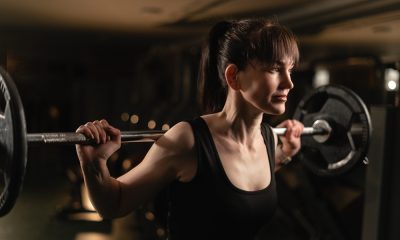











Menopausal women using hormone therapy reported healthier diet, exercise and sleep habits than non-users in a study of more than 10,000 women.
The menopause transition is associated with a higher risk of chronic health conditions and symptoms including hot flushes and problems affecting the urinary and genital systems.
Hormone therapy is often used to manage these symptoms, but it remains unclear whether it affects health outcomes directly or indirectly through changes in health behaviours.

Previous research has produced mixed results, with some studies suggesting that postmenopausal women pay greater attention to maintaining a healthy lifestyle.
The cross-sectional analysis examined whether menopause status and hormone therapy use were linked to diet, physical activity and sleep duration.
A cross-sectional study assesses participants at one point in time. It can identify associations but cannot establish whether one factor directly caused another.
Diet, exercise and sleep are described as modifiable health behaviours because people may be able to change them to improve their health.
The researchers found that postmenopausal women who had never used hormone therapy reported eating less fruit and vegetables.
Women who had never used the treatment were also 19 per cent less likely to meet guidelines for muscle-strengthening activity.
Sleep duration was shorter among postmenopausal women who had never used hormone therapy.
Compared with premenopausal and perimenopausal women, the likelihood of meeting sleep guidelines was 14 per cent lower among never-users, 26 per cent lower among current users and 24 per cent lower among past users.
Perimenopause is the transitional period before menopause, when hormone levels and menstrual periods can change.
Researchers said these findings may be linked to higher levels of follicle-stimulating hormone among postmenopausal women who do not use hormone therapy.
They may also relate to lower levels of oestradiol, a form of oestrogen, which have previously been associated with poorer sleep.
Hot flushes and urogenital symptoms can also disrupt sleep, although hormone therapy may ease these symptoms.
Dr Stephanie Faubion, medical director for The Menopause Society, said: “This large observational study underscores that women who use hormone therapy tend to adopt overall healthier lifestyles.
“Although this association may partly reflect better symptom control enabling healthier behaviours, healthy-user bias is likely a significant contributor.
“Women who choose to use hormone therapy are often more proactive in their healthcare and may systematically differ from nonusers in socioeconomic resources, access to care, and health literacy.
“This largely explains why early observational studies of hormone therapy suggested cardiovascular benefits that were not confirmed in subsequent randomised, controlled trials.”


Women who do strength training may have a lower risk of major cardiovascular disease, particularly alongside aerobic activity, a study suggests.
Cardiovascular disease is the leading cause of death worldwide. Aerobic activities such as brisk walking, jogging, cycling and swimming are already established ways to help reduce the risk.
Strength or resistance training, also known as RT, is less established as a prevention strategy. It makes muscles work against a force and can involve body weight, free weights, resistance bands or machines.

Current US guidelines recommend at least two days of strength training and 150 minutes of moderate-to-vigorous aerobic activity each week.
They also recommend limiting sedentary behaviour, including prolonged television viewing, which is considered an independent risk factor for cardiovascular disease.
Dr Tianyue Zhang, lead study author and scientist in the department of nutrition at the Harvard T.H. Chan School of Public Health, said: “Despite its established health benefits, RT is often overlooked as a prevention strategy for CVD, and its impact on CVD risk, especially in middle-aged and older women, remains understudied.
“A key question is, how much does it add beyond aerobic activity alone?”
Researchers analysed data from 117,025 women participating in the Nurses’ Health Study and Nurses’ Health Study II.
The two groups had average starting ages of 66.8 and 48.1 years respectively.
The women reported their resistance training every four years, with exercises involving the arms and legs recorded separately.
Time spent watching television was used as the main measure of sedentary behaviour.
The researchers examined exercise and television-viewing habits alongside the incidence of major cardiovascular disease.
Major cardiovascular events included fatal or non-fatal heart attacks, strokes, coronary artery bypass surgery and percutaneous coronary intervention.
Coronary artery bypass surgery redirects blood around narrowed or blocked heart arteries. Percutaneous coronary intervention uses a small balloon, often followed by a stent, to open a narrowed artery.
Higher levels of strength training were associated with a lower risk of major cardiovascular disease, particularly heart attacks.
No statistically significant link with stroke was found when resistance exercise was considered separately.
Women completing at least two hours of strength training a week had a 20 per cent lower risk of major cardiovascular disease and a 44 per cent lower risk of heart attack than those doing none.
Each additional hour a week was associated with a five per cent lower risk of major cardiovascular disease and a 14 per cent lower risk of heart attack.
The associations weakened somewhat after researchers accounted for body mass index and conditions including diabetes, high blood pressure and high cholesterol, but remained clear.
Body mass index, or BMI, compares weight with height and is commonly used to assess whether someone is within a healthy weight range.
Strength training was also linked to additional benefits among women who did aerobic activity.
Women completing at least two hours of strength training and 150 minutes of aerobic activity each week had a 45 per cent lower risk of heart attack than those reporting no physical activity.
Women who met recommendations for strength training, aerobic activity and reduced television viewing had the lowest risks of major cardiovascular disease, heart attack and stroke compared with those who met some or none of the recommendations.
Zhang said: “These findings suggest that, within an already active population, RT is associated with additional reductions in CVD risk above and beyond overall aerobic activity.
“Alongside aerobic activity and reductions in sedentary behaviour, RT may be an important component of public health strategies for cardiovascular prevention in women.”
The study relied on participants reporting their own resistance training, meaning the data may not always have been precise.
Researchers also noted the possible influence of unmeasured factors and the limited diversity of participants.
They were unable to fully separate the effects of the type of resistance training performed from the overall amount completed.
Dr Harlan M. Krumholz, professor at Yale School of Medicine, said: “We have long encouraged resistance training, and this study provides strong evidence to reinforce that message.
“It should be included in a well-rounded health routine to support function and longevity.”

Women who develop pre-eclampsia face a higher risk of chronic kidney disease and high blood pressure later in life, new research suggests.
The amount of protein found in the urine during pregnancy may help identify those at greatest risk of developing long-term health problems.

Pre-eclampsia usually involves high blood pressure and increased protein in the urine. Some women also experience severe headaches and changes to their vision.
The condition cannot be treated during pregnancy and, in some cases, labour must be induced early to protect both the woman and baby.
The study found that the condition may be linked to longer-term health problems.
Anne Høy Seemann Vestergaard, a medical doctor and PhD at the department of clinical medicine at Aarhus University, said: “What we can see is a clear association between pre-eclampsia and the development of high blood pressure, chronic kidney disease and cardiovascular disease later in life.”
The researchers found that the amount of protein passed in the urine during pregnancy was linked to the risk of developing chronic conditions after giving birth.
Protein in the urine can indicate that the kidneys are not filtering blood normally.
Vestergaard said: “The most surprising finding was how clearly the amount of protein in the urine during pre-eclampsia was linked to the risk of later high blood pressure and chronic kidney disease. Women with moderate to severe protein excretion had a higher risk of both conditions compared with women with low or no protein excretion.”
Among women with pre-eclampsia and moderate to severe levels of protein in the urine, around one in 20 developed chronic kidney disease within 10 years and around one in six developed high blood pressure.
Most women in the study did not develop long-term complications, but the researchers said the increased risk should still be taken seriously because the potential effects can be severe.
Vestergaard said: “At first glance, this may sound like a low number, but it represents a markedly increased risk when the groups are compared. In the group with pre-eclampsia and high levels of protein in the urine, around 1 in 20 women developed chronic kidney disease within ten years, including early stages of the disease, compared with around 1 in 100 in the group with lower or no protein excretion.”
She added: “That is a considerable number in light of the fact that chronic kidney disease is a potentially serious condition that can progress to kidney failure if isn’t diagnosed early.”
The findings suggest women who experience pre-eclampsia may benefit from more systematic monitoring after pregnancy.
Vestergaard said: “Our study suggests that these women may benefit from monitoring of blood pressure and kidney function after pregnancy.”











 Menopause4 weeks ago
Perimenopause misinformation ‘putting women at risk’

 Entrepreneur3 weeks ago
Women’s Health Innovation Summit opens submissions for 2026 Innovation Showcase

 Insight2 weeks ago
British women among angriest in Europe, health survey reveals

 News3 weeks ago
Women still being failed when they reach menopause, experts say

 Hormonal health3 weeks ago
Sweden eyes domestic production of oestrogen patches amid menopause treatment shortage

 News3 weeks ago
Three menopause innovators shortlisted for Femtech World Award

 News1 week ago
Femtech World Awards 2026: Winners revealed

 Hormonal health2 weeks ago
Apple Health adds menopause and perimenopause tracking
2 Comments