




Pregnancy
London Pregnancy Clinic expands to Chelsea


London Pregnancy Clinic has officially expanded its expert services to West London with the opening of a new location in Chelsea.
This new clinic will allow the team to see more patients and continue their commitment to offering high-quality care.
This expansion was driven by the increasing demand for high-quality prenatal care in West London, providing expectant mothers with greater convenience and access to advanced diagnostic services closer to home.
This marks a significant milestone in the clinic’s mission to provide expectant mothers with accessible, high-quality pregnancy care.
Miss Jess McMicking, founder of Westminster Women’s Clinic, said: “Very much looking forward to having London Pregnancy Clinic and their exceptional team in our surrounds, and most importantly, their expertise for our patients and the wider West London community.”
The clinic is located within the esteemed Westminster Women’s Clinic (WWC), a centre known for its excellence in women’s health.
This collaboration ensures that London Pregnancy Clinic can offer its renowned early pregnancy scans, viability scans, and advanced Non-Invasive Prenatal Testing (NIPT) in a cutting-edge and welcoming environment.
Dr. Fred Ushakov, Medical Director of London Pregnancy Clinic, said: “Opening our Chelsea clinic is a fantastic step forward in making expert prenatal care more accessible to expectant mothers in West London.
“We are thrilled to bring the best NIPT options in London, ensuring that families have access to the most advanced screening technologies in a supportive environment.”
Comprehensive Services for Expectant Mothers
London Pregnancy Clinic West offers a wide range of specialist services designed to support women through early pregnancy.
Key offerings include:
Early Pregnancy Scans – Providing reassurance and vital information during the crucial first trimester, including the 10-week scan.
This scan helps assess fetal development, confirm the number of fetuses, and detect potential abnormalities early in pregnancy. It also provides reassurance to expectant parents and helps determine if further testing, such as Non-Invasive Prenatal Testing (NIPT), may be necessary.
Viability and Dating Scans – Confirming pregnancy progression and establishing accurate due dates.
Advanced Non-Invasive Prenatal Testing (NIPT) – Including PrenatalSafe and the SMART Test, offering early detection of chromosomal abnormalities such as Down syndrome.
Utilising state-of-the-art ultrasound technology and supported by a team of experienced specialists in Obstetrics and Gynaecology, the clinic ensures accurate diagnostics in a calm, professional setting.
Why This Expansion is a Game Changer for West London
With the opening of its Chelsea location, London Pregnancy Clinic makes expert prenatal care more accessible to expectant mothers in Chelsea, Fulham, Kensington, Knightsbridge, and surrounding areas.
This new clinic offers a tranquil and private setting, ensuring a comfortable experience for patients.
Located within the prestigious Westminster Women’s Clinic, it provides access to some of the most advanced ultrasound technology and prenatal screening options in the UK, making it a top choice for those seeking comprehensive pregnancy care.
By bringing its trusted services to this new location, the clinic ensures that more women can benefit from personalised, high-quality care without having to travel across the city.
Meet the West London Team
Our dedicated team in Chelsea has been carefully selected to provide expert prenatal care tailored to the needs of expectant mothers in West London.
Each specialist brings a wealth of experience in fetal medicine, obstetric ultrasound, and maternal-fetal health, ensuring that every patient receives the highest standard of care.
London Pregnancy Clinic is proud to introduce the expert team at its Chelsea location:
Dr. Fred Ushakov – Medical Director, Specialist in Fetal Medicine & Obstetric Ultrasound. With decades of experience in fetal medicine, Dr. Ushakov is internationally recognised for his expertise in advanced ultrasound techniques and early detection of fetal abnormalities.
Dr. Spyros Bakalis – Consultant in Obstetrics and Maternal-Fetal Medicine in West London. Dr. Bakalis brings a wealth of experience in high-risk pregnancies and fetal assessments, ensuring expectant mothers receive comprehensive and personalised care.
Ms. Shaz Khojasteh – Specialist Sonographer in Fetal Medicine, Gynaecology & Fertility. Ms. Khojasteh has extensive experience in obstetric and gynaecological ultrasound, supporting patients through every stage of pregnancy and fertility planning.
Ms. Karin Meeds – Specialist Sonographer in Obstetrics, Gynaecology & Fertility. Known for her patient-centred approach, Ms. Meeds provides expert diagnostic imaging and ensures that every scan is conducted with precision and care.
Saskia Hicks – Experienced Midwife. Saskia plays a crucial role in guiding and supporting expectant mothers through their pregnancy journey, offering reassurance and expert advice tailored to individual needs through Pouch Health, a digital health companion designed to provide expectant mothers with essential pregnancy information, support, and resources throughout their journey.
A New Era of Pregnancy Care in West London
The launch of London Pregnancy Clinic’s Chelsea location marks a significant step forward in making expert prenatal care more widely available.
With its combination of top-tier medical expertise, cutting-edge technology, and patient-centred approach, the clinic continues to set the standard for pregnancy care in London.
Expectant mothers looking for trusted, professional pregnancy support can now book appointments at the Chelsea location.
To celebrate the opening, London Pregnancy Clinic is offering exclusive early pregnancy scan packages and priority bookings for NIPT screenings, ensuring that West London families receive unparalleled care from day one.
Learn more about London Pregnancy Clinic at londonpregnancy.com













A preeclampsia study has found unusual cell activity in mothers and babies that could reveal new targets for treatment.
The condition affects 2 to 4 per cent of pregnancies worldwide and is a leading cause of maternal and foetal mortality.
There is currently no cure, and severe cases can put both the mother and baby at risk.

Scientists from UCL and University College London Hospitals found that stressed placental cells, poorly functioning blood vessels and an overactive immune response all contribute to the condition.
Preeclampsia causes high blood pressure during pregnancy. It can affect blood flow to the baby and cause symptoms such as swelling, headaches, blurred vision and pain under the ribs.
Without treatment, it can damage the mother’s health, slow the baby’s growth and, in severe cases, become life-threatening.
Previous research has focused only on the placenta, the organ that develops during pregnancy to support the baby’s growth, rather than the tissues around it.
The researchers said the findings could reveal new therapeutic targets, which are biological processes that future treatments could be designed to alter.
Senior author professor Sara Hillman, of the UCL EGA Institute for Women’s Health, said: “We studied individual cells from both the mother and the baby to see how their activity changes in healthy pregnancies compared with preeclampsia.
“This helped us to confirm some changes already suspected in the condition and also discover new ones.”
The team studied 20 pregnant women recruited at UCLH, including 10 with severe preeclampsia and 10 without the condition.
They used genomic testing to examine individual cells in the placenta and other tissues where cells from the developing baby and mother come into contact.
Genomic testing examines genetic information to help researchers understand how cells behave and the roles they may play.
The other tissues studied were the myometrium, the muscular layer of the womb, and the chorioamniotic membranes, which surround the baby during pregnancy.
The team compared cells from healthy pregnancies and those affected by preeclampsia at different gestational ages, meaning different stages of pregnancy.
They used technology that can read the genetic information of thousands of individual cells at the same time, allowing them to see what each cell was doing and where it was located in the tissue.
In preeclamptic pregnancies where babies were born prematurely, before 37 weeks, during the third trimester, placental cells showed signs of stress and low oxygen levels.
The cells also did not use energy in the normal way.
Some cells responsible for reshaping the mother’s blood vessels were not working properly, the researchers found, which may affect blood flow to the baby.
There were also signs of an overactive immune response in the placenta, nearby tissues and the mother’s blood.
The researchers said this response, together with other stress molecules released by the placenta, helps explain why preeclampsia affects the whole body and can become serious.
They hope the findings will help researchers find treatments for the condition and potentially save lives.
Co-lead author Dr Yara Sanchez Corrales, of the UCL Great Ormond Street Institute of Child Health, said: “These findings point to specific biological processes that could be targeted with treatments. Acting early in pregnancy, especially in more severe early-onset cases, could help improve outcomes and reduce the high risks associated with severe preeclampsia.
“We hope that our findings may set us on the path to reducing premature births and fatalities associated with preeclampsia.”
Co-lead author Mr Theodoros Xenakis, of the UCL Great Ormond Street Institute of Child Health, said: “Future studies may provide an even clearer picture of the biological changes linked to the disease by including more participants and using even more precise methods.”

Pregnancy complications may increase women’s risk of peripheral artery disease later in life, new research suggests.
The study analysed data from more than two million women in Sweden who gave birth to single babies between 1973 and 2015.
Led by Casey Crump, the research examined the long-term risk of peripheral artery disease among women who experienced preterm delivery, pre-eclampsia, gestational diabetes or other adverse pregnancy outcomes.
Crump, professor in the department of family and community medicine at McGovern Medical School at UTHealth Houston, said: “Our prior work has already shown that adverse pregnancy outcomes are associated with long-term risks of heart disease, stroke, and heart failure.
“This study builds on that work by showing that these women have an increased risk of peripheral artery disease, an important but understudied cardiovascular condition.”
Peripheral artery disease is often a precursor to long-term cardiovascular complications, including stroke, ischaemic heart disease and premature death.
The condition affects millions of people worldwide and occurs when narrowed arteries reduce blood flow, most commonly to the legs and feet.
Ischaemic heart disease occurs when the heart does not receive enough blood and oxygen, usually because the arteries have narrowed.
Symptoms of peripheral artery disease can include leg pain, cramps while walking, numbness, cold feet and sores on the feet or legs that are slow to heal.
Crump said women who experience pregnancy complications have an important opportunity after giving birth to make plans with their primary care doctor to monitor long-term risks.
Women who have experienced complicated pregnancies should speak with their doctor about possible future cardiovascular health risks.
Checks for blood pressure, diabetes and cholesterol are important.
While the period after childbirth is an important time for women to monitor their health, Crump said it is never too late to lower the risk of peripheral artery disease.
He said: “Women with a history of adverse pregnancy outcomes who seem to be doing well may still have a higher risk that can emerge later in life.”
Crump also suggested preventive steps such as avoiding smoking, maintaining a healthy weight and following a healthy lifestyle.
He stressed the importance of long-term follow-up care and conversations with healthcare providers to help protect cardiovascular health later in life.
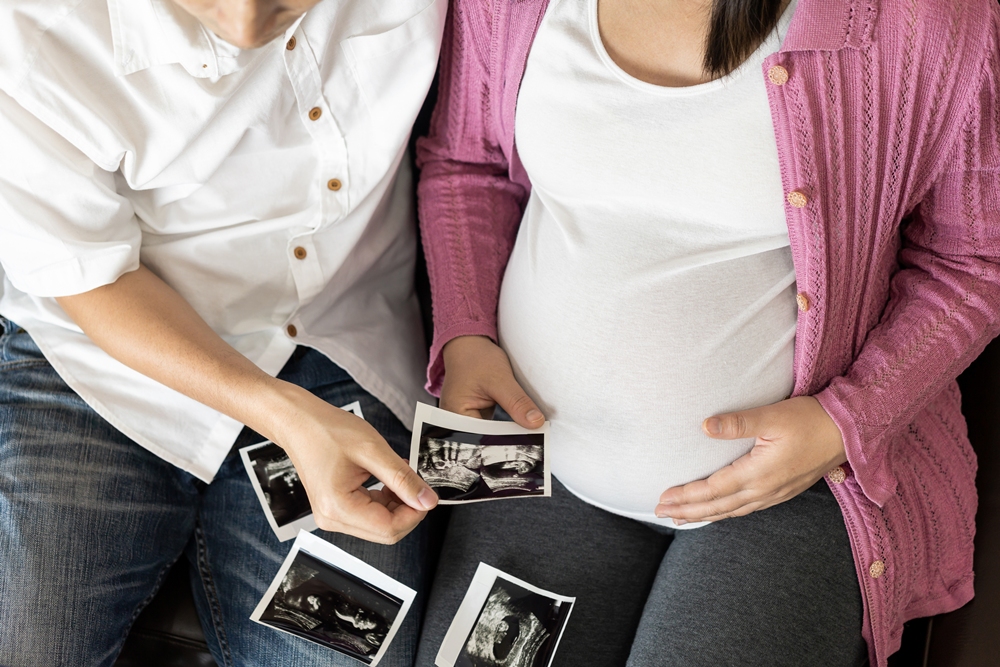
A high-powered ultrasound treatment could help identical twins affected by a rare and serious condition during early pregnancy, an initial study suggests.
Twin-to-twin transfusion syndrome, or TTTS, causes uneven blood flow between identical twins who share a placenta.
The imbalance can leave one baby dangerously small and the other too large, putting both babies’ survival at risk.

Brioney Garrett’s daughters were in danger before doctors used the world-first treatment to seal the blood vessels causing the problem without an operation.
Nancy and Margo were born healthy and, now aged four, are due to start school.
Researchers from Queen Charlotte’s and Chelsea Hospital tested the non-invasive procedure in 10 women from the UK and elsewhere in Europe after scans detected TTTS during early pregnancy.
Five women needed further treatment, while 12 of the 20 babies survived following the procedure.
The researchers described having a treatment that did not require a needle or telescope to be inserted into the mother’s abdomen as “extremely exciting”.
However, they said larger studies involving more pregnant women were needed before the procedure could be offered more widely.
Garrett described her daughters as “my miracle twins”.
She said: “We were in a very dire situation and I don’t forget that.
“It stays with me always how things could have been. Every day I still count my blessings.”
TTTS affects between 10 and 15 per cent of identical twins who share a placenta, representing around 300 to 400 pregnancies in the UK each year.
The uneven blood flow causes excess fluid to build up around the larger recipient baby, while leaving dangerously little fluid around the smaller donor baby.
Treatment usually involves inserting a needle into the womb to drain some of the fluid or using a laser to seal the connecting blood vessels.
Garrett’s procedure took about 20 minutes. She lay flat while a specially designed machine directed high-powered ultrasound waves at small blood vessels in her placenta.
She said: “It was very quick and pretty painless.”
Christoph Lees, head of fetal medicine at Imperial College Healthcare NHS Trust and professor of obstetrics at Imperial College London, described the research as “very promising”.
He said: “If this could work in a fully-fledged study, it could give hope to a lot of women who otherwise might have to have quite invasive treatment.”
Ultrasound is commonly used during medical scans to produce images of the body, but this procedure uses much more focused waves.
Heat generated by the waves can seal blood vessels about 2mm in diameter and located around 5cm to 6cm beneath the skin.
The procedure blocked blood flow in 90 per cent of the vessels treated during the study, with no unwanted side-effects reported.
Twins Trust, which supported the study, said the approach could make a significant difference for families affected by TTTS.
Helen Peck, head of healthcare engagement and research, said: “Any procedure that is non-invasive and can potentially identify TTTS earlier and improve outcomes for our families with this life-threatening condition could be a turning point.”
Scans carried out weeks after Garrett’s procedure showed that blood flow between the babies had been rebalanced, although other problems developed during the pregnancy.
Garrett said Margo, who had too little fluid around her, “was in a much better position” and that “the strain on Nancy’s heart had eased”.
Nancy and Margo were born at nearly 34 weeks, weighing 3lb 7oz and 3lb 3oz respectively.
Garrett said: “They were both healthy, and Margo wasn’t as small as we worried she was going to be.”
The twins are due to start primary school in September.
Garrett said: “They’re funny, smart, energetic little girls that just fit right in with their age group.”








 News2 weeks ago
New menopause drug approved for use by NHS in Scotland

 Hormonal health2 weeks ago
Stardust period tracker shares health data, study reveals

 Entrepreneur1 week ago
Zero Candida market set to reach over US$2 billion by 2030 – report

 Entrepreneur2 weeks ago
Women’s health draws record $1.55bn in equity as capital spreads beyond the mega-rounds

 Entrepreneur2 weeks ago
Onto Health acquires diagnostics software company Levy Health

 News2 weeks ago
Congress urged to invest over $20bn to close women’s health gap

 Mental health1 week ago
Nearly 60% of young women get health advice from influencers, research finds

 Insight5 days ago
From Hologic to Ark Surgical: Why Joseph LaBruzzo is betting on the future of women’s surgical innovation