



Ageing
‘Rejuvenated’ eggs raise hopes for improved IVF outcomes

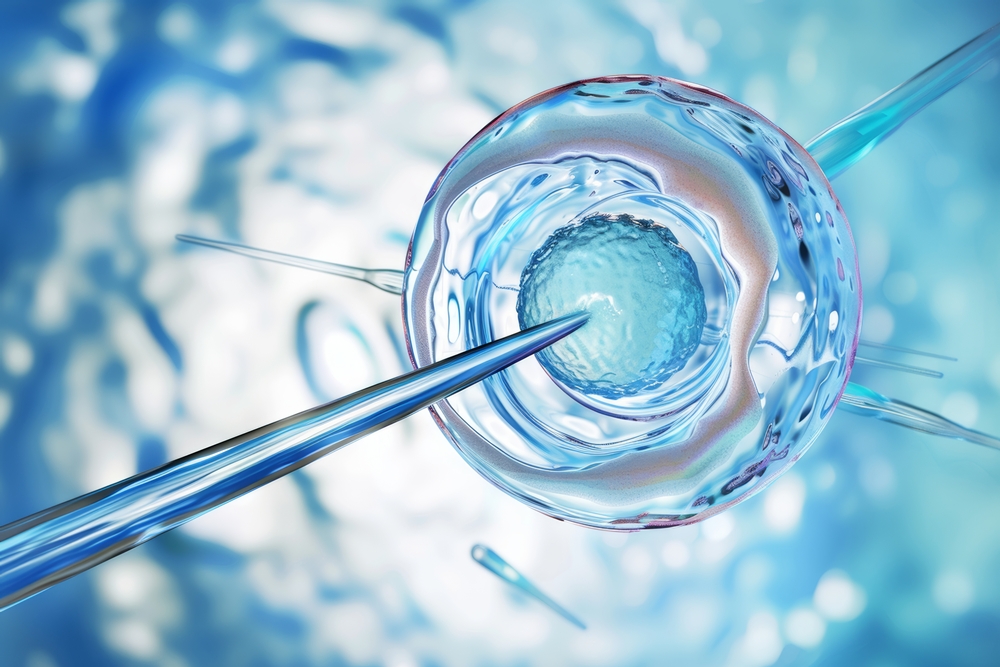
Scientists say they have ‘rejuvenated’ human eggs, in work that could improve IVF success rates for older women.
The team reports that an age-related defect causing genetic errors in embryos may be reversed by supplementing eggs with a key protein.
In eggs donated by fertility patients, microinjection of the protein cut the share showing the defect from 53 per cent to 29 per cent.

The findings were presented at the British Fertility Conference in Edinburgh by researchers from the Max Planck Institute for Multidisciplinary Sciences in Göttingen.
The technique is being commercialised by Ovo Labs, co-founded by professor Melina Schuh, who led the research.
The approach targets problems in meiosis, the process where eggs halve their genetic material before fertilisation.
In older eggs, chromosome pairs can loosen and separate too soon, leading to embryos with too many or too few chromosomes, known as aneuploidy.
The researchers found levels of a protein called Shugoshin 1, which helps hold chromosome pairs together, decline with age. Microinjections appeared to restore this “molecular glue” and reduce errors.
Professor Schuh said: “Overall we can nearly halve the number of eggs with [abnormal] chromosomes. That’s a very prominent improvement.
“Most women in their early 40s do have eggs, but nearly all of the eggs have incorrect chromosome numbers. This was the motivation for wanting to address this problem.
“What is really beautiful is that we identified a single protein that, with age, goes down, returned it to young levels and it has a big effect.
We are just restoring the younger situation again with this approach.
Declining egg quality is a major reason IVF success rates fall steeply with age.
UK figures show an average birth rate of 35 per cent per embryo transferred for patients under 35, dropping to 5 per cent for women aged 43 to 44.
Dr Agata Zielinska, co-founder and co-chief executive of Ovo Labs, said: “Currently, when it comes to female factor infertility, the only solution that’s available to most patients is trying IVF multiple times so that, cumulatively, your likelihood of success increases.
“What we envision is that many more women would be able to conceive within a single IVF cycle.”
The approach would not extend fertility beyond menopause.
The team is in talks with regulators about a clinical trial.
Dr Güneş Taylor, of the University of Edinburgh, who was not involved, said: “This is really important work because we need approaches that work for older eggs because that’s the point at which most women appear.
“If there’s a one-shot injection that substantially increases the number of eggs with properly organised chromosomes, that gives you a better starting point.”






Women with high psychosocial stress show early heart changes linked to cardiovascular disease, with no similar association in men, a recent study has found.
The findings support sex-specific effects of stress on cardiovascular health and suggest that risk assessment should include psychosocial factors and mental wellbeing.

Judy Luu is assistant professor at the Division of Clinical and Translational Research at McGill Faculty of Medicine.
She said: “From an epidemiological point of view, we have known for about two decades that stress is an important risk factor in cardiovascular health for people born female.
“But with this research stream, we’re really aiming to understand how stress physiologically impacts the heart.”
Cardiac MRI measures T1 and T2 in heart muscle, signals related to tissue composition and water; higher values can indicate early disease.
The study, conducted by researchers from McGill and Concordia universities in Canada, examined MRI heart scans of 219 adults aged 43 to 65, about half of whom were female.
The scans assessed T1 and T2 markers linked to early cardiac disease.
Participants were divided into two groups: those with at least one cardiovascular risk factor (such as diabetes, hypertension or smoking) but no heart disease, and healthy controls.
In both groups, women reporting high psychosocial stress had significantly higher T1 values than low-stress women.
T2 was also higher in the at-risk group only. No significant differences were seen between high- and low-stress men.
She added that the sex differences observed are not only a social question, but also a biological question.
Luu said: “Research points to the fact that there are biological differences in the way females physically handle stress.”
The next phase of the research will focus on blood markers and other biological explanations, such as hormones.
The team hopes the work can lead to better interventions to advance women’s heart health.










-

 Insight4 weeks ago
Cannabis compounds kill ovarian cancer without harming healthy cells, research finds
-

 Mental health4 weeks ago
Meta removes dozens of abortion advice and queer advocacy accounts
-

 Insight4 days ago
2025: The year IVF innovation went from lab to life
-

 News3 weeks ago
Can biotech help close the fertility gap? Inside the race to improve egg quality
-

 Features4 weeks ago
University of Leeds IVF spinout raises £3.5m
-

 Insight3 weeks ago
AI-driven digital tool delivers sustained blood pressure reductions, study finds
-

 Insight4 weeks ago
Menopausal hormone therapy may not increase breast cancer risk in women with BRCA mutations
-

 News3 weeks ago
AHA invests in AI aimed at cardiology’s gender bias problem