Connect with us

Pregnancy

Crisis pregnancy centres warned off ectopic scans
Published

on

A lawsuit settlement in Massachusetts over alleged medical harm at a crisis pregnancy centre is prompting new legal guidance for faith-based clinics across the US.

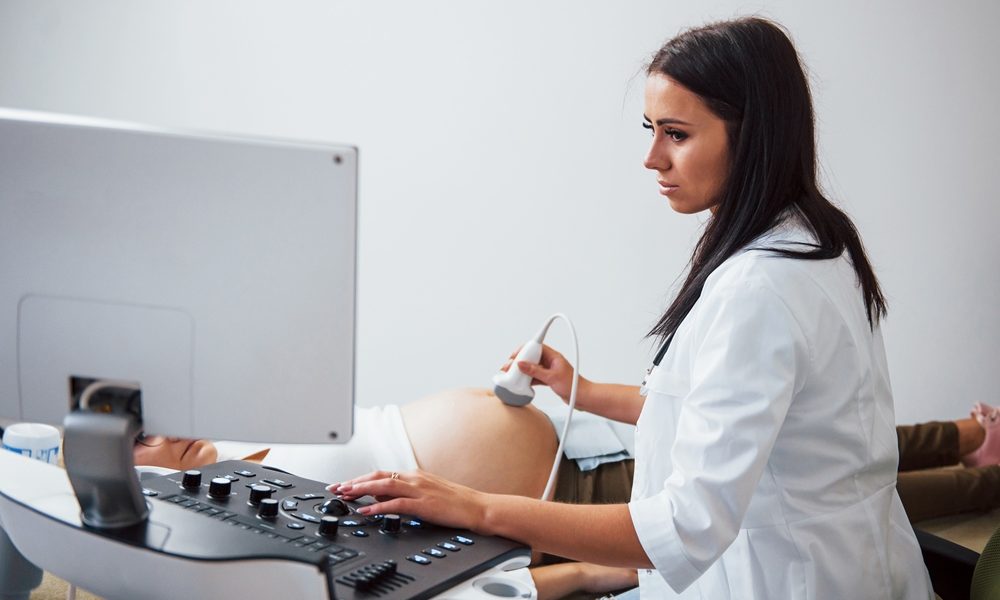
Crisis pregnancy centres are now being advised not to perform ultrasounds on women with suspected ectopic pregnancies – a potentially life-threatening condition where an embryo implants outside the womb – and instead refer them to emergency care.

The advice was shared during a panel discussion hosted by the National Institute of Family and Life Advocates (NIFLA), a group that provides legal and medical support to crisis pregnancy centres.

Lawyers urged centres to avoid scanning women reporting symptoms.

One lawyer said during the recorded session: “Just as I’m walking down here I had a call from a centre.

“They had a woman come in who was cramping, and she said on a scale of 1 to 10, it was just below a 6. And I’m like, yikes, like, I wouldn’t scan her.”

The lawyer said the appropriate response in such cases is to send the client directly to the emergency department.

NIFLA has previously issued similar guidance.

A 2018 document states that “if a patient has symptoms of an ectopic pregnancy or miscarriage, she will not be offered an ultrasound exam and is advised, verbally and in writing, to immediately obtain medical care.”

Although NIFLA did not represent Clearway Clinic in the Massachusetts case, the centre was listed as a NIFLA member in 2023.

NIFLA has previously represented crisis pregnancy centres in high-profile cases, including a 2018 US Supreme Court case in California that resulted in a First Amendment ruling in their favour.

Crisis pregnancy centres are religiously affiliated organisations that provide free pregnancy tests and ultrasounds, typically with the aim of discouraging abortion, according to the American College of Obstetricians and Gynaecologists.

They have been criticised for presenting themselves as comprehensive reproductive health clinics while following an ideological rather than clinical model of care, according to a paper in the American Medical Association Journal of Ethics.

During the NIFLA panel, lawyers and a participating doctor advised against scanning women with symptoms of possible ectopic pregnancy, particularly in cases involving low levels of human chorionic gonadotropin (HCG) – a hormone produced by the placenta in early pregnancy.

Low or slowly rising HCG levels may indicate miscarriage or ectopic pregnancy.

The doctor said: “I’m not scanning. If you’ve got a level that’s low like that, it could be early pregnancy, but that is one of the cardinal signs of ectopic and one of the cardinal signs of miscarriage, slowly rising HCG.

“Please do not. She’s already got a provider. Dump it back on them.”

“She should be going back to her provider,” a legal representative added.

Andrea Swartzendruber, a researcher who studies crisis pregnancy centres, described the advice as a significant shift.

She said: “That seems like a very marked change, especially given that so many CPCs are using fear around ectopic pregnancy as a reason to come in and get scanned.”

The panel also addressed privacy concerns.

While many centres claim to be “HIPAA-compliant”, they are not legally bound by the US Health Insurance Portability and Accountability Act (HIPAA), which applies only to specific healthcare entities.

One lawyer said: “There’s this movement not to say HIPAA, and I just finally got everybody to spell it right. So I’m kind of upset.

“We want you to abide by those policies, but don’t advertise yourself as HIPAA-compliant.”

Debra Rosen, executive director of Reproductive Health and Freedom Watch, said this approach can be misleading.

Rosen said: “Unregulated pregnancy clinics masquerade as medical facilities, are not covered entities under HIPAA, and for decades have vigorously pushed back against even the most basic forms of accountability.

“Women nationwide face real harms as these fringe clinics trap them between illusions of confidentiality and the actual legal protections they receive.

“This dangerous gap demands legislative action.”

Pregnancy

£50m initiative aims to tackle disparities in maternal healthcare

Published

on

A £50m maternity consortium will bring together UK clinicians, researchers and communities to tackle the most critical gaps in maternal care.

Funding from the National Institute for Health and Care Research has established the NIHR Inequalities Challenge: Maternity Disparities Consortium under the leadership of the University of Birmingham and Newcastle University.

Higher education bodies, NHS organisations, community groups and voluntary organisations from across the UK will work together through the programme.

The NIHR has committed £50m over five years to support research led by clinicians, researchers and communities across the consortium.

Professor Joht Singh Chandan, consortium co-lead for research at the University of Birmingham, said: “National attention on maternity safety and equity has never been greater, but ambition must now be matched by evidence and implementation.

“Through this consortium, we will work across the UK to understand what works, for whom and in what contexts, and to ensure that research leads to practical changes in care for the women, babies and families who need them most.”

The launch comes at a pivotal moment for UK maternity care, with growing national attention on improving safety, equity and women’s experiences of care.

The government’s renewed Women’s Health Strategy highlights the need to improve care before and between pregnancies for underserved communities.

Against that backdrop, the consortium will generate the evidence, interventions and research capacity needed to help turn national ambition into practical improvements for women, babies and families.

University of Birmingham is leading work to improve maternity care pathways across the antenatal, intrapartum and postnatal periods.

Antenatal care covers pregnancy before labour, while intrapartum care refers to care during labour and birth.

The consortium will examine how women and families can be better supported before pregnancy and between pregnancies.

This includes improving access to advice and care that can help people prepare for pregnancy, manage existing health conditions and reduce risks before they build up.

Other research will focus on improving care during pregnancy, birth and the early weeks after birth.

This will include work on major causes of poor maternal health, such as high blood pressure, diabetes in pregnancy, obesity, perinatal mental health and complications during recovery after birth.

Professor Judith Rankin OBE, consortium co-lead for research and capacity development at Newcastle University, said: “This funding represents a critical opportunity to make the step change we need to improve outcomes for women and their babies.

“Alongside the research, the Consortium will be investing in tomorrow’s research leaders today to ensure we have the capacity to deliver on improving pregnancy outcomes, access to, and experience of, care.”

Continue Reading

Entrepreneur

Liverpool uni secures £18.m for women’s health studio and life-saving tech

Published

on

The University of Liverpool has secured £1.8m to test a device for postpartum bleeding and launch a new women’s health studio.

The PPH Butterfly is designed to help control postpartum haemorrhage, which is severe bleeding after childbirth and a leading cause of maternal death worldwide.

The funding will support research into how the device can be used in clinical practice and generate evidence to inform its wider adoption.

The university has launched the Women’s Health Innovation Studio, known as the WIN Studio, alongside the project.

The £1.8m initiative is predominantly funded by the National Institute for Health and Care Research, which is providing £1.5m, with additional support from the university.

The PPH Butterfly project will involve a multi-centre clinical trial across the UK and a global feasibility study looking at how practical it would be to use the device in different healthcare settings.

The WIN Studio is led by Andrew Weeks, professor of international maternal health care at the University of Liverpool and a senior investigator at the National Institute for Health and Care Research, and Dr Teesta Dey, a tenure track fellow in the department of women’s and children’s health.

Dr Dey will also lead the PPH Butterfly project.

Its work will cover conditions linked to female biology, including endometriosis, menopause and pregnancy-related complications.

It will also support technologies for diseases that affect women differently or disproportionately, even when they are not usually classed as gender-specific conditions.

Dr Dey said: “Women’s health has often been marginalised within healthcare systems and innovation markets, resulting in treatments, devices and care models that fail to adequately account for women’s specific needs. WIN Studio seeks to change this status quo and reconfigure how health technologies are conceived and delivered.

“The funding from NIHR for this £1.8m project is precisely the kind of innovation the WIN Studio exists to foster: clinically urgent, women-centred, and with the potential to save lives at scale.”

The studio recently hosted an event at Liverpool Women’s University Hospital as part of the Liverpool City Region Combined Authority’s Innovation Investment Fortnight.

Seven innovations are currently undergoing clinical testing through the studio, with three developed internally.

The studio will work closely with NHS University Hospitals Liverpool Group and provide clinical, regulatory and commercial support to people developing women’s health technologies.

It will also involve patients and members of the public in shaping research priorities and product development.

Its wider programme includes collaborations involving clinicians, engineers, economists, academics and policymakers.

The project team says the PPH Butterfly is a simple, low-cost device designed to control severe bleeding quickly and with minimal training.

According to the team, postpartum haemorrhage causes around 70,000 deaths globally each year, equal to about one death every seven minutes.

The device previously received £1.1m in funding from the National Institute for Health and Care Research.

The latest £1.5m grant will support a randomised UK trial, in which participants are allocated to different treatment groups by chance, and a global feasibility assessment.

Weeks said: “In an area where women face deep health inequalities, WIN Studio has a vital role to play. By working in partnership with the NHS, local government and communities, we can ensure that research leads to real-world impact.

“Liverpool has a highly integrated ecosystem of academic, clinical and commercial expertise. By bringing these together under a single platform, the WIN Studio aims to act as a national exemplar for equitable health innovation. Transforming the way medical technologies are developed is essential to addressing gender disparities in healthcare outcomes.”

Another product supported by the university, the LifeStart Trolley, has already reached commercialisation.

The small mobile resuscitation trolley allows newborn care to be carried out at the bedside while the baby’s umbilical cord remains intact, enabling delayed cord clamping.

Delayed cord clamping means waiting before cutting the cord so blood can continue flowing from the placenta to the baby after birth.

Clinical trials conducted around 10 years ago found that life-saving care could be provided successfully at the bedside using the trolley.

It was later commercialised by Inspiration Healthcare and is now used in more than 70 UK maternity units and in 36 countries, including Norway, Italy and the US.

Continue Reading

Pregnancy

Type 2 diabetes raising twice as fast in younger womem, research finds

Published

on

Type 2 diabetes diagnoses are rising twice as fast in women under 40 as in women over 40, new data shows.

Type 2 diabetes is a serious condition and can lead to complications such as heart attacks and strokes. When it develops in younger people, it can be more aggressive and have more severe and acute effects.

Diagnoses in women under 40 rose by 47 per cent between 2017/18 and 2023/24. By comparison, diagnoses rose by 22 per cent in women aged 40 to 79.

During the same period, type 2 diabetes diagnoses in men under 40 increased by 34 per cent.

Diabetes UK said it is concerned about the follow-up care offered to women who have had gestational diabetes, also known as GDM, which increases the risk of developing type 2 diabetes after pregnancy.

Gestational diabetes is high blood sugar that develops during pregnancy and usually goes away after birth, but it raises the risk of type 2 diabetes later.

Colette Marshall, chief executive at Diabetes UK, said: “These figures should be a wake-up call. Type 2 diabetes is rising twice as fast in younger women compared to older women, and a crucial opportunity for prevention is being missed. Every diagnosis is life-changing, but when it develops in younger people, type 2 diabetes is even more aggressive.

“Pregnancy shouldn’t be a pathway to ill health. Yet despite facing a much higher risk of type 2 diabetes, too many women with GDM receive little or no follow-up care after pregnancy.

“As the Government turns its Strategy into action, support for women who have had gestational diabetes must not be overlooked.”

Last year, the NHS published the first national GDM audit for England in 2024/25, which revealed inconsistencies in follow-up care.

Only 57 per cent of women with GDM received an annual HbA1c test, which should be offered to every woman with GDM.

An HbA1c test measures average blood sugar levels over the previous two to three months.

Only 4.5 per cent of women had received support through the NHS Diabetes Prevention Programme.

The report also found that 11 per cent of women developed prediabetes within five years of having GDM, while 15 per cent developed type 2 diabetes within 10 years.

Prediabetes means blood sugar levels are higher than normal and a person has a higher risk of developing type 2 diabetes.

A recent survey funded by Diabetes UK also found that more than a third of women with GDM felt abandoned by healthcare services after giving birth.

If you live in England and have had gestational diabetes, you can self-refer to the NHS Diabetes Prevention Programme, which supports people at risk of developing type 2 diabetes. If you live in Northern Ireland, Scotland or Wales, you can speak to your GP about support.

Diabetes UK has written to women’s health minister Baroness Merron calling for urgent improvements to postnatal support for those diagnosed with GDM during pregnancy.

GDM affects between 10 and 20 per cent of pregnant women, but Diabetes UK said cases have long been underreported and UK-wide data on the condition has not been readily available.

The charity said poor follow-up care for women who have had GDM may be contributing to rising rates of type 2 diabetes in younger women.

It is calling for consistent postnatal follow-ups for women after GDM, more referrals to the NHS Diabetes Prevention Programme, greater accountability for improvements in postnatal care, and action on inequalities affecting women from deprived and minority ethnic communities.

Continue Reading

Trending

Copyright © 2025 Aspect Health Media Ltd. All Rights Reserved.