




Cancer
Smart textiles bra could help detect cancer in women with intellectual disabilities


Women with intellectual disabilities could receive added monitoring for breast cancer with the development of a smart textiles bra by researchers at Nottingham Trent University (NTU) and the University of Glasgow (UofG).
Funded by Cancer Research UK, a team of scientists and designers are developing an electronic textile which would fit inside a bra and monitor whether a tumour is growing in real time, before alerting clinicians to potential risks.
Although women with intellectual disabilities have a lower incidence of breast cancer, they face significantly higher mortality rates due to barriers in accessing current screening methods.

The research is led by Professor Yang Wei of the Nottingham School of Art & Design (NSA&D) and Professor Deborah Cairns, director of SLDO (UofG).
Professor Wei said: “Breast cancer can develop over time, and while some types grow quickly, others may progress slowly, making early detection critical for improving survival outcomes.
“This technology has the potential to save women’s lives by detecting tumours early, while being used as an added measure alongside all other normal checks and scans.”
“As MRI scans can be months apart, patients could be given better peace of mind by knowing that any growth between monitoring appointments would be picked up.
“We hope in the future that this technology could reduce the need for many other checks, such as MRI, ultrasound and mammograms, and in doing so create efficiencies for health services.”
The research is being developed at NTU’s Medical Technologies Innovation Facility (MTIF) and the Scottish Learning Disabilities Observatory (SLDO) at UofG, with an investment of around £100,000 from Cancer Research UK.
The technology uses a form of electrical current that can scan to spot subtle differences in body tissues.
Because tumours tend to be denser and hold less water than healthy areas, the device can help differentiate them.
The technology has the potential to detect growths as little as 5mm – enabling earlier detection and triggering other scans to be taken, such as MRI.
The device would record data and provide feedback via smartphone to the wearer, carers and clinicians so that assessments can be made.
It will be co-designed with input from women with intellectual disabilities, carers, and healthcare professionals to ensure usability and effectiveness.
The research team says there’s potential for the technology to be developed as part of a new bra altogether, as well as an insert.
Cancer Research UK figures show, there are 56,900 new cases of breast cancer in the UK every year, with around 11,200 breast cancer deaths.
Research information manager at Cancer Research UK, Dr Dani Skirrow, said: “Over the past 50 years, our work has helped to nearly double breast cancer survival in the UK.
“We’re committed to making sure everyone shares in this progress equally, regardless of who they are, where they’re from or what type of cancer they have.
“The ‘Smart Bra’ has the potential to make breast cancer screening more accessible so that more people can benefit from it.
“This would help us to detect more breast cancers at the earliest stage, when treatments are most likely to work.
“We’re supporting our scientists to develop innovative technologies like the ‘Smart Bra’ to make sure the benefits of research are shared by everyone.”













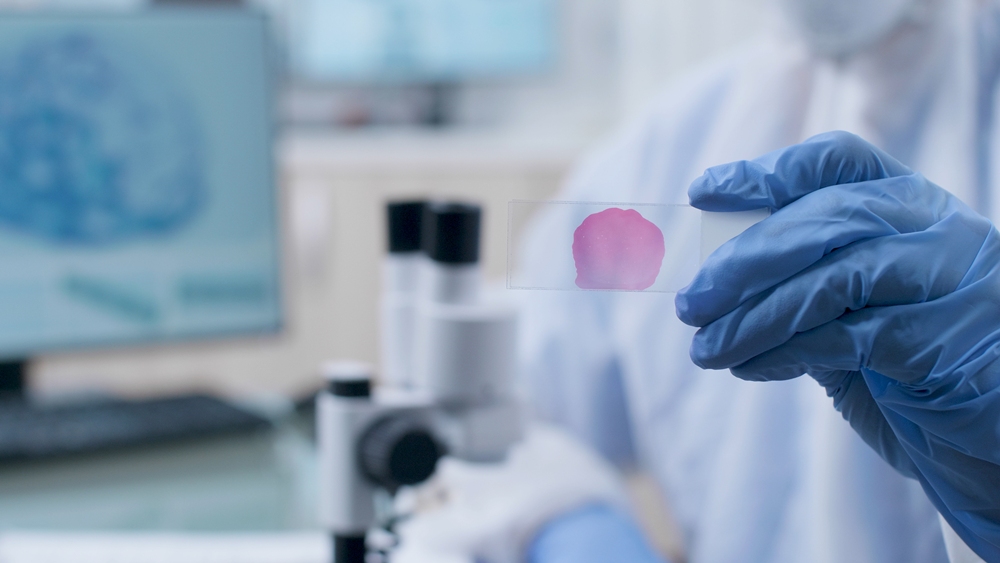

An experimental drug slowed triple-negative breast cancer in mice by flooding tumour cells with toxic fats.
Triple-negative breast cancer lacks three common drug targets, making it one of the hardest-to-treat and most aggressive forms of the disease.
The compound, known as DH20931, appears to push cancer cells past their limits by triggering a surge in ceramides, fat-like molecules that place the cells under intense stress until they self-destruct.

In lab experiments, the drug also made standard chemotherapy more effective. When combined with doxorubicin, researchers were able to reduce the dose needed to kill cancer cells by about fivefold.
The drug targets an enzyme known as CerS2 to sharply increase production of these lipids and stress cancer cells. Healthy cells, by contrast, showed lower sensitivity to the drug in lab tests.
While the early results are promising, further preclinical and clinical trials would still be needed to determine the safety and effectiveness of DH20931 in humans.
Satya Narayan, a professor in the University of Florida’s College of Medicine, led the study with an international group of collaborators.
The researchers published their results on human-derived tumours on 21 April and presented their findings on combination therapy at the annual meeting of the American Association for Cancer Research in San Diego.
Narayan likened the drug’s effects to a home’s electrical system handling a power surge.
While healthy cells act like a properly grounded and installed circuit, cancer cells are more like a jumble of mismatched wires and faulty fuses. DH20931 overwhelms cells not with electricity, but with fats.
He said: “When that surge goes into the cancer cells, they cannot handle the amount of power they are getting. The fuses burn out, the cell can’t handle the surge and it dies.”
The compound was developed at the University of Florida in the lab of Sukwong Hong.
Hong, now a professor at the Gwangju Institute of Science and Technology in South Korea, created DH20931 as one of many drug candidates tested for efficacy in Narayan’s lab.
In the study, researchers implanted human triple-negative breast cancer tumours into mice and treated them with DH20931.
The drug significantly slowed tumour growth without causing noticeable weight loss or signs of toxicity in the animals. In separate lab experiments, it also showed activity against other breast cancer subtypes.
In addition to increasing lipid levels, DH20931 triggers a second stress signal by flooding cells with calcium.
Together, these effects disrupt the mitochondria, the structures that produce a cell’s energy, ultimately leading to cell death.
Narayan said: “It does not just follow one pathway but it goes through multiple pathways. It’s a two-hit hypothesis.
“These pathways are common in all breast cancer types and other solid tumours, so we think this drug can be useful not only in triple-negative breast cancer but potentially other cancers as well.”











 Entrepreneur5 days ago
Future Fertility raises Series A financing to scale AI tools redefining fertility care worldwide

 Entrepreneur4 weeks ago
Three sessions that show exactly where women’s health is heading in 2026

 Pregnancy4 weeks ago
How NIPT has evolved and what AI NIPT means in 2026

 News4 weeks ago
Two weeks left to make your mark in women’s cardiovascular health

 Opinion4 weeks ago
Q1 momentum: Female founders are advancing, but the system still hasn’t caught up

 Fertility2 weeks ago
Future Fertility partners with Japan’s leading IVF provider, Kato Ladies Clinic

 Mental health1 week ago
Lifting weights shows mental health and cognitive benefits in older women, study finds

 Menopause2 weeks ago
More research needed to understand link between brain fog and menopause, expert says