




Insight
Routine mammograms could help evaluate cardiovascular disease risk, study suggests


Routine mammograms could help assess cardiovascular disease risk in women, new research suggests.
The study found that both the severity of calcium in breast arteries and how it progressed on mammograms predicted future cardiovascular disease.

Researchers at Penn State College of Medicine analysed data from 10,348 women who had repeat mammograms, with an average of 4.1 years between scans.
The X-ray images can detect calcium in the breast’s arteries, a sign that blood vessels are stiffening.
As people age, calcium can build up in arteries, raising heart attack and stroke risk.
In the study, AI software assessed whether calcification was present and how severe it was.
Women with more severe calcification, and those whose calcification progressed over time, had up to two times higher risk of major events such as heart attack, stroke, heart failure and death.
Matthew Nudy is assistant professor of medicine and public health sciences at Penn State College of Medicine.
He said: “We know that women are more likely to be diagnosed at later stages of cardiovascular disease and have worse outcomes following a heart attack compared to men.
“That may be in part because the current cardiovascular risk assessment tools underestimate risk in women. We need better tools.
“In the future, assessment of breast arterial calcification may help improve our ability to predict risk and prevent cardiovascular disease.”
Vascular calcification was present in 19.4 per cent of participants at baseline.
Those who initially had no calcium but developed it on follow-up had a 41 per cent higher risk of an adverse cardiovascular event and death.
Nudy said: “This could be a way to use data that may already be available for different reason and to potentially use it to risk stratify an individual for the development of cardiovascular disease.”












Chest Heart & Stroke Scotland has launched a three-year Women’s Health Plan setting out actions to improve prevention, diagnosis, treatment and support for women in Scotland.
The 2026 to 2029 plan includes commitments on health information, prevention and early detection, professional training, peer support, post-diagnosis care, policy and research.
It comes amid disparities affecting women with chest, heart and stroke conditions, including differences in diagnosis, testing and treatment.

Figures cited by the charity show women in Scotland are 50 per cent more likely than men to receive an initial misdiagnosis after a heart attack.
Jane-Claire Judson, chief executive of Chest Heart & Stroke Scotland, said: “Women have been telling us for years that their symptoms aren’t being taken seriously, and the evidence backs them up.
“When we talk about women’s health, we need to look beyond reproductive and maternal health alone.
“Women experience inequalities across a wide range of conditions, including chest, heart, stroke and Long Covid conditions, and they deserve equitable access to the information, support and care they need.
“Our CHSS Women’s Health Plan is about listening to those experiences and turning them into meaningful action.”
Across the UK, women are twice as likely to be misdiagnosed with heart failure, with many waiting an average of 20 weeks for a diagnosis, compared with 3.6 weeks for men.
There are more than 4,600 incidences of stroke in women in Scotland each year, with more than 1,200 dying as a result.
Asthma and chronic obstructive pulmonary disease (COPD) are also more common among women, while women are nearly twice as likely as men to die from asthma.
Women are less likely to be offered diagnostic testing within 72 hours of a heart attack and less likely to be prescribed medication that reduces the risk of a second heart attack, according to the charity.
CHSS also said conditions that predominantly affect women, including Long Covid and heart conditions such as coronary microvascular dysfunction, remain under-researched and under-diagnosed.
Four in five women say they are not listened to by healthcare professionals, while UK female life expectancy has fallen from 20th to 26th place among 38 OECD countries in recent years.
The Women’s Health Plan includes developing women-specific health information and launching a prevention and early detection programme through CHSS’s Health Defence and Community Healthcare Support Service.
Other commitments include raising the visibility of women’s health, strengthening training for healthcare professionals, CHSS colleagues and volunteers, expanding peer support and post-diagnosis care, and campaigning for changes to policy, funding and women’s inclusion in research.
The charity also plans to drive continuous improvement in its women’s health work, shaped by lived experience.
CHSS said it will seek to address inequalities through prevention programmes, professional education, policy influence and improved support for women across Scotland.
The plan builds on CHSS’s women’s health work launched in 2021 and its wider No Life Half Lived strategy. It also aligns with phases one and two of the Scottish Government’s Women’s Health Plan.
More than 140 responses to a national survey helped shape the plan, alongside consultation with health and social care professionals and people with lived experience through CHSS’s Voices of Experience Panel.
Judson said: “By improving awareness, supporting earlier detection and diagnosis, and ensuring women are heard when they seek help, we can begin to address inequalities that have persisted for far too long.
“Our first plan, launched in 2021, established important foundations.
“This next phase builds on that progress and reflects our commitment to a Scotland, where nobody is left behind because of their sex or gender.
“At Chest Heart & Stroke Scotland, our No Life Half Lived mission means working towards a future where everyone can live well with their condition. By bringing together women with lived experience, health professionals, policymakers and partners, we can create lasting change and help build a fairer, healthier Scotland for women.”


Women in Europe’s health and care sector face a 19 per cent hourly gender pay gap, according to a new World Health Organization (WHO) report.
Women account for 77 per cent of the sector’s workforce, compared with 45 per cent across all other sectors combined, but make up only 55 per cent of its top earners.
The hourly gender pay gap widens at higher wage levels, from 2 per cent among the lowest earners to more than 22 per cent at the top.
The WHO report found that health and care accounts for almost 17 per cent of all women’s employment in its European Region, compared with 5 per cent of men’s employment.
The sector is the fourth-largest employer overall and the single largest employer of women in the region.
Natasha Azzopardi Muscat, director of the Division for Health Systems at WHO Europe, said: “Women make up the majority of the people who keep Europe’s health systems running, yet they’re paid less than their male counterparts, a gap that compounds over a lifelong career.”
The findings follow a pattern seen across the wider labour market, with structural inequality increasing at higher wage and seniority levels.
Globally, women working in health earn an average of 24 per cent less than men, according to the report, a wider gap than in many other industries.
Some of the difference in pay could be explained by work-related factors, including age, education, public or private sector employment and whether people worked full-time or part-time.
After adjusting for those four factors, the hourly pay gap fell from 19 per cent to 6 per cent, while the monthly gap declined from 28 per cent to 10 per cent.
The remaining difference could not be explained by factors measured in the data.
“Most of this gap isn’t down to women working fewer hours, being younger or working in different parts of the sector,” Azzopardi Muscat said.
“It comes down to how the sector values women’s work. Age, education, working hours and public versus private sector employment only helps explain some of it.”
WHO said the findings point to factors including the undervaluation of care work, occupational segregation and potential discrimination in pay-setting practices.
Occupational categories with a higher proportion of women paid less across managerial, professional and technical roles.
Management jobs in health and care employ more women than management roles in other sectors and pay an average of €22 per hour, compared with €24.70 in comparable roles elsewhere.
WHO described the gender pay gap as one of the most persistent forms of labour market inequality. Given the number of women working in health and care, it said the gap could have important economic and social consequences.
The report said the inequality may lead to lower lifetime earnings and pension entitlements, increase women’s risk of poverty, reduce returns to education and undermine sustainable economic growth.
“It means lower pensions, less financial security in older age, and a higher risk of poverty for women who’ve spent their working lives caring for others,” said Azzopardi Muscat.
“This isn’t a coincidence, and it isn’t about qualifications. Women are being paid less for the same work and passed over for the roles that pay more.”
WHO said closing gender pay gaps was both an equity imperative and an investment in a stronger and more sustainable health workforce.
It suggested measures including greater salary transparency, increased female representation in decision-making roles and action to address gender norms and stereotypes.
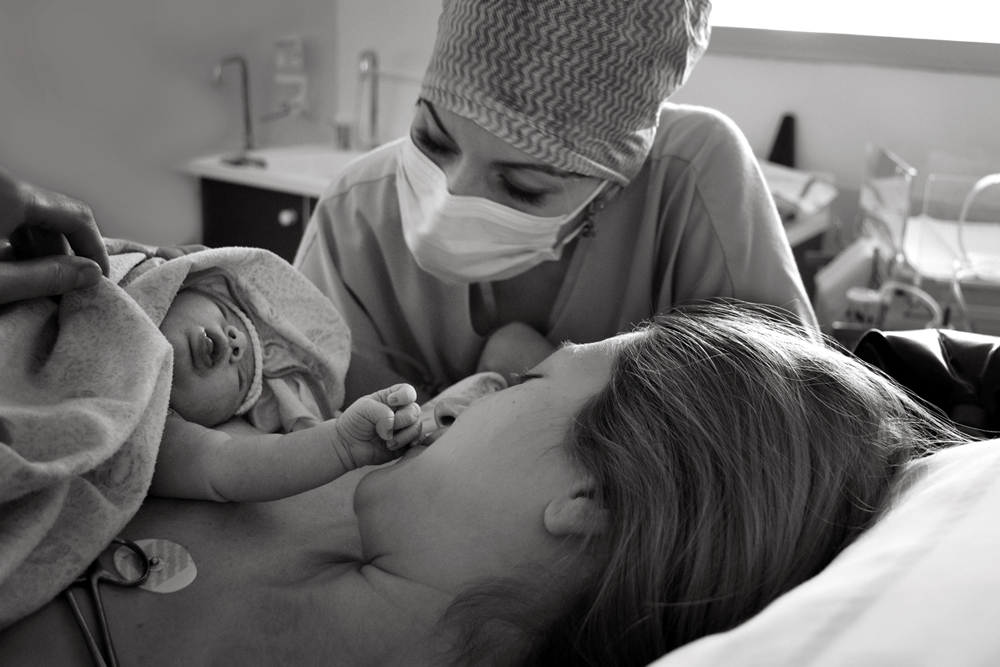
Women with childbirth-related PTSD had healthcare costs 2.5 times higher than women without PTSD from six to 12 months after birth, a report found.
The analysis estimated that early prevention of traumatic births and childbirth-related post-traumatic stress disorder (PTSD) could save the NHS around £26m each year.
Women with PTSD were also less likely to have returned to work by 12 months after giving birth, suggesting potential longer-term employment and economic effects.
The report from City St George’s, University of London was launched at an All-Party Parliamentary Group (APPG) on Birth Trauma event on 10 September 2026.
Researchers calculated the potential NHS savings using the number of births reported in NHS hospitals in 2024-25 and the UK prevalence of childbirth-related PTSD.
Around one in 20 women in the UK develop PTSD following childbirth, while recent research has shown that the condition remains underdiagnosed.
The findings draw on research that tracked more than 2,000 women in England and Scotland from pregnancy to two years after birth. Researchers assessed mental health, use of health services and employment outcomes.
The research included assessments of childbirth-related PTSD and PTSD arising from other traumatic experiences. It also included a separate Birth Trauma Association survey examining women’s experiences of birth trauma.
Between six and 12 months after birth, healthcare and support service costs for women with childbirth-related PTSD were 2.5 times those of women without PTSD.
Women with low or moderate symptoms, including those reporting one or two PTSD symptoms, also had higher healthcare service costs than women without PTSD.
Just over half, 53 per cent, of women with PTSD had returned to work by 12 months after giving birth, compared with 68 per cent of women without symptoms.
Women with PTSD were more likely to be referred for mental health support, but more than half received no referral.
Those whose PTSD followed a traumatic birth also had slightly higher healthcare costs than women whose PTSD resulted from other traumatic experiences.
The researchers called for routine PTSD assessment and treatment during pregnancy and after childbirth, alongside greater access to specialist perinatal mental health services.
They also recommended training healthcare staff in perinatal trauma, trauma-informed care and identifying women at risk of PTSD.
The report said further research was needed to establish whether screening, treatments and trauma-informed care pathways are effective and evidence based.
The work follows the APPG’s 2024 Birth Trauma Inquiry, which highlighted the effects of birth trauma on women and families and called for evidence on its wider public health and societal costs.
The report focused primarily on healthcare use and did not attempt to calculate all costs associated with birth trauma and postnatal PTSD, including wider employment, family and societal effects.







 Menopause1 week ago
Menopause may not explain rising heart condition in women – study

 Fertility2 weeks ago
Paracetamol use may impact future fertility, studies suggest
 Insight1 week ago
Women with birth trauma face 2.5x higher healthcare costs – study

 Menopause2 weeks ago
Cancer drug could tackle osteoporosis menopause weight gain

 News1 week ago
Medical cannabis may improve endometriosis symptoms – study
 Cancer1 week ago
Study could explain why obesity is a breast cancer risk factor

 Menopause2 weeks ago
Menopause hormone therapy may improve cardiovascular health outcomes, study suggests

 AI1 week ago
Evvy secures US$40m for AI-powered vaginal microbiome testing