



Opinion
Acceptable use vs exploitation with ‘free’ digital health tools


By Wolfgang Hackl, CEO, OncoGenomX Inc., Allschwil, Switzerland
“Free” digital health tools are rarely free. In most cases the user – healthy or patient – pay with something far more valuable than a subscription fee: intimate, high-granularity data about their bodies, behaviours, and vulnerabilities.
As digital health platforms grow into critical infrastructure for care, research and consumer wellness, a central ethical question has become unavoidable: When does data use enable public good – and when does it cross the line into exploitation?
Across global literature, five bright lines consistently separate acceptable data use from irresponsible or predatory practices: transparency, proportionality, patient control, fairness in value sharing, and protection from harmful downstream uses.
When any of these conditions are missing, offering a “free” tool can become a mechanism for extracting disproportionate value from users while outsourcing the risks back onto them.
The ethics of the deal: what healthy users and patients expect from data sharing
Empirical studies continue to show that most people are willing to share health data – but only conditionally.
Individuals support sharing when data clearly contribute to research, treatment innovation, care quality, or public health.
Trust erodes quickly when data are used for insurance underwriting, targeted advertising, pricing segmentation, or other uses that may limit access to care or worsen financial vulnerability.
What users consistently expect is:
- Clarity – Who sees which data, for what purpose, and for how long?
- Control – Granular permissions and an easy, meaningful opt-out—not buried legalese.
- Security – Strong technical safeguards and independent oversight.
- Benefit – A reasonable expectation that sharing data contributes to something of social or personal value.
Several commentaries argue that requesting personal data without a realistic prospect of benefit—not even transparency about outcomes – is itself problematic because it treats contributions as limitless and one-sided.
The ethical legitimacy of data collection depends on demonstrating respect for the individual’s time, autonomy, and moral investment in the health system.
Exploitation risks in the “free” digital health economy
The most serious risks emerge when a free tool’s business model is fundamentally misaligned with users’ health interests.
Technical audits of reproductive health, wellness and symptom-tracking apps show a common pattern: extremely broad data collection, unclear purpose boundaries, permissive permissions, third-party tracking, and vague categories such as “other information.”
These form the architecture of a data extraction engine rather than a health intervention.
Even apps claiming to hold only de-identified data can open the door to harms, because de-identified health behaviour signals are immensely valuable for:
- Risk scoring and pricing (insurance, consumer credit, employment screening)
- Targeted advertising (particularly manipulative or sensitive targeting)
- Behavioural profiling (including in politically or legally hostile environments)
- Opaque algorithmic triage or eligibility decisions
In such cases, the user’s data generate significant commercial value yet expose the individual to disproportionate risks – a classic hallmark of exploitation.
The “paying twice” problem: who benefits from population data?
Growing debate around emerging health data spaces – especially in Europe – frames exploitation not only as a privacy issue but as a structural market failure.
Health data are immensely profitable. When commercial actors derive outsized value from population-level datasets without mechanisms to share those gains back with the public, patients effectively “pay twice”:
- First with their data, which fuel product development, risk models, or AI systems.
- Then again through the high prices of those very products and services.
This disconnect – value extracted privately, risk borne publicly – undermines the legitimacy of the entire ecosystem.
Scholars argue that without reciprocity mechanisms (affordability conditions, public-good obligations, reinvestment requirements, open reporting), population data becomes a one-way transfer of wealth from patients to shareholders.
What acceptable data use actually looks like
Across policy, legal, and ethics scholarship, a consistent set of practical markers has emerged to distinguish responsible data practice from exploitation:
1. Transparency and comprehension
Not merely posting a 30-page privacy policy, but communicating data practices in human-readable language.
Dark patterns, forced consent, or ambiguous categories (“other information”) are widely flagged as red flags.
2. Data minimisation and proportionality
Collect only what is needed for the clear, stated purpose. Health apps that request location, contacts, device IDs, access to photos, or continuous background tracking must justify why such access is necessary for patient benefit.
3. Meaningful patient control
Granular consent, revocation options, and controls that do not punish users for refusing unnecessary data sharing.
Users should be able to say “yes to research but no to advertisers” without losing core functionality.
4. Demonstrable public benefit and reciprocity
Data-driven innovation should return value to the communities who generate the data—through equitable access, affordability, improved care pathways, or transparent reinvestment in health systems.
5. Prohibitions on harmful downstream uses
Platforms must enforce technical and contractual safeguards against uses that could lead to discrimination, exclusion, legal jeopardy, or personal harm – especially in sensitive domains such as reproductive health, mental health, and genomics.
6. Strong security and independent governance
Routine audits of algorithms, permissions, data flows and third-party access; oversight bodies empowered to block or penalise inappropriate secondary use; and governance models built around public accountability.
When these markers are present, data use—whether in research, diagnostics, early detection, or population analytics – can be socially valuable and ethically defensible.
When they are absent, value extraction becomes the default.
Where the industry must go from here
For global Health Tech companies, the stakes are high. Trust is not just a compliance objective – it is a competitive advantage.
As jurisdictions develop new frameworks for data spaces, AI governance, and platform accountability, Health Tech innovators must rise to higher ethical standards than the minimal legal baseline.
A responsible future for digital health requires that “free” tools come with:
- Clear limits on what patient data can be used for
- Oversight mechanisms to validate secondary uses
- Fair distribution of the benefits of data-driven innovation
- Design practices that prioritize patient autonomy and safety
Anything less risks widening inequities, damaging public trust, and ultimately undermining the legitimacy of digital health itself.
The real test of the industry is simple: Are we using patient data to empower people – or to exploit them?
The next decade of digital health will be shaped by how honestly and rigorously we answer that question today.











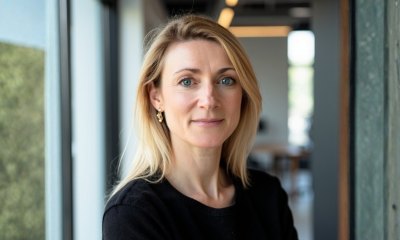


By Celine Vignal, co-founder of Seesaw Health
The past year marked a turning point in femtech.
After a decade of steady progress, 2025 delivered a wave of innovations that pushed women’s health technology into a more mature, data-driven, and clinically integrated era.
From AI-enhanced hormone analytics to nervous-system biofeedback, companies shifted away from generic wellness and moved toward precision, personalisation, and validated outcomes.
With women now representing more than 80 per cent of household healthcare decisions and nearly 50 per cent of the global workforce, the demand for tools that reflect biological realities and not just generalised averages, has never been stronger.
Major Developments in 2025: From Hormone Intelligence to Pelvic Care
One of the most notable advancements in 2025 was the rapid evolution of AI-powered fertility and hormone-tracking technologies.
Fertility platforms expanded beyond ovulation prediction to offer multi-hormone modeling, giving users clearer insights into perimenopause, thyroid interplay, and metabolic patterns.
The industry also saw a surge in devices capable of real-time hormone detection, supporting more personalised care for women across all life stages.
Menopause tech continued its expansion.
What began five years ago as symptom-logging apps has now grown into integrated care platforms offering telehealth, digital coaching, non-hormonal treatment plans, and AI-based flare-up predictions.
Companies are increasingly leveraging longitudinal data to help identify early markers for sleep disruptions, cardiovascular risk, and mood instability, issues that disproportionately affect midlife women yet have historically lacked attention.
Meanwhile, menstrual and pelvic-health technology advanced significantly.
In 2025, startups brought to market more precise ways to monitor menstrual patterns, pelvic floor function, and chronic conditions like endometriosis.
We saw a rise in devices that combine sensor technology with therapeutic guidance. This reflects a deeper shift: women’s health problems long dismissed as “normal” are now being re-examined through a scientific lens, supported by better data and better tools.
Maternal health also benefited from this momentum.
Remote monitoring platforms now help track blood pressure, glucose variability, and stress biomarkers throughout pregnancy and postpartum, improving early detection for conditions like preeclampsia and gestational diabetes.
Importantly, many of these solutions are being built with inclusivity in mind, aiming to reduce disparities that have persisted for decades.
The Role of Nervous-System Data in Personal Health
Throughout 2025, the value of autonomic data—the signals that reflect how the body responds to stress—gained recognition as a critical element of women’s health.
New biosensors and software have made it possible to measure parasympathetic activity in real time, offering a window into how the nervous system modulates inflammation, pain, hormonal stability, and emotional regulation.
This represents a major shift: instead of using stress-reduction apps that rely solely on self-report or generic protocols, people can now see how their body responds physiologically in the moment.
Beyond wellness applications, this kind of data has important potential for chronic conditions that affect women disproportionately.
Autonomic dysregulation plays a role in migraines, IBS, endometriosis, PCOS, anxiety disorders, and perimenopause symptoms.
Tools that help women understand and regulate their stress response could become a critical layer of preventive care.
Predictions for 2026: Relying on Body Data
1. Nervous-system biomarkers will become as common as heart-rate data
In 2026, real-time stress measures, such as vagal tone, respiratory patterns, and autonomic balance, will increasingly appear in wearables and therapeutic devices.
Seesaw Health is one example of this trend, offering sensor-driven insights into parasympathetic activity to personalise breathwork and recovery.
We’re also seeing early signals from devices integrating sensors directly into earbuds and ambient sensors that adapt lighting and sound based on autonomic patterns.
2. Pelvic and menstrual health will enter a precision-care era
Expect more clinical validation and early-detection tools.
Startups are already piloting AI-powered ultrasound analysis for early endometriosis suspicion and pelvic-floor trainers like Perifit that adjust programmes based on muscle response rather than user guesswork.
High-resolution menstrual-mapping platforms will expand beyond risk scoring to offer cycle-specific care recommendations.
3. AI-driven coaching will personalise daily health decisions
Virtual health assistants will combine biological data with contextual signals to offer just-in-time guidance like Maven Clinic.
Some tools are already experimenting with flare-up prediction for PMDD or endometriosis, and with workout-modification engines that adapt intensity based on inflammation, sleep debt, and stress load.
As these models mature, daily self-care routines could become far more adaptive.
4. Menopause platforms will formalise into mainstream care
With over one billion women projected to be in perimenopause or menopause by 2030, insurers and health systems are beginning to integrate menopause-specific care pathways.
Tools offering cognitive-support modules, cardiovascular risk tracking, and metabolic change monitoring will likely become standard, especially those like Elektra Health combining telemedicine care with evidence-based education.
5. The consumer–clinician bridge will narrow
Women increasingly expect their digital tools to generate data they can share with providers.
In 2026, more apps will automatically produce structured summaries for clinicians, covering pain patterns, autonomic signals, cycle changes like Mira Fertility, or medication effects.
Early pilots are underway exploring integration of pelvic sensor data into PT workflows and autonomic summaries into functional medicine assessments.
About the Author
Celine Vignal is the co-founder of Seesaw Health focused on female physiology, stress regulation, and preventive care.
Her work centers on translating complex nervous-system science into accessible tools and biofeedback parasympathetic breathwork methods that support everyday resilience and nervous system balance.


By Maxime Kryvian, co-founder and CEO of MyCelsius
Menopause remains one of the biggest taboos in women’s health.
Often treated as a private matter to be discussed quietly, when it is a significant life stage that deeply affects the physical, mental, and social well-being of millions of women.

Yet menopause symptoms are still frequently minimised or overlooked.
Research shows that over 80 per cent of women experiencing menopause symptoms do not seek support, clearly pointing to a lack of recognition and insufficient access to appropriate solutions.
This shows how women’s health continues to be under-prioritised and how much needs to be done to bridge the gender health gap in innovation and research.
The impact is undeniable: in the UK, women spend more years in poor health than men, and menopause is one of the periods where their needs remain widely underestimated.
Closing the gender health gap requires acknowledging that menopause is not a “private inconvenience” but a key life moment that deserves appropriate, accessible, and destigmatised support.
However, change is underway.
With new technology and innovators challenging outdated taboos, FemTech is redefining how women are understood, supported, and empowered at every stage of life.
Beyond being a buzzword, FemTech is becoming a crucial tool in addressing long-standing inequalities, not only by offering practical solutions but by empowering women to take control of their wellbeing.
Innovation for inclusion
A CIPD report found that over half of women (53 per cent) were able to think of a time when they had not been able to go into work due to their menopausal symptoms, with more than a quarter adding that menopause harmed their career progression.

Maxime Kryvian
As such, women need practical, innovative solutions that can help them feel more confident and empowered while going through the menopause and support them with symptoms such as hot flushes and stress.
Giving women supportive solutions isn’t just about comfort but about inclusion, equality and progress.
Not only will women benefit from being able to manage their symptoms and continue performing at their best, but organisations will also continue to benefit from their leadership, ideas and perspectives. This is where new technologies can play a great role.
Whilst at the highest level, the Government has renewed its Women’s Health Strategy to tackle inequalities, it’s just as critical that the gender health gap is also addressed in spaces where real change starts from the ground up, using innovation and technology to provide support where it has not been given.
Breaking the taboo with women-focused solutions
The taboo surrounding menopause has limited innovation and research in women’s health, leaving many women to navigate this transition alone.
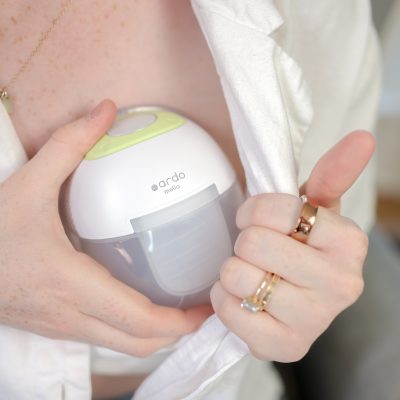
Start-ups like MyCelsius are changing that by creating women-focused technology designed to provide instant cooling comfort during hot flushes.
More than just a product, MyCelsius involves women at every stage of research, testing, and development, ensuring real experiences shape real solutions.
By listening to women, these innovations help break stigma while delivering practical, empowering results.
It’s more important than ever that emerging femtech brands listen to the stories and testimonies of women facing difficult challenges – challenges that have serious impacts on their health, wellbeing, and personal and professional lives, and develop people-led solutions.
There is a clear need for a multitude of new solutions to improve women’s health and to provide a diverse range of options, so women can access support that adapts to their needs and choose what works best for them, wherever medically possible.
As FemTech continues to evolve, it is becoming a vital tool in closing the gender health gap, giving women greater control over their well-being in ways that are natural, private, and intuitive while being stylish enough to integrate seamlessly into everyday life.
This new generation of FemTech isn’t about exposing vulnerabilities; it’s about restoring confidence, normalising conversations around menopause, and enabling women to live and work on their own terms.
Creating a culture of inclusive health
As FemTech develops, it offers more than simply consumer products but represents a cultural shift towards destigmatising and empowering women during sensitive periods of their lives.
By combining innovation and digital tools with empathy, we can start to see a culture where the gender health gap is closing, creating a space where compassionate, inclusive health solutions are deemed normal – not an exception.










-

 Hormonal health3 weeks ago
Opinion: Not ‘just stress’ – How hormonal changes affect women’s brain function
-

 News4 weeks ago
Top 7 drug-free solutions for managing PMS and PMDD in in 2025
-

 Diagnosis3 weeks ago
Researchers develop nasal therapeutic HPV vaccine
-

 News3 weeks ago
Woman files lawsuit claiming fertility clinic ‘bootcamp’ caused her stroke
-

 Diagnosis4 weeks ago
YON E Health raises €250k for its vaginal health device
-

 News4 weeks ago
Researchers achieve first pregnancy using AI to recover sperm in infertile men
-

 News1 week ago
Doctors push back on ‘data-free’ ruling on menopause hormone therapy
-

 Wellness3 weeks ago
Sleep-related disorders linked to hypertension in postmenopausal women