



Entrepreneur
Austrian organisation Female Founders launches €20m fund to drive gender diversity in tech
The new fund has already made its first close of €12.5 million to date

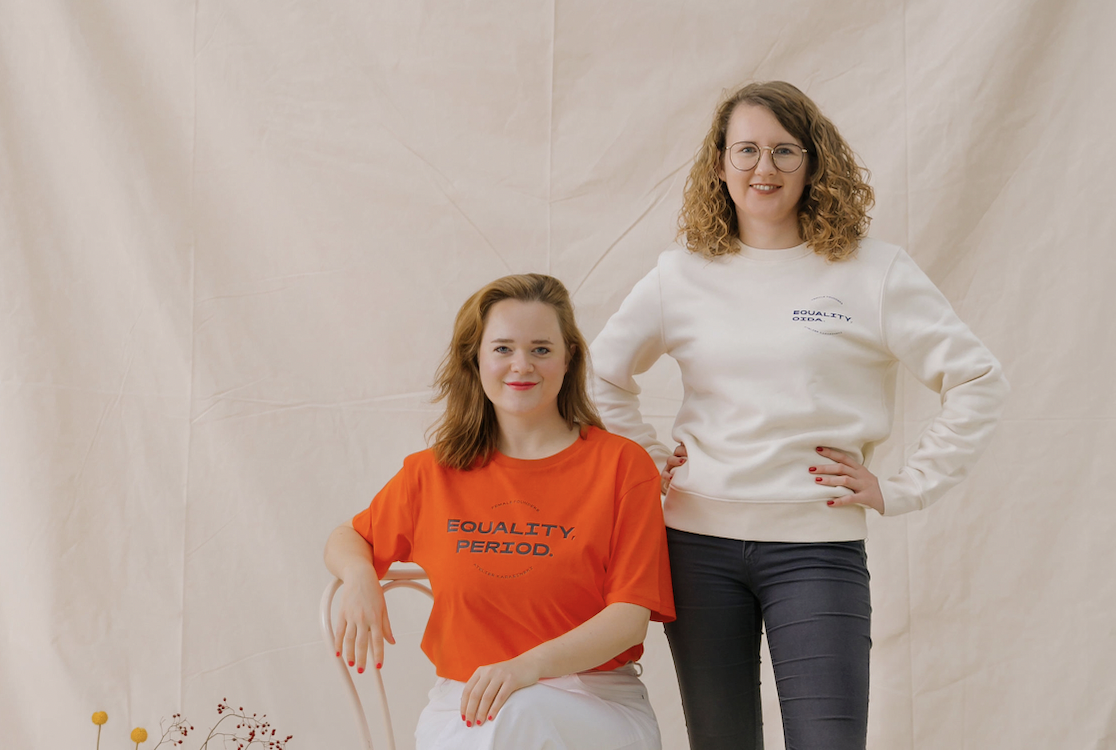
The Austrian organisation Female Founders has announced a €20m VC fund to invest in gender-diverse founder teams.
Fund F aims to foster equal opportunities for female entrepreneurs in the European tech ecosystem, driving investment in pre-seed and seed start-ups with at least one female founder in sectors including femtech, health tech, fintech, climate tech and HR tech.
The fund’s LP base includes entrepreneurs, angels, and family offices. It has already raised €12.5m from the Austrian bank Raiffeisen-Landesbank Steiermark, the VC fund Speedinvest and Austria Wirtschaftsservice, the promotional bank of the Austrian federal government.
Female Founders, an organisation based in Vienna, Europe’s hub for female entrepreneurship, was founded in 2016 by Lisa-Marie Fassl and Nina Woss to drive gender diversity in tech and innovation in Europe through accelerator and leadership programmes, events and networking.
The company provides founders with products, services and opportunities in the areas of start-ups and investment, talent and its growing community to help make that mission a reality.
“Our first close happened in October at over €12.5m and was over-subscribed,” the two founders said in a social media post.
“Now, we are thrilled to start investing in and supporting gender-diverse founder teams.
“Our main focus industries include femtech, health tech, fintech, climate tech and HR Tech and we are looking for start-ups ready to tackle the world’s many issues and positively impact humanity.”
The Fund F plans to invest in 25-30 pre-seed and seed stage companies that have at least one female co-founder in the next four years. Initial ticket sizes will be between €100,000-€400,000.
Austria is gaining a reputation as a hub for female start-up founders. More than 35 per cent of all start-ups created in Austria had at least one female founder, with women making up 18 per cent of the total of all start-up founders, up from 12 per cent in 2018.
According to the Federal Ministry of Labor and Economy (BMAW), Austria currently has the highest share of female start-ups in the EU.










Flex partners with Clue to make Clue Plus eligible for HSA and FSA spending in the US, letting users pay for menstrual health tools with pre-tax funds.
HSAs and FSAs are US pre-tax accounts for eligible health costs. Announced on 16 December 2025, the move makes Clue Plus available via these benefits, with Flex citing potential savings of 30 to 40 per cent.
Clue Plus offers personalised cycle tracking, deeper analysis, advanced predictions and hormone insights, with options for pregnancy and perimenopause. It includes 12-month forecasting and clinician-backed guidance.
“At Clue, our mission is to empower women and people with cycles with trustworthy, science-based information about their menstrual and reproductive health,” said Rhiannon White, CEO of Clue. “Partnering with Flex allows us to make Clue more accessible to the millions of people who rely on our app for insights into their bodies. We’re thrilled to expand access through HSA/FSA eligibility.”
Flex says more than US$150bn is held in HSA and FSA accounts, and the partnership brings reproductive health purchases into standard benefits checkout.
“At Flex, we believe everyone should have affordable access to women’s healthcare,” said Sam O’Keefe, CEO of Flex. “After my own pregnancy and postpartum experience, I saw firsthand how confusing and hard to navigate women’s health can feel. Making Clue eligible for HSA and FSA spending is one way we are helping more people use their pre-tax dollars to access tools that provide meaningful data and insights into their health.”

IVFmicro has raised £3.5m to advance its microfluidic device designed to improve IVF success rates in routine clinic use.
The Leeds-based spinout from the University of Leeds, founded in 2024, aims to increase the quality and number of embryos in an IVF cycle.
IVF, or in vitro fertilisation, combines eggs and sperm in a lab before transferring embryos to the womb. A microfluidic device is a chip with tiny channels that move very small volumes of fluid.
The company says its device could raise the number of viable embryos available for transfer and the likelihood that an embryo will implant.
Currently, IVF leads to a successful pregnancy in about 30 per cent of cases for women under 35. A single cycle typically costs around £5,000 in the UK.
“My career has focused on understanding the reproductive biology of eggs and embryos, how they develop and, crucially, why things sometimes go wrong,” said IVFmicro co-founder and scientific director Helen Picton.
“At IVFmicro, we are harnessing years of research into reproductive biology to create a practical, accessible solution that can improve outcomes for patients undergoing fertility treatment. Our goal is to make IVF more effective, more predictable, and ultimately more hopeful for those striving to start a family.”
The investment was led by Northern Gritstone, with support from Innovate UK’s Investment Partnership Programme.
“IVFMicro is a brilliant example of the world-class innovation emerging from the Northern Arc’s universities, combining scientific excellence with a clear commercial vision to tackle the societal challenge of infertility,” said Northern Gritstone chief executive Duncan Johnson.
“Millions worldwide require fertility treatment, but new solutions are needed to overcome the high costs involved and low success rates. We are especially proud that IVFMicro’s journey has been supported through our NG Studios programme and our Innovation Services, which exist to help founders like Virginia and Helen turn pioneering research into real-world impact.”

University of Leeds IVF spinout IVFmicro has raised £3.5m in pre-seed funding.
The investment is led by Northern Gritstone, with support from Innovate UK Investor Partnerships Programme, and will be used by IVFmicro for its next verification and validation phase, leading to trials on human embryos in fertility clinics.
Helen Picton is scientific director and co-founder of IVFmicro.

She said: “My career has focused on understanding the reproductive biology of eggs and embryos, how they develop and, crucially, why things sometimes go wrong.
“At IVFmicro, we are harnessing years of research into reproductive biology to create a practical, accessible solution that can improve outcomes for patients undergoing fertility treatment.
“Our goal is to make IVF more effective, more predictable, and ultimately more hopeful for those striving to start a family.”
Globally, 1 in 6 couples will face fertility issues, yet IVF success rates are suboptimal, with only 25-30 per cent succeeding in women under 35 years of age.
This is due in part to limitations of the embryo culture process, which typically involves repetitive handling, subjective selection of the best embryo, and the expense of highly skilled operators.
IVF is an expensive process, costing on average £5,000 for a patient in the UK for one cycle, accompanied by long NHS waiting lists that have selective criteria.
IVFmicro provides the first microfluidic device (a device for safely managing embryo culture and handling with very small amounts of nutrient-rich fluid) that can be used in any IVF treatment cycle.
This precision-engineered solution improves both the number of viable embryos available for transfer and the likelihood that an embryo will implant and result in a pregnancy.
IVFmicro provides a 10-15 per cent improvement in embryo quality and quantity, a significant leap that increases the potential to fall pregnant.
IVFmicro was founded in 2018 by Virginia Pensabene, Ph.D, and Helen Picton, Bsc, Ph.D., both professors at the University of Leeds.
Pensabene has published scientific advancements in microfluidics and brings her technical and scientific expertise to the product design.
Picton is a non-clinical expert in female reproductive biology and embryology, and has generated over £8m in research grant income.
IVFmicro recently took part in the NG Studios life sciences programme, which supports pre-seed life science businesses, and is delivered by accelerator KQ Labs, the Francis Crick Institute, and Northern Gritstone.
Virginia Pensabene, CEO and co-founder, IVFmicro, said: “As a biomedical engineer, I began exploring the potential of this technology in 2017, when Helen and I first met at the University of Leeds.
“From the start, our goal was to translate our research into a real solution for patients.
“Thanks to the combination of grant funding and Northern Gritstone’s support — both through investment and its innovation programmes — we have been able to grow our team in Leeds and take a major step toward bringing this precision-engineered IVF solution to market.”










-

 Features2 weeks ago
Cannabis compounds kill ovarian cancer without harming healthy cells, research finds
-
 Opinion4 weeks ago
Femtech in 2025: A year of acceleration, and what data signals for 2026
-

 Insight3 weeks ago
Meta removes dozens of abortion advice and queer advocacy accounts
-

 Hormonal health4 weeks ago
Round up: First wearable detects symptoms of perimenopause, and more
-

 Insight3 weeks ago
Sperm donor with cancer-causing gene fathered nearly 200 children across Europe
-

 Mental health4 weeks ago
Insomnia combined with sleep apnea associated with worse memory in older women
-

 Insight3 weeks ago
UK couples exploiting legal loophole to rank embryos based on IQ, height and health
-

 Entrepreneur4 weeks ago
Femtech firm launches genetic test for perimenopause