




Special
Breaking down barriers: how femtech is changing women’s health in France
Unlike previous generations, women in France are now more willing to speak up and take their health into their own hands


From detecting endometriosis to reconstructing breast tissue, the femtech sector in France sounds promising, to say the least. We speak to Delphine Moulu, co-founder and managing director of FemTech France, to find out what the market has to offer.
With companies around the world using pioneering technologies to develop new products and improve patient outcomes, women’s health has never looked more exciting.
After decades in which women were excluded from medical research, the femtech sector offers a glimmer of hope.
Since the term was coined in 2016, the market has exploded, with more and more businesses seeking to disrupt the system and empower women to take control of their health.
However, to many, femtech remains a new concept. A former events manager at Station F, the world’s largest start-up campus based in Paris, Delphine Moulu had no idea what femtech was until one of her colleagues came up to her with an idea for a start-up programme.
“I’ve always been a feminist, but I hadn’t heard of femtech before,” she says.
“I started doing a lot of research and I was shocked to discover the health inequalities between men and women. So I immediately agreed to get involved in the the creation of a dedicated programme that we launched at Station F to help early-stage femtech founders from France and Europe.”
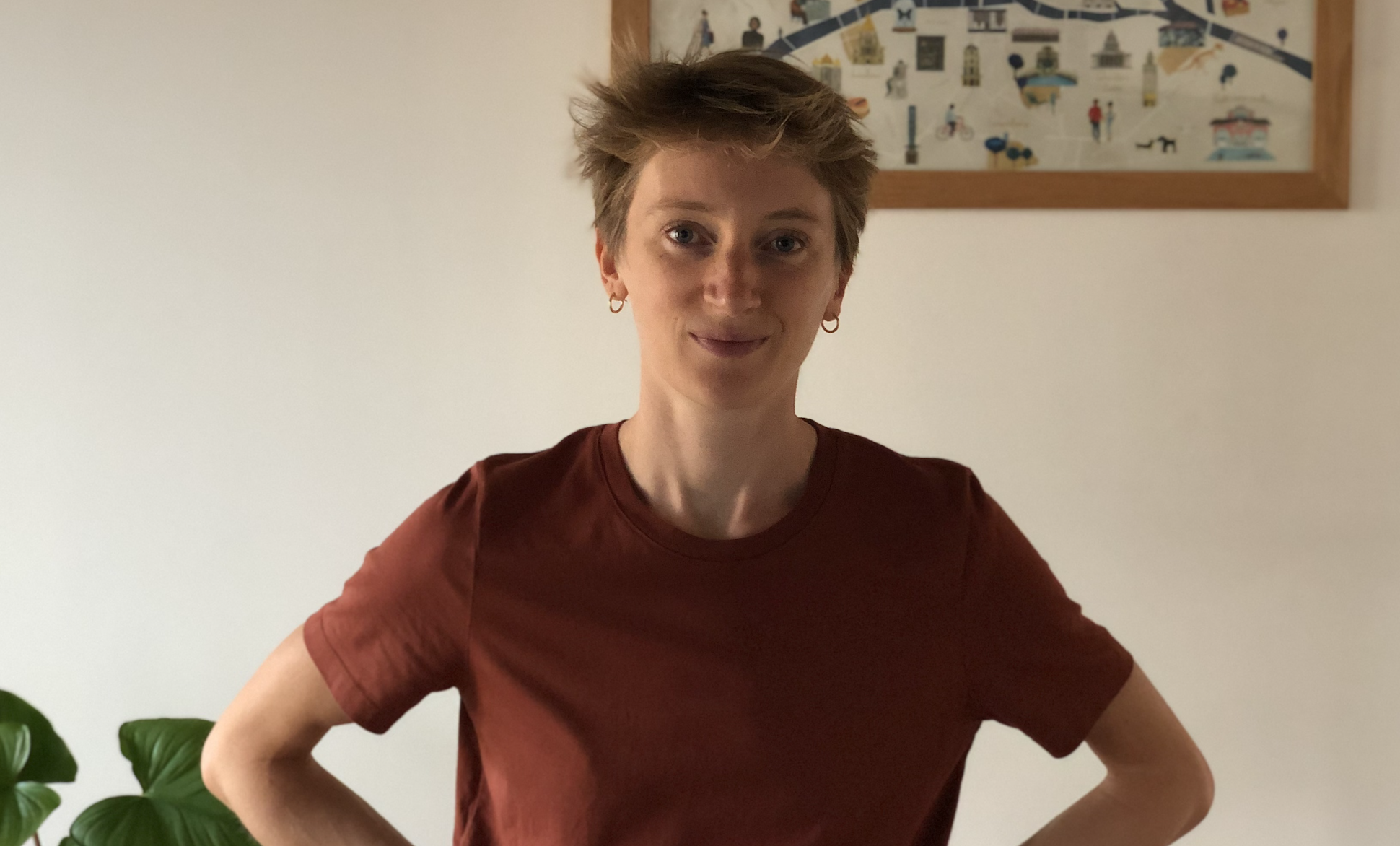
Delphine has left her job at Station F to launch FemTech France
Soon after she was introduced to femtech, Delphine realised how passionate she was about it, so much so that she left her job at Station F and launched FemTech France, an association dedicated to accelerating innovation in women’s health in France.
“Having the right people around you can help you go faster, as an entrepreneur, and can save you time and potentially money,” she explains. “That’s what FemTech France is all about.
“Our aim is to support entrepreneurs by creating synergies between the different actors of the ecosystem and taking part in all the strategic debates around women’s health in France.
“Last year, for example, we did our first bootcamp where we provided eight femtech founders with a toolbox with all the information they needed to create a femtech start-up in France.
“They also had the chance to be connected to our two partners for this first edition, the pharmaceutical lab Organon France and the health insurance Groupe VYV. It was so successful that we are organising it again this year!”
As data on the femtech sector was limited, Delphine and her team also put together the first mapping of the French femtech start-ups, showcasing the work of more than 80 businesses across France.

Delphine and the FemTech France team
“That was another important step for us,” she explains. “We wanted to show that the French ecosystem is booming, is not niche, and that, in fact, there are a lot of actors in this space, but they are still small because they have trouble getting funding.
“What we saw was that most of the femtech start-ups in France focus on reproductive health. However, we lack businesses around menopause and contraception. There’s a huge need, but due to stigma, there isn’t much innovation going on yet.
“In terms of trends, following the national strategy against endometriosis, we saw a lot more people talking openly about endometriosis and more recently, about PCOS.”
Finding a business model in health tech and femtech is also a challenge. Delphine says in France she sees a trend of start-ups shifting from B2C to B2B2C.
“Before Covid it was super taboo to talk about mental health at work. Now, every company offers employee benefits around mental health with applications and services to support employees. I hope in a beautiful future the same will happen for women’s health.”
The good news is that things are changing in France. Women are more open about their health than ever before and, unlike previous generations, they are now willing to speak up and take their health into their own hands.
“We’ve had a positive response from decision makers, ministers and politicians, as most of them are already aware of the gender gap in healthcare,” adds Delphine.
“We are happy to see that their doors are open. This is a public health issue, but if we work together, we can move things forward.”
To find out more, visit femtechfrance.org.











Former US first lady Dr Jill Biden visited Imperial College Healthcare NHS Trust and Imperial College London to explore work on women’s health and antimicrobial resistance.
The visit was hosted by professor the Lord Darzi of Denham, who chairs the Fleming Initiative and directs Imperial’s Institute of Global Health Innovation.
Dr Biden, chair of the Milken Institute’s Women’s Health Network, spoke about the impact scientists, clinicians, innovators and investors can have on improving women’s healthcare.

Dr Biden stressed the importance of “collaboration, prevention and education” in improving women’s health globally.
At the museum, Dr Biden and Esther Krofah, executive vice-president of health at the Milken Institute, heard about the worldwide significance of the discovery and the contribution of women who, during wartime Britain, grew penicillin in bedpans to support early experimentation.
The discussion also explored how AMR is a key women’s health issue, with women disproportionately affected in low and middle-income countries, and in high-income settings where women are more likely than men to be prescribed antibiotics.
Dr Biden was shown an architectural model of the Fleming Centre in Paddington, which will bring together research, policy and public engagement to address AMR worldwide.
The second part of the visit brought together Imperial clinicians, researchers and innovators for a roundtable on women’s health priorities, including improving diagnosis, equity in maternity care and support during the menopause transition.
Participants highlighted wide variation in the quality of care for conditions affecting women and called for fairer access to services, with the postcode lottery named as a priority to address.
Professor Tom Bourne, consultant gynaecologist and chair in gynaecology at Imperial’s Department of Metabolism, Digestion and Reproduction, described how AI could improve diagnostic accuracy for conditions such as endometriosis.
Equity emerged as a central theme.
Professor Alison Holmes, professor of infectious diseases at Imperial College London and director of the Fleming Initiative, highlighted persistent gaps in women’s representation in clinical trials, including antibiotic studies, which limits the ability to optimise care and treatments.
Dr Christine Ekechi, consultant obstetrician and gynaecologist at Imperial College Healthcare NHS Trust, drew on national maternity investigations to underline the importance of valid data, meaningful engagement with affected communities and rebuilding trust.
Menopause and midlife health were also identified as priorities for clinical research.
Professor Waljit Dhillo, consultant endocrinologist and professor of endocrinology and metabolism in Imperial’s Department of Metabolism, Digestion and Reproduction, described a new treatment for hot flushes, including for women unable to take hormone replacement therapy, such as those with a history of breast cancer.
The discussion then turned to bringing innovation into health systems. Innovators shared how data and technology are being used to close gaps in women’s health, while noting challenges in accessing funding to grow and scale.
Dr Helen O’Neill and Dr Deidre O’Neill, co-founders of Hertility Health, described predictive algorithms using self-reported data to help diagnose gynaecological conditions at scale.
Embedded into clinical workflows, the technology could reduce waiting times, identify conditions earlier and improve outcomes. They noted how “we have cures for the rarest genetic conditions but don’t even have the answers to common women’s health issues.”
Dr Lydia Mapstone, Dr Tara O’Driscoll and Dr Sioned Jones, co-founders of BoobyBiome, outlined work creating products that harness beneficial bacteria found in breast milk to support infant health.
By isolating and characterising key microbial strains, BoobyBiome has created synbiotics, combinations of beneficial bacteria and the food that nourishes them, to make these benefits accessible to all babies.
Speakers throughout the visit stressed the need to reduce variation in care quality and outcomes for women, strengthen prevention and education, and address power and equity in women’s health.
Professor the Lord Ara Darzi said: “It was a privilege to welcome Dr Biden and the Milken Institute to Imperial to meet some of the outstanding researchers, clinicians and innovators advancing women’s health.
“Imperial’s unique combination of clinical excellence and world-leading research positions us at the forefront of tackling the biggest health challenges facing society and the UK’s ambition for innovation demands nothing less.
“For too long, the health needs of women and girls across their life course have not received the attention they deserve.
“By working together across borders and disciplines, we can transform equitable access to care, accelerate the detection and treatment of disease, and ultimately improve health outcomes for millions of women in the UK and around the world.”










 Menopause3 days ago
Menopause may not explain rising heart condition in women – study

 Fertility7 days ago
Paracetamol use may impact future fertility, studies suggest

 Events1 week ago
Last chance to save on Women’s Health Week and Women’s Sport Summit: Early Bird pricing ends 11 September

 Menopause2 weeks ago
Menopause hormone treatment may ease brain fog, study suggests

 Menopause1 week ago
Cancer drug could tackle osteoporosis menopause weight gain

 Insight3 days ago
Women with birth trauma face 2.5x higher healthcare costs – study

 Menopause2 weeks ago
Menopausal women posing as men to buy testosterone amid NHS access issues

 Cancer3 days ago
Study could explain why obesity is a breast cancer risk factor
3 Comments