Menopause
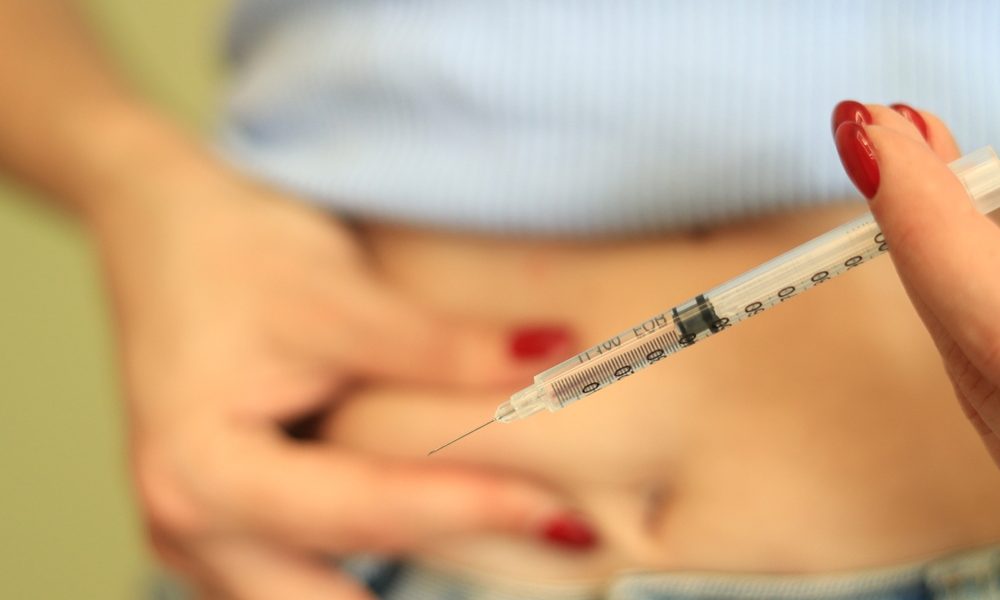
Weight loss jabs ease depression and migraines in menopause – study
News
Avni Wellness secures US$470k funding

Avni Wellness has secured Rs 4 crore, around US$470,000, in seed funding to expand its products and digital commerce capabilities.
The Mumbai-based women’s health start-up plans to strengthen its online retail operations and increase its presence across digital marketplaces.
It will also expand its cycle nutrition product range and grow its women-led network of micro-entrepreneurs.
Founded in 2021 by Sujata Pawar and Apurv Agarwal, Avni Wellness offers science-backed, toxin-free products spanning adolescence, reproductive years and menopause.
Its portfolio includes a patented antimicrobial reusable sanitary pad and a liposomal iron supplement designed to address iron deficiency among women in India.
Liposomal supplements encase nutrients in tiny fat-like particles intended to support absorption.
The company also offers products for polycystic ovary syndrome, or PCOS, calcium supplementation, urinary and vaginal health and seed-based hormonal nutrition. PCOS is a condition that can affect hormone levels, periods and fertility.
Proteus Partners led the funding round, with participation from angel investors Puru Gupta, Sreejith Moolayil, A. Velumani and Somya Nigam.
Avni Wellness said it aims to address gaps in women’s healthcare in India by focusing on hormonal health, nutrition and long-term wellbeing while incorporating livelihood generation and sustainability into its model.
News
Only one-in-three voters say US healthcare system meeting women’s needs

Only 31 per cent of US voters believe healthcare does a good job of meeting women’s needs, according to a national survey.
The survey found broad agreement that women have distinct health needs requiring specific attention, but that care falls short at several stages of life.
Impact Research and Echelon Insights conducted the survey for Center Forward among 1,206 registered voters in the likely electorate across the US.
Tara Evans, marketing director for Plan B One-Step, said: “These findings should serve as a wake-up call for the health care industry and for policymakers.
“Women are telling us loudly and clearly that the system is not working for them. From reproductive health to menopause care to postpartum support, the gaps are real, they are significant, and voters want action.”
Only 31 per cent of respondents said the healthcare system did a good or very good job of meeting women’s health needs.
This compared with 41 per cent who said it performed well in meeting men’s health needs.
Half of the women surveyed said the system did not pay enough attention to their health issues.
Some 41 per cent rated the system as poor or very poor at meeting women’s needs immediately before, during and after menopause.
A further 38 per cent gave the same rating for care following pregnancy and during the postpartum period.
The figure was 35 per cent for care provided while women were seeking to prevent pregnancy.
Overall, 92 per cent agreed that women have distinct health needs deserving specific attention, including 89 per cent of Republicans and 95 per cent of Democrats.
Access to screening for cancers affecting women was considered very important for policymakers to address by 81 per cent of respondents.
Prenatal care was prioritised by 78 per cent, while 77 per cent highlighted both gynaecological care and cardiovascular services.
Postpartum care was considered very important by 72 per cent, while 68 per cent said the same about diabetes and weight management services.
Some 46 per cent of voters said the healthcare system did a poor or very poor job of meeting the needs of rural patients.
Rural women were six percentage points more likely than voters overall to report difficulty accessing quality care.
The findings also showed that gaps in care were not evenly distributed.
Women who described their health as fair or poor were 15 percentage points more likely than those in excellent or very good health to say the system paid too little attention to their needs.
People earning less than US$50,000 a year were among those most likely to feel overlooked.
Among voters earning between US$30,000 and US$49,000 annually, 61 per cent said the system did not pay enough attention to their health issues.
Evans said: “The picture this data paints is one of a system that works better for some Americans than others, and women, particularly those with lower incomes or in rural communities, are bearing the greatest burden of that failure.
“Plan B is committed to being part of the solution by ensuring that at the very minimum, women have access to emergency contraception when they need it.”
Plan B One-Step is an over-the-counter emergency contraceptive available in all 50 US states without identification or a prescription.
The company says it donates up to 500,000 units each year to clinics, non-profit organisations, advocacy groups and other qualifying organisations supporting medically underserved communities.
The survey was conducted from 12 to 16 January 2026 and had a margin of sampling error of plus or minus 3.2 percentage points.
Plan B One-Step is a backup form of birth control intended to help prevent pregnancy after unprotected sex or when another contraceptive method fails.
It is not an abortion pill and does not affect implantation or harm an existing pregnancy.
Emergency contraception such as Plan B is used within 72 hours of unprotected sex and works better the sooner it is taken.
The findings form part of the 2026 Women’s Health Mandate, a five-part bipartisan series examining women’s healthcare in the US.
News
Non-hormonal therapy shows menopause promise

A non-hormonal therapy restored vaginal tissue in an animal study, suggesting a possible new treatment for menopause-related GSM.
Genitourinary syndrome of menopause, or GSM, is a chronic condition caused by falling oestrogen levels.
It affects the vulva, vagina and urinary tract, causing symptoms including vaginal dryness, painful sex and recurring vaginal or urinary tract infections.
Steve Nordeen, the study’s senior author and professor emeritus in the department of pathology at the CU Anschutz School of Medicine, said: “For too many women, the current options are either products that only provide temporary relief or hormone-based treatments they may not feel comfortable using.
“Our goal was to develop a therapy that addresses the underlying cause of the vaginal changes that follow menopause, not just the symptoms, without relying on steroid hormones.
“While more research is needed, these findings suggest we may have a promising new approach.”
Researchers at the University of Colorado Anschutz developed the treatment to restore oestrogen signalling only within vaginal tissue, without exposing the rest of the body to the hormone.
In a preclinical animal study, the therapy restored vaginal tissue structure and function lost through oestrogen deficiency.
The results suggest it could address the underlying cause of GSM rather than offer only temporary relief from symptoms.
An estimated 50 to 70 per cent of women experiencing natural or medically induced menopause develop one or more symptoms of GSM.
Women may have to choose between living with painful symptoms, using over-the-counter products with limited effectiveness or taking hormone-based treatments that replace oestrogen.
Some women cannot or choose not to use hormone therapy because of concerns about potential risks. This is particularly relevant to those with a history of breast cancer or an increased risk of hormone-sensitive cancers.
The researchers synthesised a novel non-steroidal oestrogen-signalling molecule called 3-fluoro 6,4′-dihydroxyflavone, or 3F.
Delivered as a vaginal suppository, the therapy regenerated the vaginal epithelium in a preclinical model of menopause. The epithelium is the layer of cells lining the vagina.
Researchers found no evidence of systemic oestrogenic activity, meaning the treatment did not appear to trigger oestrogen responses elsewhere in the body.
The team is seeking support to move the treatment into human clinical trials.
Nordeen said: “Our findings suggest the prospect of a safer and more effective therapy is within reach.
“The next step is securing the support needed to move this therapy into human clinical trials so we can determine whether it offers women a new treatment option.”
The researchers said the therapy could provide a new option for millions of women with GSM if future clinical trials confirm the findings.
Cancer2 days agoThousands of women could avoid painful cancer exam with new AI blood test
Fertility4 days agoWomen with PMOS should have annual NHS checks, new guidance says
Diagnosis3 days agoTwo “gamechanger” tests set to speed up endometriosis diagnosis on the NHS
Entrepreneur1 week agoKorea’s Femtech Industry Goes Global as Vespexx Hosts Korea Femtech Summit 2026
Fertility2 weeks agoImmunotherapy may temporarily restore fertility in premature menopause
News1 week agoBreast cancer biosensor and low-cost ultrasound startups win women’s health AI competition
News2 weeks agoDon’t miss HTW’s upcoming deep dive into health AI
News1 week agoClue spotlights seven women’s health journeys in new campaign


1 Comment