




News
Sleep checks could unlock better menopause care, poll suggests














From AI embryo analysis in India to couples fertility care launching in the US, Korea’s women’s health startups are going global, and US investors are taking notice.
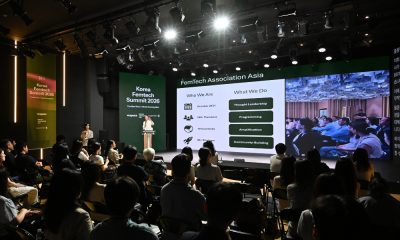
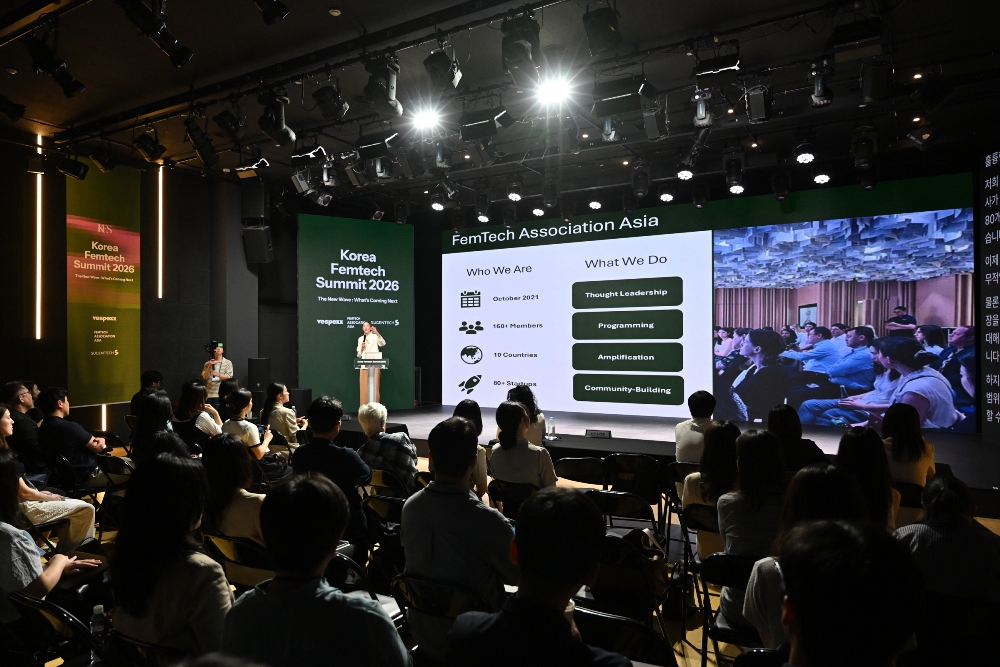
Vespexx, the femtech company behind couples preconception health platform Soonr, hosted Korea Femtech Summit 2026 on June 30 in Seoul, convening founders, clinicians, and investors from Korea, Singapore, Canada, and Japan to map the global expansion of women’s health technology.
A panel moderated by Kakao Ventures’ Jade Chung, an OB/GYN-turned-investor, captured the summit’s central theme: Korean startups taking on the world. On stage were three companies already building well beyond Korea. Vespexx, led by Co-CEO Scarlett Joowon Jung, is entering the US with Soonr; Kai Health, founded by CEO Hyejun Lee, has deployed its AI embryo-analysis software across more than 120 fertility clinics in India; and Endo Health, represented by the Head of Design Karlie Hyeonjeong Koo, has built Glow, an AI coaching app whose user base is 98% women and which is backed by US investors including a16z. Together they discussed what it takes for Korean startups to compete globally, where AI creates a real edge, and whether “K-femtech” can follow the path of K-beauty onto the world stage.
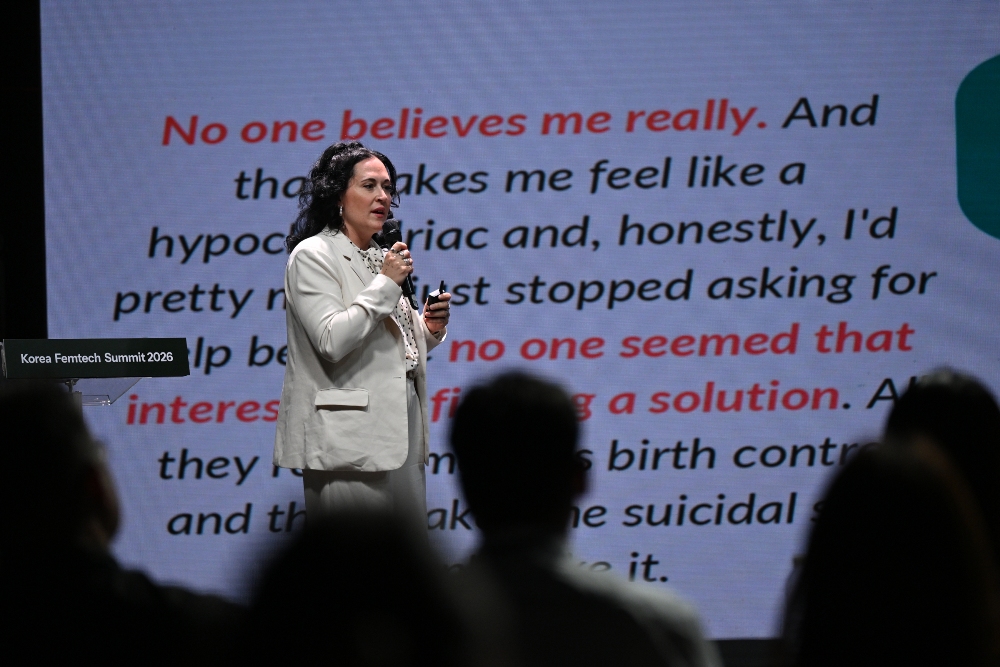
The program spanned the full arc of women’s health technology. Lindsay Davis, founder of FemTech Association Asia, opened with a look at where Asia’s femtech stands today. Dr. Juhye Lee of Ewha Womans University Mokdong Hospital offered a clinician’s view of how patient needs are shifting, arguing that women’s health is expanding beyond pregnancy and treatment toward care across the entire life course. Boram Bae, Head of Digital Health PM Part at Samsung Electronics spoke to how a consumer platform at global scale can connect women’s everyday health data with life-stage care. And Rimi Lee, head of the Femtech Center at KOSDAQ-listed diagnostics company Sugentech, traced the evolution of hormone testing from results read by eye to AI-assisted analysis, and pointed toward wearable continuous hormone monitoring as the next frontier.
Vespexx Co-CEO Scarlett Joowon Jung presented the company’s “dyadic health” approach on their ‘Soonr’ app, which brings both partners into fertility and preconception care rather than tracking a woman’s data alone, an approach validated by their legacy product, Signaling’s 800,000 users across Asia, as the company prepares for US launch.
The summit also featured Rachel Bartholomew, the Canadian founder of Hyivy Health and Femtech Across Borders, who built her pelvic-health company, and Megumi Kimura of the Japan Women’s Health Innovation Association, who outlined the investment and business models driving Japan’s fast-growing femtech market.
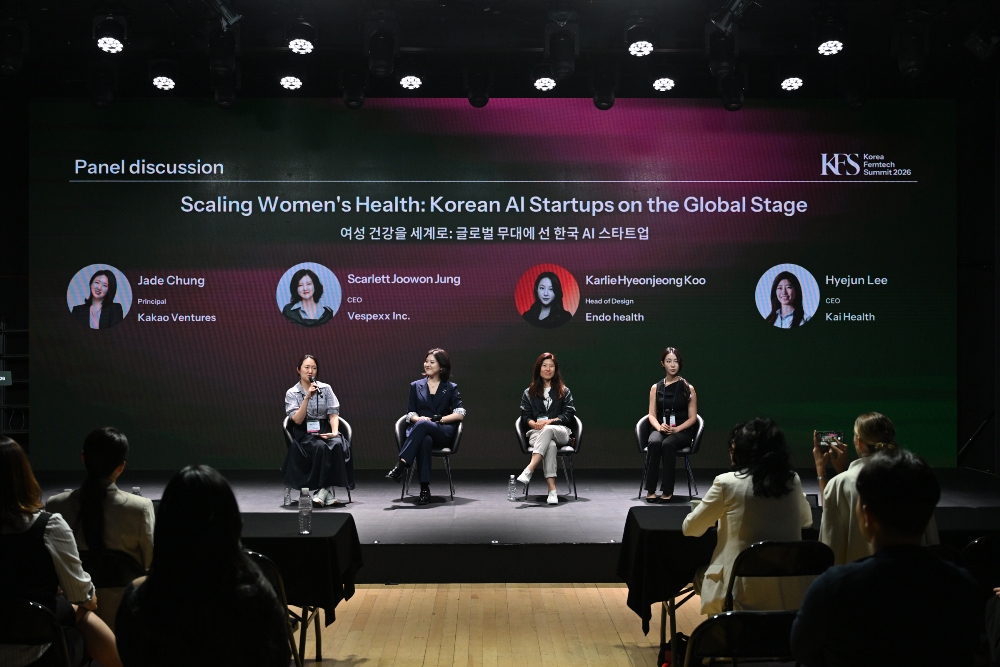
At the summit, Vespexx also announced the launch of Femtech Korea, an industry network intended to connect Korean femtech companies with global markets and partners, and to serve as a bridge for cross-border collaboration.
“Korea has world-class healthcare technology, but femtech has been one of its best-kept secrets,” said Scarlett Joowon Jung, Co-CEO of Vespexx. “The companies on this stage are proof that’s changing. We’re not just building for Korea anymore, we’re building for the world, and we want US partners and investors to be part of that.”
Korea Femtech Summit 2026 was hosted by Vespexx and co-hosted by FemTech Association Asia. The summit was sponsored by Sugentech, with additional support from Innerness and Octolabs.
About Vespexx
Vespexx is a Korean femtech startup and subsidiary of KOSDAQ-listed biotech Sugentech. The company operates Soonr Health, a couples-focused preconception health platform, and its earlier product Signaling has accumulated over 800,000 users. Vespexx is currently expanding into the North American market.
About Femtech Association Asia
FemTech Association Asia is the region’s first and largest specialist advisory and industry network for founders, investors, corporate partners, and ecosystem contributors, with a core focus on improving women’s health through technology solutions.


Our sister publication Health Tech World brings its first live event to London this summer, gathering the people building, buying and regulating healthcare AI for a single afternoon. With a full line-up confirmed and two months to go, tickets are open now, and this first edition is one to book early.
Health Tech World Live, the debut live event from FemTech World’s sister title Health Tech World, makes its first appearance on Friday 21 August, bringing clinicians, founders, developers, NHS commissioners and investors together at Teesside University London in Stratford for an afternoon on where healthcare AI goes next. The programme is confirmed, and with two months to go, it is worth booking your place while the diary is still clear.
The line-up for this first edition reads like a who’s-who of UK health AI. Speakers include Dr James Harmsworth King, Chief Medical Strategy Officer at Numan, fresh from the MHRA’s AI Airlock; Dr Sonia Szamocki, founder and CEO of 01Health; Hugo Dragonetti of NHS London Procurement Partnership; Mikael Kågebäck, CTO at Sleep Cycle; Max Gattlin, Commercial Director at X-on Health; and Marcus Vass, Head of Digital Health at Osborne Clarke, with proceedings chaired by Alastair MacColl.
Across six sessions, the afternoon moves from scaling specialist care and smarter NHS procurement, through responsible delivery and consumer AI, to fair access to GP care and the regulation underpinning all of it. Between the talks, delegates get time with the speakers and the Health Tech World editorial team, the kind of access that is hard to come by anywhere else.
It is shaping up to be one of the summer’s standout dates in health tech, and a launch worth being part of from the start. If you are planning to be there, now is the time to get it booked.
The future of healthcare AI: strategies, opportunities and vital insights
When: Friday 21 August 2026, 12 noon to 4pm
Where: Teesside University London Campus, Queen Elizabeth Olympic Park, 14 East Bay Lane, London, E15 2GW
Tickets: £99

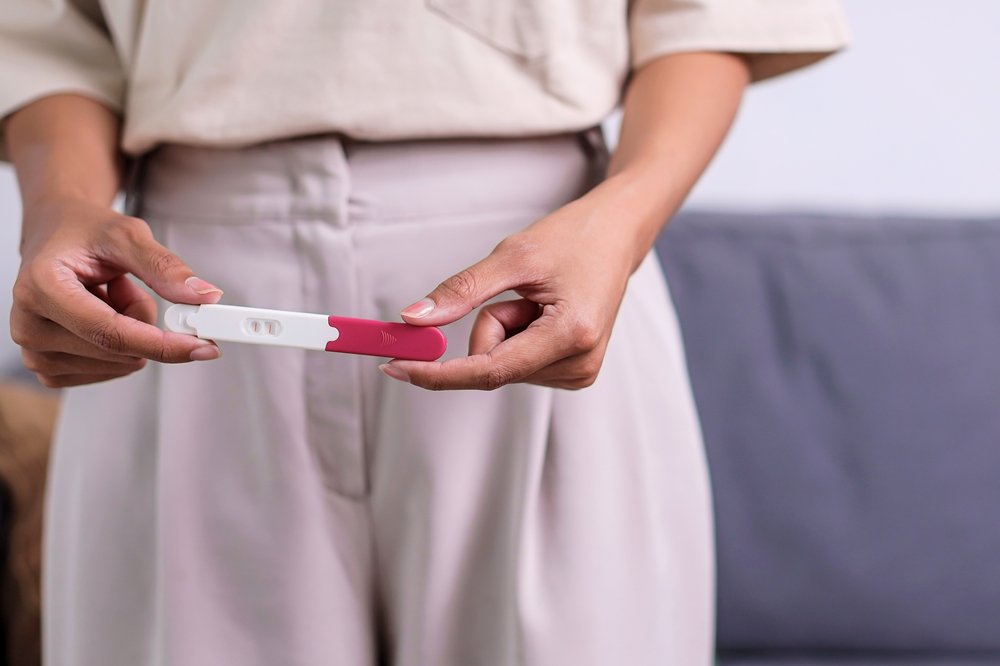
Immunotherapy may temporarily restore fertility in women with autoimmune premature ovarian insufficiency, a pilot study suggests.
Three of the 10 women who received treatment later gave birth to healthy babies.
Premature ovarian insufficiency, or POI, affects just over three per cent of women worldwide and occurs when the ovaries stop functioning before the age of 40.

The condition significantly reduces fertility and can have several causes, including autoimmune processes and genetics.
Researchers at Karolinska Institutet examined whether immunotherapy could make the ovaries temporarily responsive to hormonal stimulation in women with POI caused by autoimmunity.
The study included 12 women aged between 18 and 35 with autoimmune POI.
Two withdrew before treatment began. The remaining 10 underwent ovarian hormone stimulation before receiving rituximab and again four to six months after treatment.
Rituximab is an approved and well-established medicine used to treat several autoimmune conditions and cancers.
None of the women responded to ovarian stimulation before receiving the drug.
After treatment, six developed follicles that made it possible to retrieve eggs in response to ovarian stimulation.
Follicles are small sacs within the ovaries where eggs develop.
Professor Angelica Lindén Hirschberg, the study’s first author and a professor at Karolinska Institutet’s Department of Women’s and Children’s Health, said: “The results show that in some women there remains an egg reserve that can be activated when the autoimmune process is suppressed.”
In five women, mature eggs could be frozen or fertilised.
Three later had embryos transferred and all three gave birth to healthy babies.
For safety reasons, the embryo transfers took place no earlier than one year after treatment.
One serious side effect was reported and was linked to the hormone stimulation rather than the immunotherapy.
Women with autoimmune POI commonly have other autoimmune diseases.
All six women who responded to the treatment also had autoimmune Addison’s disease, a condition in which the immune system destroys the adrenal glands.
The study was a proof-of-concept investigation without a control group and involved a small number of participants, meaning the findings must be interpreted cautiously.
A proof-of-concept study is an early investigation designed to assess whether an approach could work before it is tested more widely.
Professor Lindén Hirschberg said: “This is a first step. To determine whether the method is effective and safe, larger, randomised studies are required.”
The research team has launched a larger randomised study.
The work was carried out by researchers at Karolinska Institutet, Karolinska University Hospital and the University of Bergen.
It was funded by organisations including the Swedish Research Council, the Knut and Alice Wallenberg Foundation, the Novo Nordisk Foundation and Region Stockholm.
The researchers reported no conflicts of interest.
POI is also linked to long-term health risks caused by oestrogen deficiency, including osteoporosis, an increased risk of cardiovascular disease, cognitive decline and poorer mental and sexual wellbeing.
Hormone replacement therapy can relieve menopausal symptoms and reduce many of these risks, but no treatment has been reliably shown to restore fertility in women with POI.
Egg donation was previously the only option for women with the condition who wanted to become pregnant.











 Insight4 weeks ago
British women among angriest in Europe, health survey reveals

 Menopause3 weeks ago
Apple Health adds menopause and perimenopause tracking
 News3 weeks ago
Femtech World Awards 2026: Winners revealed

 News4 weeks ago
Elation Health acquires EHR startup Aster

 News3 weeks ago
Menopause workplace toolkit launched to help UK employers support staff
 pain conditions4 weeks ago
Endometriosis documentary profiles stars including Marilyn Monroe and Amy Schumer

 Motherhood4 weeks ago
Natural birth pressure harming new mothers’ mental health, research finds
 Entrepreneur3 weeks ago
Women’s Health Week Europe 2026 opens pitch applications for mainstage showcase at The Emirates Stadium