




News
AI identifies women at high risk of breast cancer


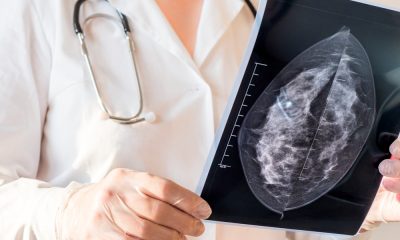
AI technology can identify 42 per cent of breast cancers that develop between routine mammograms by flagging women at highest risk, researchers have found.
The study analysed 134,217 screening mammograms using a deep learning model known as Mirai, which estimates breast cancer risk from imaging data, tumour features and breast density.
Researchers from the University of Cambridge and Addenbrooke’s Hospital tested the tool on UK screening data collected between 2014 and 2016.

They identified 524 “interval cancers” — cases diagnosed between regular screening appointments.
The algorithm’s risk scores predicted 42.4 per cent of these interval cancers among women ranked in the highest 20 per cent for risk, equating to an additional detection rate of 1.7 cancers per 1,000 women screened.
Interval cancers tend to be more advanced when diagnosed, often larger or more aggressive than cancers found during routine screenings.
Co-author Fiona J. Gilbert is professor of radiology at the University of Cambridge and honorary consultant radiologist at Addenbrooke’s Hospital.
Gilbert said: “Interval cancers generally have a worse prognosis compared with screen-detected cancers because they tend to be either larger or more aggressive.
“That’s why it’s important to minimise the number of interval cancers that you have in any screening programme.”
The tool was most accurate for cancers developing within a year of screening, performing less well for those emerging after 12 to 36 months.
It was also less effective for women with extremely dense breast tissue — tissue with more glands and fibrous material than fat — which can make tumours harder to detect.
However, Mirai still outperformed conventional risk assessment tools.
Lead researcher Joshua W. D. Rothwell, an M.B.B.S./Ph.D. student at the University of Cambridge, said the findings could help identify women who need closer monitoring or additional imaging.
Rothwell said: “Our results suggest that further workup of mammograms within the top 20 per cent of scores could yield 42.4 per cent of interval cancers, meaning that Mirai could be used to identify women for supplemental imaging or a shortened screening interval.
In the UK, around 2.2 million women undergo breast screening each year through the triennial programme, which invites women for mammograms every three years.
The technology could refine this process by identifying those who would benefit from extra imaging such as MRI or contrast-enhanced mammography — an X-ray technique that uses dye to highlight areas of concern.
Gilbert said: “If we called back 20 per cent of women for supplemental imaging, we’d have to find the capacity to offer contrast-enhanced mammography or MRI to 440,000 women.
“Personalised breast cancer screening depends on accurately assessing an individual’s risk of developing breast cancer within a specific timeframe.
“We can use supplemental imaging and adjust screening frequency based on a woman’s breast density and likelihood of developing breast cancer within a short timeframe.”
Next steps include comparing commercially available predictive tools, conducting cost-effectiveness studies and running trials to identify which women would benefit most from additional imaging.
“Identifying women at increased risk of developing breast cancer is a complex, multifactorial problem,” Dr Gilbert said.
“The goal is to accurately identify the women most likely to have an interval cancer while minimising the amount of additional imaging required.”











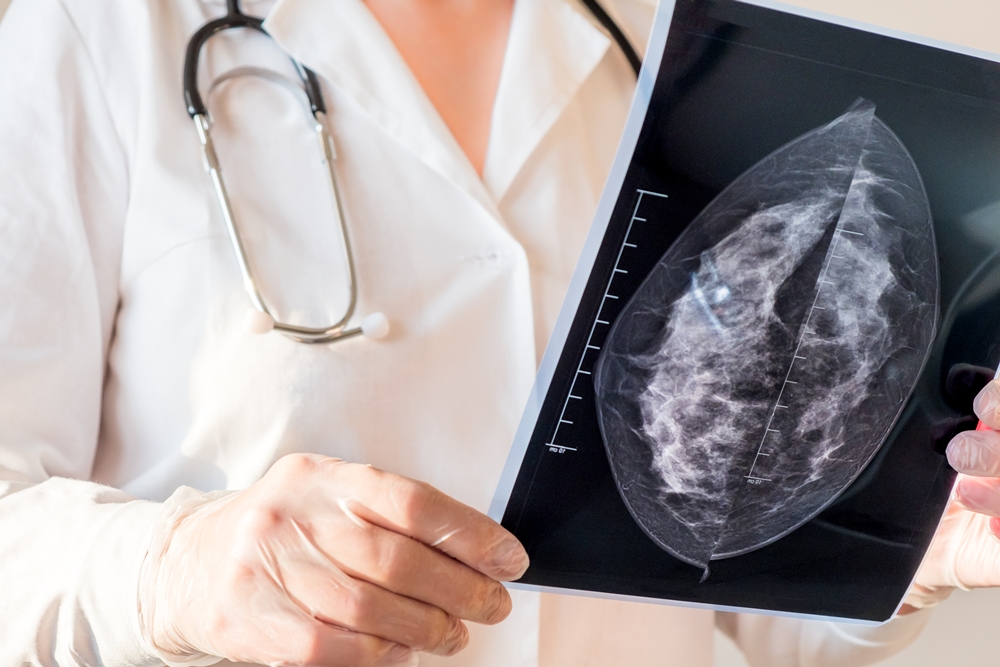
Changes in AI mammogram scores may help predict breast cancer years before diagnosis, research involving more than 54,000 women suggests.
Scores rose steadily among women who later developed the disease but remained broadly stable among those who did not.
The increase could be detected up to six years before diagnosis and became much steeper during the final two years.
Researchers led by Professor Constance Lehman, of Harvard Medical School and healthcare technology company Clairity, analysed screening mammograms taken between 2009 and 2019.
They used a validated, open-source deep learning model to calculate five-year breast cancer risk scores from the images alone.
Deep learning is a form of artificial intelligence trained to recognise complex patterns in large amounts of data.
The model examined the whole mammogram rather than relying on a limited, predetermined feature such as breast density.
Models of this kind have performed better than traditional risk models and breast density alone when estimating a woman’s five-year breast cancer risk.
The study initially included 239,703 consecutive two-dimensional screening mammograms from 89,882 patients across six imaging sites spanning urban tertiary, community-based and rural settings.
All were standard bilateral full-field digital mammography examinations, taken with or without digital breast tomosynthesis.
Digital breast tomosynthesis uses multiple low-dose X-ray images to create a three-dimensional view of the breast.
After exclusions, the final analysis involved 54,014 women with a median age of 61 and a total of 158,807 mammograms.
Each woman contributed one index examination and up to six previous annual mammograms. Women had a median of three scans each.
For women who developed cancer, the index examination was their final screening mammogram within the year before diagnosis. For the cancer-free group, it was their final mammogram during the five-year study period.
The model did not use demographic information, clinical records or historical imaging data when calculating each score.
Of the women included, 817, or one per cent, were diagnosed with breast cancer within 365 days of their index examination.
This included 451 women, or 55 per cent, with invasive breast cancer and 118, or 14 per cent, with ductal carcinoma in situ, known as DCIS.
DCIS occurs when abnormal cells are found inside a milk duct but have not spread into the surrounding breast tissue.
The cancer type was unknown for the remaining 248 patients, representing 30 per cent of the cancer group.
A total of 682 cancers, or 83 per cent, were detected through screening, while 135, or 17 per cent, were interval cancers diagnosed between routine mammograms.
The other 53,197 women were not diagnosed with breast cancer during follow-up and formed the cancer-free comparison group.
Professor Lehman said: “We observed clinically relevant differences in risk trajectories between women who did and did not develop cancer. The increase in scores among cancer patients was detectable as early as six years prior to diagnosis and became more pronounced over time.”
Among women later diagnosed with the disease, the median score rose from 2.1 five to six years before diagnosis to 6.6 at the index examination.
Scores among cancer-free women remained stable, with median values ranging from 1.8 to 2.2 throughout the study.
The rise among women who developed cancer was steepest during the two years before their index examination.
Professor Lehman said: “These findings demonstrate signals, invisible to the human eye, in the image alone can predict future risk. This is exciting, because 85 per cent of women diagnosed with breast cancer do not have a significant family history of breast cancer or known genetic mutations.”
Most breast cancers are considered sporadic, meaning they are not driven by inherited genetic changes or a family history of the disease.
Traditional risk models have a limited ability to distinguish between women who will and will not develop breast cancer when used across large screening populations.
Researchers said tracking how scores change over time could provide more information than calculating risk at a single appointment.
Professor Lehman said: “AI-derived risk scores can identify patients who are otherwise predisposed to the disease, and our findings demonstrate that image-based AI risk scores evolve over time and that changes in those scores may provide additional information about future breast cancer risk.”
The patterns remained consistent when women were grouped by age and breast density.
Breast density describes the amount of fibrous and glandular tissue visible on a mammogram. Dense tissue can make cancers harder to detect and is also associated with an increased risk of the disease.
Researchers said image-based scores could support personalised screening and risk-reduction strategies without relying on self-reported or inconsistent clinical information.
Professor Lehman said: “These trends remained robust across subgroups defined by age and breast density, further supporting the generalisability of our findings. This is particularly relevant given persistent disparities in screening performance across patient populations. A dynamic biomarker approach grounded in the imaging data could mitigate some of these disparities by enabling risk-based personalisation that does not rely on self-reported or inconsistent clinical data.”
A biomarker is a measurable sign that can indicate a person’s health, disease risk or response to treatment.
Changing scores could eventually help clinicians identify women who may benefit from additional imaging or measures intended to reduce their risk.
Professor Lehman said: “With the power of AI, computer vision, and the ability to extract predictive data, we are able to apply the power of imaging to risk assessment and preventing disease from developing. Having a dynamic risk score opens up a whole new domain of more effective preventive therapies for breast cancer, similar to how we screen for and treat patients with high cholesterol and hypertension.”
AI image-based risk scores are included in the 2026 National Comprehensive Cancer Network guidelines.
The guidelines recommend that, from the age of 35, women with an elevated five-year risk score of more than 1.7 per cent consider breast MRI alongside annual mammography.
An AI image-based model approved by the US Food and Drug Administration is already being used to calculate five-year breast cancer risk at selected US healthcare institutions.

Women’s health startup Ovum has raised US$4m in seed funding to develop its AI health journal and expand research using women’s health data.
The round valued the Melbourne startup at US$18m.
Ovum plans to use the funding to develop its artificial intelligence technology and longitudinal datasets, which track health information over time to reveal changes and patterns.

The AI captures symptoms, lifestyle factors, biometric measurements, reproductive health stages, medication, appointments and medical reports.
It uses this information to identify health patterns and create summaries and questions for medical appointments.
Ovum previously raised US$1.7m in pre-seed funding in February 2025 before launching its health journal app in August that year.
Since then, the company says the app has grown by 30 per cent month on month and recorded more than 20,000 downloads.
It has captured 57,000 health data insights and hosted more than 107,000 AI health conversations involving women aged between 15 and 84.
Founder Dr Ariella Heffernan-Marks developed the idea while she was a third-year medical student experiencing chronic migraines and was told that her pain was caused by anxiety.
The company describes the resulting women’s health journal as combining technology and clinical research to make health information more actionable and equitable for women.
Heffernan-Marks said: “I’ve sat on both sides of the desk, as a patient and as a doctor, and that’s why this mission matters so much to me.
“For too long, women have had to navigate healthcare systems that were not designed around their lived experiences or backed by sufficient female health data. Ovum exists to help women better understand their bodies, advocate for themselves with confidence, and contribute to research that improves care for future generations.”
Private health insurer Medibank is an Ovum partner, alongside Fernwood Fitness, Sweat and Menopause Friendly Australia.
Australian Red Cross Lifeblood is also involved in a pilot examining productivity losses caused by women reducing their working hours or leaving employment for health reasons.
Earlier in 2026, Ovum launched clinical trials with St George Hospital and the Royal Hospital for Women to assess AI as a preventative health tool for women.
The research is examining how women currently manage their health, which digital tools they use and whether AI could support health confidence, self-advocacy and continuity of care.
Continuity of care means receiving connected and consistent support across different appointments, healthcare professionals and services.
The funding round was led by Admiralty Capital Group, with participation from Antler, Giant Leap, Aviron Investments, Foggy Valley Aotearoa, Brisbane Angels and Think & Grow.
Existing investor LaunchVic, which is due to merge with Breakthrough Victoria, also participated through its Alice Anderson Fund, which focuses on female founders.
Amanda Andriano, founding partner at Admiralty Capital Group, said the gender health gap was a problem that should not be tolerated.
She said: “Ovum combines mission, market timing and technical capability with an exceptional founder uniquely positioned to lead this movement, and we believe that creates the foundation for a company of global significance.”
Women with endometriosis or painful periods were four to five times more likely to receive an STI diagnosis, a large Japanese study found.
Endometriosis occurs when tissue similar to the lining of the womb grows outside the womb. Although not strictly a menstrual disorder, it can cause pain, irregular periods and infertility.

The study was led by researchers at the University of Yamanashi and funded by Rohto Pharmaceutical Co.
The analysis examined health insurance claims from more than 3.4m women aged 40 or younger who had at least one healthcare visit during 2023.
Around 260,000 women, or 7.5 per cent of those included, had been diagnosed with endometriosis, dysmenorrhoea or both.
Dysmenorrhoea is the medical term for painful periods or menstrual cramps.
Women with endometriosis, dysmenorrhoea or both were four to five times more likely to have a recorded diagnosis of a sexually transmitted infection, or STI, than women without the conditions.
Diagnoses were significantly more common across every category examined, including chlamydia, gonorrhoea, trichomoniasis, genital herpes and other STIs.
Chlamydia was recorded in 3.5 per cent of women with menstruation-related conditions, compared with 0.7 per cent of those without them.
This represented a fivefold increase and the largest difference in prevalence between the two groups.
Gonorrhoea was diagnosed in 0.9 per cent of women with the conditions, compared with 0.2 per cent of those without them, also representing an increase of about five times.
Trichomoniasis, genital herpes and other STIs were diagnosed four to five times more often in women with endometriosis, dysmenorrhoea or both.
Women with endometriosis had the highest STI diagnosis rates overall.
Almost five per cent had a recorded chlamydia diagnosis, making it the most common STI in this group and more than seven times as prevalent as among women without menstruation-related conditions.
Women with dysmenorrhoea also had higher diagnosis rates for every STI included in the analysis.
The study found little evidence that hormonal treatments, including low-dose oestrogen-progestin therapy, affected STI diagnosis rates.
Differences between women who used hormonal treatment and those who did not were generally less than one percentage point.
Researchers suggested several possible explanations for the association between menstruation-related conditions and STI diagnoses.
One likely explanation is that women with endometriosis and dysmenorrhoea attend healthcare appointments more often.
As many STIs cause only mild symptoms, women seeking care more frequently for these conditions may be more likely to have infections detected.
Biological and behavioural factors may also play a part.
Menstruation-related conditions, particularly endometriosis, are associated with inflammation, pain during sex and sexual dysfunction, which could influence contraceptive practices and susceptibility to infection.
However, the authors said these possible explanations “remain speculative.”
They cautioned that differences in healthcare-seeking behaviour make it difficult to determine whether women with menstruation-related conditions acquire more infections or are simply more likely to receive a diagnosis.
The authors concluded that the findings underline the importance of STI screening and reproductive health education for women with endometriosis or painful periods.











 Menopause4 weeks ago
Perimenopause misinformation ‘putting women at risk’

 Entrepreneur4 weeks ago
Women’s Health Innovation Summit opens submissions for 2026 Innovation Showcase

 Insight3 weeks ago
British women among angriest in Europe, health survey reveals

 News4 weeks ago
Women still being failed when they reach menopause, experts say

 Hormonal health2 weeks ago
Apple Health adds menopause and perimenopause tracking

 Menopause4 weeks ago
Sweden eyes domestic production of oestrogen patches amid menopause treatment shortage

 News2 weeks ago
Femtech World Awards 2026: Winners revealed

 News4 weeks ago
Three menopause innovators shortlisted for Femtech World Award