




News
Swab-based endometrial cancer test wins place in German national guideline


WID-easy, the only non-invasive triage test for endometrial cancer in routine use in a European public health system, has been cited in Germany’s highest-tier clinical guidance; a marker that non-invasive detection is reaching clinical maturity.
The vaginal-swab test designed to spare women unnecessary invasive procedures has been referenced in the updated German S3 Guideline on Endometrial Cancer, its maker Sola Diagnostics has announced.
The Austria-based women’s-health diagnostics company behind the WID-easy Test, said the test now features in the recommendations-supporting background text of the guideline’s latest version (v4.0, May 2026; AWMF 032-034OL), in Section 4.3.
The S3 designation is the highest evidence- and consensus-based tier in the German clinical guideline system, broadly comparable in standing to NICE guidance in the UK, and is widely drawn on in clinical practice, reimbursement and liability assessments.
In Section 4.3, the guideline cites four peer-reviewed validation studies of the WID-easy Test and credits it with a sensitivity of more than 95 per cent and a negative predictive value of at least 99.7 per cent.
It describes a fall in invasive workup from 19 to two dilatation-and-curettage (D&C) procedures per cancer detected when compared with transvaginal ultrasound alone, assuming a realistic 3.4 per cent cancer prevalence in women with postmenopausal bleeding, and states that the test has the potential to improve the diagnostic workup of women with peri- and post-menopausal bleeding by cutting the rate of invasive procedures.
A growing burden, an imperfect standard
Endometrial cancer is the most common gynaecological cancer in high-income countries, and its incidence is rising, driven by ageing populations and increasing obesity, making it one of the fastest-growing cancer burdens in women’s health.
A number of groups are now developing non-invasive tests for earlier detection. The current standard, transvaginal ultrasound, is an imperfect triage tool: it misses serous carcinomas and performs especially poorly in black women, a group with disproportionately high endometrial-cancer mortality.
WID-easy has been validated prospectively across multiple cohorts, including a dedicated cohort of black women in Ghana (Ken-Amoah et al., 2025).
Adopted in routine care
WID-easy is the only endometrial-cancer triage test in Europe with real-world adoption in a public health system. It is UKCA-marked and in use across NHS pilot sites in England and Scotland, and is delivered through commercial laboratory partners across the DACH region of Austria, Germany and Switzerland. Its UK pivotal study, EASY-CARE, is funded by a competitively awarded NIHR i4i grant.
The postmenopausal bleeding pathway has been singled out for change across three UK Government strategy documents published in 2026 — the National Cancer Plan for England (DHSC), the renewed Women’s Health Strategy for England (DHSC) and the National HealthTech Access Programme (NICE).
The NICE initiative names speeding up access to better tools for detecting endometrial cancer in women with unexplained bleeding as one of only four priority areas.
WID-easy is the only non-invasive endometrial-cancer triage test that is UKCA-marked and commercially available for NHS use today, with no competing molecular test yet on the market.
“Seeing WID-easy referenced in a guideline of this standing confirms that the science behind non-invasive endometrial cancer detection has reached clinical maturity,” said Prof Martin Widschwendter, founder and member of the scientific advisory board at Sola Diagnostics.
“Our goal has always been to spare women unnecessary invasive procedures without missing the cancers that matter — and to do so equitably, across all populations.”
The WID-easy Test detects and triages endometrial cancer from a vaginal swab using DNA methylation. It is built on the WID-qEC biomarker, exclusively licensed from University College London Business and complemented by Sola’s own patent portfolio. The same methylation platform underpins a pipeline of further tests in cervical, ovarian and breast cancer.












Nottingham University Hospitals NHS Trust has apologised after a human error caused 11 years of maternity data to be overwritten.
The incident happened during routine technical work on 18 August, when computer instructions intended to create a copy of a radiotherapy database were mistakenly applied to the maternity database.
Most of the affected information has since been recovered, including notes, observations, test results and other information recorded as part of patient care.

However, the trust has been unable to fully restore the historical record showing who viewed maternity records between September 2011 and November 2022.
Current data was not affected and the incident has had no impact on current maternity services or care provided to women and babies, according to the trust.
It also said no information was accessed or used inappropriately as a result of the incident.
Andy Callow, chief digital and information officer at Nottingham University Hospitals, said: “I am sorry for the concern and distress this incident may cause to women and families affected.
“On 18 August 2026, a human error during a routine technical process resulted in a maternity records database being unintentionally overwritten.
“We took immediate action to investigate the incident and recover the affected information.
“The information needed to support patient care has been restored and there has been no impact on current maternity services or the care provided to women and babies today.
“However, to date, we have been unable to fully restore the historical record showing who viewed maternity records between September 2011 and November 2022.
“We have informed the Information Commissioner’s Office, completed a full investigation and strengthened our processes and controls to help prevent a similar incident from happening again.”
The error occurred when pre-written computer instructions previously used for another hospital system were used during the technical work.
A setting that should have been changed was not altered, resulting in work being carried out on the maternity database instead of the radiotherapy database.
The issue was escalated within minutes of being identified and experts were brought in to recover as much information as possible.
The trust has referred the incident to the Information Commissioner’s Office and notified Nottinghamshire Police, which is conducting a separate criminal investigation into maternity care at the trust.
The force is assessing whether the loss of information about who accessed maternity records could affect that investigation.
The incident follows a maternity review led by midwife Donna Ockenden, which concluded in June after examining the cases of 2,500 families over a 20-year period.
The review found more than 500 mothers and babies suffered potentially avoidable harm, with 162 dying following substandard care. Some babies who survived were left seriously disabled.
Nottinghamshire Police announced its separate criminal investigation, Operation Perth, in September 2023.


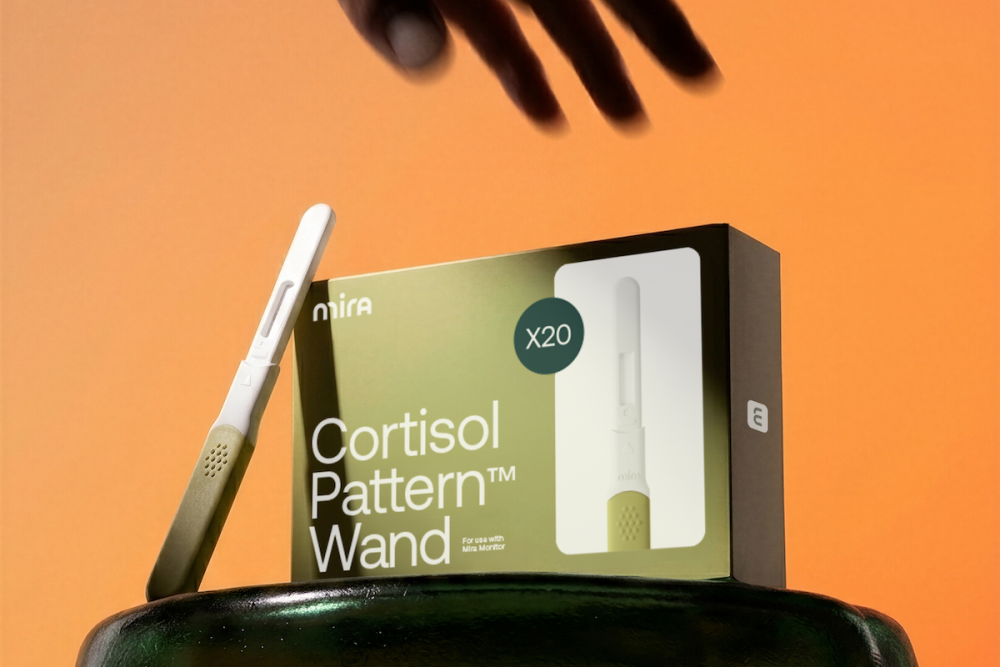
Mira has launched an at-home cortisol tracking kit that allows women to monitor stress-related patterns over time using urine samples.
The Cortisol Pattern Kit measures urinary free cortisol directly from a urine sample and displays results through the company’s existing monitor and app.
The system is intended for repeated testing rather than a single measurement, allowing users to compare results with a personal baseline built from their own data.
Mira said consistent daily testing can establish a baseline in about a week. It recommends testing in the morning and evening to see how cortisol patterns change throughout the day.
Cortisol is involved in the body’s stress response but is not a direct or complete measure of stress. The company said the kit is intended for general wellness use and is not designed to diagnose stress, an endocrine condition or any other medical condition.
The Cortisol Pattern Wands use the same lateral-flow testing format as Mira’s existing hormone tests. Users dip a wand into a urine sample, insert it into the Mira Monitor and view the result in the app within minutes.
The company said cortisol data can be viewed alongside cycle, hormone and daily routine information.
Sylvia Kang, founder and chief executive of Mira, said: “The Cortisol Pattern™ Kit gives women a new way to understand their stress patterns over time, in the context of their own biology.”
She added: “We built Mira to give women answers they had spent far too long searching for, beginning with the TTC journey and expanding into hormone and cycle tracking across life stages, including perimenopause. Now, we’re taking Mira beyond reproductive health and into everyday wellness, bringing personalised stress-pattern tracking directly into women’s homes.”
Mira said more than 350,000 women already use its platform to track their cycle and hormones.
Waitlist sign-ups for the Cortisol Pattern Kit and Cortisol Pattern Wands opened on 22 September, with wand refills available to pre-order in 20- and 30-count options.

A targeted nanotherapy reduced endometriosis lesions and pain sensitivity after a single dose in mice, early research has found.
The experimental treatment uses a nanoparticle to deliver an existing drug to immune cells associated with endometriosis.
Researchers hope the approach could eventually lead to a treatment for people with the chronic condition, but it has not yet been tested in humans.
Kanako Hayashi, professor in Washington State University’s School of Molecular Biosciences in the College of Veterinary Medicine and a corresponding author of the research, said: “We found the disease-specific immune cell, and then we had a drug, but we couldn’t target the cell with the drug alone.
“So we used this nanocarrier that delivers the drug specifically to the disease site.”
The Washington State University team developed the therapy after previously identifying a distinct population of macrophages associated with endometriosis. Macrophages are white blood cells involved in immune defence.
They designed a nanocarrier, a specialised molecule used to transport drugs to the disease site, to target these cells without affecting surrounding cells and tissue.
The treatment uses niclosamide, a drug approved to treat intestinal tapeworms that is also being studied for other potential uses, including cancer treatment.
Previous research by the team found that niclosamide could reduce endometriosis lesions. However, the drug has low solubility, meaning large amounts are needed for it to work and limiting how long it can safely be taken.
The researchers engineered a nano-sized molecule called a dendrimer to bond with niclosamide and deliver it in a more soluble form.
In a mouse model, a single injection reduced the size and number of endometriosis lesions as well as sensitivity to pain.
Endometriosis affects roughly 190 million women worldwide and occurs when lesions similar to tissue inside the uterus grow outside it.
Symptoms can include chronic pain, severe cramps, pain during sex and infertility. Hormonal therapies can help manage symptoms but may affect fertility and bone density, while surgery can remove lesions but its effectiveness may be short-term.
Recent research has focused on immune system dysfunction in endometriosis, particularly problems involving macrophages.
The researchers are working with the WSU Office of Entrepreneurship and Innovation as they pursue patenting and commercialisation opportunities and seek support to test the technology in human trials.
Hayashi said: “Although we still need to clear multiple phases, this study is telling us the efficacy is strong, and this nanocarrier is stable, so far, for two weeks—and we think we can go longer.
“The idea is that if it’s stable for a month, you could go to the doctor once a month, get the shot, either IV or muscle injection, and then go home.”









 Menopause1 week ago
Menopause may not explain rising heart condition in women – study

 Pregnancy2 weeks ago
Paracetamol use may impact future fertility, studies suggest

 Insight1 week ago
Women with birth trauma face 2.5x higher healthcare costs – study

 Menopause2 weeks ago
Cancer drug could tackle osteoporosis menopause weight gain

 pain conditions1 week ago
Medical cannabis may improve endometriosis symptoms – study

 Cancer1 week ago
Study could explain why obesity is a breast cancer risk factor

 Menopause2 weeks ago
Menopause hormone therapy may improve cardiovascular health outcomes, study suggests
 AI1 week ago
Evvy secures US$40m for AI-powered vaginal microbiome testing