




News
FDA plans to revise black box warning on menopause hormone therapies


The US Food and Drug Administration (FDA) plans to update the black box warning on menopause hormone therapies soon, commissioner Dr Martin Makary has said.
The move follows years of debate over safety alerts that have limited access to treatment for millions of women with menopause symptoms.
“We are in serious discussions now about what to do about the black box warning, and I think you’ll hear something on it very soon,” Makary told CNN’s Dr Sanjay Gupta on the Chasing Life podcast.

The black box warning – the FDA’s strongest safety alert – has appeared on oestrogen-containing menopause treatments since 2003, including pills, patches, sprays and creams.
It warns that their use can increase the risk of uterine and breast cancers, strokes, blood clots and dementia in women over 65.
The label was added after a large government-funded study found that women taking oestrogen pills after menopause had higher risks for certain cancers, heart disease and stroke compared with those given a placebo.
The participants had an average age of 63, meaning many were already past menopause when they began therapy.
After the study and label change, prescriptions for hormone replacement therapy (HRT) dropped by more than 70 per cent, and many doctors became reluctant to prescribe them.
“It’s really a tragedy. It’s maybe one of the greatest screw-ups of modern medicine,” Makary said.
“It’s resulted in 50 million women being denied this incredible therapy.”
The result has been undertreatment of symptoms that can be debilitating for women in midlife.
In the late 1990s, more than one in four postmenopausal women took hormones to manage symptoms such as hot flushes (sudden sensations of heat), mood swings and night sweats.
By 2020, that figure had dropped to about one in 25.
Newer analyses of the original Women’s Health Initiative data have since found that hormone therapy started in women under 60, or within 10 years of starting menopause, may safely help manage symptoms such as hot flushes and poor sleep, provided they do not have specific contraindications such as a history of hormone-sensitive breast or uterine cancer.
Makary said HRT may also have benefits including reducing bone loss, lowering heart disease risk and helping preserve memory.
“Women live longer and feel better on hormone replacement therapy when started before age 60,” Makary told Gupta.
The potential change follows a July meeting of experts convened by the FDA to discuss the benefits and risks of hormone replacement therapy.
The panellists urged the agency to remove the warning label.
“I am begging the FDA, and all of us are begging, please remove the box label,” said Dr JoAnn Pinkerton, professor of obstetrics and gynaecology at the University of Virginia School of Medicine.
“And please stop harming women.”
Some women’s health experts say the FDA overstepped when it applied the boxed warning to all forms of oestrogen replacement.
“That is a real mistake,” said Dr JoAnn Manson, professor at Harvard Medical School and one of the principal investigators of the Women’s Health Initiative study.
Some forms do not raise oestrogen levels in the blood, so they are unlikely to increase cancer risk.
For example, studies have found that low doses of oestrogen delivered by vaginal tablets, creams or rings can safely treat symptoms of dryness, painful sex and urinary tract infections in postmenopausal women, Manson said.
However, the black box warning may still deter women from using them.
“It scares them away. And even after they purchase the product, they just don’t take it,” Manson said.
“This is really where women are being tremendously undertreated and are suffering unnecessarily due to a boxed warning that is just class labelling.
“All hormone therapy products get exactly the same boxed warning, and it is really harming women,” said Manson, who is chief of the Division of Preventive Medicine at Brigham and Women’s Hospital.
Manson said it would also be reasonable for the FDA to consider removing the warnings from oestrogen-containing therapies delivered through the skin in patches, sprays or creams to relieve menopause symptoms such as hot flushes and night sweats.
These deliver hormones into the bloodstream, but observational studies suggest they have a more favourable balance of risks and benefits than pills.
She was less certain about removing the boxed warning from oestrogen-containing pills taken by mouth.
“I think that’s where it’s evidence-based and justified,” she said.
A 2022 review by the US Preventive Services Task Force concluded that, in women past menopause, there was no net benefit to taking either oestrogen alone – prescribed for women who have had their uterus removed – or a combination of oestrogen and progestin – typically prescribed for women who still have their uterus – to prevent chronic conditions such as heart disease and dementia.
What remains unclear is whether women who start hormone therapy during perimenopause (the transition before menopause) need to stay on it long-term to gain potential heart, brain and bone benefits.
“It’s a very good question,” said Dr Roberta Diaz Brinton, a neuroscientist who studies oestrogen’s effects on the brain at the University of Arizona.
“We need to answer that.”
Other experts say there is still not enough scientific evidence to support long-term use of hormones to prevent heart disease, Alzheimer’s disease or osteoporosis.
Four medical societies – the American College of Obstetricians and Gynecologists, the Menopause Society, the Endocrine Society and the American Association of Clinical Endocrinology – support the use of hormones to relieve menopausal symptoms but do not recommend continued use to prevent chronic conditions such as heart disease.
Dr Leslie Cho, who runs Cleveland Clinic’s women’s cardiovascular centre, said she supports lifting the warning from vaginal oestrogen cream.
“It’s never made sense on the cream,” she said.
But Cho warned that some of the proposed benefits are based on after-the-fact analyses of studies that were not designed to measure them.
“I’m so glad to hear the FDA chair talk about this, because then, if that’s the case, they should do a study.
“They should fund a study,” she said.
With the rise of online hormone prescriptions, Cho warned that some women could start taking hormones despite having risk factors such as high blood pressure, obesity or high cholesterol, which could outweigh potential benefits.
Even in younger women, studies show that hormones may increase the risk of blood clots.
“Women have to talk to their physicians about hormone replacement therapy before they believe in all the hype that’s currently ongoing, because so much of it is hype,” she said.












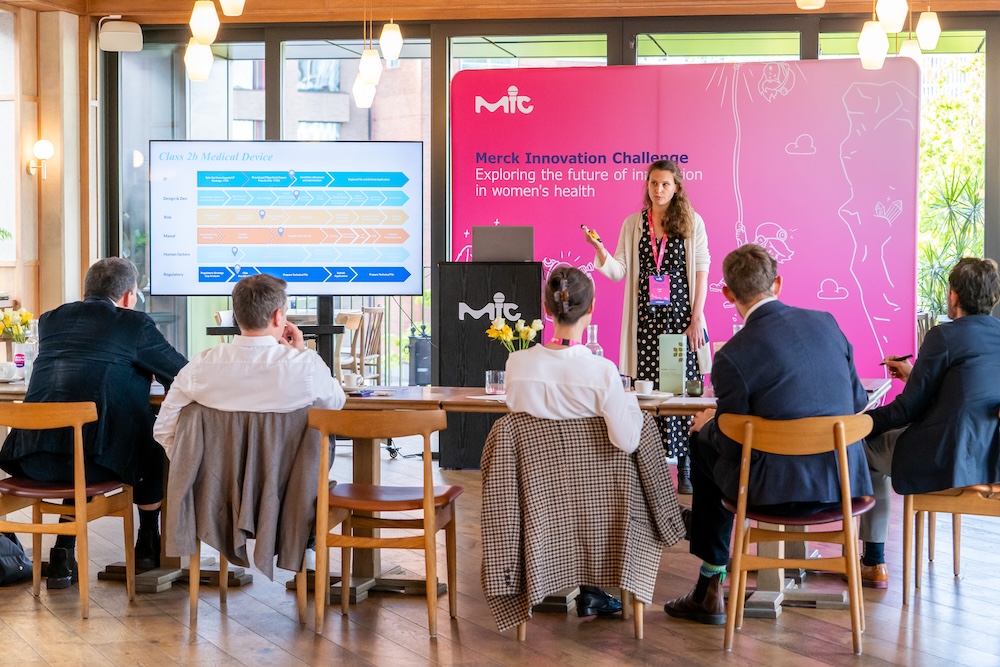
Applications close 2 September at 12pm BST for W Accelerate with Merck KGaA and M Ventures, a fast-track programme offering startups, scaleups and spinouts in reproductive and maternal health direct access to decision-makers at one of the world’s leading reproductive health companies.
With a single application, innovators connect with Merck KGaA’s partnership team and investment professionals from M Ventures, Merck’s corporate venture arm.
Selected companies will be notified on 11 September and invited to pitch at W Accelerate in London, at One Hundred Shoreditch, on 5 October.
During the event, they will receive a private 30-minute session with Merck and M Ventures leadership, small-group guidance from regulation and investment specialists, an “Ask Merck Anything” roundtable, and access to a VIP networking reception.
Applications are open to companies working on breakthrough solutions across reproductive and maternal health, including fertility, endometriosis, adenomyosis, ovarian health, preeclampsia and pregnancy comorbidities.
Applicants can choose one of three lanes, depending on whether they’re seeking strategic collaboration, investment, or both: Partnership Lane, Investment Lane, or Dual Lane. Direct-to-consumer and over-the-counter products are outside the programme’s scope.
Thang Vo-Ta, CEO & co-founder of Calla Lily Clinical Care and participant of a previous edition of W Accelerate with Merck Healthcare and M Ventures, said: “The opportunity to pitch directly to senior leadership at Merck and M Ventures sparked conversations that became the foundation of relationships leading to our eventual strategic collaboration with Merck. I’ve yet to see another event run with this level of excellence.”
For more information, visit W Group’s website: wplatform.co
Applications close 2nd September 2026, 12pm BST
W Accelerate event: 5th October 2026 at One Hundred Shoreditch, London (travel and accommodation not provided)
Apply here


The Women’s Health Innovation Summit (WHIS), the event uniting the global women’s health ecosystem, has just announced 18 new speakers joining the agenda for its 2026 summit, taking place October 13–15 at Encore Boston Harbor.
The latest additions bring further depth across pharma, clinical research, health systems, venture, and policy, reinforcing WHIS’s role as the only platform where the full women’s health ecosystem convenes under one roof.
Newly confirmed speakers include:
- Kelle Moley, MD – VP, Women’s Health Early Phase Clinical Development, Cardiometabolic Research, Eli Lilly & Company
- Justine Levin-Allerhand – Executive Partner, Chief Corporate Development Officer & COO, Flagship Labs, Flagship Pioneering
- Sebnem Yildirimoglu, MD, PMP – Executive Director, Women’s Health Strategy, Premier Research
- Terri Stewart – Head of Global Healthcare & Government Affairs, EMD Serono
- Dr. Morag Grassie – Executive Director, Blavatnik Fund for Innovation, Yale
- Sandra Butler – Director, Design Impact, Mass General Brigham
- Zhenya Lindgardt – Chief Executive Officer, Sera Prognostics
- Sadie Morahan – Head of US Revenue, Withings Health Solutions
- Angela Drew, PhD – Vice President, Regulatory Strategy, Premier Research
- Dr. Stephanie Lahr – CMIO, Aqurio
- Michelle Andrews – Contributing Writer, KFF Health News
- Charlotte Williams – CEO, My Bump Hub
- Clint Dart, MS – Director, NIH Women’s Health Data Coordinating Center, Premier Research
- Cass Sanford – US Venture Advisor, FemTech Lab
- Megan Mukuria – Founder & CEO, ZanaAfrica
- Tiffany Inglis, MD, FACOG – Chief Medical Officer, Sera Prognostics
- Angelean Hendrix, PhD – Vice President, Pharmacometrics and MIDD, Premier Research
- Amanda Ducach – CEO & Co-founder, EmaEQ
“WHIS is where the women’s health industry comes together to take action,” said Poppy Howard-Wall, Event Director at WHIS.
“This latest wave of speakers reflects exactly the kind of cross-sector expertise our attendees expect – from global pharma and clinical research leadership to venture, health systems, and grassroots innovation.
“It’s this breadth that makes WHIS the room where things actually move forward.”
Bringing the Full Ecosystem Together
These additions join a growing 2026 agenda spanning four content tracks that reflect the full lifecycle of healthcare innovation, from early-stage research and development through to patient delivery, system transformation, and commercial scale.
Attendees can expect over 1,000 senior decision-makers, 120+ expert speakers, four dedicated stages, and more than 10 hours of curated 1:1 meetings.
Full speaker and agenda details are available at whisusa.com/speakers-2026.
About WHIS
The Women’s Health Innovation Summit is the only platform uniting the full women’s health ecosystem – providers, payers, employers, pharma leaders, investors, and innovators -to increase deal flow, expand reimbursement, improve access, and deliver better outcomes for women at every stage of life.





 Entrepreneur2 weeks ago
Applications close August 18 for Women’s Health Innovation Summit 2026 Innovation Showcase

 Menopause2 weeks ago
Third of women unaware of perimenopause mental health impact

 Fertility1 week ago
Chelsea FC Women to launch first-of-its-kind player fertility fund

 Menopause2 weeks ago
Menopausal hormone therapy may lower dementia risk, study suggests

 Opinion1 week ago
anna perimenopause app launches across 39 markets

 Hormonal health2 weeks ago
We are wrapping our children in plastic and calling it care

 Pregnancy2 weeks ago
Chemicals in plastics may be linked to high blood pressure during pregnancy

 News2 weeks ago
Women with endometriosis face 46% higher risk of type 2 diabetes – study