




Connect with us

Entrepreneur

Women’s Health Week Europe launches two specialised pitch competitions to accelerate innovation
Published

on

Following the success of standout alumni like Impli and Hera Biotech, Women’s Health Week Europe doubles down on innovation with two targeted startup showcases.

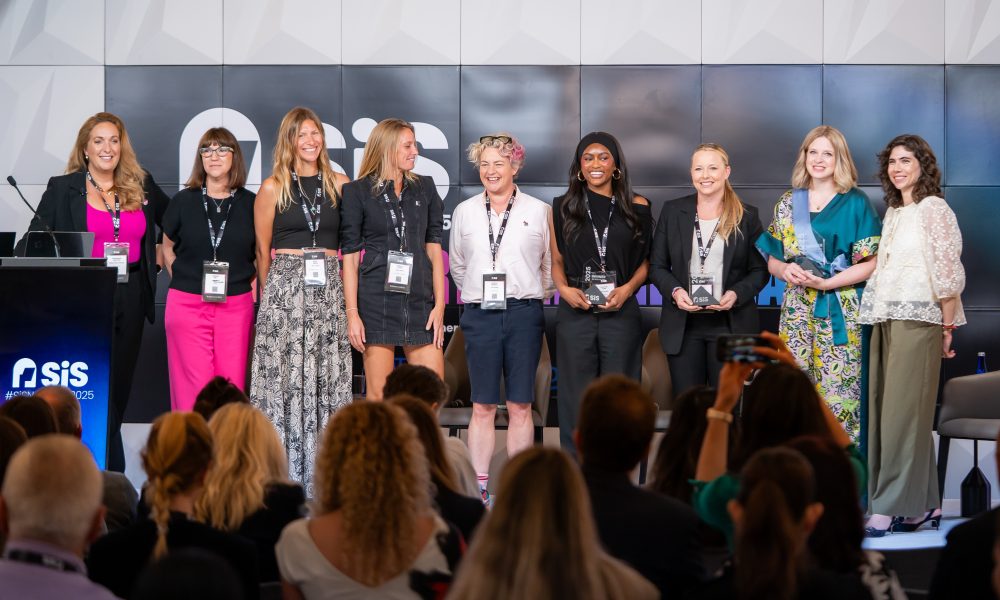
Women’s Health Week Europe, the continent’s largest dedicated women’s health event, has announced the opening of applications for its expanded innovation showcase — now featuring two specialized pitch competitions designed to fast-track breakthrough solutions across the women’s health ecosystem.

Building on a track record of launching growth-stage companies like Impli and Hera Biotech, this year’s competition introduces two targeted tracks to reflect the growing breadth of innovation:

Therapeutic & Med Device Showcase

For clinically focused solutions in oncology, cardiovascular and autoimmune health, reproductive care, contraception, maternal and pelvic health, menopause (via HRT, diagnostics, or devices), clinical mental health (including DTx and medical devices), and bone health.

Consumer & Tech Showcase

For direct-to-consumer solutions in menstrual and sexual health, sleep, dermatology, holistic wellness, mental health (via wellness apps, community platforms, or self-care tools), and menopause management through tracking and wellness products.

The competitions will take place at the Barbican Centre in London on 16–17 October 2025 as part of Women’s Health Week Europe, giving selected startups direct access to top-tier investors, global corporates, and strategic partners actively seeking opportunities in the rapidly growing women’s health market.

“The women’s health sector is experiencing unprecedented momentum,” said Molly

Taylor, Head of Content at Women’s Health Week Europe.

“By expanding into two specialised showcases, we’re ensuring that innovations — from clinical therapeutics to consumer wellness — gain direct access to the capital and connections they need to scale.”

A Market Ripe for Disruption

The global women’s health market is projected to reach $60 billion by 2027, fueled by rising awareness, rapid technological advancement, and increased investment in historically underserved areas.

These pitch competitions aim to accelerate this progress by connecting cutting-edge startups with the capital and partnerships needed to bring their solutions to market.

What Applicants Receive

All applicants — regardless of selection status — will benefit from high-value exposure and access:

  • Access to Founders Day programming
  • Featured listing in the official startup directory
  • Networking with investors, multinationals, and sector experts
  • Full event access to Women’s Health Week Europe
  • One-to-one investor meetings through curated matchmaking

Finalists additionally receive:

  • Live pitch opportunity before leading European investors and industry leaders
  • High-impact visibility and validation among potential partners and funders

Proven Results

The competition has a strong track record of success.

Previous winners and participants have secured significant funding, forged strategic partnerships, and unlocked new market opportunities — validating the platform’s power to connect innovation with investment and scale.

Application Details

Deadline: 19 September 2025

Location: Barbican Centre, London

To Apply: Submit a pitch deck and secure an event ticket (early-bird pricing

currently available)

Apply now: https://bit.ly/400EoZc

About Women’s Health Week Europe

Women’s Health Week Europe is the continent’s premier gathering of innovators, investors, healthcare providers, and industry leaders focused on advancing women’s health.

From startup showcases and strategic matchmaking to interactive workshops and investor roundtables, the event is designed to catalyze commercial growth and health impact across the women’s health ecosystem.

Entrepreneur

Impli wins £1.4m for hormone patch

Published

on

Impli has secured a £1.4m grant to begin clinical use of a real-time hormone patch for infertility treatment.

The startup, which is working with innovations from Imperial College London, is developing a continuous hormone monitoring system for use in in vitro fertilisation, known as IVF.

IVF is a fertility treatment in which eggs are fertilised outside the body before an embryo is transferred to the womb.

Timing is critical in IVF, the most common form of infertility treatment, but most patients are still monitored through blood tests taken every other day at best.

Hormone levels can change within hours, meaning important shifts may be missed.

These can include hormone surges linked to egg release, dips that may contribute to implantation failure and early signs of ovarian hyperstimulation syndrome.

Ovarian hyperstimulation syndrome is a potentially serious reaction to fertility medicines, where the ovaries over-respond and become swollen.

In a treatment with low success rates, these uncertainties can affect patient outcomes and wellbeing.

Impli’s system is based on research by Dr Salzitsa Anastasova in the department of mechanical engineering at Imperial.

The technology uses electrochemical biosensors to sample hormones in the fluid between cells.

These can be used in a subcutaneous implant, meaning one placed under the skin, or in Impli’s Bio-Endocrine Analysis Monitor, known as BEAM, which uses microneedles that pierce the skin.

Microneedles are tiny needles designed to enter the upper layers of the skin with minimal discomfort.

The biosensors continuously measure oestradiol, luteinising hormone and progesterone, which are hormones involved in the menstrual cycle and fertility treatment.

Data is transmitted wirelessly to a smartphone, where AI software converts raw signals into real-time hormone trends.

Sotirios Saravelos, consultant gynaecologist and reproductive medicine subspecialist at the Wolfson Fertility Centre, part of Imperial College Healthcare NHS Trust, said:

“Continuous hormone monitoring has the potential to change the landscape of fertility treatment, both in terms of clinical care and patient experience. Rather than snapshots taken at fixed points in time, with Impli we will have access to a live feed of each patient’s hormonal response, allowing us to personalise care in a way that has not been possible before.”

Saravelos is part of the research consortium that has won a £1.4m grant to take Impli’s BEAM device from prototype to its first human clinical validation for IVF.

The project was designed with support from Dr Simon Hanassab as part of a PhD on how AI can support decision making for IVF.

The work was carried out at the UKRI Centre for Doctoral Training in AI for Healthcare at Imperial, a collaboration between the department of computing and the department of metabolism, digestion and reproduction.

Hanassab is now working part-time as Impli’s head of AI.

The grant comes from the National Institute for Health and Care Research Invention for Innovation programme.

It will support a 30-month project bringing together Impli, Imperial College Healthcare NHS Trust, the London Institute for Healthcare Engineering at King’s College London and the patient advocacy network Fertility Europe.

Specialist medical device manufacturer TTP is also involved.

BEAM is the first step in Impli’s plan to develop a broader platform of fully implantable, long-duration monitoring systems.

Anna Luisa Schaffgotsch, founder and chief executive of Impli, said:

“We are not just building a device, we are building the evidence base to show that continuous hormone monitoring is possible, clinically meaningful and ready for the real world. With an exceptional consortium behind us, we now have the funding, the expertise and the clinical pathway to do that properly.”

According to the company, the same core technology could later have applications in hormonally driven cancers, polycystic ovary syndrome, endometriosis and menopause.

Polycystic ovary syndrome is a common hormonal condition that can affect periods, fertility and metabolism.

Endometriosis is a condition where tissue similar to the lining of the womb grows outside the uterus, often causing pain.

BEAM’s development builds on more than 15 years of biosensor research at Imperial, with intellectual property covering the sensing approach, device architecture and data interfaces.

Impli has so far delivered three functional prototypes, completed pre-clinical laboratory trials and begun animal trials, which the company said have shown positive results.

It also has a strategic partnership with Bayer on real-time hormone biosensing and relationships with IVF clinics internationally.

Continue Reading

Entrepreneur

Women’s Health Week Europe 2026 opens pitch applications for mainstage showcase at The Emirates Stadium

Published

on

Women’s Health Week Europe 2026 has opened applications for its flagship start-up Pitches, giving women’s health innovators the chance to present on the mainstage at The Emirates Stadium in London on 7-8 October.

16 finalists will be selected across two categories: Medical Devices & Therapeutics and Consumer & Tech, with the shortlisted companies receiving the opportunity to pitch in front of 700+ investors, corporates, other innovators and strategic partners actively seeking solutions that can scale.

Two categories, one stage

The Medical Devices & Therapeutics category is open to companies working across medical devices, therapeutics and pharma innovation, regulated digital health, and deep-tech or science-led platforms.

The Consumer & Tech category covers consumer health and wellness brands, digital health platforms, wearables and connected data, employer and payor-led solutions, and commerce and marketplace businesses.

Any company treating a condition that affects women exclusively, differently, or disproportionately is eligible to apply.

Applications are completely free, so what do you have to lose?

Apply to pitch at WHW Europe 2026 now.

What’s in it for you?

Unmatched exposure

Present in front of 700+ investors, corporates, clinicians, and strategic partners actively seeking solutions that can scale.

With WHW Europe 2026 relocating to The Emirates Stadium and expanding to 700+ attendees across two stages, the 2026 edition represents the largest platform the series has offered to date.

A proven platform

The WHW Pitch Sessions have become one of the most commercially significant showcases in women’s health, with previous cohorts including companies that have gone on to raise investment and secure major strategic partnerships. 2024 alumni BoobyBiome, closed a £2.5M seed round in the year following their pitch at WHW Europe.

The Watchlist

All registered applicants will have the opportunity to be featured in The Watchlist, WHW Europe’s official directory of women’s health innovators to know, giving companies visibility beyond the pitch stage itself.

Applications close 28 August 2026.

Find out more about WHW Europe.

Apply to pitch at WHW Europe.

Continue Reading

Entrepreneur

Liverpool uni secures £18.m for women’s health studio and life-saving tech

Published

on

The University of Liverpool has secured £1.8m to test a device for postpartum bleeding and launch a new women’s health studio.

The PPH Butterfly is designed to help control postpartum haemorrhage, which is severe bleeding after childbirth and a leading cause of maternal death worldwide.

The funding will support research into how the device can be used in clinical practice and generate evidence to inform its wider adoption.

The university has launched the Women’s Health Innovation Studio, known as the WIN Studio, alongside the project.

The £1.8m initiative is predominantly funded by the National Institute for Health and Care Research, which is providing £1.5m, with additional support from the university.

The PPH Butterfly project will involve a multi-centre clinical trial across the UK and a global feasibility study looking at how practical it would be to use the device in different healthcare settings.

The WIN Studio is led by Andrew Weeks, professor of international maternal health care at the University of Liverpool and a senior investigator at the National Institute for Health and Care Research, and Dr Teesta Dey, a tenure track fellow in the department of women’s and children’s health.

Dr Dey will also lead the PPH Butterfly project.

Its work will cover conditions linked to female biology, including endometriosis, menopause and pregnancy-related complications.

It will also support technologies for diseases that affect women differently or disproportionately, even when they are not usually classed as gender-specific conditions.

Dr Dey said: “Women’s health has often been marginalised within healthcare systems and innovation markets, resulting in treatments, devices and care models that fail to adequately account for women’s specific needs. WIN Studio seeks to change this status quo and reconfigure how health technologies are conceived and delivered.

“The funding from NIHR for this £1.8m project is precisely the kind of innovation the WIN Studio exists to foster: clinically urgent, women-centred, and with the potential to save lives at scale.”

The studio recently hosted an event at Liverpool Women’s University Hospital as part of the Liverpool City Region Combined Authority’s Innovation Investment Fortnight.

Seven innovations are currently undergoing clinical testing through the studio, with three developed internally.

The studio will work closely with NHS University Hospitals Liverpool Group and provide clinical, regulatory and commercial support to people developing women’s health technologies.

It will also involve patients and members of the public in shaping research priorities and product development.

Its wider programme includes collaborations involving clinicians, engineers, economists, academics and policymakers.

The project team says the PPH Butterfly is a simple, low-cost device designed to control severe bleeding quickly and with minimal training.

According to the team, postpartum haemorrhage causes around 70,000 deaths globally each year, equal to about one death every seven minutes.

The device previously received £1.1m in funding from the National Institute for Health and Care Research.

The latest £1.5m grant will support a randomised UK trial, in which participants are allocated to different treatment groups by chance, and a global feasibility assessment.

Weeks said: “In an area where women face deep health inequalities, WIN Studio has a vital role to play. By working in partnership with the NHS, local government and communities, we can ensure that research leads to real-world impact.

“Liverpool has a highly integrated ecosystem of academic, clinical and commercial expertise. By bringing these together under a single platform, the WIN Studio aims to act as a national exemplar for equitable health innovation. Transforming the way medical technologies are developed is essential to addressing gender disparities in healthcare outcomes.”

Another product supported by the university, the LifeStart Trolley, has already reached commercialisation.

The small mobile resuscitation trolley allows newborn care to be carried out at the bedside while the baby’s umbilical cord remains intact, enabling delayed cord clamping.

Delayed cord clamping means waiting before cutting the cord so blood can continue flowing from the placenta to the baby after birth.

Clinical trials conducted around 10 years ago found that life-saving care could be provided successfully at the bedside using the trolley.

It was later commercialised by Inspiration Healthcare and is now used in more than 70 UK maternity units and in 36 countries, including Norway, Italy and the US.

Continue Reading

Trending

Copyright © 2025 Aspect Health Media Ltd. All Rights Reserved.

