




Fertility
Are period tracking apps falling behind? Why GenAI is the missing piece


By Morgan Rose, Chief Science Officer at Ema
Period tracking apps have come a long way—from simple calendar-based logs to advanced cycle prediction tools.
But are these apps truly meeting women’s needs, or are they missing a critical opportunity?
The reality is that most period apps stop at data collection—they track symptoms but don’t translate that data into real-time, personalised support.
This is where Generative AI (Gen AI) can revolutionise the experience.
Why Period Apps Need Gen AI to Support Women
- Personalised, Real-Time Answers:
- Most period tracking apps offer static, one-size-fits-all predictions, but women’s cycles are dynamic. What happens when an app flags an irregular cycle? What if a user logs new, unexpected symptoms? Currently, many apps leave women to figure it out independently. Gen AI can change that by offering contextual explanations, possible causes, and next steps—without forcing users to Google symptoms or wait for a doctor’s appointment. A Journal of Medical Internet Research study found that women desire more personalised insights and guidance from period tracking apps, mainly for managing irregular cycles and understanding symptom patterns.
- A True Health Companion, Not Just a Calendar:
- Today, apps function as logbooks, not interactive guides. With Gen AI-powered assistants, users could have real-time conversations about their symptoms, emotional well-being, and health concerns. Instead of just logging mood swings, imagine an app recognising patterns and suggesting evidence-based strategies for symptom relief.
- Smarter Insights, Not Just Static Predictions:
- Period trackers use cycle history to make predictions, but what if a user skips logging for a few months? What if their symptoms shift due to lifestyle changes? Gen AI can fill the gaps by analysing past data, current trends, and external health factors (like stress, sleep, and exercise) to provide adaptive, real-time guidance. A survey analysis of menstrual cycle tracking technologies highlights the need for more sophisticated data analysis and personalised insights to improve the accuracy and effectiveness of period tracking.
- Bridging the Gap Between Tracking and Action:
- Most apps are passive—they remind users when their period is coming but don’t offer proactive health recommendations. Gen AI closes this gap by:
- Suggesting relevant health screenings based on symptoms
- Providing cycle-specific nutrition & lifestyle tips
- Helping users prepare for PMS symptoms before they hit
- Research suggests that women are increasingly using period tracking apps to manage their health proactively, and Gen AI can facilitate this by providing actionable recommendations and personalised guidance.
- Most apps are passive—they remind users when their period is coming but don’t offer proactive health recommendations. Gen AI closes this gap by:
Future-Proofing Femtech: AI as a Competitive Advantage
Apps that fail to integrate Gen AI risk becoming outdated and less engaging.
As women seek more intuitive, intelligent tools, those that leverage AI will become the go-to platforms for personalised reproductive health support.
AI-powered platforms like Ema are bridging this gap by ensuring personalised and medically relevant insights—helping women access smarter, more adaptive health support, no matter their background or needs.
The Bottom Line
Tracking is just the beginning—women deserve more than a digital calendar. Period apps that don’t evolve with Gen AI risk missing a major opportunity to support users in real-time.
It’s time to move beyond symptom tracking and into the AI-driven, personalised health guidance era.
Will your period app keep up?
Morgan Rose is a Certified Nurse Midwife, Women’s Health Nurse Practitioner, and International Board-Certified Lactation Consultant with over a decade of experience supporting women’s health.
As the Chief Science Officer at Ema, Morgan combines her expertise with her passion for empowering women. She lives in New York City with her spunky daughter and their beloved dog.
Learn more about her work with Ema here.


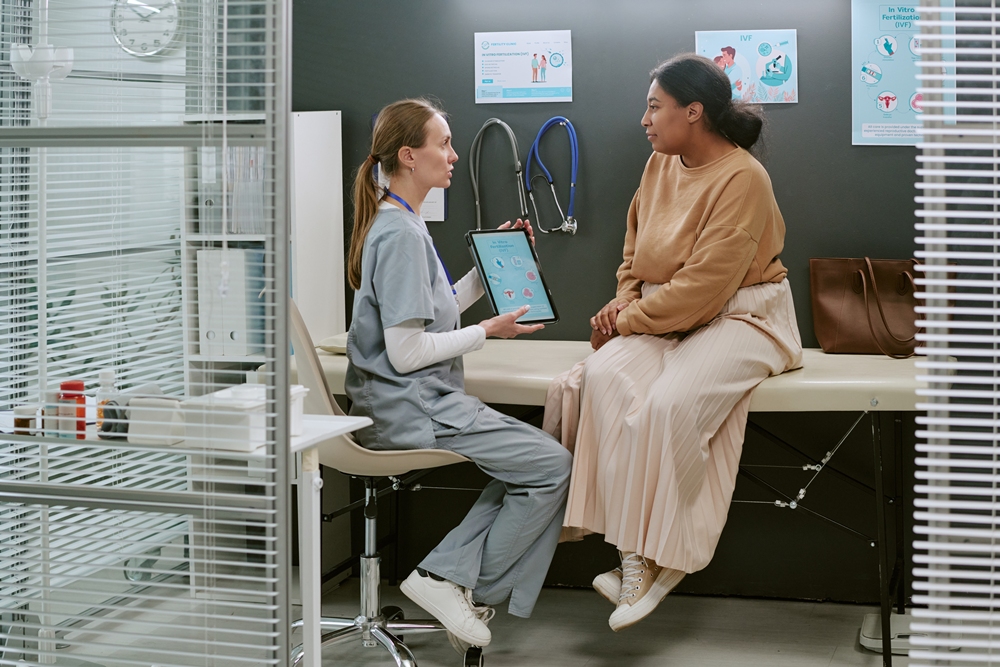
The Scottish government has launched a national review into whether NHS IVF access should be extended to single women.
The review will also consider whether wider access should be offered to couples who have children from previous relationships.
Health secretary Angela Constance said: “Access to NHS IVF treatment should be fair, timely and reflect the way people’s lives and families look today.”

Most single women are not currently eligible for NHS IVF treatment in Scotland.
Campaigners have welcomed the review.
Katie Rollings of Fertility Action said: “It’s an essential and long-awaited decision that will impact a huge number of people who are struggling to grow their families.
She said there is “no evidence” that having two parents rather than one determines whether a child will thrive.
She added: “What matters is whether a child is loved, safe, supported and has stable, positive relationships around them.”
Figures from the Human Fertilisation and Embryology Authority show Scotland is the only UK nation where NHS-funded IVF cycles outnumber privately funded cycles.
In 2024, more than 6,000 cycles of fertility treatment were carried out among more than 4,000 patients in Scotland. Both figures were slightly lower than the record highs recorded in 2022.
The past 20 years have also seen a rise in the number of same-sex female couples and single women receiving fertility treatment.
In 2024, 625 IVF cycles were carried out for women in same-sex couples in Scotland, with more than one third funded by the NHS.
There were 330 cycles involving single women, of which 50 were NHS-funded.
In England, single women can access IVF through the NHS, although eligibility varies according to the local health trust’s policy.
Current Scottish rules state that couples are eligible if they have been living in a stable relationship for two years and neither partner has been sterilised.
Couples where one partner already has a child can be eligible, but those where both partners have children from previous relationships are not.
Eligibility rules also require a body mass index above 18.5 and below 30, and state that couples must not smoke, drink alcohol or take drugs during treatment. The mother must be under 42.
The Scottish government said the review would also examine consistency of access to fertility preservation, including during cancer treatment, as well as reducing waiting times for donor eggs and sperm.
Same-sex female couples already have access to NHS IVF, but they can face long waits for donor eggs or sperm, as can heterosexual couples who require donor treatment.
The National Fertility Group will lead the review and make “costed, demand-modelled recommendations”, which are due to be published by early summer 2027.
The group will include fertility experts from Scotland’s four NHS-assisted conception units in Glasgow, Edinburgh, Aberdeen and Dundee.
Prof Sarah Martins Da Silva, an NHS consultant and chair of fertility medicine at Dundee University, said there were questions to be answered in a resource-stretched NHS.
“As a fertility specialist I’m never going to be disappointed if the criteria is widened,” she said.
“But with single people, as an NHS clinician looking at the competing demands we have, I’d ask the question about whether being single is a health condition that needs to be funded.”
Da Silva said NHS waiting lists were full of couples who require donated eggs or sperm because of medical conditions including cancer and could face longer waits.
“It’s slightly a disservice to them,” she said.
“There would need to be a real investment and resource without making everybody wait an extraordinary long time.
“With the current financial environment we work in, if you’re talking about new money, where would that come from?”
She said she would welcome changes that encouraged more people to donate eggs or sperm and questioned whether arguments about children needing two parents were necessarily relevant to the debate.
“On the one hand bringing up a child is quite an expensive process, and if you don’t have that support, it can be very difficult.
“But on the other hand, many people start off as a couple and divorce.”
Da Silva also welcomed plans for the review to consider eligibility for couples who already have children, describing the move as “fantastic”.



Jersey is launching a pilot PMOS health check clinic for women to improve follow-up care and access to specialist support.
The clinic will operate at the Assisted Reproductive Unit in St Brelade from October, providing health checks rather than diagnosing or treating the condition.
Women with polyendocrine metabolic ovarian syndrome (PMOS) will need to see their GP before being referred to the service.
Jessica Pinel, chair of PMOS Jersey, described the service as “a good start” but said more could be done.
She said the clinic was in line with draft guidance from the UK’s National Institute for Health and Care Excellence (NICE), which advises annual checks to identify health issues associated with the condition.
Pinel was diagnosed with PMOS in 2023 after spending more than £3,100 on treatment.
She said: “We need to realise that cost may be a barrier to people getting support, even if the cost is going to their GP. But I think we do have to be grateful that we have had this service approved.
“Because the clinic is part of the government health system, it allows for referrals to be made into different pathways like endocrinology, dermatology, so it could actually allow for better support and reduce costs for women with PMOS.
“I think it’s great to see things moving forward and, for women who are newly diagnosed, there’s going to be a more joined-up approach and we’re now taking the long-term health consequences of PMOS more seriously.”
PMOS, which was renamed from polycystic ovary syndrome (PCOS) in May, is a metabolic condition that changes how the ovaries work and affects up to one in eight women, according to the UK’s NHS.
The new name was introduced to reflect the condition’s effects across the body. PMOS has been linked to infertility and weight gain.
The Jersey government said the clinic would help women access further care for PMOS and associated conditions, including type 2 diabetes.
Screening clinic nurse Corrinne Purdy said reviews would take a holistic approach, covering medication, height and weight, sleep, management of the condition, fertility aspirations and mental health.
She said: “We will see whether they’re getting on alright with their medication, how they’re feeling about themselves; we will do height and weight reviews, we will ask them questions about their sleep, how they’re managing their condition.
“We will also speak to them about any particular fertility aspirations and how they’re getting with their mental health as well.”
Purdy said PMOS had been “overlooked” for a long time and that many women struggle with associated symptoms.
The government said women who require specialist management for heavy menstrual bleeding, fertility concerns or other gynaecological conditions would be referred to the appropriate specialist service.
It said existing waiting lists for gynaecology or surgical capacity would not be affected because additional clinical capacity had been identified.
Assistant Minister for Health and Social Services Andy Howell said many women “have been suffering” with PMOS and that the trial was intended to show “that we’re taking them seriously and they’re not going to be dismissed”.
Howell said funding for the clinic would be “managed within the budget that we have at the moment, so it’s not going to cost us any more”.
The Health Department was allocated £381m for 2026 as part of the government’s 2026-2029 budget.
The clinic will also offer investigations including ultrasound scans and endometrial biopsies during the same visit.
Howell said Jersey would base its review of the service on NICE guidance, while Pinel said feedback from women using the clinic would be shared with practitioners to help improve the support provided.









 Hormonal health2 weeks ago
Major UK study could be a ‘game-changer’ for heavy periods and endometriosis

 Entrepreneur5 days ago
KOVE Medical raises €1.7 million to improve safety of foetal surgery
 Events2 weeks ago
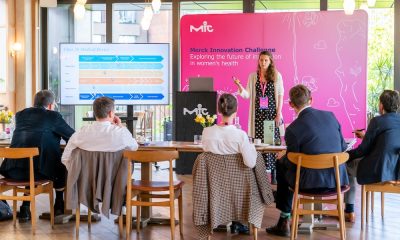
One week left to apply: W Accelerate with Merck KGaA and M Ventures

 Pregnancy6 days ago
UK study aims to transform maternity care for high-risk pregnancies

 Menopause2 weeks ago
Quarter of women miss work due to menstual symptoms, survey finds

 Hormonal health1 week ago
PMDD after SSRIs or hormones: Why the brain may be the missing treatment target
 Diagnosis1 week ago
Ark Surgical secures further institutional backing to accelerate US expansion

 Insight2 weeks ago
Study to tackle years-long delays in endometriosis diagnosis