




News
Insider Insight: Oriana Papin-Zoghbi, CEO and co-founder of AOA Dx


AOA Dx was founded in 2020 with the aim of giving women access to the most innovative early detection platform in their fight against cancer. Femtech World caught up with CEO and co-founder Oriana Papin-Zoghbi for our latest Insider Insight piece.
What is your morning routine?
I try to wake up before my toddler to enjoy a quiet morning with a cup of coffee, but most days, she’s an early riser, and we jump straight into breakfast. We have breakfast as a family, and then I take her to school—this quality time with her is one of my favorite parts of the day.
A few days a week, I make an effort to get up extra early to fit in a workout, which is essential for me. Once I’m back and ready to start my workday, I check my Notion dashboard to organize my tasks before diving into emails. This helps set me up for success and helps me prioritize tasks for the day.
Which technology could you not live without?
I couldn’t live without Notion, it’s like my second brain. I’m a strong believer in David Allen’s Getting Things Done method, a personal productivity approach that redefines how you manage both life and work. It emphasizes that when your mind is overloaded, you can’t think as clearly or effectively, so staying organized is key
How do you relax?
I’m still working on getting better at relaxing, but as someone who’s always striving to get things done, it can be a challenge. The best way for me to unwind is by taking walks with my family and our dog. We love strolling around the city and spending time at the park.
Which quote resonates with you?
If you can dream it, you can do it’ – Walt Disney. As an immigrant from a humble background, this quote deeply resonates with me. My family worked incredibly hard, dreamed big, and made it happen. It’s a philosophy I’ve always embraced.
What is the best thing about your job?
The best part of my job is the incredible people I work with and our shared mission to create a better future for ovarian cancer patients. This mission drives me every day. I feel truly fortunate to be on this journey with my co-founders, team, investors, advisors, and everyone helping us make early detection a reality.
What keeps you motivated?
Indignation on the status of women’s health, especially now that I have a daughter and have experienced my own challenging journey to start a family.
What is the most important lesson you have learned on your start-up journey?
The most important lesson I’ve learned on my startup journey is that hiring is everything. Bringing on the right people can make or break your company. I heard this advice early on, but it wasn’t until I experienced it firsthand that I truly understood how crucial it is.
What advice would you give to your younger self?
Work for people, not just companies. In the early stages of your career, it’s essential to soak up as much knowledge as possible, as traditional education only takes you so far. Seek out companies with strong leaders who can mentor you during these formative years. Instead of chasing the trendiest company, focus on finding the right people, great managers and colleagues, who will support your growth and development.
What is something you wish you could experience again for the first time?
My wedding. Throughout my life, I’ve moved around the world, and my husband has also experienced his share of relocations. Our friends and family are scattered across different corners of the globe, so our wedding was the one occasion when everyone came together in one place. I felt incredibly grateful to have all of them there to celebrate with us. It was one of the most special moments of my life, and I cherished being surrounded by the people I love most.
What is your greatest achievement since establishing AOA?
Building our team has been our greatest achievement and the most significant learning curve. While we’ve had success in raising capital, publishing papers, de-risking our technology, making progress on our milestones, etc, none of this would have been possible without our team.
My co-founders, Alex, Anna, and I have worked diligently to assemble a phenomenal group of individuals who are truly passionate and committed to AOA.

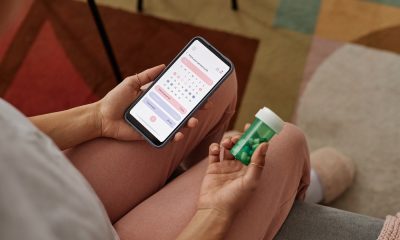










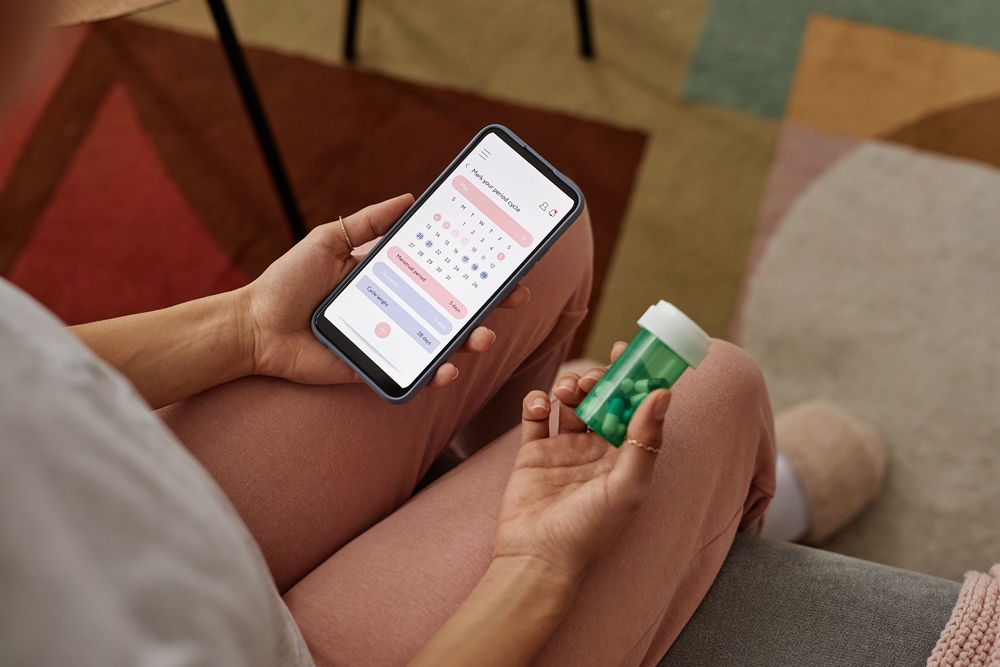
Women’s health has become one of the most searched and shared topics online, from cycle syncing and cortisol management to menopause hacks, supplements, hormone testing and clinician-creator content.
That surge in attention, sometimes dubbed “healthmaxxing,” is changing how women find, evaluate and act on health information, and it is starting to reshape the relationship between patients, clinicians and the companies building products for this market.
For providers, the shift means patients are arriving better informed but also more exposed to unverified claims, putting pressure on clinicians to engage with online narratives rather than dismiss them.
For femtech and pharma companies, it opens a route to reach and educate consumers at scale, but also raises the stakes on credibility: products and messaging that ride the trend without clinical grounding risk eroding the trust the industry has spent years building.
Investors are watching the same dynamic from a different angle.
Attention-driven demand can be a signal of where the next wave of femtech growth will come from, but distinguishing genuine clinical need from viral momentum is increasingly part of due diligence.
The net effect is a widening gap between companies that treat cultural attention as a distribution channel for credible, evidence-based care, and those that risk being swept up in trends with little clinical substance behind them.
How that gap plays out will shape patient trust, clinical relationships and commercial opportunity across the women’s health industry for years to come.
These themes will be explored in more depth in an upcoming webinar, “Women’s Healthmaxxing: The Opportunity & Risks of Cultural Attention for the Women’s Health Industry,” hosted by the Women’s Health Innovation Summit (WHIS), featuring Ellen Wilcox (Listen Ventures), Jessica Bell van der Wal (Frame Fertility), Dr. Tosin Sotubo-Ajayi (NHS, BBC and more) and Nora Lansen (Elektra Health).
Register free for the webinar on 23 July 2026 at https://events.virtualpro.com/womens-health-series-webinar-july-2026/registration

More young midwives are leaving the NHS before 35 as burnout adds pressure to stretched maternity services, new research has revealed.
The trend has raised concerns about the quality and safety of care for mothers and babies in understaffed maternity units.
During 2025-26, 1,669 midwives aged 34 or under left the health service in England, representing 57 per cent of the 2,949 midwives of all ages who resigned.
The pressures of maternity care, including increasingly complex childbirth and the risks involved, are thought to be among the factors behind the trend.
Hannah Leonard, deputy chief midwife at the Royal College of Midwives, said the exodus of midwives under 35 was “deeply worrying” and showed that too many were ending up “burnt-out within a few years of qualifying because every shift means too few colleagues, missed breaks and unpaid hours”.
She added: “Losing these midwives, and students, even before they qualify, is a terrible waste of talent.”
The figures, revealed in parliamentary questions tabled by the Liberal Democrats, show that 205 of last year’s younger leavers were under 25, while 655 were aged 25 to 29 and 809 were aged 30 to 34.
The number of midwives under 35 leaving the NHS has risen sharply in recent years. The 2025-26 figure was 59 per cent higher than the 1,051 who left in 2014-15, according to NHS figures.
Burnout means long-term physical and emotional exhaustion, often linked to sustained pressure at work.
Separate figures obtained by the Liberal Democrats suggest almost one in four midwifery students are leaving before completing their three-year degree.
In 2021, 3,565 students started a midwifery degree, but 2,725 graduated in 2024, meaning 840, or 24 per cent, did not complete the course.
Midwifery students spend much of their second and third years learning on the job in maternity units.
The loss of staff and students underlines what the Royal College of Midwives has described as a “staffing emergency” in maternity care across the UK.
A recent survey by the Royal College of Midwives found that three-quarters of midwives had considered leaving the profession over the last year, mainly because of concerns over staffing levels and patient safety.
Both recent large-scale reviews of maternity care in England, led by Donna Ockenden and Valerie Amos, identified staffing shortages as a key problem affecting patient safety.
Helen Morgan, the Liberal Democrat health spokesperson, said: “These statistics reveal an alarming crisis in maternity, with far too many midwives burning out early in their career and in their training. Patients are paying the price, and mothers are left with no alternative but to give birth on understaffed and unsafe wards.
“Rather than throw money at yet more new recruits who quit under intolerable pressure, the government needs a new approach. Through guaranteeing protected, year-round training and professional development we can help midwives cope with rising complexity and risk.”
About 10 per cent of all midwives leave the NHS each year.
However, the figures show higher leaving rates among younger midwives, with one in seven, or 14.6 per cent, of those aged 25 to 29 and one in six, or 16.6 per cent, of those aged 30 to 34 leaving during 2025-26.
A Department of Health and Social Care spokesperson said: “Under this government we have a record number of midwives in the workforce and we value the vital service they provide in maternity and neonatal units across the country.
“To make the NHS the best employer it can be, we have introduced new NHS staff standards to improve health and wellbeing support, promote flexible working, as well as crucial measures to tackle violence, sexual harassment or abuse and racism.
“Alongside consecutive above-inflation pay rises, we’ve bolstered the midwifery workforce through our graduate guarantee and recently opened up 1,000 more midwifery roles backed by £10m to help prevent student midwives leaving the profession.”
Department of Health and Social Care figures show a record 25,500 full-time-equivalent midwives are working in the NHS, 2,000 more than when the Labour government took office in July 2024.

Nearly six in ten young women get health and wellness advice from influencers, new research shows.
Women aged 18 to 29 were more likely than young men to use online influencers for health information.
The topics included beauty, alternative medicine, mental health, weight loss and fitness.
The Pew Research study found that 57 per cent of women aged 18 to 29 said they get health and wellness information from online influencers, 10 percentage points higher than young men.
While Americans still mostly rely on healthcare providers, the research suggests social media influencers also play a major role in how young people find health advice.
Among women who get health and wellness information from influencers, 51 per cent said they often hear about beauty and appearance, compared with 18 per cent of men.
Young women were also around twice as likely as young men to say they see content about alternative medicine, meaning treatments or health practices used outside mainstream medical care.
A third or more of both young men and young women said they often hear about mental health and weight loss from influencers.
Around half or more of both groups said they often see fitness content.
When asked why they seek health and wellness information from influencers, around half of young women said they wanted to make a change to their health or lifestyle.
That compared with 37 per cent of young men.
The research also found that 23 per cent of young women said hearing from people who share their background or beliefs was one reason they used influencers, compared with 14 per cent of young men.
A further 19 per cent of young women said they learnt about things they did not want to ask their doctor, compared with 10 per cent of young men.




 Diagnosis2 weeks ago
Two “gamechanger” tests set to speed up endometriosis diagnosis on the NHS

 Insight2 weeks ago
Women with PMOS should have annual NHS checks, new guidance says

 News5 days ago
New menopause drug approved for use by NHS in Scotland
 Cancer2 weeks ago
Thousands of women could avoid painful cancer exam with new AI blood test

 Entrepreneur2 weeks ago
Applications open for the third W Accelerate with Merck KGaA and M Ventures
 Fertility2 weeks ago
Older women face lower chance of fertility treatment working, even with donor eggs, study finds

 News2 weeks ago
We built Ema like a nurse: Here’s why that matters

 News2 weeks ago
Experts call for regulation of toxic period product chemicals