Connect with us

Mental health

How women can use technology to empower their mental health and happiness

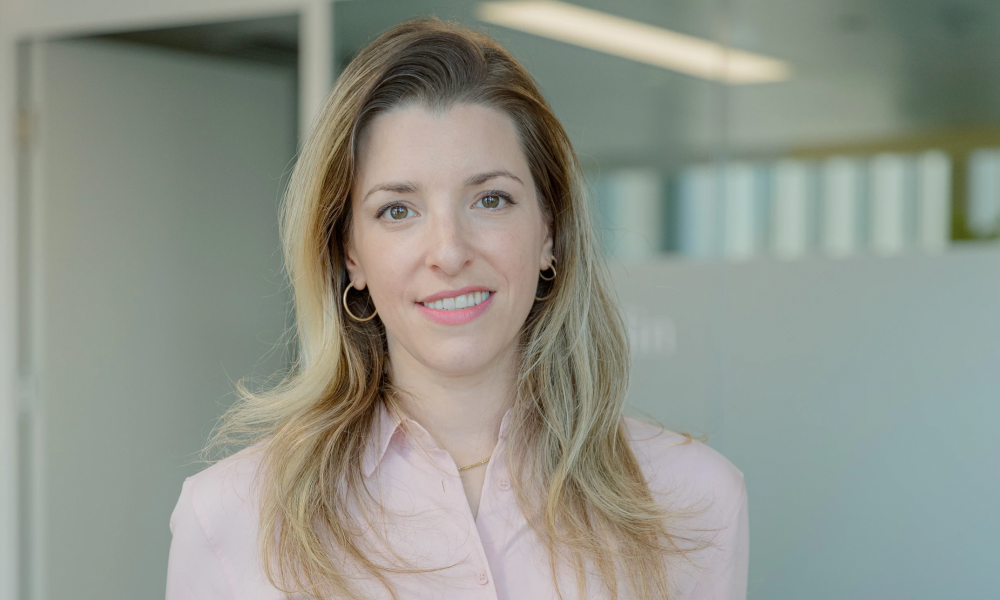
By Talia Soen, founder and CEO at Happy Things

Published

on

Talia Soen, founder and CEO at Happy Things

Technology is not just about convenience; it’s a potent tool for nurturing our mental health and happiness.

I’m 36 years old, and I spent most of my life feeling like I wasn’t happy enough. To my surprise, it didn’t matter what milestones I achieved throughout my life – completing my degree, securing my dream job, finding love, getting married. I accomplished these goals, yet happiness remained elusive.

This search has eventually led me to found my first company, Happy Things. Based on the science of positive psychology, Happy Things is trying to change the paradigm that happiness is a goal to be achieved.

With the Happy Things app, we’re trying to teach users that happiness is a skill, learned and honed through simple, daily habits.

In this journey of building Happy Things, me and my team – we’re all women, by the way – went through it all: pregnancies, fertility treatments, and of course, “just” dealing with our periods.

During that time, something clicked. As women, life events, as well as physical, biological and hormonal changes affect our mental health. So how come most mental health solutions available out there don’t address our unique needs and experience? 

As women, we should be taking into account all the different components that make up who we are. While there is a lot of information out there, we still have to do most of the work ourselves; learn more about the connection between our bodies and our mental health, develop healthy habits that work for us; empower ourselves to change the happiness paradigm. Technology can help us do that.

Mind-body connection: menstrual cycles and mental wellness

One area where technology is making remarkable strides is in helping women understand and embrace the changes that come with their menstrual cycles.

Menstrual cycle tracking apps, for example, offer a profound understanding of the intricate relationship between a woman’s body and her mental well-being. These apps empower women to record physical and emotional changes throughout their cycle.

Tracking enables women to make informed self-care decisions. During the menstrual phase, rest and self-compassion can alleviate mood swings, while the ovulatory phase, characterised by high energy, is ideal for physical activities.

Aligning routines with these insights fosters harmony between body and mind, enhancing mental wellbeing. In a hectic world, tracking apps help women reconnect with their bodies, prioritise self-care, and nurture their mental health. 

The habit loop: how tech can help us create better habits

At the core of wellness and happiness lies the formation of positive habits. Habits are the small, consistent actions we take daily that shape our lives. Whether it’s practicing mindfulness, maintaining a balanced diet, or getting regular exercise, these habits have a profound impact on our mental and physical health. 

Yet, new habits are hard to acquire, and even harder to sustain. Imagine this: your smartphone becomes a wellness coach, guiding you toward healthier habits. It offers reminders for your daily meditation practice, tracks your nutrition, and monitors your sleep patterns.

Through wearable devices, you gain real-time insights into your physical activity and stress levels. These tools turn abstract wellness goals into tangible actions.

Practical tips to build wellness habits with technology

Tracking: Apps like Happy Things, the Apple Health Kit, or period tracking apps offer habit-tracking features that can help you monitor your daily wellness routines and celebrate your achievements, no matter how small.

Notifications and reminders: Leverage technology to set reminders for your wellness habits. Whether it’s a morning meditation session or a midday mood check, automated reminders keep you on track.

Mindfulness apps: Explore mindfulness and meditation apps that guide you through relaxation exercises, deep breathing, and mindfulness practices. These can become daily habits that enhance your mental wellness.

Community support: Many wellness apps offer community features where you can connect with like-minded individuals. Joining a supportive community can reinforce your commitment to wellness habits.

The future of mental health tech: personalised wellness

In the world of femtech, where innovation meets the unique needs of women’s health, one key area that often remains unexplored is the profound connection between mental wellness and our bodies.

As we navigate the intricacies of our menstrual cycles, fertility journeys, and life events, there’s an opportunity to leverage technology not only to track and manage these aspects but also to build healthier habits that enhance our overall wellness and happiness.

One of the most exciting aspects of where the wellness industry is currently going is personalisation. New developments unlock the potential for more personalised tech products than ever before, products that almost… understand you, and therefore, provide you with the most useful assistance for your journey.

At Happy Things, for example, we believe that personalisation should take into account the unique needs and experiences of women because our vision is to make happiness a skill that every woman can cultivate.

Technology is not just about convenience; it’s a potent tool for nurturing our mental health and happiness.

By tapping into the wisdom of positive psychology, utilising innovative apps, and building wellness habits, women can embark on a journey of holistic wellbeing. It’s time to unlock your wellness potential—one habit at a time.

Talia Soen is the founder and CEO of the wellness and wellbeing app Happy Things.

Insight

The danger of ‘efficiency culture’ in women’s mental tech

Published

on

By Somayeh McKian, a member of the clinical advisory board of Vea, the AI-powered mental health journal app

The danger of efficiency culture in women’s mental tech is that we are inadvertently optimizing the very patterns that drive our collective burnout.

When we look at the explosive growth of the femtech sector, the dominant narrative remains focused on speed, tracking, and passive compliance.

We build apps that treat a woman’s emotional state like a broken supply chain or a medical deficit that needs to be optimised, streamlined, or forced into submission.

But true psychological resilience cannot be quantified by a simple mood slider or an algorithmic checkmark.

As a psychotherapist and gender studies scholar, my research into the lived experiences of women, particularly how cultural mandates and bodily surveillance are pathologised, reveals a deep-seated form of suffering.

When women constantly say “yes” while meaning “no,” or ignore a chronically depleted body to maintain a rigid role, they are living out what I call an “inkless life.”

It is a blank manuscript in which their physical and emotional existence has been entirely authored by external critics, medical charts, and the “Discourse of the Other.”

They aren’t suffering from an efficiency problem; they have been stripped of the agency to author their own skin.

If femtech platforms simply digitise these rigid, externalised “shoulds,” they risk becoming high-tech tools of compliance rather than portals of liberation.

The investment community and health tech innovators need to realise that the next frontier of mental health tech isn’t about managing symptoms on the fly; it is about existential archaeology.

We must build digital spaces that serve as a “corporeal pen,” transforming self-reflection from a passive hobby into a defiant, existential act.

True innovation lies in helping women find the meaning, the latent metaphors, and the unique tasks already written into their struggles and transforming inherited pain into a human achievement.

This is exactly the structural paradigm shift we are anchoring at Véa. Instead of building superficial tracking logs, our architecture treats life as a manuscript.

We design clinical narrative journeys that help women decode where their internal boundary scripts were written, recognize how somatic depletion is a truth-teller, and wield phrases like “stop it” not as external policing, but as internal, defiant boundaries.

If we want to build a sustainable ecosystem for women’s health, we must stop funding platforms that merely help women endure their exhaustion more efficiently.

In the intersection of meaningful life and technology, we look at the human spirit not by its current restrictions but by its latent potential for change.

It is time to back technologies that give the fluent soul a sharp new set of instruments to rewrite its own narrative.

Somayeh McKian is a certified psychotherapist, in-training logotherapist, gender studies scholar, published author and part of Véa’s clinical advisory board.

Continue Reading

Entrepreneur

Screen time reduction app awarded £15k in women-led startup competition

Published

on

A screen time app that lets friends cut their phone use together has won the £15,000 top prize in a women-led startup competition.

Snitch, led by design engineering MEng graduate Asha Bakhai, took first place at WE Innovate, Imperial College London’s flagship competition for women-led startups.

The team aims to tackle excessive screen use among young people, which some research suggests may have a negative effect on mental and physical health.

The app lets users join accountability groups and set shared limits across their most-used apps.

When one person scrolls, the group’s combined timer counts down. Its founders say this helps build awareness, encourages reflection and supports small changes in behaviour by making screen use a shared responsibility.

Speaking at the WE Innovate Grand Final, Bakhai, co-founder and chief executive of Snitch, said: “Thank you to all the people who have been involved with thinking about what it could look like for young people to not be addicted to their phones.

“Whether that’s our friends who we started this with – exchanging screen time passwords and things like that – or the users along the way who beta tested with us, or our families and our friends who we’ve forced to use our app, even though it failed and bugged out and blocked all their apps. Thank you to all of them – and especially, thank you to WE Innovate for making all of this happen.”

Snitch’s team also includes co-founders Serena Sebastian and Yoshiki Berrecloth.

WE Innovate is a six-month pre-accelerator run by Imperial Enterprise Lab for teams led by female students, recent alumni and early career researchers.

The programme supports 25 women-led teams through masterclasses, business coaching, one-to-one expert support and peer mentoring.

The top five teams competed for a share of a £30,000 prize fund.

Professor Hugh Brady, president of Imperial College London, said: “WE Innovate was born out of the realisation that women founders were grossly underrepresented among our wider founder group across the university – so it was an imperative for Imperial to start such a programme.

“It was just last year that we heard Dame Alison Rose, author of the Rose Review, speak about the untapped economic opportunity and potential of women entrepreneurs in the UK.

“After 12 years, this programme has supported hundreds of women entrepreneurs, leading to exciting ventures across health tech, clean tech and all aspects of deep tech.”

The winning teams were selected by a panel including Kristen McLeod CBE, chief strategy officer at the British Business Bank, and Elizabeth Gooch MBE, founder and former chief executive of EGS plc.

The panel also included Pierre N. Rolin, founder and chief executive of Ankh Impact Ventures, and Professor Mary Ryan, vice-provost for research and enterprise at Imperial.

The final marked the second year of WE Innovate National, a UK-wide programme with separate Grand Final showcases held this month at Queen’s University Belfast, Swansea University and Loughborough University.

Joanna Jensen, founder of skincare brand Childs Farm, gave a keynote address about her experiences as an entrepreneur and co-writing The Rise Report of Female Entrepreneurship.

The report found that the UK economy would be £310bn larger if women started and scaled businesses at the same rate as men.

Jensen said 78 per cent of the founders surveyed reported that human connection had been central to their journey, while one in seven identified loneliness as their biggest challenge as an entrepreneur.

She said: “That is why what Imperial is doing matters so profoundly. Not just here in South Kensington but as WE Innovate goes national.

“Because a founder in Loughborough, Durham or Swansea deserves the same access to networks, mentors, capital and belief as a founder sitting in this room tonight.

“Talent is everywhere. Opportunity, until now, has not been.

“A nationwide network for female founders, being backed by women and men, having doors opened for them by women and men, and then paying that forward: that is how you close a £310 billion gap.

“Not with one programme. With a system of programmes, joined up across the country, and held to account on outcomes.”

Waypoint, led by innovation design engineering MSc student Bana Quronfuleh, received the £7,000 second prize.

The team is developing a video game controller that allows visually impaired players to hear and feel popular games.

AlphaVectors Biotech, led by Imperial alumnus Dr Apanpreet Kaur, received the £5,000 third prize for its lipid nanoparticle platform, which aims to improve the stability of RNA vaccines at room temperature.

Lipid nanoparticles are tiny fat-based particles used to protect and deliver genetic material, including the RNA found in some vaccines.

The other finalists, FluoroCycle and Epile-X, each received £1,500.

PHlora LABS received the Lauren Dennis Award, which was established in memory of a pioneering WE Innovate alumnus, for developing a synbiotic suppository intended to prevent recurrent vaginal infections.

Synbiotics combine beneficial microorganisms called probiotics with substances known as prebiotics, which help them grow.

The award recognises a team demonstrating exceptional entrepreneurial spirit in science, technology, engineering and mathematics and includes a six-month business coaching package.

DisoLens received the Engineers in Business Award, sponsored by the Engineers in Business Fellowship.

The award provides each winner with £1,500 in grant funding, mentorship and a professional CV package for entrepreneurs working across engineering sciences.

The team is developing a self-dissolving biodegradable contact lens intended to remove the need for lenses to be taken out each day.

Continue Reading

Pregnancy

£50m initiative aims to tackle disparities in maternal healthcare

Published

on

A £50m maternity consortium will bring together UK clinicians, researchers and communities to tackle the most critical gaps in maternal care.

Funding from the National Institute for Health and Care Research has established the NIHR Inequalities Challenge: Maternity Disparities Consortium under the leadership of the University of Birmingham and Newcastle University.

Higher education bodies, NHS organisations, community groups and voluntary organisations from across the UK will work together through the programme.

The NIHR has committed £50m over five years to support research led by clinicians, researchers and communities across the consortium.

Professor Joht Singh Chandan, consortium co-lead for research at the University of Birmingham, said: “National attention on maternity safety and equity has never been greater, but ambition must now be matched by evidence and implementation.

“Through this consortium, we will work across the UK to understand what works, for whom and in what contexts, and to ensure that research leads to practical changes in care for the women, babies and families who need them most.”

The launch comes at a pivotal moment for UK maternity care, with growing national attention on improving safety, equity and women’s experiences of care.

The government’s renewed Women’s Health Strategy highlights the need to improve care before and between pregnancies for underserved communities.

Against that backdrop, the consortium will generate the evidence, interventions and research capacity needed to help turn national ambition into practical improvements for women, babies and families.

University of Birmingham is leading work to improve maternity care pathways across the antenatal, intrapartum and postnatal periods.

Antenatal care covers pregnancy before labour, while intrapartum care refers to care during labour and birth.

The consortium will examine how women and families can be better supported before pregnancy and between pregnancies.

This includes improving access to advice and care that can help people prepare for pregnancy, manage existing health conditions and reduce risks before they build up.

Other research will focus on improving care during pregnancy, birth and the early weeks after birth.

This will include work on major causes of poor maternal health, such as high blood pressure, diabetes in pregnancy, obesity, perinatal mental health and complications during recovery after birth.

Professor Judith Rankin OBE, consortium co-lead for research and capacity development at Newcastle University, said: “This funding represents a critical opportunity to make the step change we need to improve outcomes for women and their babies.

“Alongside the research, the Consortium will be investing in tomorrow’s research leaders today to ensure we have the capacity to deliver on improving pregnancy outcomes, access to, and experience of, care.”

Continue Reading

Trending

Copyright © 2025 Aspect Health Media Ltd. All Rights Reserved.