Connect with us

News

AI as good as radiologists at spotting breast cancer, study finds

AI screening is as good as two radiologists working together, Swedish researchers suggest

Published

on

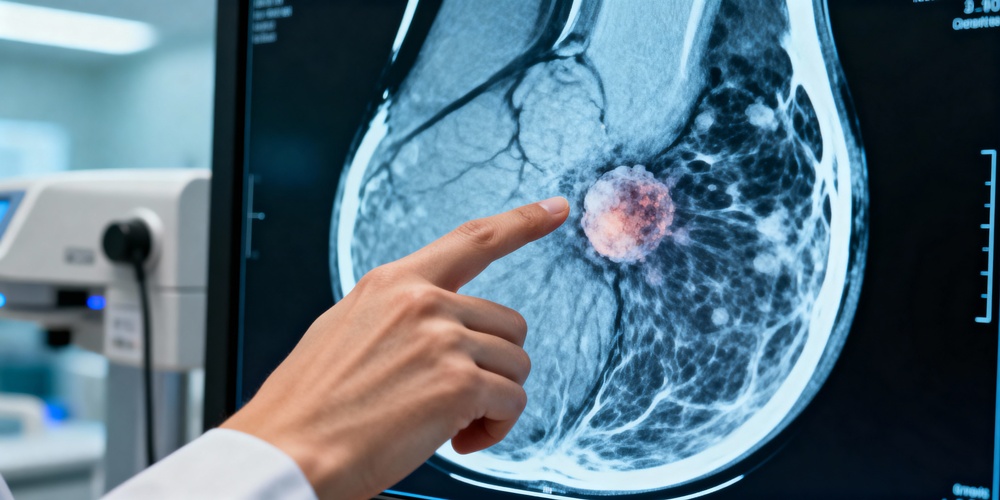
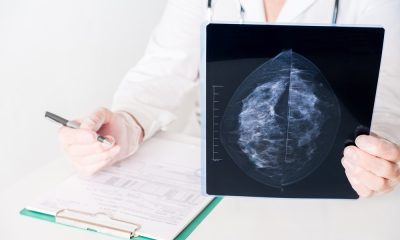
Mammography screening supported by artificial intelligence is a safe alternative to today’s conventional double reading by radiologists, a new study has shown.

The potential of AI to support mammography screening has attracted much attention, but how this is to be optimally conducted and what the clinical consequences will be remains unclear.

Female breast cancer has now surpassed lung cancer as the most commonly diagnosed cancer worldwide, with an estimated two million new cases registered in 2020.

The Mammography Screening with Artificial Intelligence (MASAI) trial is the first randomised controlled trial evaluating the effect of AI-supported screening.

The study, led by researchers from Lund University in Sweden, addressed the clinical safety of using AI in mammography screening and found that AI screening is as good as two radiologists working together, without increasing false positives.

“In our trial, we used AI to identify screening examinations with a high risk of breast cancer, which underwent double reading by radiologists,” said Kristina Lång, researcher and associate professor in diagnostic radiology at Lund University and consultant at Skåne University Hospital, who led the study.

“The remaining examinations were classified as low risk and were read only by one radiologist. In the screen reading, radiologists used AI as detection support, in which it highlighted suspicious findings on the images.”

The 80,033 women included in the safety analysis were randomly allocated into two groups: 40,003 women in the intervention group that underwent AI-supported screening and 40,030 in the control group that underwent standard double reading without AI support.

“We found that using AI resulted in the detection of 20 per cent more cancers compared with standard screening, without affecting false positives. A false positive in screening occurs when a woman is recalled but cleared of suspicion of cancer after workup,” Lång added.

The screen-reading workload for radiologists was reduced by 44 per cent. The number of screen readings with AI-supported screening was 46,345 compared with 83,231 with standard screening.

Lång said the time aspect is incredibly important, as one radiologist reads only an average of 50 screening examinations per hour.

“We estimated that it took approximately five months less of a radiologist’s time to read the roughly 40,000 screening examinations in the AI group,” she explained.

“However, we need to see whether these promising results hold up under other conditions, for example with other radiologists or other AI algorithms.

“There may be other ways to use AI in mammography screening, but these should preferably also need to be investigated in a prospective setting,” the researcher added.

A total of 100,000 women have now been enrolled in the MASAI trial. The research team’s next step is to investigate which cancer types that were detected with and without AI support.

The primary endpoint of the trial is interval-cancer rate. An interval cancer is a cancer diagnosed between screenings and generally have poorer prognosis than screen-detected cancers. The interval-cancer rate will be assessed after the 100,000 women in the trial have had at least a two-year follow up.

“Screening is complex,” Lång said. “The balance between benefit and harm must always be taken into account. Just because a screening method finds more cancers does not necessarily mean it’s a better method.

“What’s important is to find a method that can identify clinically significant cancers at an early stage. However, this has to be balanced with the harm of false positives and the overdiagnosis of indolent cancers.

“The results from our first analysis shows that AI-supported screening is safe since the cancer detection rate did not decline despite a substantial reduction in the screen-reading workload.

“The planned analysis of interval cancers will show whether AI-supported screening also leads to a more accurate and effective screening programme.”

Pregnancy

Early birth safer in high blood pressure pregnancies – study

Published

on

Early birth may cut serious complications and stillbirth risk in high blood pressure pregnancies without increasing caesarean rates, a Cochrane review suggests.

Planned early birth after 34 weeks cut serious maternal complications by nearly half compared with watchful waiting, the findings suggest.

It also likely reduced the risk of stillbirth by about 75 per cent, although the authors said this should be interpreted with caution.

Catherine Cluver, senior author of the review and researcher at Stellenbosch University and Tygerberg Hospital, said: “These findings give clinicians and women clearer guidance about the timing of birth when high blood pressure develops in pregnancy.

“For women with pre-eclampsia in particular, the evidence supports offering planned early birth from 34 weeks, and no later than 37 weeks.”
This Cochrane review, led by King’s College London, pooled data from six randomised controlled trials involving 3,491 women.

The trials compared planned early birth after 34 weeks with watchful waiting in women with one or more hypertensive disorders of pregnancy.

Hypertensive disorders of pregnancy, including pre-eclampsia, gestational hypertension and chronic hypertension, are the second leading cause of maternal death globally.

For women with pre-eclampsia, early birth remains the only definitive treatment, as the condition is driven by the placenta and will only resolve once it is delivered.

The trials took place in the Netherlands, UK, US, India and Zambia.

The review found high-certainty evidence that serious maternal complications were nearly halved in women who had planned early birth compared with those managed with watchful waiting.

The finding on stillbirth was based on moderate-certainty evidence and was driven by a single trial in India and Zambia, where stillbirth rates are higher. No stillbirths were recorded in the high-income country trials.

The review also found that planned early birth likely does not increase neonatal unit admission, although this finding was also based on moderate-certainty evidence.

The authors said the maternal benefit held across both high- and low-income settings, suggesting early birth reduces complications even when women are already receiving appropriate monitoring and care.

Alice Beardmore-Gray, lead author of the review and obstetrician at King’s College London, said: “Judging when to offer birth is the question that we battle with clinically every day.”

The authors added that in two of the trials, more than half the women allocated to watchful waiting ended up needing emergency birth before 37 weeks.

They typically gave birth just three to five days later than women allocated to planned early birth and often experienced more complications.

Beardmore-Gray said: “A common misconception is that by waiting longer, mum and baby are gaining more time, but often what you are doing is just delaying an inevitable emergency birth, when both may be in a worse condition.”

The review found high-certainty evidence of no increased risk of caesarean section associated with planned early birth.

Beardmore-Gray said: “That is the first question anyone asks when you offer them an early induction: won’t it increase my risk of a C-section?

“Being able to clearly answer no is a really important piece of information to give women when counselling them about the timing of their birth.”

The authors said the timing of birth should take into account the woman’s preferences and the severity of her condition.

They said these findings are consistent with and reinforce current international guidelines, which recommend that all women with pre-eclampsia should be offered planned early birth no later than 37 weeks.

Women with gestational hypertension or chronic hypertension without severe features may choose to continue with careful monitoring, with planned early birth considered from 39 weeks onwards.

Further research is needed on longer-term outcomes for infants born late preterm and on the long-term cardiovascular health of mothers affected by hypertensive disorders of pregnancy.

Continue Reading

News

Low insulin diet and avoiding four food groups may prevent menopause weight gain

Published

on

A low-insulin diet may help curb menopause weight gain, with researchers suggesting that avoiding four food groups could help women avoid gaining weight.

The findings suggest women who ate more vegetables and avoided red and processed meats, potatoes, salty foods and ultra-processed foods were most likely to prevent weight gain during menopause.

Weight gain and changes in body shape are common during perimenopause and menopause.

At least 50 per cent of women experience weight gain during this stage, according to the British Menopause Society.

Evidence suggests women gain an average of about 1.5kg a year during menopause, with average weight gain reaching 10kg by the time menopause is reached.

New research published in JAMA Network Open has identified dietary patterns linked to lower midlife weight gain and obesity during menopause.

The study analysed data from 38,283 women over a 12-year period, covering six years before and six years after menopause.

It used information from the Nurses’ Health Study II, a long-running US study into factors affecting women’s health between 1989 and 2019.

The NHS advises that eating well and exercising can help with menopause symptoms.

It also recommends calcium-rich foods, such as milk, yoghurt and kale, to support bone health.

Researchers assessed participants’ diets every four years and recorded changes in body weight each year.

They examined 11 dietary patterns, including plant-based diets, Mediterranean diets, low-carbohydrate diets and ultra-processed food intake, to see which were linked to less weight gain during menopause.

A low-insulinaemic diet focuses on foods that help keep insulin levels steadier. Insulin is a hormone that helps control blood sugar, and repeated spikes may encourage the body to store more fat.

The study found diets higher in natural, fibre-rich foods and lower in carbohydrates and sugary foods were linked to better weight control.

Researchers said red and processed meats, French fries and potatoes, high-sodium foods and ultra-processed foods were most strongly linked to insulin spikes and menopausal weight gain.

Red and processed meats, along with poultry, were positively associated with weight gain.

French fries were found to trigger hormonal signals that can encourage fat storage.

Researchers also found that higher sodium intake was associated with the greatest weight gain among participants.

Ultra-processed foods and sugary juices were also linked to a higher risk of obesity.

The researchers concluded that avoiding these foods and eating more nuts, legumes, wholegrain carbohydrates and vegetable proteins may help prevent obesity and support longer-term heart health in women.

Continue Reading

News

Three brain and mental health innovators shortlisted for award

Published

on

We are excited to reveal the three exceptional innovators shortlisted for the Brain & Mental Health Innovation Award at the Femtech World Awards 2026.

The award recognises groundbreaking work addressing the cognitive and emotional health challenges that uniquely and disproportionately affect women.

This award is sponsored by Women In Cloud, the global network of 120,000 women tech founders, executives, professionals and allies across 80 countries, united in their mission to make the tech ecosystem an inclusive force for change – and to unlock US$1 billion in new economic access by 2030.

The shortlisted entries will now be judged by a representative from Women In Cloud who will announce the winner at a virtual event on June 19.

Congratulations to the shortlist and thank you to everyone who entered or nominated.

Brain and Mental Health Innovation Shortlist

HealCycle is a clinical and social breakthrough targeting what founder Ananya Grover calls the “Silent Decade” – the years when women’s endocrine health and environmental stressors are routinely dismissed by traditional healthcare silos.

Under the clinical leadership of psychiatrist Dr. Aninda Sidhana, HealCycle monitors HPO-axis markers, addresses conditions like PMDD, and integrates an AI companion, Tara, built on the principle of Radical Empathy.

Backed by the WICCI National Women’s Mental Health Council and designed to meet WHO standards for gender-responsive care, HealCycle is replacing silence with science – from Delhi to the world.

Môr is reimagining cognitive wellbeing from the ground up with the first science-led, female-first nutritional system designed around how women’s brains actually work.

Grounded in compelling research – including findings from Weill Cornell Medicine showing accelerated metabolic brain decline during menopause transition – Môr’s patented AM/PM chrono-targeted architecture delivers the right ingredients at the right time: daytime mental clarity and stress resilience in the morning, nervous system recovery and sleep support in the evening.

With backing from Innovate UK and a clinical feasibility study in development, Môr is building for the invisible majority: cognitively depleted women who have been failed by a market that never built for them.

Véa is an AI-powered emotional operating system that builds a living cognitive profile of each user, helping women understand their thoughts, triggers and behavioural patterns through neuroscience-backed journalling.

Véa does not just record how women feel, it connects the dots across weeks, months and years to reveal the hidden architecture of their emotional world.

Having already analysed over 101,000 anonymised words journaled to identify 3,000+ specific cognitive distortions – such as ‘double-bind’ guilt and ‘catastrophising’ – Véa is closing the critical gender data gap in mental health.

Continue Reading

Trending

Copyright © 2025 Aspect Health Media Ltd. All Rights Reserved.