




News
New drug combination offers hope to ovarian cancer patients
Nearly half of the women treated with avutometinib and defactinib saw their tumours shrink significantly, results show

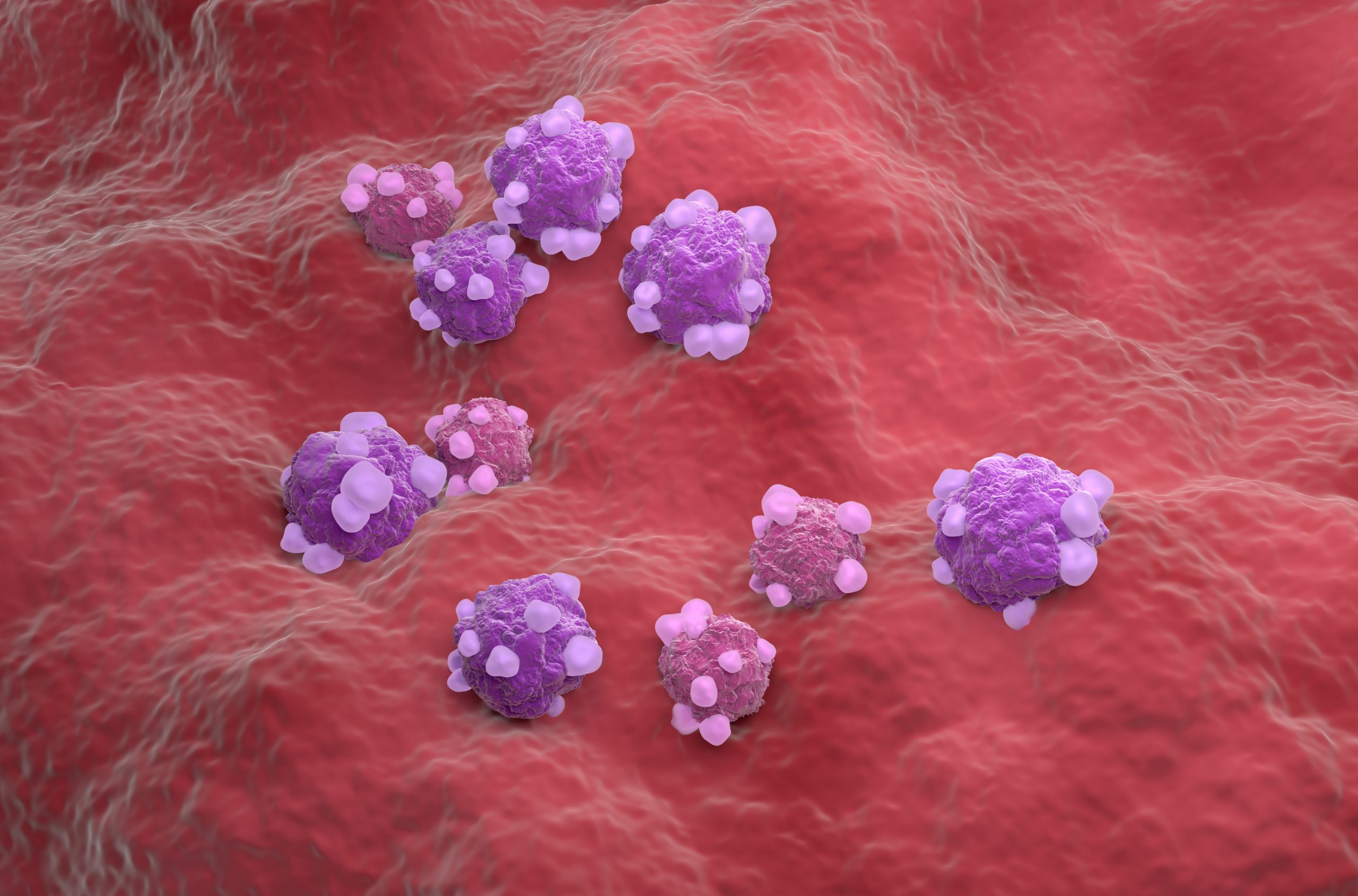
Thousands of women with ovarian cancer could benefit from a drug combination thought to be nearly twice as effective as the next best treatment.
Scientists hope the results, presented at the world’s largest cancer conference, will lead to a new option for patients with advanced low-grade serous ovarian cancer (LGSOC), a rare form of the disease that has a poor response rate to current treatments.
The international study, led by researchers from The Royal Marsden NHS Foundation Trust and The Institute of Cancer Research, London, has tested avutometinib alone and in combination with defactinib in 29 patients with LGSOC.
Both drugs are designed to block signals that encourage cancer cells to grow.
Approved treatment options available for patients with advanced LGSOC in the UK are currently limited to chemotherapy and hormone therapy, with response rates typically ranging from 0-14 per cent.
According to these results, nearly half (45 per cent) of patients treated with avutometinib in combination with defactinib saw their tumours shrink significantly, suggesting the new combination could be almost twice as effective as the next best treatment.
Responses to the drug combination were particularly promising in those with a mutation in a gene called KRAS, with six in 10 patients experiencing significant tumour shrinkage.
LGSOC accounts for about one in 10 cases of ovarian cancer, with around 700 women in the UK and 80,000 worldwide diagnosed each year. Compared with other forms of the disease, LGSOC tends to affect younger women.
Global lead investigator of the study, Dr Susana Banerjee, consultant medical oncologist and research lead for The Royal Marsden NHS Foundation Trust gynaecology unit, said: “These initial results could be fantastic news for women with low grade serous ovarian cancer, indicating a far more effective option than current treatments may be on the horizon.
“It’s wonderful to see so many patients experience a meaningful response to this innovative drug combination and I’m so grateful to all who joined the trial, making this research possible.
“Low grade serous ovarian cancer does not respond well to currently approved treatments, so these results could represent a significant breakthrough in treating the disease.
“We are hopeful this drug combination will one day become a standard of care for women with low grade serous ovarian cancer.”
Avutometinib is a dual RAF and MEK inhibitor, a type of targeted drug that blocks certain proteins that help control cancer growth and survival. Studies have shown the drug can become ineffective over time as tumours develop resistance to treatment.
However, when combined with defactinib – which is designed to combat a protein that encourages drug resistance – researchers believe avutometinib works more efficiently. The drug combination is over four times more effective than avutometinib alone.
Christine Cull, a 71-year-old from Coventry, was diagnosed with low grade serous ovarian cancer in 2009. She found out the disease had returned in 2014 and she was treated with chemotherapy and hormone therapy, which didn’t work for her, along with several surgeries.
She joined the trial at The Royal Marsden in August 2020 and has been treated with the new drug combination ever since. Her latest scan results showed no evidence of disease.
“My lowest point throughout this experience was in 2019 when my local hospital said there was nothing more they could do for me – it was horrible,” Cull explained.
“My cancer had completely resisted chemotherapy and hormone therapy, and my team weren’t able to operate again.
“Fortunately, my doctor referred me to The Royal Marsden who, as specialist cancer centre, had the expertise to do another surgery. When the disease started growing again the next year, this trial had opened at the hospital, and I was chuffed to be able to join.
“I have scans every three months and each time we’ve seen the cancer getting smaller and smaller. After finding out recently that the cancer is currently not even visible on scans, I felt relieved, amazed and so happy to be able to pass this good news onto family and friends.”
Cull said the hospital gave her and her family hope when she thought all her options had been exhausted.
“The Royal Marsden means so much to me. Because of this trial, I am able to live my life with my husband, three children and three grandchildren with barely any side effects.”










We are excited unveil the three finalists competing for one of the Femtech World Awards’ most coveted honours: the Startup of the Year Award, sponsored by Future Fertility.
This award celebrates an early-stage company making a bold impact in women’s health through innovation, vision and execution.
The winner will be announced at our virtual ceremony on 19 June, with the decision made by a representative from category sponsor Future Fertility.
Congratulations to the shortlist and thank you to everyone who entered or nominated.
Startup of the Year Shortlist

Hello Inside is the first women’s health AI company to turn daily metabolic signals into outcomes women feel and healthcare systems reimburse.
Women’s health has long been under-researched, and current AI benchmarks fail on women’s health questions roughly sixty percent of the time.
Hello Inside built the architecture to close that gap.
Across four years and 12,000+ validated metabolic profiles, three in four women improve at least one symptom within ninety days.
They lose four kilograms in three months, moving from overweight into the healthy range. In a clinical study with Alisa Vitti’s Flo Living, 91.9 per cent reduced PMS burden within sixty days.


U-Ploid is an early-stage biotechnology company tackling one of the most fundamental challenges in fertility care: the sharp, age-related decline in egg quality that limits outcomes across IVF and egg freezing.
While much of the field focuses on improving assessment and selection, U-Ploid is developing a first-in-class therapeutic approach designed to improve egg quality itself by addressing the biological causes of age-related chromosomal errors.
Supported by strong preclinical evidence and now advancing into human studies, U-Ploid combines scientific rigour, regulatory discipline and long-term vision to help redefine what is possible in fertility care.

Gestational diabetes is a strong risk factor for future type 2 diabetes, even in women with normal pre-pregnancy weight, according to a study at the University of Gothenburg.
The researchers call for earlier testing and better follow-up.

“Our results show that gestational diabetes functions as a kind of stress test for the body’s ability to manage blood sugar, and identifies women with a greatly increased risk of future type 2 diabetes”, said Jon Edqvist, PhD and affiliated to research at the University of Gothenburg, and operating room nurse at Sahlgrenska University Hospital.
Gestational diabetes is a special type of diabetes that can affect pregnant women.
The condition is defined as elevated blood sugar levels, without previously known diabetes. Treatment involves self-monitoring of blood sugar, advice on lifestyle habits and, if necessary, medication.
Identifying gestational diabetes is important because the disease increases the risk of complications such as preeclampsia, the need for a cesarean section and high birth weight for the baby.
Those who have had gestational diabetes are also at higher risk of later developing type 2 diabetes.
In the current study, published in eClinicalMedicine, researchers now show that gestational diabetes is a strong indicator of future risk of developing type 2 diabetes, even in women with normal weight before pregnancy.
Elevated risk even with normal weight
The study is based on data from the Medical Birth Registry on just over 1.15 million first-time mothers in Sweden, who gave birth between 1987 and 2019. 16,870 women with confirmed gestational diabetes were compared with age-matched women without the diagnosis. The median follow-up period was nine years.
The results show that women with a BMI of 35 and above, i.e. severe obesity, had an almost tenfold increased risk of developing gestational diabetes compared to women with normal weight.
The risk of subsequent type 2 diabetes also increased with higher BMI, but it was significantly increased even with normal weight, which the researchers describe as particularly worrying.
More follow-up and more studies
The researchers behind the study welcome the recently updated recommendations on gestational diabetes in Sweden, where a higher proportion of pregnant women at increased risk are expected to be offered testing earlier in pregnancy, and if necessary, interventions.
“Diagnostics and care of gestational diabetes have looked very different in different parts of the country,” said Annika Rosengren, professor at the University of Gothenburg.
“There is a need for both improved follow-up after gestational diabetes, and more studies that investigate how such follow-up affects future health and prognosis”











 News4 weeks ago
Women’s digital health market set to reach US$5.28 billion in 2026 – report

 Insight4 weeks ago
Why the UK’s fertility rate keeps falling – and what it means if you’re trying now

 Wellness4 weeks ago
Women’s HealthX unveils Northwell Health, Corewell Health, Biogen & more to headline Chronic Disease stage

 Opinion3 weeks ago
What Maternal Mental Health Month reveals about where postpartum support actually breaks down

 Fertility4 weeks ago
Toxins and climate harms having ‘alarming’ effect on fertility, research warns

 News3 weeks ago
NIH Grant terminations disproportionately impact minority scientists, research finds

 Adolescent health2 weeks ago
WUKA brings Period-Positive Pool Party to London Aquatics Centre to keep girls swimming through puberty

 Fertility4 weeks ago
Researcher explores weight loss jab impact on PCOS
1 Comment