




Fertility
Round up: First wearable detects symptoms of perimenopause, and more


Femtech World explores the latest business developments in the world of women’s health.
First wearable detects and decodes the symptoms of perimenopause
AI-driven women’s health company, IdentifyHer, has launched Peri, the world’s first wearable designed to detect and decode symptoms of perimenopause.
“75 per cent of perimenopausal women experience life-disrupting symptoms, yet perimenopause is treated like a mystery or an inevitability that women simply have to power through,” said Heidi Davis, co-founder of IdentifyHer.

“We reject this. Women deserve real data, validation, and support during this profoundly overlooked stage of life
“With Peri, we are pioneering a new era of women’s healthcare; one where women are in control of their health and equipped to manage the symptoms that shape how we feel – physically, mentally and emotionally.”
For most women perimenopause begins in the early to mid-40’s and brings wide-ranging symptoms that are often dismissed by healthcare providers.
Using biosensing technology and AI-driven analytics, Peri is a wearable device that passively tracks physiological signals to identify perimenopause symptoms and delivers personalised insights.
It helps women address perimenopausal challenges like anxiety, hot flashes, sleep disruption, nights sweats and more – issues that could have long-term health implications.
The device profiles these symptoms across the menstrual cycle, examining their interrelationships, and tracking changes over time.
“Heidi and I first launched IdentifyHer with the mission to support women’s long-term health, and immediately recognised that to do this, we need to address the gap in perimenopause symptom data,” said Donal O’Gorman, COO and co-founder of IdentifyHer.
“Our goal with Peri is to demystify perimenopause, but more importantly, to empower and reassure women they are not alone in what they’re feeling and it is possible to take proactive action towards their health.”
Emm raises £6.8m to launch world’s first smart menstrual solution
UK-based biowearable tech company, Emm, has raised £6.8m in an oversubscribed seed funding round, to bring the world’s first smart menstrual cup and connected app to market.
Creating a new category of “smart menstrual care”, Emm will equip users to understand their individual menstrual baseline and track key metrics for personalised insights into their menstrual health.
The funding will support Emm in bringing the product to market and accelerating the pathway to further clinical product development, as the business moves to transform the research, diagnosis and treatment of reproductive and menstrual health conditions.
Results published on potential endometriosis treatment
Biotech company Hope Medicine has announced that the results of a proof-of-concept Phase II clinical trial evaluating HMI-115 (a human monoclonal antibody targeting the prolactin receptor) for the treatment of endometriosis-related pain have been published in The Lancet Obstetrics, Gynaecology, & Women’s Health.
The research, carried out in collaboration with Peking University, Peking Union Medical College Hospital, Shandong University, and other institutions, aimed to evaluate the safety, tolerability, and preliminary efficacy of HMI-115 in premenopausal women with moderate to severe endometriosis-related pain.
Results showed that at the end of the 12-week treatment period, dysmenorrhea NRS scores decreased by 41 per cent, 34 per cent, and 27 per cent in the 240 mg, 120 mg, and 60 mg HMI-115 groups, respectively, compared to the 18 per cent reduction in the placebo group.
Non-menstrual pelvic pain NRS scores also decreased across all HMI-115 dosage groups, with sustained efficacy observed at Week 25.
The company says that percentage reductions of dysmenorrhea and non-menstrual pelvic pain in the 240 mg group was statistically significant compared to placebo.
Additionally, HMI-115 groups showed improvements in the Endometriosis Daily Impact Pain (EDIP) scores and reduced use of NSAID rescue medications.
In terms of safety, the incidence of treatment-emergent adverse events (TEAEs) was 56 per cent, 59 per cent, 75 per cent, and 37 per cent in the 60 mg, 120 mg, 240 mg HMI-115 groups, and placebo group, respectively.
The most common adverse events included injection site itching and rash, dizziness, nausea, nasopharyngitis, and headaches.
No treatment-related deaths or serious adverse events were reported. Unlike existing hormonal therapies, HMI-115 did not cause hypoestrogenic side effects such as hot flashes or depression, and bone mineral density and key sex hormone levels remained stable during treatment.
This study is the first to clinically validate the potential of blocking prolactin receptor signaling to alleviate endometriosis-related pain.
Its non-hormonal mechanism of action avoids interference with ovulation and menstrual cycles, offering a promising new option for patients with fertility intentions.
The research team stated that these findings provide a strong foundation for initiating longer-duration Phase III trials to further evaluate the clinical benefits and risks of HMI-115.
A month of milestones in breast imaging innovation
Koning Health has said that October marked a substantial month for Koning in its mission to expand access to non-compression breast imaging.
The last several weeks saw the continued expansion of Koning’s technology to new and diverse settings across the country, including the official launch of Gnosis Dx, which introduced a mobile breast imaging and diagnostics platform powered by the Koning Vera Breast CT (KBCT) on the West Coast.
Designed to travel directly into communities, the Gnosis trailer is meant to reduce barriers to early detection and address disparities in access in the state of California.
On Manhattan’s Upper East Side, Pink Medical celebrated its grand opening this month with a ribbon-cutting event led by fashion icon Nicole Miller. This New York City location aims to redefine the breast imaging scene in the Big Apple.
Koning’s installation at Mount Sinai Medical Center in Miami brought the Vera system to one of Florida’s most respected medical institutions.
The device will be used both clinically and for research, advancing the understanding of breast CT’s role in precision detection and patient-centered imaging.
Koning continues to expand its international reach as the only breast CT manufacturing company that has received global critical regulatory and quality achievements including Koning’s 3D breast imaging system remains the only FDA-approved breast CT device commercially available for diagnostic use in the US.
The company is also seeing progress advancing in Australia (TGA) and through Europe’s GMED for CE Mark.
















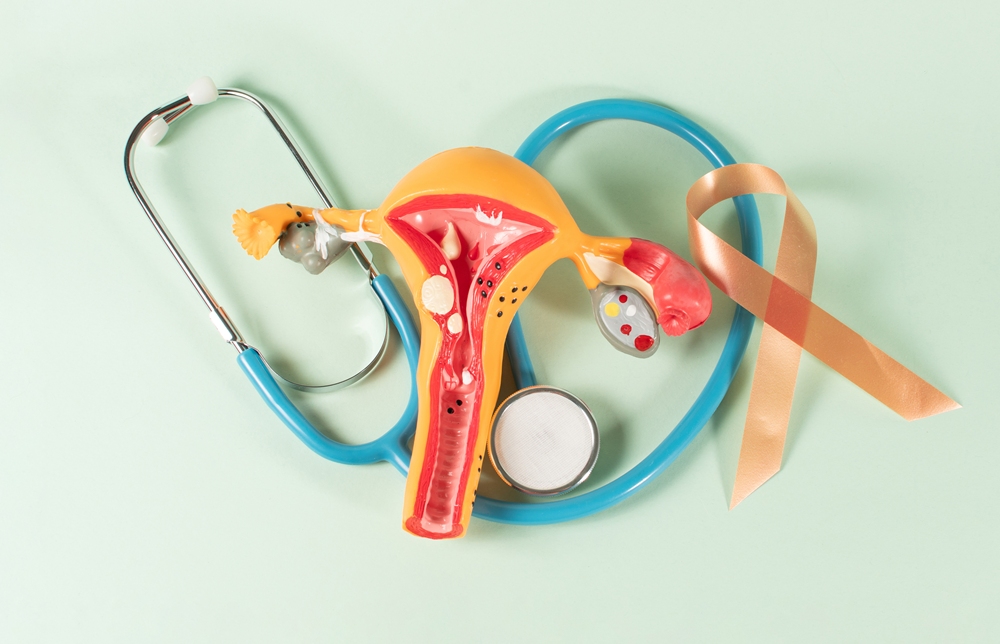
AI could transform ovarian care by personalising cancer and fertility treatment, but more clinical validation is needed before routine use.
A systematic review and meta-analysis found AI models showed high diagnostic accuracy for ovarian cancer when combining data such as ultrasound scans and blood test results.
Across 81 studies, AI models correctly identified ovarian cancer in around nine out of 10 cases, with pooled rates of 89 to 94 per cent.

They were also highly accurate at ruling out ovarian cancer when it was not present, with specificity of 85 to 91 per cent.
The analysis also found that explainable AI tools could predict complete surgical cytoreduction in advanced ovarian cancer.
Complete surgical cytoreduction means removing all visible cancer during surgery, which can be an important goal in treatment planning.
The tools achieved a pooled AUC of 0.87. AUC is a measure of how well a model distinguishes between different outcomes, with higher scores showing stronger performance.
In reproductive medicine, AI algorithms helped physicians optimise ovarian stimulation protocols and predict follicular growth during IVF.
Ovarian stimulation is the use of hormones to encourage the ovaries to produce eggs, while follicles are the small sacs in the ovaries where eggs develop.
The review found AI could reliably model ovarian response in IVF with a pooled AUC of 0.81.
However, researchers said challenges remain in translating promising research findings into routine clinical practice.
They identified substantial variation across studies, driven by retrospective study designs, variable AI systems and a lack of standardised validation.
Only 22 per cent of analysed studies reported prospective, multicentre external validation, where models are tested forward in time across multiple healthcare settings.
The authors called for rigorous validation to help close the gap between research and routine clinical practice, alongside standardised methodological and reporting frameworks, smooth integration with clinical workflow and robust governance to support responsible and ethical AI use.
They concluded: “Artificial intelligence is a transformative force in the management of ovarian conditions.
“In gynaecologic oncology, AI enhances every phase of care, from early detection and accurate diagnosis to prognostic stratification and surgical planning.”
In reproductive medicine, AI personalises ovarian stimulation and refines the diagnosis of heterogenous endocrine disorders such as PCOS.
PCOS, or polycystic ovary syndrome, is a hormonal condition that can affect periods, skin, weight and fertility.













 Opinion4 weeks ago
What Maternal Mental Health Month reveals about where postpartum support actually breaks down

 News3 weeks ago
NIH Grant terminations disproportionately impact minority scientists, research finds

 Menopause4 days ago
Perimenopause misinformation ‘putting women at risk’

 Adolescent health3 weeks ago
WUKA brings Period-Positive Pool Party to London Aquatics Centre to keep girls swimming through puberty

 Insight2 weeks ago
PCOS renamed after decade-long campaign to end ‘cyst’ misconception

 Events4 weeks ago
WHIS 2026 unveils agenda and first speakers for the leading women’s health summit

 Menopause3 weeks ago
CBT shows promise for menopause insomnia and hot flashes

 Mental health4 weeks ago
Online abuse and deepfakes ‘pushing women out of public life’
1 Comment