



Insight
Millennial women are missing lifesaving cancer checks – how to close the cervical screening gap


As new European research shows millennials are more likely to miss cervical cancer screenings than any other generation, experts warn that failing to address major barriers – from fear to family and workplace pressures – could undermine global elimination targets.
Results from a survey of over 5,500 women aged 16-64 found that 31 per cent of eligible millennials have postponed or missed their cervical screening appointments, a figure that is 27 per cent higher than the average across all age groups.
The research, commissioned by Roche Diagnostics and conducted by GWI across six European countries, also found that, despite screening services being widely available free of charge or heavily subsidised in many countries, specific challenges make accessing routine cervical screening difficult for some.
Fears related to pain, embarrassment or stigma surrounding cervical screenings are well-documented as contributing to lower screening rates. But the research also reveals particular challenges millennials face in balancing careers, caregiving responsibilities, and relationships often result in appointments being missed or delayed at a higher rate compared to other age groups.

The ‘have it all’ generation?
“Millennials are often said to be the ‘have it all generation,’ juggling careers, caregiving, and societal expectations. Yet, they tend to put themselves last,” said Joanna Sickler, Vice-President, Health Policy and External Affairs at Roche Diagnostics.
“The research shows that millennials are disproportionately failing to prioritise cervical screening because of a mix of emotional, logistical, and societal pressures.”
Cervical cancer affects more than 600,000 women globally every year, yet it is preventable in almost all cases through vaccination, early detection, and treatment of precancers. Cervical screenings remain vital for detecting human papillomavirus (HPV), the cause of over 99 per cent of cervical cancers, but participation has declined in recent years.
In England, cervical screening rates have fallen to around 69 per cent for women aged 25–64 – well below the NHS England target of 80 per cent – with rates lower for younger women (66 per cent) than older women (74 per cent). According to NHS data, this means over five million women are not up to date with their routine check-up.
The high prevalence of millennials missing screening appointments is particularly concerning, given that they may be the age group that is most at risk. Between 1990 and 2019, cases of early-onset cancer among people under 50 increased by 79 per cent worldwide, and mortality by 28 per cent, making millennials the first generation at greater risk of developing tumours than their parents.
Research also indicates a rise in cases of cervical cancer among millennial women, despite the World Health Organization’s commitment to eliminating it as a public health problem by 2030. A study published in JAMA in 2022 revealed that the incidence of the disease has risen by an average of 2.5 per cent per year among women 30 to 34 years old since 2012.
Experts believe that the reduction in screening uptake among this age group could be contributing to the rise in cervical cancer rates.
A separate study, published in JAMA Network Open, found that of over 20,000 US women surveyed between 2005 and 2019, the percentage of those overdue for cervical cancer screening rose from 14 per cent in 2005 to 23 per cent in 2019.
Women aged 21–29 were significantly more likely to be overdue for screening than those between the ages of 30 and 65.
Fear remains the biggest barrier
According to Roche’s research, fear remains the biggest barrier to attending cervical screenings, with 30 per cent citing fear as the primary reason for missing or delaying their appointments, driven by anxiety about discomfort, pain, or the potential results. This was particularly common among younger generations.
In Spain, 43 per cent of respondents cited fear as a reason for delay, the highest across all surveyed markets. Across the wider survey, 36 per cent of those aged between 16 and 34 years old and 37 per cent of those without children were also significantly more likely to delay due to fear.
This appears to be compounded by a lack of awareness and open dialogue about cervical screening. Despite various public health initiatives to encourage uptake, nearly 50 per cent of respondents, including 43 per cent of millennials, admitted they had never spoken to anyone about cervical screening, with 10 per cent saying they would be more likely to attend if encouraged by family, friends, or colleagues.
“It’s important to create an environment where discussing cervical screening and women’s health topics is not only accepted but encouraged,” Sickler tells Femtech World.
“This can only happen if these topics become commonplace in homes, workplaces and communities.”
Work, family and societal pressures
But fear is not the only factor.
The survey also found that professional commitments and workplace demands are the second-largest barrier for all participants. High-income earners, or those in the top third of income ranges across markets, are 22 per cent more likely than average to delay appointments, and 27 per cent of this group cite workplace demands as the reason for postponement.
Caregiving responsibilities are also often prioritised over personal health, particularly for parents, with 27 per cent of parents surveyed reporting they had delayed or cancelled cervical screening appointments.
Among millennials who postponed their screenings, 12 per cent identified assistance with travel or childcare as a significant motivator, while 19 per cent said greater workplace flexibility and encouragement from employers would help them prioritise their appointments.
According to Sickler, although 66 per cent of managers agree on the importance of taking an active role in supporting employees to attend screenings, only 14 per cent offer flexibility, and just eight per cent have discussed the topic at work.
At the same time, evidence shows the burden of cervical cancer falls disproportionately on marginalised and underserved communities, with incidence rates of cervical cancer in the UK 65 per cent higher in the most deprived quintile of the population, and approximately 520 cervical cancer cases each year linked to deprivation.
Meeting women where they are
Professor Daniel Kelly OBE, Cardiff University, and co-chair of the HPV and Hep B Action Network at the European Cancer Organisation, says healthcare systems “must evolve to meet women where and how they live”. And more broadly, society and communities should “foster open dialogue” to “normalise cervical health as a shared responsibility”.
Sickler agrees that healthcare systems must adapt to better address some of the barriers facing millennial women through practical and cultural solutions – from strengthening awareness and support to streamlining booking systems and expanding access to alternative screening options like self-sampling.
“The latest findings highlight opportunities to improve screening participation through education, workplace flexibility and access to resources,” she says.
“Whilst millennials are the most likely to miss cervical screening appointments, our research also shows they are also the generation most likely to request alternative screening options (21 per cent) and a more convenient booking process (35 per cent).
“To meet these needs, health systems could expand alternative screening options such as self-collection, which offers privacy and convenience and helps overcome barriers like embarrassment, fear of discomfort, and cultural stigma.
Sickler adds: “Streamlining booking processes, strengthening patient education, and fostering open conversations to normalise cervical health are crucial steps in overcoming key barriers.”
NHS to roll out home HPV testing
In England, where the NHS has promised to eliminate cervical cancer by 2040, more women are expected to be offered home screening kits as part of the cervical screening programme outlined in the recently published 10 Year Plan.
From January 2026, HPV self-sampling kits will be offered to those who have rarely or never attended their cervical screening appointment to allow them to test at home. The programme is specifically aimed at groups consistently missing vital appointments, including younger women, ethnicities facing cultural hurdles, people with disabilities and the LGBT+ community.
The new policy was informed by research carried out by King’s College London in 2021, which provided HPV self-sampling kits to women and people with a cervix who were at least six months overdue for their cervical screening. The YouScreen trial found that offering self-sampling kits could boost the numbers screened in England by about 400,000 each year.
According to Dr Anita Lim, visiting senior research fellow at King’s and chief investigator of the trial, the findings demonstrated that self-sampling could reach people who find it difficult to attend traditional screening, including those from diverse and underserved populations.
“It’s hugely positive to see this now reflected in national policy, helping more people get protected from this highly preventable cancer,” said Lim.
While screening carried out by a clinician is still considered the “gold standard” for HPV testing, experts and leading charities such as Cancer Research UK and The Eve Appeal have welcomed the initiative, saying it will help remove barriers and make cervical screening more accessible. And anyone who tests positive for HPV through self-sampling will be encouraged to attend a clinician-taken follow-up screening test.
“The gold standard way to test for HPV is still a sample taken by a clinician, and this will be suitable for most people,” said Michelle Mitchell, Chief Executive of Cancer Research UK, when the plans were announced back in June.
“But beating cervical cancer means beating it for everyone, and this move helps to bring us closer to that goal.”
A ‘societal movement’ to beat cervical cancer
Improving access to self-screening is one solution, but as Sickler highlights, it’s not the whole solution.
Roche’s new campaign, ‘Cervical cancer: it only ends with all of us’, focuses on several different ways to encourage those eligible to overcome barriers and attend clinician-collected cervical screenings.
This includes promoting more emotional and practical support from loved ones, better education across communities, and open conversations around the topic.
“The campaign aims to improve attendance rates through a societal movement to encourage and empower eligible populations to attend their cervical screening appointments,” Sickler adds.
“Only by creating an inclusive environment where women’s health topics are discussed will we be able to increase attendance and prevent cervical cancer from continuing to claim lives.”












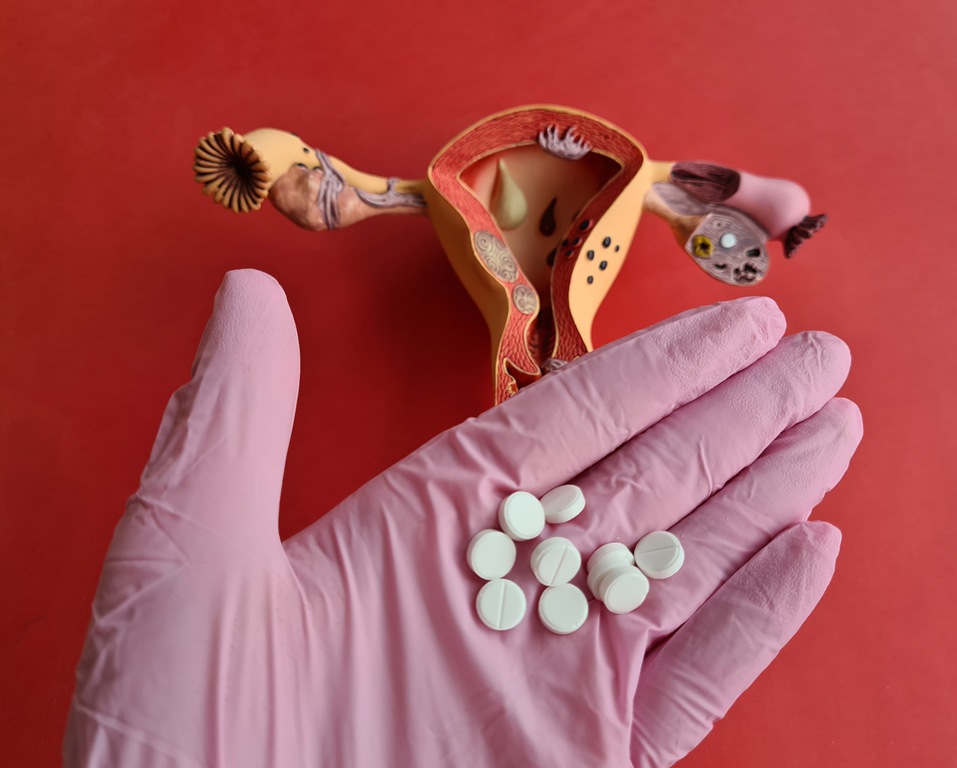
GSK said its ovarian cancer drug shrank or cleared tumours in more than 60 per cent of patients in an early trial as CCO Luke Miels pushes faster development.
The company said that in an early-stage trial, Mocertatug Rezetecan, known as Mo-Rez, shrank or eliminated tumours in 62 per cent of patients with ovarian cancer after chemotherapy had failed, and in 67 per cent of those with endometrial cancer.

Hesham Abdullah, GSK’s global head of cancer research and development, said: “Treatment of gynaecological cancers remains a major challenge, with a pressing need for new therapies that offer improved response rates.
“With Mo-Rez we now have compelling evidence of a promising clinical profile.”
GSK acquired the Mo-Rez treatment, an antibody-drug conjugate, from China’s Hansoh Pharma in late 2023 and has trialled it in 224 patients around the world, including the UK, over the past year.
Only a few patients needed to stop treatment because of side effects, the most common being nausea.
It is given every three weeks by intravenous infusion, meaning directly into a vein.
Combined with data from a separate intermediate trial in China, the results have given the British drugmaker the confidence to go straight to late-stage trials, with five clinical studies planned globally in the next few months, including on patients in the UK.
Speaking to journalists before the conference, Abdullah described Mo-Rez as a “key asset” in the company’s growing cancer portfolio.
It is expected to be a blockbuster drug, with peak annual sales of more than £2bn, which GSK hopes will help it achieve its 2031 sales target of £40bn.
A few years ago GSK did not have any cancer drugs on the market, but it now has four approved medicines and 13 in clinical development.
Last year, oncology generated nearly £2bn in sales, up 43 per cent from 2024, with sales of its endometrial cancer drug Jemperli rising 89 per cent.

Self-employment is linked to lower rates of high blood pressure, obesity, diabetes, poor health and binge drinking in Hispanic women, research suggests.
The findings, published in the peer-reviewed journal Ethnicity & Disease, suggest work structure may be related to cardiovascular disease risk among this group.

Dr Kimberly Narain is assistant professor of medicine in the division of general internal medicine and health services research at the David Geffen School of Medicine at UCLA, senior author of the study, and director of health services and health optimisation research for the Iris Cantor-UCLA Women’s Health Center.
She said: “Hispanic women experience a disproportionate burden of heart disease compared to non-Hispanic women. This is the first study to link the structure of work with risks for heart disease among this group of women.”
The researchers examined 2003 to 2022 data from the Behavioral Risk Factor Surveillance System to assess the association between self-employment, cardiovascular disease risk factors and health outcomes for Hispanic women.
The data included 165,600 Hispanic working women. Of those, about 21,000, or 13 per cent, were self-employed rather than working for wages or a salary.
Overall, the researchers found that self-employed women were less likely to report cardiovascular-disease-associated health problems.
They were also about 11 per cent more likely to report exercising compared with their non-self-employed counterparts.
Specifically, they found that self-employed Hispanic women had a 1.7 percentage point lower chance of reporting diabetes, roughly a 23 per cent decline.
They also had a 3.3 percentage point lower chance of reporting hypertension, roughly a 17 per cent decline.
The study also found a 5.9 percentage point lower chance of reporting obesity, roughly a 15 per cent decline.
It found a 2.0 percentage point lower chance of reporting binge drinking, roughly a 2 per cent decline.
It also found a 2.5 percentage point lower chance of reporting poor or fair overall health, roughly a 13 per cent decline.
The relationship between heart disease risks and the structure of work among Hispanic women was not driven by access to healthcare or differences in income, Narain said.
In fact, the decrease in high blood pressure linked to self-employment was nearly as large as the decrease in high blood pressure linked to being in the highest income group.
The study has some limitations.
The researchers relied on self-reported outcomes, which might be less reliable among ethnic and racial minorities and those from a lower socioeconomic background.
In addition, the researchers’ definition of poor mental health does not entirely match the accepted definition in the fifth edition of the Diagnostic and Statistical Manual of Mental Disorders.
They also did not have data allowing them to examine the specific types of occupations held by the women.
The study design also cannot prove any causal relationship between self-employment and cardiovascular disease risk, which is a subject the researchers will explore.
“The next step in the research is to conduct studies that are able to better assess if the structure of work is a cause of higher heart disease risks among Hispanic women.”
Narain said this.
Study co-authors are Lisette Collins, who led the research, and Dr Frederick Ferguson of UCLA.
Grants from the Iris Cantor-UCLA Women’s Health Center-Leichtman-Levine-TEM program and the UCLA National Clinician Scholars Program supported the research.











 Entrepreneur2 weeks ago
Three sessions that show exactly where women’s health is heading in 2026

 Fertility4 weeks ago
Menstruation costs £20,359 a lifetime, sparking calls for Government action

 Menopause3 weeks ago
California plans US$3.4m menopause care overhaul

 News4 weeks ago
Halogen Ventures surpasses 100 investments in female-founded startups

 Menopause3 weeks ago
Watchdog bans five ads for women’s heath claims

 Pregnancy2 weeks ago
How NIPT has evolved and what AI NIPT means in 2026

 Fertility4 weeks ago
Peers push to pardon women criminalised under abortion laws

 Menopause3 weeks ago
Menopause has no lasting impact on cognition, research finds