Connect with us

Insight

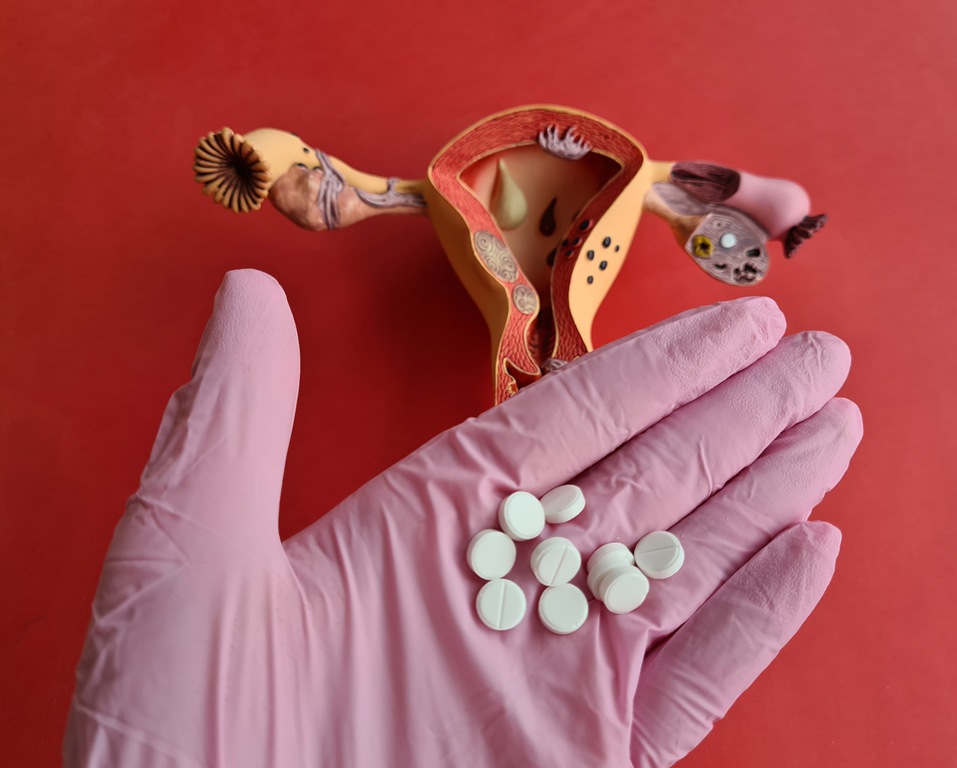
GSK ovarian and womb cancer drug shows promise in early trial

Published

on

GSK said its ovarian cancer drug shrank or cleared tumours in more than 60 per cent of patients in an early trial as CCO Luke Miels pushes faster development.

The company said that in an early-stage trial, Mocertatug Rezetecan, known as Mo-Rez, shrank or eliminated tumours in 62 per cent of patients with ovarian cancer after chemotherapy had failed, and in 67 per cent of those with endometrial cancer.

Hesham Abdullah, GSK’s global head of cancer research and development, said: “Treatment of gynaecological cancers remains a major challenge, with a pressing need for new therapies that offer improved response rates.

“With Mo-Rez we now have compelling evidence of a promising clinical profile.”

GSK acquired the Mo-Rez treatment, an antibody-drug conjugate, from China’s Hansoh Pharma in late 2023 and has trialled it in 224 patients around the world, including the UK, over the past year.

Only a few patients needed to stop treatment because of side effects, the most common being nausea.

It is given every three weeks by intravenous infusion, meaning directly into a vein.

Combined with data from a separate intermediate trial in China, the results have given the British drugmaker the confidence to go straight to late-stage trials, with five clinical studies planned globally in the next few months, including on patients in the UK.

Speaking to journalists before the conference, Abdullah described Mo-Rez as a “key asset” in the company’s growing cancer portfolio.

It is expected to be a blockbuster drug, with peak annual sales of more than £2bn, which GSK hopes will help it achieve its 2031 sales target of £40bn.

A few years ago GSK did not have any cancer drugs on the market, but it now has four approved medicines and 13 in clinical development.

Last year, oncology generated nearly £2bn in sales, up 43 per cent from 2024, with sales of its endometrial cancer drug Jemperli rising 89 per cent.


News

Self-employment linked to better cardiovascular health outcomes in Hispanic women

Published

on

Self-employment is linked to lower rates of high blood pressure, obesity, diabetes, poor health and binge drinking in Hispanic women, research suggests.

The findings, published in the peer-reviewed journal Ethnicity & Disease, suggest work structure may be related to cardiovascular disease risk among this group.

Dr Kimberly Narain is assistant professor of medicine in the division of general internal medicine and health services research at the David Geffen School of Medicine at UCLA, senior author of the study, and director of health services and health optimisation research for the Iris Cantor-UCLA Women’s Health Center.

She said: “Hispanic women experience a disproportionate burden of heart disease compared to non-Hispanic women. This is the first study to link the structure of work with risks for heart disease among this group of women.”

The researchers examined 2003 to 2022 data from the Behavioral Risk Factor Surveillance System to assess the association between self-employment, cardiovascular disease risk factors and health outcomes for Hispanic women.

The data included 165,600 Hispanic working women. Of those, about 21,000, or 13 per cent, were self-employed rather than working for wages or a salary.

Overall, the researchers found that self-employed women were less likely to report cardiovascular-disease-associated health problems.

They were also about 11 per cent more likely to report exercising compared with their non-self-employed counterparts.

Specifically, they found that self-employed Hispanic women had a 1.7 percentage point lower chance of reporting diabetes, roughly a 23 per cent decline.

They also had a 3.3 percentage point lower chance of reporting hypertension, roughly a 17 per cent decline.

The study also found a 5.9 percentage point lower chance of reporting obesity, roughly a 15 per cent decline.

It found a 2.0 percentage point lower chance of reporting binge drinking, roughly a 2 per cent decline.

It also found a 2.5 percentage point lower chance of reporting poor or fair overall health, roughly a 13 per cent decline.

The relationship between heart disease risks and the structure of work among Hispanic women was not driven by access to healthcare or differences in income, Narain said.

In fact, the decrease in high blood pressure linked to self-employment was nearly as large as the decrease in high blood pressure linked to being in the highest income group.

The study has some limitations.

The researchers relied on self-reported outcomes, which might be less reliable among ethnic and racial minorities and those from a lower socioeconomic background.

In addition, the researchers’ definition of poor mental health does not entirely match the accepted definition in the fifth edition of the Diagnostic and Statistical Manual of Mental Disorders.

They also did not have data allowing them to examine the specific types of occupations held by the women.

The study design also cannot prove any causal relationship between self-employment and cardiovascular disease risk, which is a subject the researchers will explore.

“The next step in the research is to conduct studies that are able to better assess if the structure of work is a cause of higher heart disease risks among Hispanic women.”

Narain said this.

Study co-authors are Lisette Collins, who led the research, and Dr Frederick Ferguson of UCLA.

Grants from the Iris Cantor-UCLA Women’s Health Center-Leichtman-Levine-TEM program and the UCLA National Clinician Scholars Program supported the research.

Continue Reading

Insight

Working from home linked to higher fertility, research finds

Published

on

Working from home is linked to 0.32 more children per woman when both partners do it at least once a week, research across 38 countries suggests.

The study found that among working adults aged 20 to 45, estimated lifetime fertility, meaning children already born or fathered plus plans for future children, rises when one or both partners work remotely.

In the US, the increase was even higher at 0.45 children per woman.

On average, women whose partners did not work from home had 2.26 children.

When the woman worked from home at least one day a week, this rose to 2.48. When both partners did so, it increased to 2.58.

If the man worked from home at least one day a week, the increase was more limited at 2.36 children.

The research, by Steven J. Davis and colleagues and published as a working paper by the National Bureau of Economic Research, points to three possible explanations.

Remote working may make it easier to balance childcare with paid work, leading some couples to have more children.

Families with children may also be more likely to look for remote roles. Or the growing availability of those roles may lift fertility by opening up more parent-friendly jobs.

“All three stories align with the idea that WFH jobs make it easier for parents to combine child rearing and employment,” the report suggests.

The pattern held both after the pandemic, between 2023 and 2025, and before it, between 2017 and 2019.

The implications for national fertility rates vary mainly because working-from-home rates differ widely between countries.

Among workers aged 20 to 45, the share working from home at least one day a week ranges from 21 per cent in Japan to 60 per cent in Vietnam. The UK ranks third globally and leads Europe at 54 per cent.

The report estimates that, if “interpreted causally”, remote working accounts for 8.1 per cent of US fertility, equal to about 291,000 births a year as of 2024.

The researchers note that while this may sound modest, it is larger than the effect of government spending on early childhood care and education in the US.

“Bringing WFH rates to the levels that currently prevail in the United States, United Kingdom, and Canada has the potential to materially boost fertility in many other countries,” the report suggests.

However, the research cautions against broad policy approaches, saying the desire for remote work varies widely between individuals, and that it is not practical in every job or organisation.

“Thus, policy interventions that push for a one-size-fits-all approach to working arrangements are likely to yield unhappier workers and lower productivity,” it warns.

A UK Parliament report has also found that remote and hybrid work can boost employment, with parents, carers and people with disabilities likely to benefit most from more flexible working options.

Continue Reading

Insight

Radiotherapy may cut lymphoedema risk

Published

on

Radiotherapy to the armpit instead of surgery may cut lymphoedema risk in some breast cancer patients, early trial results suggest.

Lymphoedema is swelling of the arm or armpit that can happen after surgery to remove lymph nodes.

New findings suggest axillary radiotherapy may be as effective at killing any remaining cancer cells while being less likely to trigger this complication.

The results come from the pilot phase of a phase III randomised international clinical trial looking at whether axillary radiotherapy has a lower risk of lymphoedema than axillary lymph node dissection in breast cancer patients who have had chemotherapy or hormone therapy before surgery, and whose cancer has spread to only one or two lymph nodes.

The trial will also assess overall survival and disease-free survival.

The researchers stressed that these are preliminary results from two years of follow-up in the pilot study, and that clinicians should wait for results from the ongoing phase III trial before considering changes to clinical practice.

Amparo Garcia-Tejedor, from the Functional Breast Unit at Bellvitge University Hospital in Spain and the Institut Català d’Oncologia, is leading the trial.

She said studies had already shown that axillary radiotherapy was a good alternative to axillary lymph node dissection in patients whose first line of treatment was surgery.

She said: “In situations where patients have received chemotherapy or hormone therapy before surgery, it is expected that results could be similar. However, robust prospective data are not yet fully established or published.

“Many patients treated with neoadjuvant therapy experience a significant reduction in axillary disease burden and ultimately present with only one or two lymph nodes that are positive for cancer metastases, which often correspond to the sentinel lymph node, while the remaining axillary nodes are negative.

“This observation strongly suggested that further axillary surgery might be unnecessary in a substantial proportion of patients and that a strategy of de-escalation should be explored.”

From June 2021 to April 2023, the ADARNAT trial recruited 272 breast cancer patients whose disease might have spread to one or more lymph nodes.

The patients had received neoadjuvant therapy and, at the time of surgery, had metastatic cancer in one or two sentinel lymph nodes, the lymph nodes where cancer typically spreads first.

Patients were randomised to receive either axillary radiotherapy or axillary lymph node dissection, and patients in both groups also received radiotherapy to areas of the breast and chest. Results were available for 46 patients in the radiotherapy group and 56 in the surgery group, with a median follow-up of two years.

No cancer recurred in the axillary area in the radiotherapy group, compared with one recurrence in the surgery group, or 1.8 per cent.

Cancer spread to other parts of the body in 4.4 per cent of radiotherapy patients and 5.5 per cent of surgery patients, and there were two deaths in the surgery group, or 4.3 per cent.

Lymphoedema was more common after surgery, at 26.7 per cent, than after radiotherapy, at 18.9 per cent, although the researchers said this difference was not statistically significant. Disease-free and overall survival rates were similar after two years.

Garcia-Tejedor said: “These results indicate that ART instead of ALND is feasible and has good cancer outcomes at two years.

“While some specialists have already begun to substitute axillary lymph node dissection with axillary radiotherapy without waiting for definitive results, the only way to determine with certainty whether this strategy is truly safe and effective is through participation in a well-designed clinical trial such as the one we are now conducting.

“This is particularly important given that the study population includes patients with residual axillary disease and, therefore, a potentially worse prognosis.

“In this context, treatment decisions should not be made without robust evidence.

“Our trial is designed to provide the necessary data to definitively answer this question and to ensure that any future change in standard practice is safe in terms of cancer outcomes and is also beneficial for patients.”

Maria Laplana-Torres, a radiation oncologist at the Hospital Clínic de Barcelona, presented pilot-phase results showing that although axillary radiotherapy was linked to more skin damage from radiation, this was usually temporary and easily treated.

Acute skin damage of grade 2 or above occurred in 27.8 per cent of radiotherapy patients compared with 13.3 per cent after surgery.

It mainly involved skin redness, pigment changes or, in some cases, skin peeling. There were no significant differences in later skin damage between the two groups.

She said: “Some patients experienced mild, temporary difficulty raising the arm above the shoulder or lifting it to the side. These limitations were usually short-lived and did not affect everyday activities.

“We found that treating the axilla with radiotherapy instead of extensive surgery can avoid a more aggressive operation without compromising treatment safety in patients with sentinel lymph node involvement.

“One and two years after treatment, there were no meaningful differences in arm mobility or quality of life between the two groups, although there was a more favourable trend in the ART patients.

“These results show that axillary radiotherapy may be a safe and less invasive option for some women treated with chemotherapy or hormone therapy before surgery.’

“This kind of research is essential to continue improving patient outcomes and to define safer, equally effective therapeutic approaches.”

More than 500 patients have now joined the main phase III trial. The researchers estimate that about three more years will be needed to complete recruitment, followed by five years of follow-up to fully assess cancer outcomes.

Continue Reading

Trending

Copyright © 2025 Aspect Health Media Ltd. All Rights Reserved.