




Insight
Pregnancy and breastfeeding linked to higher cognitive ability in postmenopausal women


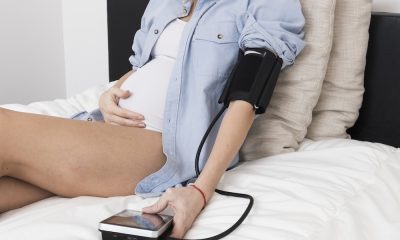
Pregnancy and breastfeeding are linked to stronger cognition in postmenopausal women, a long-term study suggests.
Greater cumulative time spent pregnant and time spent breastfeeding correlated with higher overall scores in the study, including verbal and visual memory, in later life.

Researchers analysed annual assessments of more than 7,000 women aged about 70 for up to 13 years using data from the Women’s Health Initiative Memory Study and the Women’s Health Initiative Study of Cognitive Aging.
On average, those who were pregnant for around 30.5 months were expected to have a 0.31 per cent higher global cognition score than those who had never been pregnant.
A lifetime average of 11.6 months of breastfeeding was linked to a 0.12 per cent higher global score.
Each additional month spent pregnant was associated with a 0.01-point rise in overall ability.
Each extra month of breastfeeding showed the same increase, and a 0.02-point gain in verbal and visual memory. Although small, these effects are similar to known protective factors such as not smoking and high physical activity.
The work was led by Molly Fox, an anthropology professor at the University of California, Los Angeles.
Fox said: “Any ways in which we can focus public health outreach or clinical interventions towards higher-risk populations leads to more effective and efficient efforts.”
Participants who had ever been pregnant scored, on average, 0.60 points higher than those who had never been pregnant.
Those who had breastfed scored 0.19 points higher overall and 0.27 points higher for verbal memory than those who had never breastfed.
Women are disproportionately affected by Alzheimer’s disease, a progressive condition that impairs memory and thinking skills, and this is not fully explained by life expectancy differences.
The authors say biology and social factors may both play roles.
They noted that more adult children could contribute to cognitive health by buffering stress, supporting wellbeing or encouraging healthy behaviour.
“If we can figure out, as a next step, why those reproductive patterns lead to better cognitive outcomes in old age, then we can work towards figuring out how to craft therapies, for example, new drugs, repurposed drugs or social programmes, that mimic the naturally occurring effect we observed,” said Fox.
The study team is now working to identify the mechanisms that link reproductive histories to cognitive resilience.














Ki-67, a protein used to measure tumour growth, may also help prevent chromosome errors that drive cancer, a study suggests.
The findings could change how scientists view Ki-67, a marker commonly used in breast cancer and other tumours to assess how quickly cancer cells are growing.
Researchers found the protein may help preserve genome stability by maintaining the structural integrity of centromeres, key parts of chromosomes that help ensure DNA is shared correctly during cell division.

The research was led by professor Paola Vagnarelli at Brunel University of London in collaboration with scientists at the University of Edinburgh and the Technical University of Berlin.
Professor Vagnarelli said: “Doctors already measure Ki-67 to see how aggressive a cancer might be. But our results suggest it is actually helping maintain genome stability.
“That means it may be more than a marker. It could potentially also be a therapeutic target.”
The study examined three proteins that attach to chromosomes during cell division and help rebuild the molecular system that tells each new cell what kind of cell it is.
Every human cell carries identical DNA. What makes a liver cell different from a brain cell is which genes are switched on and which are kept inactive.
When a cell divides, that entire system of switches must be rebuilt. The three proteins involved in this process were Ki-67, Repo-Man and PNUTS.
Vagnarelli’s team developed a method that individually removes each protein from a living cell at the precise point of division. Older techniques could not isolate that moment cleanly.
They found that cells rely on all three proteins to reset themselves after division, but each failed in a different way when removed.
Without PNUTS, gene activity spiralled out of control and thousands of genes switched on at once.
Without Repo-Man, cells escaped safety checkpoints that usually stop damaged or abnormal cells from continuing to divide.
“What we didn’t expect was how clean the separation was,” said Vagnarelli.
Each protein fails in its own specific way. There is no redundancy, no safety net. Which means there are three separate points at which this process can go wrong.
“When the system breaks down, cells can emerge with the wrong number of chromosomes. That condition, called aneuploidy, is seen in disorders such as Down syndrome and in many cancers.
“We also found that these chromosome errors can trigger inflammatory signals inside the cell.”
Aneuploidy means a cell has too many or too few chromosomes, which can disrupt normal growth and function.
Inflammatory signals are chemical messages that can make a cell behave as if it is responding to injury or infection.
“These cells behave almost as if they are under attack,” said Vagnarelli.
“The immune response switches on because the genome is unstable.
“That link between chromosome imbalance and inflammation could help explain patterns we see in several diseases.”
The researchers said the findings may help cancer scientists better understand how chromosome instability, loss of gene regulation and cells dividing before they are ready contribute to tumour growth.
They said understanding the normal machinery that prevents these errors may help researchers find ways to push cancer cells into making mistakes they cannot survive.
“We now have a clearer map of the machinery that resets the cell after division,” said Vagnarelli.
“That knowledge gives us a starting point for thinking about new therapeutic approaches.”












 News4 weeks ago
Women’s digital health market set to reach US$5.28 billion in 2026 – report

 Insight4 weeks ago
Why the UK’s fertility rate keeps falling – and what it means if you’re trying now

 Wellness4 weeks ago
Women’s HealthX unveils Northwell Health, Corewell Health, Biogen & more to headline Chronic Disease stage

 Motherhood3 weeks ago
What Maternal Mental Health Month reveals about where postpartum support actually breaks down
 Fertility4 weeks ago
Toxins and climate harms having ‘alarming’ effect on fertility, research warns

 News3 weeks ago
NIH Grant terminations disproportionately impact minority scientists, research finds

 Adolescent health2 weeks ago
WUKA brings Period-Positive Pool Party to London Aquatics Centre to keep girls swimming through puberty
 Fertility4 weeks ago
Researcher explores weight loss jab impact on PCOS