



Insight
Why AI in women’s health needs to start with curiosity
By Morgan Rose, Chief Science Officer, Ema


Women’s pain is complex, often overlapping between physical, emotional, and social dimensions.
Chronic pain affects 70 per cent of female sufferers yet is frequently misdiagnosed or dismissed as psychological (Oh, n.d.; UCL, 2021).
Curiosity is the key to addressing this gap.
By asking thoughtful questions and uncovering connections, AI can move beyond surface symptoms to build trust, foster understanding, and uncover root causes.
This curiosity-driven approach ensures earlier diagnoses, more effective treatments, and care that truly resonates with women’s unique experiences—bridging the gaps traditional healthcare often leaves behind.
Understanding Pain as More Than Physical
Pain isn’t just physical; it encompasses emotional and social dimensions that significantly impact women’s health.
Physical Pain: Women often experience conditions like fibromyalgia and migraines more frequently than men.
These ailments are painful and challenging to diagnose and treat, leading to prolonged suffering.
Biological and hormonal factors significantly influence these conditions.
For example, fluctuations in estrogen levels have been shown to exacerbate pain sensitivity, highlighting the need for sex-specific approaches to treatment (IASP, n.d.; PMC, n.d.).
Research Insight: Studies indicate that women’s pain is more likely to be dismissed or misdiagnosed due to gender biases in healthcare (UCL, 2021).
A curious approach can counteract these biases by delving into specific triggers and experiences.
Asking targeted, open-ended questions can help identify patterns that might be overlooked.
Example Question: “You mentioned frequent migraines—have you noticed if they occur more during certain phases of your menstrual cycle or after stressful events?”
Emotional Pain: Chronic pain often coexists with emotional distress, including depression and anxiety.
Women are twice as likely as men to experience these conditions, which can exacerbate their physical symptoms and create a cycle of suffering (Mayo Clinic, n.d.; Kushner, 2024).
The emotional distress associated with chronic pain often exacerbates the perception of pain, creating a cycle that’s hard to break (Dovepress, 2024).
Research Insight: Emotional pain is frequently underdiagnosed or mischaracterised in women, often overshadowing underlying physical conditions (Mayo Clinic, n.d.; Kushner, 2024).
Addressing both dimensions through curiosity fosters holistic care.
Exploring the emotional context of pain through thoughtful questions can uncover hidden contributors to distress.
Social Pain: Social rejection, isolation, and stigma are significant contributors to women’s pain experiences.
For instance, caregiving responsibilities and societal pressures disproportionately affect women, amplifying their vulnerability to social pain (IASP, n.d.; PMC, 2024).
Societal factors, including gender biases, can lead to women’s pain being dismissed or underestimated by healthcare providers.
This dismissal delays appropriate treatment and contributes to feelings of isolation and helplessness (Psychology Today, 2024).
Research Insight: Social determinants, such as poverty and neighborhood conditions, significantly influence pain intensity, particularly in conditions like breast cancer (PMC, 2024).
Curiosity-driven care can help identify and address these factors. Addressing social pain requires understanding the broader context of a woman’s life.
Curiosity in Practice: Improving Diagnosis and Care
Delayed Diagnosis
Women often face significant delays in receiving diagnoses for chronic pain conditions like endometriosis and pelvic pain (Independent, 2024).
These delays are attributed to biases, normalization of symptoms, and limited access to care (MDU, 2024).
How Curiosity Changes the Game
Curiosity goes beyond simply asking questions—it’s about exploring someone’s unique challenges and identifying connections they might not see themselves.
Research shows that curiosity-driven approaches foster trust, enhance engagement, and lead to more accurate diagnoses in healthcare.
They are designed with curiosity at its core, can uncover root causes, and provide meaningful support in women’s health. Here’s how:
1. Asking the Right Questions to Build Trust
A curious approach encourages open dialogue, helping women feel understood and validated.
Studies reveal that patients who feel heard are more likely to share critical information, leading to better outcomes.
- “You mentioned fatigue—do you notice it more after specific activities or during certain times of the month?” This shows attentiveness and opens the door to uncovering hormonal or lifestyle connections.
2. Uncovering Overlooked Patterns
Curiosity allows AI to identify connections that might not be immediately obvious, such as how diet, stress, and sleep interact to affect overall health.
Research highlights that women often present with complex, multifaceted symptoms that require nuanced exploration.
- Example: “Have you noticed whether your skin flare-ups happen during periods of high stress or poor sleep? Let’s explore the potential links.”
3. Encouraging Reflection for Deeper Insights
Curiosity-driven AI doesn’t just provide answers—it helps women reflect on their habits, symptoms, and patterns.
This reflective process empowers patients to take ownership of their health.
- Example: “What impacts your energy most—your diet, stress, or sleep? Why do you think that is?”
4. Creating Personalised, Actionable Plans
When curiosity informs recommendations, they feel more relevant and actionable. Personalized care has been proven to increase adherence to health advice, improving outcomes.
- Example: “Would you like to start adjusting your hydration or exploring sleep routines? Let’s choose what feels manageable for you.”
5. Supporting Holistic Health
Women’s health is deeply interconnected. Curiosity allows AI to address not just the physical symptoms but the emotional and social factors as well.
- Example: “You mentioned stress and skin health—have you noticed any connections between the two? Let’s explore what might be contributing.”
6. Inspiring Confidence and Action
The right questions can help users discover practical, achievable steps. Curiosity creates those “aha” moments that make users feel capable of making meaningful changes.
- Example: “Have you tried syncing your workouts with your cycle? It could boost your energy and help you feel more in tune with your body. Would you like to explore how to get started?”
7. Keeping the Conversation Going
Curiosity also helps AI maintain long-term engagement because users feel their progress matters. They’re more likely to return and keep exploring solutions.
- Example: “Let’s check in next week to see how those hydration tips worked for you. What might you notice after trying them for a few days?”
The Bigger Picture
Curiosity isn’t just a nice to have; it’s essential for addressing the complexities of women’s health.
It builds trust, keeps users engaged, and helps uncover connections that lead to meaningful solutions.
By focusing on the person behind the pain—and asking thoughtful, open-ended questions—AI can bridge the gaps that traditional healthcare often leaves behind.
When AI tools like Ema approach women’s health curiously, they move beyond simply tracking symptoms.
They create a space where women feel seen, heard, and empowered to take control of their health—physically, emotionally, and socially.
Why This Matters
Women’s health has long been underserved, with too many tools and platforms treating it as one-dimensional.
By making curiosity the foundation of AI interactions, we can change that.
Curiosity doesn’t just solve problems—it helps women feel connected to their health in a way that’s personal, honest, and empowering.
That’s the kind of change we need.
Morgan Rose is a Certified Nurse Midwife, Women’s Health Nurse Practitioner, and International Board-Certified Lactation Consultant with over a decade of experience supporting women’s health. As the Chief Science Officer at Ema, Morgan combines her expertise with her passion for empowering women. She lives with her spunky daughter and their beloved dog in New York City.
References
- Dovepress. (2024). The connection between emotional distress and chronic pain. Retrieved from www.dovepress.com
- Independent. (2024). One in Three Women with Female Health Conditions Forced to Wait Three Years for Diagnosis. Retrieved from https://www.independent.co.uk/news/health/women-health-diagnosis-delay-treatment-b2280080.html
- International Association for the Study of Pain (IASP). (n.d.). Pain in Women. Retrieved from https://www.iasp-pain.org/advocacy/global-year/pain-in-women/
- Kushner, D. (2024). How Does Endometriosis Impact Mental Health?. Retrieved from https://www.drdanielkushner.com/blog/how-does-endometriosis-impact-mental-health
- Mayo Clinic. (n.d.). Depression in Women: Understanding the Gender Gap. Retrieved from https://www.mayoclinic.org/diseases-conditions/depression/in-depth/depression/art-20047725
- MDU. (2024). Avoiding Diagnosis Delays in Endometriosis. Retrieved from https://www.themdu.com/guidance-and-advice/latest-updates-and-advice/avoiding-diagnosis-delays-in-endometriosis
- PMC. (2024). Social Disparities of Pain and Pain Intensity Among Women Diagnosed with Early Stage Breast Cancer. Retrieved from https://pmc.ncbi.nlm.nih.gov/articles/PMC8861323/
- Psychology Today. (2024). How gender bias affects the perception and treatment of women’s pain. Retrieved from www.psychologytoday.com
- UCL. (2021). Analysis: Women’s Pain is Routinely Underestimated. Retrieved from https://www.ucl.ac.uk/news/2021/apr/analysis-womens-pain-routinely-underestimated-and-gender-stereotypes-are-blame


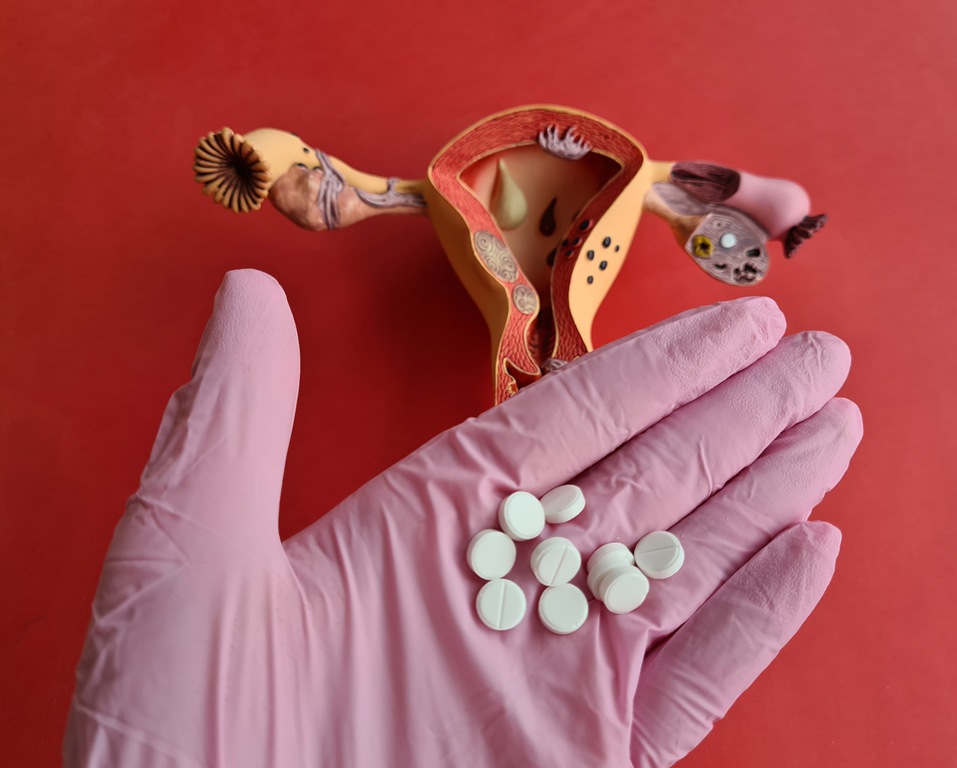
GSK said its ovarian cancer drug shrank or cleared tumours in more than 60 per cent of patients in an early trial as CCO Luke Miels pushes faster development.
The company said that in an early-stage trial, Mocertatug Rezetecan, known as Mo-Rez, shrank or eliminated tumours in 62 per cent of patients with ovarian cancer after chemotherapy had failed, and in 67 per cent of those with endometrial cancer.

Hesham Abdullah, GSK’s global head of cancer research and development, said: “Treatment of gynaecological cancers remains a major challenge, with a pressing need for new therapies that offer improved response rates.
“With Mo-Rez we now have compelling evidence of a promising clinical profile.”
GSK acquired the Mo-Rez treatment, an antibody-drug conjugate, from China’s Hansoh Pharma in late 2023 and has trialled it in 224 patients around the world, including the UK, over the past year.
Only a few patients needed to stop treatment because of side effects, the most common being nausea.
It is given every three weeks by intravenous infusion, meaning directly into a vein.
Combined with data from a separate intermediate trial in China, the results have given the British drugmaker the confidence to go straight to late-stage trials, with five clinical studies planned globally in the next few months, including on patients in the UK.
Speaking to journalists before the conference, Abdullah described Mo-Rez as a “key asset” in the company’s growing cancer portfolio.
It is expected to be a blockbuster drug, with peak annual sales of more than £2bn, which GSK hopes will help it achieve its 2031 sales target of £40bn.
A few years ago GSK did not have any cancer drugs on the market, but it now has four approved medicines and 13 in clinical development.
Last year, oncology generated nearly £2bn in sales, up 43 per cent from 2024, with sales of its endometrial cancer drug Jemperli rising 89 per cent.

Self-employment is linked to lower rates of high blood pressure, obesity, diabetes, poor health and binge drinking in Hispanic women, research suggests.
The findings, published in the peer-reviewed journal Ethnicity & Disease, suggest work structure may be related to cardiovascular disease risk among this group.

Dr Kimberly Narain is assistant professor of medicine in the division of general internal medicine and health services research at the David Geffen School of Medicine at UCLA, senior author of the study, and director of health services and health optimisation research for the Iris Cantor-UCLA Women’s Health Center.
She said: “Hispanic women experience a disproportionate burden of heart disease compared to non-Hispanic women. This is the first study to link the structure of work with risks for heart disease among this group of women.”
The researchers examined 2003 to 2022 data from the Behavioral Risk Factor Surveillance System to assess the association between self-employment, cardiovascular disease risk factors and health outcomes for Hispanic women.
The data included 165,600 Hispanic working women. Of those, about 21,000, or 13 per cent, were self-employed rather than working for wages or a salary.
Overall, the researchers found that self-employed women were less likely to report cardiovascular-disease-associated health problems.
They were also about 11 per cent more likely to report exercising compared with their non-self-employed counterparts.
Specifically, they found that self-employed Hispanic women had a 1.7 percentage point lower chance of reporting diabetes, roughly a 23 per cent decline.
They also had a 3.3 percentage point lower chance of reporting hypertension, roughly a 17 per cent decline.
The study also found a 5.9 percentage point lower chance of reporting obesity, roughly a 15 per cent decline.
It found a 2.0 percentage point lower chance of reporting binge drinking, roughly a 2 per cent decline.
It also found a 2.5 percentage point lower chance of reporting poor or fair overall health, roughly a 13 per cent decline.
The relationship between heart disease risks and the structure of work among Hispanic women was not driven by access to healthcare or differences in income, Narain said.
In fact, the decrease in high blood pressure linked to self-employment was nearly as large as the decrease in high blood pressure linked to being in the highest income group.
The study has some limitations.
The researchers relied on self-reported outcomes, which might be less reliable among ethnic and racial minorities and those from a lower socioeconomic background.
In addition, the researchers’ definition of poor mental health does not entirely match the accepted definition in the fifth edition of the Diagnostic and Statistical Manual of Mental Disorders.
They also did not have data allowing them to examine the specific types of occupations held by the women.
The study design also cannot prove any causal relationship between self-employment and cardiovascular disease risk, which is a subject the researchers will explore.
“The next step in the research is to conduct studies that are able to better assess if the structure of work is a cause of higher heart disease risks among Hispanic women.”
Narain said this.
Study co-authors are Lisette Collins, who led the research, and Dr Frederick Ferguson of UCLA.
Grants from the Iris Cantor-UCLA Women’s Health Center-Leichtman-Levine-TEM program and the UCLA National Clinician Scholars Program supported the research.













 Entrepreneur2 weeks ago
Three sessions that show exactly where women’s health is heading in 2026

 Menopause4 weeks ago
California plans US$3.4m menopause care overhaul

 Menopause3 weeks ago
Watchdog bans five ads for women’s heath claims

 Pregnancy2 weeks ago
How NIPT has evolved and what AI NIPT means in 2026

 Entrepreneur3 weeks ago
WHIS USA 2026 announces first ticket release for landmark Women’s Health Innovation Summit

 Menopause4 weeks ago
Menopause has no lasting impact on cognition, research finds

 News2 weeks ago
Two weeks left to make your mark in women’s cardiovascular health

 Opinion3 weeks ago
Q1 momentum: Female founders are advancing, but the system still hasn’t caught up
1 Comment