



Insight
How Agentic AI and nursing models of care are combatting decision fatigue in women’s health


Women are no strangers to decision fatigue.
From navigating reproductive health to managing chronic conditions and making daily lifestyle choices, the sheer volume of decisions women face can be overwhelming.
Add to this the complexity of healthcare options, time constraints, and information overload, and it’s no surprise that decision fatigue—a state of mental exhaustion that impairs sound decision-making—is a growing concern in women’s health.
But what if there was a way to reduce this cognitive burden while empowering women to make informed, confident choices?
Enter Ema, the first Agentic AI designed to blend the holistic principles of nursing care with cutting-edge technology, offering scalable, empathetic support tailored to women’s unique needs.
Decision Fatigue in Women’s Health: A Growing Challenge
Decision fatigue is more than a buzzword; it’s a real psychological phenomenon that disproportionately impacts women, especially in healthcare.
Studies show that:
- Women often face information overload, with conflicting advice from online sources adding to the confusion.
- Limited time during provider consultations creates pressure to make quick decisions, often without fully understanding the options.
- Emotional factors, such as anxiety and stress, further impair decision-making capabilities.
For example, a woman navigating fertility treatments may need to weigh multiple complex factors—from medical protocols to emotional and financial implications.
Similarly, those managing chronic conditions like endometriosis or diabetes must make daily decisions that affect their long-term health outcomes.
The result?
A sense of overwhelm that leads to suboptimal choices or delays in critical healthcare decisions.
The Nursing Model of Care: A Proven Framework
The nursing model of care offers a solution to decision fatigue by prioritizing holistic, patient-centred care:
- Simplification: Nurses distill complex medical information into clear, actionable steps.
- Emotional Support: Nurses help patients feel confident in their choices by building trust and providing reassurance.
- Shared Decision-Making: This collaborative approach ensures patients’ values and preferences are respected while guiding them toward informed decisions.
These principles alleviate the mental burden of decision-making and enhance patient autonomy and satisfaction.
Ema: Bringing the Nursing Model to Life with AI
Ema takes the best of the nursing model of care and amplifies it with the power of Agentic AI. Designed to act as a personalised health companion.
How Ema Tackles Decision Fatigue: Real-Life Scenarios
- Managing Fertility Treatments:
For a woman overwhelmed by the options for fertility treatments, Ema simplifies the journey by presenting her with clear, tailored recommendations and automating reminders for the next steps. - Navigating Chronic Disease:
A woman managing diabetes might struggle with daily decisions about medication, diet, and exercise. Ema reduces this burden by sending personalised prompts, tracking progress, and providing encouragement. - Understanding Abnormal Test Results:
When test results return abnormal, Ema provides clear, non-alarming explanations and actionable suggestions, reducing stress and confusion. - Choosing the Right Breast Pump:
For new mothers overwhelmed by breastfeeding and pumping, Ema simplifies pumping data by asking personalised questions about lifestyle, milk production needs, and work conditions. Based on the user’s responses, Ema recommends tips and links to resources, lactation consultants, or support groups for new moms.
Why Agentic AI Matters in Women’s Health
Agentic AI is about more than automation—it’s about empowerment.
Agentic AI doesn’t just provide answers; it actively engages users, fostering confidence and autonomy in their healthcare decisions.
By integrating the principles of nursing care with intelligent automation, Agentic AI can deliver:
- Enhanced Health Literacy: Users better understand their health, enabling informed decisions.
- Reduced Cognitive Load: With AI managing the background tasks, women can focus on what truly matters.
- Stronger Engagement: Personalised, empathetic interactions build trust and long-term relationships.
The Future of Decision Support in Women’s Health
As healthcare grows increasingly complex, tools like Ema represent a critical shift toward patient-centred innovation.
By blending the art of nursing care with the science of AI, Ema is more than a tool—it’s a trusted partner in empowering women to navigate their health with confidence and ease.
For women facing decision fatigue, this isn’t just a solution; it’s a revolution.
Learn more about Ema at emaapp.com


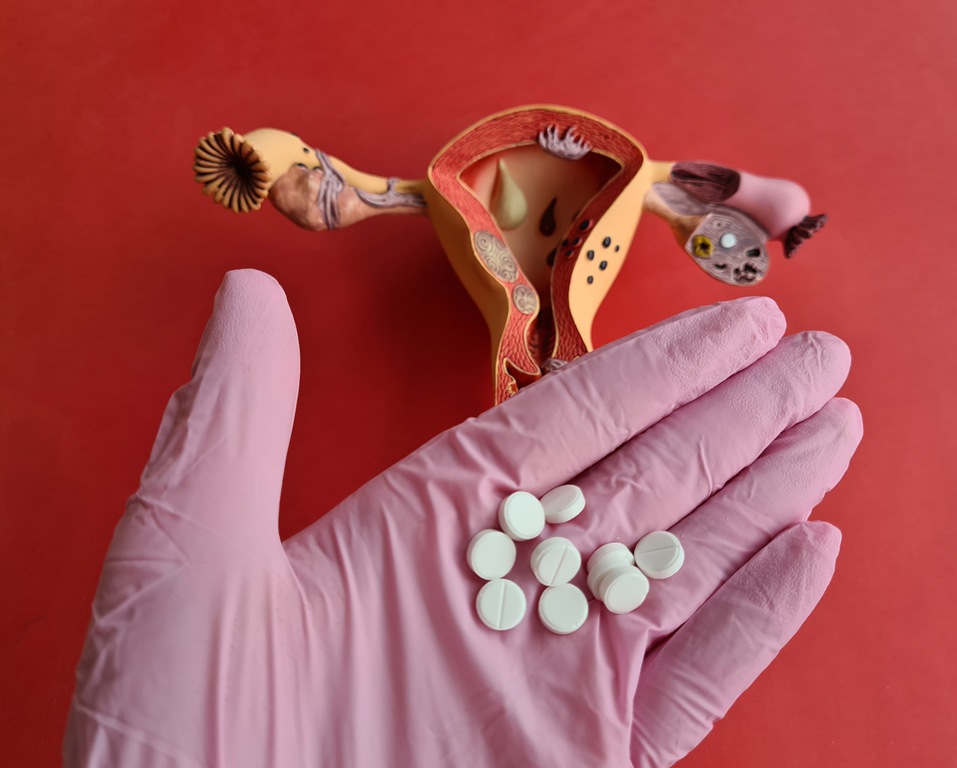
GSK said its ovarian cancer drug shrank or cleared tumours in more than 60 per cent of patients in an early trial as CCO Luke Miels pushes faster development.
The company said that in an early-stage trial, Mocertatug Rezetecan, known as Mo-Rez, shrank or eliminated tumours in 62 per cent of patients with ovarian cancer after chemotherapy had failed, and in 67 per cent of those with endometrial cancer.
Hesham Abdullah, GSK’s global head of cancer research and development, said: “Treatment of gynaecological cancers remains a major challenge, with a pressing need for new therapies that offer improved response rates.
“With Mo-Rez we now have compelling evidence of a promising clinical profile.”
GSK acquired the Mo-Rez treatment, an antibody-drug conjugate, from China’s Hansoh Pharma in late 2023 and has trialled it in 224 patients around the world, including the UK, over the past year.
Only a few patients needed to stop treatment because of side effects, the most common being nausea.
It is given every three weeks by intravenous infusion, meaning directly into a vein.
Combined with data from a separate intermediate trial in China, the results have given the British drugmaker the confidence to go straight to late-stage trials, with five clinical studies planned globally in the next few months, including on patients in the UK.
Speaking to journalists before the conference, Abdullah described Mo-Rez as a “key asset” in the company’s growing cancer portfolio.
It is expected to be a blockbuster drug, with peak annual sales of more than £2bn, which GSK hopes will help it achieve its 2031 sales target of £40bn.
A few years ago GSK did not have any cancer drugs on the market, but it now has four approved medicines and 13 in clinical development.
Last year, oncology generated nearly £2bn in sales, up 43 per cent from 2024, with sales of its endometrial cancer drug Jemperli rising 89 per cent.

Self-employment is linked to lower rates of high blood pressure, obesity, diabetes, poor health and binge drinking in Hispanic women, research suggests.
The findings, published in the peer-reviewed journal Ethnicity & Disease, suggest work structure may be related to cardiovascular disease risk among this group.

Dr Kimberly Narain is assistant professor of medicine in the division of general internal medicine and health services research at the David Geffen School of Medicine at UCLA, senior author of the study, and director of health services and health optimisation research for the Iris Cantor-UCLA Women’s Health Center.
She said: “Hispanic women experience a disproportionate burden of heart disease compared to non-Hispanic women. This is the first study to link the structure of work with risks for heart disease among this group of women.”
The researchers examined 2003 to 2022 data from the Behavioral Risk Factor Surveillance System to assess the association between self-employment, cardiovascular disease risk factors and health outcomes for Hispanic women.
The data included 165,600 Hispanic working women. Of those, about 21,000, or 13 per cent, were self-employed rather than working for wages or a salary.
Overall, the researchers found that self-employed women were less likely to report cardiovascular-disease-associated health problems.
They were also about 11 per cent more likely to report exercising compared with their non-self-employed counterparts.
Specifically, they found that self-employed Hispanic women had a 1.7 percentage point lower chance of reporting diabetes, roughly a 23 per cent decline.
They also had a 3.3 percentage point lower chance of reporting hypertension, roughly a 17 per cent decline.
The study also found a 5.9 percentage point lower chance of reporting obesity, roughly a 15 per cent decline.
It found a 2.0 percentage point lower chance of reporting binge drinking, roughly a 2 per cent decline.
It also found a 2.5 percentage point lower chance of reporting poor or fair overall health, roughly a 13 per cent decline.
The relationship between heart disease risks and the structure of work among Hispanic women was not driven by access to healthcare or differences in income, Narain said.
In fact, the decrease in high blood pressure linked to self-employment was nearly as large as the decrease in high blood pressure linked to being in the highest income group.
The study has some limitations.
The researchers relied on self-reported outcomes, which might be less reliable among ethnic and racial minorities and those from a lower socioeconomic background.
In addition, the researchers’ definition of poor mental health does not entirely match the accepted definition in the fifth edition of the Diagnostic and Statistical Manual of Mental Disorders.
They also did not have data allowing them to examine the specific types of occupations held by the women.
The study design also cannot prove any causal relationship between self-employment and cardiovascular disease risk, which is a subject the researchers will explore.
“The next step in the research is to conduct studies that are able to better assess if the structure of work is a cause of higher heart disease risks among Hispanic women.”
Narain said this.
Study co-authors are Lisette Collins, who led the research, and Dr Frederick Ferguson of UCLA.
Grants from the Iris Cantor-UCLA Women’s Health Center-Leichtman-Levine-TEM program and the UCLA National Clinician Scholars Program supported the research.













 Entrepreneur2 weeks ago
Three sessions that show exactly where women’s health is heading in 2026

 Menopause4 weeks ago
California plans US$3.4m menopause care overhaul

 Menopause3 weeks ago
Watchdog bans five ads for women’s heath claims

 Pregnancy2 weeks ago
How NIPT has evolved and what AI NIPT means in 2026

 Menopause4 weeks ago
Menopause has no lasting impact on cognition, research finds

 Events3 weeks ago
WHIS USA 2026 announces first ticket release for landmark Women’s Health Innovation Summit

 News2 weeks ago
Two weeks left to make your mark in women’s cardiovascular health

 Opinion3 weeks ago
Q1 momentum: Female founders are advancing, but the system still hasn’t caught up
1 Comment