



Insight
How Niramai AI tech changes the breast cancer detection mission

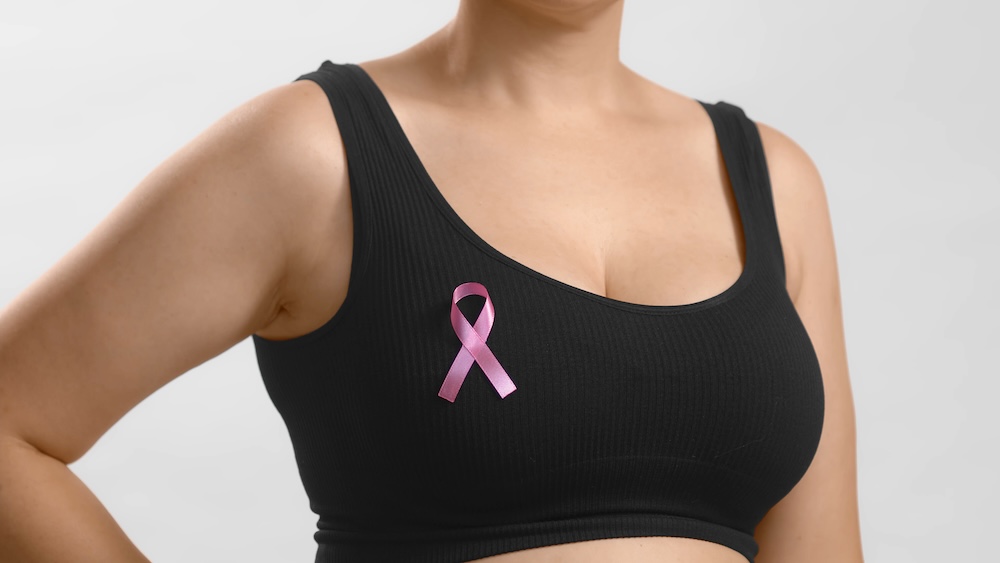
Corporations Can Close the Gap on Women’s Breast Cancer Screening; in an exclusive report by Gil Bashe, editor-in-chief of Medika Life, FINN Partners’ chair of global health and purpose
March marks Women’s History Month — a time to reflect on the progress and work to be done.
In the realm of medicine, women’s health has long lagged behind men’s, with breast cancer and heart disease diagnoses standing out as two glaring examples of this disparity.

Despite advances in medicine, a hidden and often overlooked challenge persists: the underdiagnosis of breast cancer in women with dense breast tissue.
The Challenge of Dense Breast Tissue
Dense breast tissue is not rare — it affects approximately 40–50 per cent of women.
The condition is characterised by a higher proportion of glandular and fibrous tissue than fatty tissue.
Tissue density increases the risk of developing breast cancer and makes tumors more difficult to detect using traditional mammography.
Mammograms can detect around 90 per cent of breast tumors in the least dense breasts but just 60 percent in the most dense breasts — this dangerous “masking effect” leads to delayed diagnoses and poorer outcomes.
The need for better screening tools for women with dense breast tissue is apparent. Early detection of breast cancer is crucial for improving survival rates.
When cancer is identified at an early stage, treatment options are more effective and less invasive, leading to better patient outcomes.
Research shows that regular screening mammography reduces breast cancer deaths by at least 20 per cent.
However, for women with dense breast tissue, the limitations of mammography call for alternative screening methods to ensure early and accurate detection.
A Personal Mission to Save Lives
Dr. Geetha Manjunath, the founder and CEO of Niramai Health Analytix, didn’t begin her career in healthcare — she’s a computer scientist.
But a devastating personal experience altered her path. Two of her relatives — just 42 and 38 — were diagnosed with late-stage breast cancer and passed away within six months.
Seeing firsthand the emotional, social, and economic toll pushed her to find a better solution.
“I knew there had to be a better way,” Dr. Manjunath reflects. And she found it by combining artificial intelligence and thermal imaging.
This is the potential power of AI applications – not artificial intelligence – but rather “augmented implementation.”
AI + Thermal Imaging = Early Detection
The Niramai innovative screening method, Thermalytix, uses AI to analyse thermal variations in breast tissue.
Unlike mammograms, this approach doesn’t require radiation, is pain-free, and can detect cancers in stage 0 or stage 1—well before a lump can be felt in self-exam or during a routine health professional visit.
The test is simple: a woman sits in front of a thermal camera, and the AI-driven system analyses the heat patterns in her breast tissue.
The system combines thermal radiomics and vascular radiomics to identify potential cancerous anomalies with remarkable accuracy.
Clinical studies have shown that Thermalytix has a false negative rate of less than 5 per cent.
Compare that to the 50 percent false negative rate of mammograms in dense tissue, and the potential for saving lives becomes pressing.
This technology is FDA-cleared, portable and easy to use—it can be set up in a corporate office or rural clinic and requires only 10–15 minutes per screening.
The test is noninvasive and entirely private: no touch, no see, no physical discomfort—just actionable information.
The results are analysed by AI and reviewed by a health professional, with detailed reports emailed directly to the patient within a day.
While it does not replace mammography, a health professional can now visualise tissue activity variations across the breast region, even in dense breasts.
Bringing Screening to the Workplace
In a game-changing move, Niramai is now conducting corporate-hosted breast health screenings in the US — the first of its kind.
This initiative has the potential to expand access to early detection dramatically.
A single device can screen approximately 30 women per day, and because the test is quick, private, and comfortable, participation rates are expected to increase.
FINN Partners, a global communication agency, became one of the first testing sites for this breakthrough technology.
The agency already has several programmes geared to support employee health, and knowing the heightened cancer risks associated with women with dense breast tissue, it partnered with Niramai to provide screening to employees and family members interested.
“We have come a tremendous way in leveraging technology to advance health, yet we must continue to educate on the importance of preventative medicine and screenings,” said Shannon Riggs, managing partner of FINN Portland, who advocated for the in-house screen program.
Unlike a traditional mammogram, the Niramai test is non-contact, radiation-free, and suitable for women of all ages — including those with dense breast tissue.
Niramai technology is portable, making it ideal for deployment not only in hospitals and imaging centers but also in rural areas and underserved communities where access to traditional screening tools is limited.
Overcoming Obstacles to Early Detection
Women with dense breast tissue require supplementary imaging tests, such as ultrasound or MRI, to detect abnormalities that mammograms might miss.
However, accessing these additional screenings presents real challenges:
- Limited Access: Not all healthcare facilities offer advanced imaging technologies like MRI or ultrasound, especially in rural or underserved areas.
- High Costs: Supplementary screenings can be expensive, and insurance coverage varies, leading to potential out-of-pocket expenses for patients.
- Scheduling Delays: High demand for specialised imaging can result in long wait times, delaying diagnosis and treatment.
- Discomfort and Invasiveness: Some women may find additional imaging procedures uncomfortable or invasive, deterring them from pursuing necessary screenings.
Niramai AI-driven technology removes these obstacles by providing an affordable, portable, and non-invasive alternative.
Its ease of use and high accuracy mean more women can access early detection without the hassle and cost associated with additional imaging.

Speaking to Women — Lisa Heathman’s Story
Lisa Heathman knows firsthand the importance of early detection — and how a twist of fate can change everything.
Lisa was healthy and active when a cycling accident left her with broken ribs and pain in her chest. That injury led her to undergo imaging, which revealed a tumour.
It was early-stage breast cancer — detected before symptoms would have otherwise shown up.
Lisa’s story underscores how early detection can save lives. However, not every woman will experience a lucky accident that leads to a diagnosis.
“That’s why tools like Niramai AI-based screening are so critical — they enable women to take control of their health before symptoms appear.
“Dense breast tissue is like a mask,” Lisa explains. “Mammograms couldn’t see through it. But my accident and an MRI saved my life.”
Niramai AI-driven technology lifts that mask — giving women the advantage of catching cancer early, regardless of breast density.
Empowering Women, Saving Lives
Niramai is more than just a technological breakthrough—it’s a tool for health access. Traditional screening methods have long underserved women with dense breast tissue.
Thermalytix closes that gap, giving women of all ages and tissue types a better shot at early detection and survival.
Dr Manjunath’s mission is ambitious but clear: “My vision is to take this test to every woman on earth and eliminate deaths from breast cancer.”
As we observe Women’s History Month, Niramai innovation is a testament to technology’s power to reshape health outcomes.
Early detection saves lives — and thanks to AI, that life-saving tool is now more accessible than ever.
The future of women’s health is digital, and Niramai is leading the way. The question is no longer whether this technology can make a difference—it already does.
The real question is, how can people’s workplace evolve into a convenient point of care?


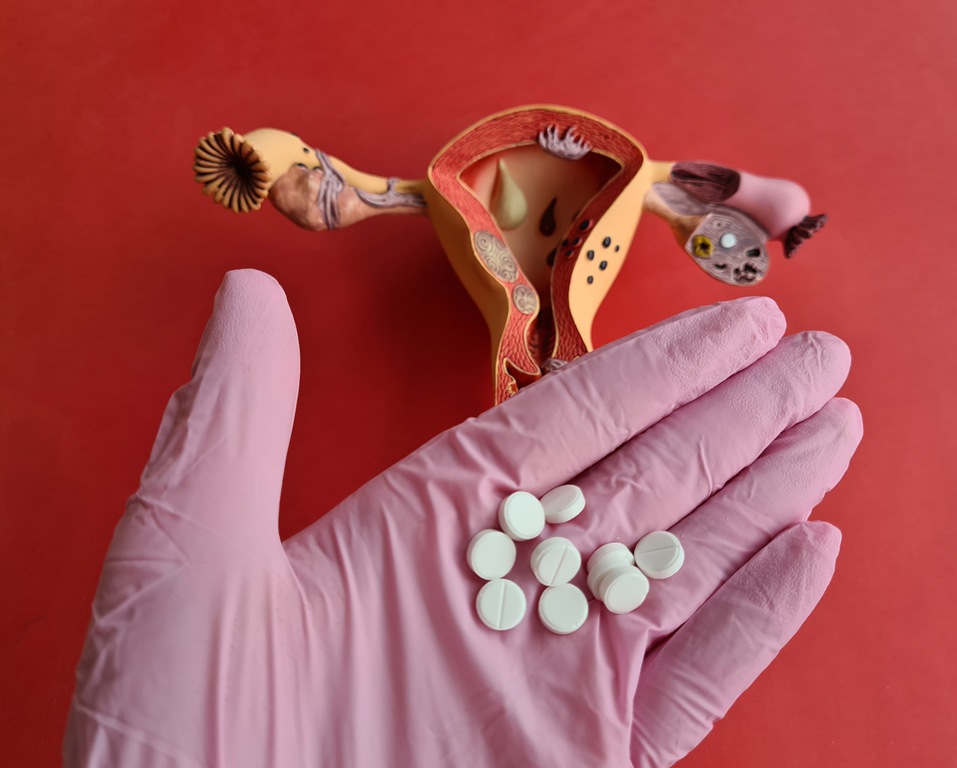
GSK said its ovarian cancer drug shrank or cleared tumours in more than 60 per cent of patients in an early trial as CCO Luke Miels pushes faster development.
The company said that in an early-stage trial, Mocertatug Rezetecan, known as Mo-Rez, shrank or eliminated tumours in 62 per cent of patients with ovarian cancer after chemotherapy had failed, and in 67 per cent of those with endometrial cancer.

Hesham Abdullah, GSK’s global head of cancer research and development, said: “Treatment of gynaecological cancers remains a major challenge, with a pressing need for new therapies that offer improved response rates.
“With Mo-Rez we now have compelling evidence of a promising clinical profile.”
GSK acquired the Mo-Rez treatment, an antibody-drug conjugate, from China’s Hansoh Pharma in late 2023 and has trialled it in 224 patients around the world, including the UK, over the past year.
Only a few patients needed to stop treatment because of side effects, the most common being nausea.
It is given every three weeks by intravenous infusion, meaning directly into a vein.
Combined with data from a separate intermediate trial in China, the results have given the British drugmaker the confidence to go straight to late-stage trials, with five clinical studies planned globally in the next few months, including on patients in the UK.
Speaking to journalists before the conference, Abdullah described Mo-Rez as a “key asset” in the company’s growing cancer portfolio.
It is expected to be a blockbuster drug, with peak annual sales of more than £2bn, which GSK hopes will help it achieve its 2031 sales target of £40bn.
A few years ago GSK did not have any cancer drugs on the market, but it now has four approved medicines and 13 in clinical development.
Last year, oncology generated nearly £2bn in sales, up 43 per cent from 2024, with sales of its endometrial cancer drug Jemperli rising 89 per cent.

Self-employment is linked to lower rates of high blood pressure, obesity, diabetes, poor health and binge drinking in Hispanic women, research suggests.
The findings, published in the peer-reviewed journal Ethnicity & Disease, suggest work structure may be related to cardiovascular disease risk among this group.

Dr Kimberly Narain is assistant professor of medicine in the division of general internal medicine and health services research at the David Geffen School of Medicine at UCLA, senior author of the study, and director of health services and health optimisation research for the Iris Cantor-UCLA Women’s Health Center.
She said: “Hispanic women experience a disproportionate burden of heart disease compared to non-Hispanic women. This is the first study to link the structure of work with risks for heart disease among this group of women.”
The researchers examined 2003 to 2022 data from the Behavioral Risk Factor Surveillance System to assess the association between self-employment, cardiovascular disease risk factors and health outcomes for Hispanic women.
The data included 165,600 Hispanic working women. Of those, about 21,000, or 13 per cent, were self-employed rather than working for wages or a salary.
Overall, the researchers found that self-employed women were less likely to report cardiovascular-disease-associated health problems.
They were also about 11 per cent more likely to report exercising compared with their non-self-employed counterparts.
Specifically, they found that self-employed Hispanic women had a 1.7 percentage point lower chance of reporting diabetes, roughly a 23 per cent decline.
They also had a 3.3 percentage point lower chance of reporting hypertension, roughly a 17 per cent decline.
The study also found a 5.9 percentage point lower chance of reporting obesity, roughly a 15 per cent decline.
It found a 2.0 percentage point lower chance of reporting binge drinking, roughly a 2 per cent decline.
It also found a 2.5 percentage point lower chance of reporting poor or fair overall health, roughly a 13 per cent decline.
The relationship between heart disease risks and the structure of work among Hispanic women was not driven by access to healthcare or differences in income, Narain said.
In fact, the decrease in high blood pressure linked to self-employment was nearly as large as the decrease in high blood pressure linked to being in the highest income group.
The study has some limitations.
The researchers relied on self-reported outcomes, which might be less reliable among ethnic and racial minorities and those from a lower socioeconomic background.
In addition, the researchers’ definition of poor mental health does not entirely match the accepted definition in the fifth edition of the Diagnostic and Statistical Manual of Mental Disorders.
They also did not have data allowing them to examine the specific types of occupations held by the women.
The study design also cannot prove any causal relationship between self-employment and cardiovascular disease risk, which is a subject the researchers will explore.
“The next step in the research is to conduct studies that are able to better assess if the structure of work is a cause of higher heart disease risks among Hispanic women.”
Narain said this.
Study co-authors are Lisette Collins, who led the research, and Dr Frederick Ferguson of UCLA.
Grants from the Iris Cantor-UCLA Women’s Health Center-Leichtman-Levine-TEM program and the UCLA National Clinician Scholars Program supported the research.












 Entrepreneur2 weeks ago
Three sessions that show exactly where women’s health is heading in 2026

 Menopause4 weeks ago
California plans US$3.4m menopause care overhaul

 Menopause3 weeks ago
Watchdog bans five ads for women’s heath claims

 Pregnancy2 weeks ago
How NIPT has evolved and what AI NIPT means in 2026

 Entrepreneur3 weeks ago
WHIS USA 2026 announces first ticket release for landmark Women’s Health Innovation Summit

 Menopause4 weeks ago
Menopause has no lasting impact on cognition, research finds

 News2 weeks ago
Two weeks left to make your mark in women’s cardiovascular health

 Opinion3 weeks ago
Q1 momentum: Female founders are advancing, but the system still hasn’t caught up