




Fertility
Medical misogyny in the UK leaves women in pain and undiagnosed for years, reveals report


A new report by the UK’s Women and Equalities Committee (WEC) that focusses on women’s reproductive health has warned that women are being left undiagnosed and in unnecessary pain for years.
Looking at conditions such as endometriosis, adenomyosis and heavy menstrual bleeding, the report reveals that women experiencing these health issues are constantly having their symptoms dismissed and normalised by their health providers.
This is due to stigma associated with gynaecological and urogynaecological health, a lack of education, and “medical misogyny” contributing to poor awareness of these conditions, says the report.
The report also found a lack of medical research, treatment options and specialists for such conditions, along with long waiting lists for gynaecological care, suggesting that the Government provides funding to help transform support and care for reproductive ill health.
The result of this medical misogyny and lack of awareness is that women are missing out on education and career opportunities, with their relationships, social lives and fertility being negatively impacted, with many resorting to expensive private healthcare.
The report states: “There is a clear lack of awareness and understanding of women’s reproductive health conditions among primary healthcare practitioners, particularly when those conditions occur in young women and girls.
“Women are finding their symptoms normalised and their pain dismissed, with an ingrained belief among some healthcare professionals that women, particularly those from a minority ethnic background, are exaggerating their symptoms. Such medical misogyny and racism is unacceptable.”
In a press statement, chair of the Women and Equalities Committee and Labour MP, Sarah Owen, stated: “Our inquiry has shown misogyny in medicine is leaving women in pain and their conditions undiagnosed.
“Women are finding their symptoms dismissed, are waiting years for life changing treatment and in too many cases are being put through trauma-inducing procedures. All the while, their conditions worsen and become more complicated to treat.
“Up to one in three women live with heavy menstrual bleeding, one in ten have a condition such as endometriosis or adenomyosis. It cannot be right that despite the prevalence of these conditions that such a lack of understanding and awareness persists.
“WEC heard compelling testimonies during the inquiry from high profile women including Naga Munchetty and Vicky Pattison about their experiences over years in seeking effective help. This issue is impacting so many women across the country from their teens through to their retirement.
“This report must act as a wake-up call and the NHS must urgently implement a training programme to improve the experience of treatment and diagnosis of reproductive health conditions.
“Improving early diagnosis, including follow-up appointments, should be a key performance indicator for the Women’s Health Strategy for England. Individuals with a suspected or diagnosed reproductive health condition should be offered specialist mental health support.
“The Committee calls on the Government to recognise the financial benefits of increased investment in early diagnosis and treatment of women’s reproductive health conditions and provide the additional funding necessary to truly transform the support available to the millions of women affected by reproductive ill health in this country.”
Speaking on Times Radio, Professor Joyce Harper of University College London’s EGA Institute for Women’s Health, said: “We have to educate our health professionals to be sure that they don’t pass women over and that women come to them with an issue, they need to investigate it properly.”
The WEC report suggests that more funding is provided for research into women’s reproductive health and that the government commits to reducing endometriosis diagnosis waiting times by two years.










Entrepreneur
Future Fertility raises Series A financing to scale AI tools redefining fertility care worldwide

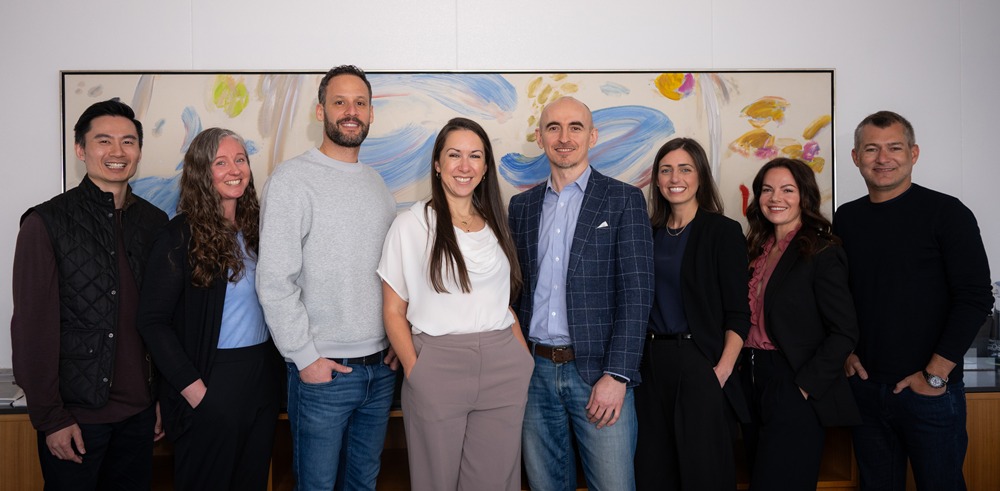
Future Fertility Inc. has announced the closing of a US$4.1 million Series A financing round.
The round was led by M Ventures (the corporate venture capital arm of Merck KGaA, Darmstadt, Germany) and Whitecap Venture Partners, with participation from new investors Sandpiper Ventures, Gaingels, and Jolt VC.
The financing will accelerate Future Fertility’s commercial expansion into Asia-Pacific and support its entry into the United States, including planned FDA 510(k) clearance for additional products as part of a broader U.S. market entry strategy.
Proceeds will also advance the development of a broader AI platform, from egg assessment through to embryo transfer, designed to support clinicians, embryologists, and patients across the full IVF journey.
M Ventures and Whitecap have supported Future Fertility’s mission to translate AI innovation into meaningful clinical outcomes since the company’s earliest stages.
Oliver Hardick, investment director, M Ventures, said: “Future Fertility is addressing a critical unmet need in reproductive medicine with a differentiated AI platform grounded in clinical data and real-world workflow integration.
“We are excited to continue supporting the company and team because we believe its technology has the potential to improve decision-making for clinicians, bring greater clarity to patients, and help advance a more personalised standard of care in fertility treatment.”
Future Fertility’s AI platform addresses a long-standing gap in fertility care: historically, there has been no objective, clinically validated method for assessing egg quality (Gardner et al., 2025), despite it being one of the most important drivers of reproductive success.
The company’s suite of deep learning tools includes VIOLET™, MAGENTA™, and ROSE™, purpose-built for egg freezing, IVF, and egg donation respectively.
The tools are based on AI models trained and validated on more than 650,000 oocyte images and are deployed in over 300 clinics across 35 countries.
Rhiannon Davies, founding and managing partner, Sandpiper Ventures, said: “The best outcomes in fertility care globally come from better data and smarter tools. Future Fertility understands that, and they’ve built a platform that delivers on it.
“Sandpiper is proud to back a team turning rigorous science into real results for patients and clinicians alike.”
Partnerships with the world’s leading fertility networks – including IVI RMA and Eugin Group across Latin America and Europe, FertGroup Medicina Reproductiva in Brazil, and most recently announced Kato Ladies Clinic in Japan – reflect growing demand for objective, AI-powered oocyte assessment in fertility care. In the United States, ROSE™ is newly available under an FDA 513(g) determination.
Research shows that approximately 50 per cent of IVF patients do not understand their likelihood of success, and many discontinue treatment prematurely, even though cumulative success rates improve significantly with multiple cycles (McMahon et al., 2024).
By delivering earlier clarity on egg quality, Future Fertility’s tools support more informed conversations between clinicians and patients, helping set realistic expectations and guide decisions about next steps.
Future Fertility’s growing evidence base spans seven peer-reviewed publications in Human Reproduction, Reproductive BioMedicine Online, Fertility & Sterility, and Nature’s Scientific Reports, and more than 70 scientific abstracts accepted and presented with partner clinics at conferences worldwide.
Christine Prada, CEO, Future Fertility, said: “Fertility treatment is one of the most emotionally and physically demanding experiences a person can go through.
“Every patient deserves objective data, not just a best guess, to support better decisions at critical moments in their care.
“This funding means we can bring that clarity to more patients, in more countries, at a moment when it matters most.”
Find out more about Future Fertility at futurefertility.com

Entrepreneur
Women’s HealthX confirms exceptional speaker line-up to advance fertility and reproductive care


By Women’s HealthX
Women’s HealthX has confirmed an outstanding cohort of fertility and reproductive care leaders for its upcoming event, bringing together the senior clinicians, medical directors, and innovators shaping evidence-based practice across hospitals and healthcare systems globally.
Timed to coincide with Infertility Awareness Week, this announcement underscores the event’s commitment to accelerating the adoption of evidence-based innovations in fertility and reproductive medicine.
Find out more about Women’s HealthX
Headline Speaker
Fireside Chat: The Invisible Disease: What Endometriosis Reveals About the Future of Women’s Health
Padma Lakshmi, Co-Founder, Endometriosis Foundation of America
Confirmed Speakers from World-Leading Institutions and confirmed sessions
Training the Next Generation of Fertility HCPs
Alan Penzias, Director, Fellowship Program in Reproductive Endocrinology & Infertility, Beth Israel Deaconess Medical Center
Shaping the Future of Fertility Care
Lynn Mason, Chief Executive Officer — North America, IVIRMA Global
Ovarian Aging and Reproductive Potential: What Truly Matters
Mark Trolice, Founder & Medical Director, The IVF Center
The Patient Journey Through Fertility Care: Improving Experience & Outcomes
Adam Balen, Chief Medical Officer / Professor of Reproductive Medicine, Leeds Teaching Hospitals NHS Trust
Designing Women’s Health Around The Whole Woman: A Life-Course Model for Sustainable Outcomes
Malissa Wood, Chief Medical Officer, Women as One
Prolong Fertility Preservation by Highlighting Ovarian Insufficiency Through Genetic Variant Data Analysis
Julie Rios, Division Director, Reproductive Endocrinology & Infertility, UPMC
What Attendees Will Take Away
How to improve the fertility patient journey and outcomes
- Ways to detect ovarian aging earlier using genetic insights
- Strategies to deliver care across the full female life course
- Approaches to training the next generation of fertility specialists
Women’s HealthX spans seven dedicated stages covering the full lifecycle of women’s health — from fertility and sexual health to maternity and menopause — providing attendees with actionable insights from frontline leaders across hospitals and healthcare systems.
With Chief Medical Officers and senior clinical leaders in attendance, the programme moves beyond discussion into delivery, giving attendees direct access to the latest clinical evidence, emerging digital tools, and real-world outcomes data to support integrated, high-quality care.
REGISTER NOW FOR A CHANCE TO WIN A FREE THERAPEUTIC MASSAGE
Complimentary passes are available for qualified healthcare professionals.
Attendees who register by 15 May will gain full access to all seven stages and a chance to receive a complimentary therapeutic massage at Encore Boston.
Register your complimentary place
For speaking opportunities, partnership enquiries, or further information, please contact the team directly at info@alpahevents.com


Article produced in association with London Pregnancy Clinic and Jeen Health
For the majority of couples planning a pregnancy, genetic testing is not something they think about until a problem arises.
Pre-conception genetic carrier screening challenges this approach by identifying risk before pregnancy begins.
As panel sizes have grown and at-home testing options have become widely available, carrier screening is transitioning from a niche clinical referral into a mainstream component of reproductive planning.
What Carrier Screening Tests For
Being a carrier of a genetic condition means carrying one copy of a variant in a gene associated with that condition, without being affected by it.
In most cases, carriers are entirely unaware of their status.
The clinical significance of carrier status emerges when both members of a couple carry a variant in the same gene: in this scenario, each pregnancy carries a one in four chance of resulting in a child who inherits two copies of the variant and is affected by the condition.
The conditions most frequently included in expanded carrier screening panels include cystic fibrosis, spinal muscular atrophy (SMA), fragile X syndrome, sickle cell disease, and a range of metabolic and enzyme deficiency disorders.
The Beacon 787 carrier test, offered by Jeen Health, screens for 787 conditions from a single sample, making it one of the most comprehensive panels currently available to UK families.
Who Is Most Likely to Benefit
Any couple planning a pregnancy can consider carrier screening. It is particularly relevant for:
- Couples with a family history of a known inherited condition
- Those from populations with higher carrier frequencies for specific conditions, including Ashkenazi Jewish, South Asian and African communities
- Couples pursuing fertility treatment, where genetic information informs treatment planning
- Those who wish to have the most complete picture of their reproductive health before conception
Importantly, being a carrier of a condition does not mean a child will be affected. It means there is a defined statistical risk that can be quantified, discussed and planned for with appropriate clinical support.
How the Test Is Performed
Carrier screening is typically carried out on a blood or saliva sample.
For at-home options such as the testing offered by Jeen Health, a cheek swab collection kit is dispatched to the patient, the sample is returned by post, and results are delivered digitally within a defined turnaround period.
In-clinic carrier testing may use a blood draw and provides the advantage of immediate access to a clinical consultation at the point of result delivery.
London Pregnancy Clinic offers genetics counselling through its partnership with Jeen Health, allowing couples to receive and contextualise carrier test results with expert support.
Genetic counselling before and after testing is recommended by Genomics England as a standard component of any genomic testing pathway.
What Happens If Both Partners Are Carriers
If both partners are identified as carriers for the same autosomal recessive condition, they are typically offered further counselling to discuss their options.
These may include proceeding naturally with an awareness of the risk, using prenatal diagnosis (CVS or amniocentesis) during pregnancy to test the fetus, or pursuing preimplantation genetic testing (PGT) in the context of IVF, which allows unaffected embryos to be selected before transfer.
The purpose of identifying carrier status before pregnancy is to give couples time to consider these options without the added pressure of an ongoing pregnancy.
Knowledge of carrier status does not remove reproductive choices; it expands the information available when making them.
The Role of Pre-Conception Services
Carrier screening sits within a broader category of pre-conception care that includes fertility assessments, general health optimisation and, where relevant, management of existing conditions before pregnancy begins.
London Pregnancy Clinic offers pre-conception services encompassing fertility investigations, genetics counselling and carrier testing as part of an integrated 0th trimester approach, allowing couples to address genetic and clinical risk factors before their pregnancy starts rather than after.
Disclaimer: This article is produced for informational purposes only and does not constitute medical advice, diagnosis or treatment.
Clinical guidance referenced reflects published NHS, NICE and RCOG standards as at March 2026. Individual circumstances vary; readers are advised to consult a qualified healthcare professional before acting on any information in this article.
This piece was produced in association with London Pregnancy Clinic and Jeen Health, which provided background clinical information for editorial purposes.
Hyperlinks to external sources are included for reference only and do not represent an endorsement of any product, service or organisation.











 Entrepreneur3 weeks ago
Three sessions that show exactly where women’s health is heading in 2026

 Pregnancy3 weeks ago
How NIPT has evolved and what AI NIPT means in 2026

 Menopause4 weeks ago
Watchdog bans five ads for women’s heath claims

 Entrepreneur4 weeks ago
WHIS USA 2026 announces first ticket release for landmark Women’s Health Innovation Summit

 News3 weeks ago
Two weeks left to make your mark in women’s cardiovascular health

 Opinion3 weeks ago
Q1 momentum: Female founders are advancing, but the system still hasn’t caught up

 News4 weeks ago
Endometriosis firm wins NIH prize

 Pregnancy4 weeks ago
Miscarriage cradle to be rolled out across Scotland