



Insight
Four considerations for evaluating GenAI for femtech
By Ambreen Molitor, National Director, Innovation, Planned Parenthood


As more industries explore the potentials of GenAI innovation and efficiency, it’s helpful to have a roadmap toward successful implementation. Investing in GenAI solutions can be costly, so it’s critical to approach the evaluation process strategically.
Planned Parenthood Federation of America (PPFA) is proudly committed to applying technology and innovation to ensure people can get the sexual health information they need to seek the care they deserve.
Over the years, we’ve learned a lot about innovating with an eye toward equity, even with finite resources.
In addition to investing in our digital tools, one of our top innovation priorities is strategically researching and evaluating GenAI to explore its potential to help us continue to meet our organisational goals.
Here are some suggestions based on insights we’ve learned along the way:
1. Determine “Why GenAI”
Test customer support as a business case.
Consider areas where automation can significantly improve efficiency or customer experience.
Common use cases like customer support and FAQ handling are a good place to start. Information sharing with motivated users is often the strongest tool to embolden positive action or change.
Define success metrics.
Make sure the product has clear, measurable objectives for chatbot implementation.
Objectives could include reducing staff time or cost or increasing satisfaction scores.
Start small and iterate.
Attempting to build a comprehensive chatbot that can respond to any scenario can result in a product that needs to be more specific and defined, making success more difficult to measure.
Instead, consider investing in AI that is trained for a specific purpose in one area. With increased specialization comes optimal output tailored for your audience.
2. Prioritise Diversity, Equity, and Inclusion (DEI) for Bot Success
Ensure inclusive language and cultural sensitivity.
A successful chatbot — particularly in health care — should be able to communicate effectively with anyone, acknowledging and accounting for diverse lived experiences, and be quality tested to ensure a reduction of error or removal of bias.
Build a diverse development and review team.
Make sure the product is regularly staffed with and work reviewed by a diverse (representative in race/ethnicity, age, lived experience, for example) group of people to contribute to the bot’s accuracy, fairness, and inclusivity.
3. Ensure Human-AI Compatibility Throughout the Product Life Cycle
Invest in resourcing staff for ongoing development and training for the bot.
Implement safeguards to prevent the AI from producing harmful or inappropriate content by handing it off to humans — or even another system — if something goes awry or the user opts out.
Ensuring seamless human-AI compatibility is crucial at every stage of a GenAI product’s lifecycle.
This ongoing focus on the human element helps create a more effective, user-friendly, and trustworthy AI solution.
4. Score for Accuracy and Brand Representation
Prioritise continued accuracy assessment.
Eliminating inaccuracy in your GenAI solution maximises user trust, builds legal compliance, and achieves business objectives.
To evaluate and enhance the accuracy of a GenAI solution, you can implement mechanisms for users to report inaccuracies or provide feedback.
Systematising error monitoring and implementing solutions for GenAI knowledge cutoff dates can also improve accuracy.
Align your product with your brand.
For an optimal user experience, you’ll want your GenAI solution to reflect your brand accurately.
Think about developing an evolving scorecard that measures communication tone, style, and ethical standards and principles against your brand guidelines and values.
Be sure to include crisis scenarios, compare these scores against other language model technologies, and keep a tally of the number of times AI provides a satisfactory answer based on the agreed-upon definition of accuracy, reliability, and other quality metrics.
If you keep your goal finite and specific, include a representative community of users, and hire trained staff to monitor and evaluate the product, you’ve established the parameters for building, scaling, evaluating, and iterating a successful GenAI solution.
Planned Parenthood is the headline sponsor of the Femtech World Awards. Find out more and enter for free here.


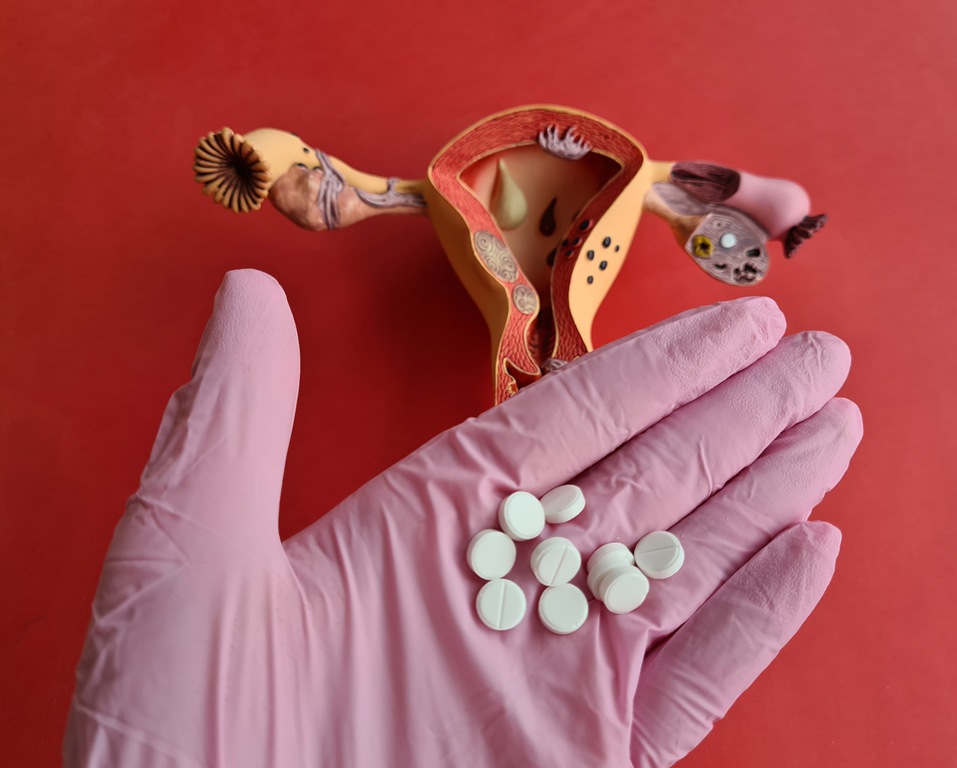
GSK said its ovarian cancer drug shrank or cleared tumours in more than 60 per cent of patients in an early trial as CCO Luke Miels pushes faster development.
The company said that in an early-stage trial, Mocertatug Rezetecan, known as Mo-Rez, shrank or eliminated tumours in 62 per cent of patients with ovarian cancer after chemotherapy had failed, and in 67 per cent of those with endometrial cancer.
Hesham Abdullah, GSK’s global head of cancer research and development, said: “Treatment of gynaecological cancers remains a major challenge, with a pressing need for new therapies that offer improved response rates.
“With Mo-Rez we now have compelling evidence of a promising clinical profile.”
GSK acquired the Mo-Rez treatment, an antibody-drug conjugate, from China’s Hansoh Pharma in late 2023 and has trialled it in 224 patients around the world, including the UK, over the past year.
Only a few patients needed to stop treatment because of side effects, the most common being nausea.
It is given every three weeks by intravenous infusion, meaning directly into a vein.
Combined with data from a separate intermediate trial in China, the results have given the British drugmaker the confidence to go straight to late-stage trials, with five clinical studies planned globally in the next few months, including on patients in the UK.
Speaking to journalists before the conference, Abdullah described Mo-Rez as a “key asset” in the company’s growing cancer portfolio.
It is expected to be a blockbuster drug, with peak annual sales of more than £2bn, which GSK hopes will help it achieve its 2031 sales target of £40bn.
A few years ago GSK did not have any cancer drugs on the market, but it now has four approved medicines and 13 in clinical development.
Last year, oncology generated nearly £2bn in sales, up 43 per cent from 2024, with sales of its endometrial cancer drug Jemperli rising 89 per cent.

Self-employment is linked to lower rates of high blood pressure, obesity, diabetes, poor health and binge drinking in Hispanic women, research suggests.
The findings, published in the peer-reviewed journal Ethnicity & Disease, suggest work structure may be related to cardiovascular disease risk among this group.

Dr Kimberly Narain is assistant professor of medicine in the division of general internal medicine and health services research at the David Geffen School of Medicine at UCLA, senior author of the study, and director of health services and health optimisation research for the Iris Cantor-UCLA Women’s Health Center.
She said: “Hispanic women experience a disproportionate burden of heart disease compared to non-Hispanic women. This is the first study to link the structure of work with risks for heart disease among this group of women.”
The researchers examined 2003 to 2022 data from the Behavioral Risk Factor Surveillance System to assess the association between self-employment, cardiovascular disease risk factors and health outcomes for Hispanic women.
The data included 165,600 Hispanic working women. Of those, about 21,000, or 13 per cent, were self-employed rather than working for wages or a salary.
Overall, the researchers found that self-employed women were less likely to report cardiovascular-disease-associated health problems.
They were also about 11 per cent more likely to report exercising compared with their non-self-employed counterparts.
Specifically, they found that self-employed Hispanic women had a 1.7 percentage point lower chance of reporting diabetes, roughly a 23 per cent decline.
They also had a 3.3 percentage point lower chance of reporting hypertension, roughly a 17 per cent decline.
The study also found a 5.9 percentage point lower chance of reporting obesity, roughly a 15 per cent decline.
It found a 2.0 percentage point lower chance of reporting binge drinking, roughly a 2 per cent decline.
It also found a 2.5 percentage point lower chance of reporting poor or fair overall health, roughly a 13 per cent decline.
The relationship between heart disease risks and the structure of work among Hispanic women was not driven by access to healthcare or differences in income, Narain said.
In fact, the decrease in high blood pressure linked to self-employment was nearly as large as the decrease in high blood pressure linked to being in the highest income group.
The study has some limitations.
The researchers relied on self-reported outcomes, which might be less reliable among ethnic and racial minorities and those from a lower socioeconomic background.
In addition, the researchers’ definition of poor mental health does not entirely match the accepted definition in the fifth edition of the Diagnostic and Statistical Manual of Mental Disorders.
They also did not have data allowing them to examine the specific types of occupations held by the women.
The study design also cannot prove any causal relationship between self-employment and cardiovascular disease risk, which is a subject the researchers will explore.
“The next step in the research is to conduct studies that are able to better assess if the structure of work is a cause of higher heart disease risks among Hispanic women.”
Narain said this.
Study co-authors are Lisette Collins, who led the research, and Dr Frederick Ferguson of UCLA.
Grants from the Iris Cantor-UCLA Women’s Health Center-Leichtman-Levine-TEM program and the UCLA National Clinician Scholars Program supported the research.













 Entrepreneur2 weeks ago
Three sessions that show exactly where women’s health is heading in 2026

 Menopause4 weeks ago
California plans US$3.4m menopause care overhaul

 Menopause3 weeks ago
Watchdog bans five ads for women’s heath claims

 Pregnancy2 weeks ago
How NIPT has evolved and what AI NIPT means in 2026

 News2 weeks ago
Two weeks left to make your mark in women’s cardiovascular health

 Entrepreneur3 weeks ago
WHIS USA 2026 announces first ticket release for landmark Women’s Health Innovation Summit

 Menopause4 weeks ago
Menopause has no lasting impact on cognition, research finds

 Entrepreneur3 weeks ago
Q1 momentum: Female founders are advancing, but the system still hasn’t caught up
1 Comment