




Menopause can be a critical turning point for a woman’s health, both physical and mental.
Studies show that the stigma surrounding this life stage can not only impact women’s quality of life but also put their long-term health at risk. In Canada alone, more than 10 million women are currently going through the menopause.
Angela Johnson was one of them. Despite entering perimenopause at the age of 36, it took her four years to find a doctor specialised in menopause care. “I know if I hadn’t found that doctor, my career and personal life would have profoundly suffered,” she says.
Surprised by the unpredictability of this life stage and frustrated by the lack of support, Angela embarked on a journey of discovery and went on to establish sanoLiving, Canada’s first clinically backed virtual health centre for women, delivering personalised, evidence-based health and wellness services for midlife women.
Here, the Canadian entrepreneur and former IBM executive tells Femtech World why opening up the conversation around menopause could not only help women access care but empower them to live the life they envisioned for themselves.
Hi Angela, could you tell us a bit more about your background?
The first thing you should know about me and my background is that I’m dedicated to revolutionising women’s health and advocating for midlife women in the workplace. I want to see women stay in their careers they worked hard and fought for because this is a story I know all too well.
For nearly 22 years, I was an executive at IBM, working with a wide variety of global Fortune 500 clients, proposing and developing business solutions that improved their innovation, competitiveness and profitability. Towards the end of my tenure in this role, I focused on IBM global business, working directly with IBM Corporation’s Chief Innovation Officer.
In 2009, I founded my first company, Medical Confidence Inc. (now a CloudMD company), inspired by my sister, who was struggling with a rare neurological condition and was overwhelmed by the complexity of the medical system. This experience exposed a clear need for a simpler, more effective way to navigate the health system, improving continuity of care and better outcomes.
I founded Medical Confidence to help Canadians obtain timely access to the ideal care within the public health system. Today, 82 per cent of Canadian life and health insurance companies use Medical Confidence to reduce wait times by an average of 220 days and recovery times by 180 days.
Today, I am the CEO and co-founder of sanoLiving, Canada’s first coast-to-coast clinical virtual health center, specialising in delivering personalised, evidence-based health and wellness services.
What inspired you to create sanoLiving?
While I was an executive at IBM and founding my first company, Medical Confidence, I was experiencing something that every woman will go through in her lifetime – menopause. Like many women around the world, in the careers that they worked incredibly hard to secure, my symptoms were debilitating and affecting not only my personal life but my professional life at work.
I entered perimenopause at the age of 36, and my symptoms were so severe that they turned my life upside down. It wasn’t until I was 40 that I found a doctor experienced in menopause symptom management.
I know if I hadn’t found that doctor, my career and personal life would have profoundly suffered. This initial treatment plan improved my overall wellbeing for a little bit, only to have my symptoms return with post-menopausal heightened intensity later.
Despite being ahead of the rest of the world on so many other issues, Canada is still very much behind other countries regarding menopause care. Beyond covering prescription reimbursement, insurers and employers do not offer menopause care and navigation as part of their benefits packages for something all women and non-binary individuals collectively experience eventually in their careers.
All of this led me to create sanoLiving. I wanted to provide a safe space for all individuals born with a female reproductive system that has 24/7 support, is completely judgment-free, and ensures that they get access to the care they need.
How would you describe sanoLiving in a few words?
Simply put, sanoLiving is a health platform dedicated to transforming women’s, transgender males and non-binary individuals’ healthcare, especially during midlife. Our flagship service, sanoMidLife, offers personalised, evidence-based wellness services.
It’s not just about providing care; it’s about empowering women, transgender males and non-binary individuals, ensuring that their unique health needs are no longer overlooked or underserved.
What makes sanoLiving different?
sanoLiving sets itself apart as a virtual, AI-driven health platform developed and operated by seasoned multidisciplinary clinicians and executives. Our AI virtual assistant, Sano, utilises advanced natural language processing, personalised by our clinical team. This ensures each sanoMidLife client receives a personalised healthcare experience.
Sano expertly guides clients through menopause assessments, educates them about symptoms and wellness, schedules appointments, and keeps them motivated with customised content. As well as providing proposed care plans for our sanoMidLife clinical team to review. With our innovative AI, we’re making high-quality healthcare more affordable and accessible.
Another uniqueness is our dedicated team of multidisciplinary clinicians who focus on individualised care. This approach offers a continuity of care and trust that is rare in virtual platforms.
For women, transgender males and non-binary individuals exploring menopause hormone therapy, building rapport with a consistent familiar healthcare team is invaluable, a stark contrast to the impersonal nature of meeting a new online clinician each time.
A lot of the work that you do involves raising awareness around menopause. How has the lack of awareness around this topic impacted women historically?
One only needs to look at the data about women and menopause in the workplace to see how greatly women have been impacted historically by the lack of awareness and government policies.
A Lean In and McKinsey study revealed that two women depart from their companies for every woman promoted to the director level. Menopause Foundation of Canada released a study in October that showed menopause-related absences cost the Canadian economy CAD$3.5bn annually. In the US, that number looks more like US$26.6bn, according to a Mayo Clinic study.
There is a pressing need to address the dismissed health challenges that women encounter during the 20+ years of perimenopause, menopause, and post-menopause.
In Canada, nearly half of our workforce are women, and 100 per cent of those women will experience the menopause transition at some point in their careers. Of these women, 95 per cent will experience symptoms, three in four will report symptoms impacting their daily life and ability to function, and 10 per cent will take a leave of absence or leave the workplace entirely as a result of these symptoms.
How has this lack of awareness impacted you as a founder in the menopause space?
While a lack of awareness exists, the good news is that safe, clinically validated treatments are available. The problem is very few individuals and health practitioners know these treatments exist. And that makes our job at sanoLiving trickier.
We need to find and work with trained and experienced clinicians in women’s midlife health. Finding these clinicians and connecting women to them to get the care they need is exponentially harder than if we were treating other health conditions that are more accepted and talked about in society.

Angela entered perimenopause at the age of 36
Did you know that a Social Science & Medicine study found that 58 per cent of analysed medical textbooks used worldwide had no reference to menopause? Think about that for a second. There’s also a shocking lack of education and minimal training in medical school on menopause and women’s midlife health, which results in many doctors being ill-equipped to offer effective treatments.
Each year, more than 300,000 Canadian women aged 40-60 will leave their full-time careers due to menopause symptoms, resulting in the most common and extended medical leaves (mental health, chronic pain, sleep disorder), especially among women over 45.
Providing quality menopause health services will not only reduce these prolonged absences but also reduce the increased risk of heart disease, osteoporosis, diabetes, genitourinary syndrome of menopause and mental illness.
What obstacles have you encountered?
We’re actively addressing diversity within our team, advisory board, and clinician group. Prioritising this from the outset, we’re engaging with women of colour, indigenous women, and the transgender and non-binary community to ensure their voices are as prominent as ours in shaping sanoLiving.
Recognising Canada’s vast rural areas, which have limited access to health services such as mammograms and pelvic floor exams, we actively seek representatives from these communities to address the lack of easy access to women’s health services.
Another obstacle we have faced is finding clinicians with the experience and training in treating menopause. Prior to 2002, 40 per cent of women were taking hormone therapy. Following the release of a study by the Women’s Health Institute that was poorly interpreted to lead women and clinicians to believe that hormone therapy was unsafe, that number dropped significantly.
Overnight, prescriptions and access to treatments were turned off entirely. That deep-rooted fear created by that interpretation? It still exists in clinicians today, but what we’re not talking about is that while hormone therapy does carry some added risk for blood clots, stroke and breast cancer, these risks are very small.
Lifestyle factors such as lack of exercise, alcohol intake and weight gain after menopause can also have an impact on your risk of developing breast cancer, but no one is talking about that.
Another significant challenge we face is the scarcity of clinicians with expertise in menopause, a specialty that witnessed a downturn post-2002 due to misinterpretations of “the” Women’s Health Institute study. These misconceptions continue to influence clinicians’ perceptions of hormone therapy, often neglecting its relatively minor risks compared to lifestyle factors.
I recently attended the Canadian Menopause Society Conference, the first since the pandemic. Though it set a record for attendance, the number of attendees was modest compared to the 48,000 general practitioners and nearly 700 gynecologists in Canada. This highlights the need for broader engagement and training in this crucial area.
Lastly, fundraising for our femtech company in its seed stage is a challenge shared by many female founders, particularly in the current economic climate.
As you well know, femtech, as a sector, receives a disproportionately small amount of funding, including government non-dilutive funds. This scenario necessitates a creative and compelling approach in showcasing our project’s potential and value to attract the essential investment needed for growth and development.
What were some of the lessons you have learned on this journey?
The first lesson I learned is that I did not realise how hard it is to get people to act. You start having conversations with decision-makers and clinicians, and the discussion always seems to lead to policies and accommodations. That the solution is government and workplace policies and accommodations.
No one seems to default to what impact it would have if we started by providing women with the care and access to clinicians they need. And if they do, by chance, bring up access to care, historically, there is a serious lack of follow-through when it comes to actually providing women with the midlife health services that they need.
Current champions of menopause in the Canadian workplace are focused on limited education, policies and accommodations, not access to care. Many women have shared with me that they almost feel like they’re to blame when they learn about these initiatives. Like they are the problem. Think about the word accommodation – the word itself makes us feel like we’re the problem; something needs to be done about our problem.
We need to speak in a supportive language that will empower women while giving them the necessary tools. Yes, some will need accommodations, but why are we talking about accommodations and policy first rather than access to care?
My biggest fear is that if we stop at accommodations and policies, women are going to revert underground even further and not talk about their symptoms or needs. This will be out of fear that if they do, they will be overlooked for opportunities for career advancement. And sadly, their fear will be well-rooted.
I am building sanoLiving to give women access to care so that they can return to the life they envisioned for themselves. The life they designed for themselves. That’s my biggest drum that I have picked up on this journey and that I’m trying to beat. And if I’m going to go down with something on my tombstone, that’s what I want it to be.
How do you think we could start opening up the conversation around menopause and educating people on this?
By providing our AI assistant, “Sano” free to women, transgender males and non-binary individuals, we’re creating a confidential, safe no-judgement environment for them to ask questions and receive accurate, clinically validated answers. We are saving them from the hassle and time of spending hours sifting through online information, which can often be misleading.
Our goal is to empower them with trustworthy information, enabling them to advocate for their health. This is our way of opening up the conversation so that they are equipped to have an in-depth discussion with their clinician. And when their clinician refuses to do their blood work because they’re afraid there will be findings they won’t know what to do with, they’ll know that is unacceptable. And I know women who are experiencing this exact scenario right now.
Educated and empowered women and individuals are a powerful force. When one woman gains access to scientifically-backed information about menopause or midlife health and shares it within her social circles, the impact multiplies.
There’s a strong, informal network among women where we exchange information and experiences. By feeding this network with credible knowledge, we’re helping individuals and fostering a broader, community-wide understanding of menopause.
How about accelerating innovation in the menopause space?
First and foremost, the work Femtech World is doing right now by sharing stories about companies focusing on women’s health technology is helping to accelerate innovation. Many of the companies featured on Femtech World have innovations and products we could collaborate on to make a more significant impact.
Bringing awareness to these companies helps us connect, and we can explore how integrating and partnering with each other can enable us to do even more.
Lastly, I want to point out that we are not in our little silos as countries. Many countries around the world, such as the UK, Australia, New Zealand, and the US, have made strides in ensuring women can get access to the care they need for their midlife health. We can learn from these countries, and their work can reduce our learning curve and give women access to care sooner rather than later.
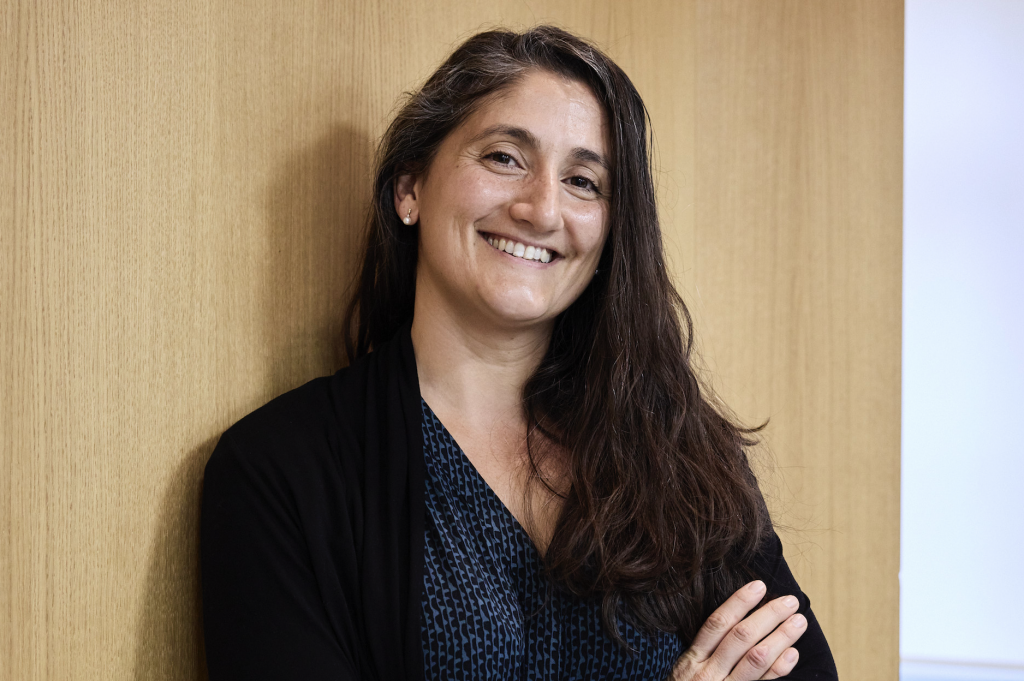
Angela Johnson is the co-founder and CEO of sanoLiving, a Canadian women’s midlife virtual health centre.

Newsletter
Sign up for free weekly updates
The latest femtech news, research and investment, straight to your inbox.



