




News
The innovators driving the period tracking tech revolution


Period tracking has moved on from the days of jotting down dates in your diary and menstrual apps have been in business for a while now. But with femtech a growing market, having exploded so much over the past 12 months that it is predicted to be worth US$60 billion by 2027, period tracking is getting increasingly advanced, as Femtech World discovers.
Period tracking apps heralded the start of the focus on femtech, which has since developed into a lucrative industry, tapping into what has traditionally been a somewhat neglected field of healthcare.
However, there is still plenty of development going on in the field of tracking women’s menstrual cycles, with new innovations – and, admittedly, concerns – arriving on the scene all the time.
These are just some of the latest developments.
Choosing a tracker
While period trackers have one main goal – to track menstrual cycles – not all are created equal, and some may be more or less suitable depending on why a woman is tracking her period.
With reasons ranging from fertility concerns to preparing for menopause, the apps currently on the market perform a range of functions; some are a simple tracker, while others are more educational and interactive.
In a comparison of the main brands on the market, Nandhini Gopal, founder of Femcy, an app for menstrual health guidance, found that Flo, which has more than 200 million users, had the most all-round features, from tracking and analytics to knowledge courses and anonymous communities.
Meanwhile, Glow was commended for catering to the whole menstrual cycle in detail, from tracking period, trying to conceive, tracking pregnancy and caring for a newborn.
All together
Femtech company Orchyd has taken period tracking one step further, launching an app along with a connected smart wallet to store a one-day supply of period products.
The app will track users’ periods, ovulation and overall health, using artificial intelligence in order to collect information about a user’s history. Women can also set up the app to give them alerts telling them when to remove tampons, to avoid the risk of toxic shock syndrome.
The tool can also alert users a few days before their expected period with a reminder to be ready and make sure they have everything they need in the associated smart wallet.
Ending period poverty
It was only a matter of time before women’s hygiene brands entered the tracking app market, and Always did so earlier this year – with a difference.
In partnership with behaviour change technology company Thrive Global, the firm launched the Always You app, a period tracker and wellness app that also aims to end period poverty.
The tracker also leverages Thrive Global’s expertise to bring users exclusive Thrive Microsteps – small, science-backed actions users can take to build positive habits.
For every new Always You registration and for every 100 donation points earned, Always pledged to donate one period product to US non-profit Feeding America, up to a maximum donation of 1,000,000 pads.
Users earn 20 points for every period or bladder leak event tracked, with a maximum of 200 per month, 10 donation points per day by completing all Microsteps, and five donation points for each piece of content consumed.
Ringing the changes
Most period trackers are found on either phones or smart watches, such as FitBits or Apple Watches. However, in October, Oura, a sleep and activity tracker ring, announced the addition of a menstrual tracker to its Generation 3 smart ring.
The ring will use changes in temperature and user feedback to predict when a women might get her period up to 30 days in advance. Body temperature changes through the menstrual cycle, rising just before ovulation and falling as menstruation begins.
The company said period prediction was only the beginning of its interest in menstruation and fertility, as the area is currently underinvested. A study in partnership with researchers at the University of California San Diego has previously showed that the Oura ring can use temperature changes to identify pregnancy around nine days before an at-home pregnancy test, although pregnancy prediction is not part of the device at this point.
Privacy issues
As women share their most intimate health details with apps and wearables, it is not surprising that some privacy concerns have come to light.
As Michelle Richardson, director of the Privacy and Data Project at the US Center for Democracy and Technology, told Marie Clare: “Everything I put into my period-tracking app is fair game to be sold.”
Reports of women downloading a pregnancy app only to be bombarded with baby-related ads on their phones are commonplace.
A study, led by Lori Andrews, a professor at Chicago-Kent College of Law, backed those reports up. Her team set up a tracking device to monitor 600 medical apps, of which some collected period data, and found that the majority sent identifiable information such as a user’s prescriptions to both the app developer and marketing companies.
As Andrews points out, such tracking could have real-life repercussions for women, especially in the US where many employers encourage staff to use such apps. “There are real possibilities women could get fired because they’ve disclosed [to an app] they were trying to conceive,” she says.












Women entering pregnancy with multiple long-term health conditions face higher risks of miscarriage and other complications, a UK study found.
Those with two or more pre-existing physical or mental health conditions had a 20 per cent higher risk of miscarriage than women with no long-term conditions.
They also had more than twice the risk of venous thromboembolism and around four times the risk of antenatal anxiety and depression.

The UK-wide research team analysed 2,225,701 pregnancies and birth events recorded between 2000 and 2022 across five datasets covering England, Scotland, Wales and Northern Ireland.
Women with multiple long-term conditions had a 69 per cent higher risk of nausea and vomiting during pregnancy and a 42 per cent higher risk of pre-eclampsia.
The women also had a 32 per cent higher risk of placental abruption and a 26 per cent higher risk of gestational diabetes.
Risks rose as the number of existing conditions increased.
Among women with three or more long-term conditions, the risk of venous thromboembolism was more than three-and-a-half times that of women with no long-term conditions.
Researchers said the findings had implications for maternity services, where care pathways are largely centred on individual conditions and may not adequately meet the needs of women with multiple long-term conditions.
Dr Kelly-Ann Eastwood, joint senior author and honorary lecturer at Queen’s University Belfast and consultant obstetrician at St Michael’s Hospital, Bristol NHS Foundation Trust, said the results “help define” the urgent clinical challenges facing women entering pregnancy with multiple long-term conditions and the clinicians caring for them across the UK.
“These findings highlight the pressing need to restructure existing maternity services to improve antenatal outcomes,” she added.
The authors cautioned that the study was observational and relied on routinely collected health records, meaning some conditions and outcomes may have been under-recorded, while residual confounding could not be excluded.
The researchers plan to examine birth and child outcomes and identify which combinations of long-term conditions carry the greatest risk.


Manchester City has launched a female athlete health platform covering menstrual, pelvic and breast health, as well as nutrition.
The Her City website is designed for the club’s women’s first-team players, coaches, support staff, academy players and parents.
Manchester City says the platform is the first of its kind in the Women’s Super League and was developed over two years.
The project was led by director of performance services Emma Deakin, physical performance scientist Rosie Anderson and PhD student and first-team nutritionist Sarah Malone.
It grew out of PhD research into menstrual, pelvic and breast health and nutrition, with the team seeking to turn that work into an online educational resource.
The website divides the four areas into separate sections and provides peer-reviewed information that the club says has been critically analysed by experts.
Content will continue to be reviewed and updated as further evidence emerges.
Resources include posters, visual explainers, audio materials and downloadable educational content, with information tailored to different groups including players and parents.
The platform aims to improve knowledge, develop critical analysis skills and strengthen communication within football and at home.
It also includes material to help users assess misinformation they encounter on social media or elsewhere.
A confidential contact form allows users to raise concerns or ask questions directly of experts at Manchester City.
Parents of academy players can also access the platform, with resources intended to help them support their children during a key phase of their development.
Manchester City said its longer-term aim is to make the platform available to all women working across City Football Group.

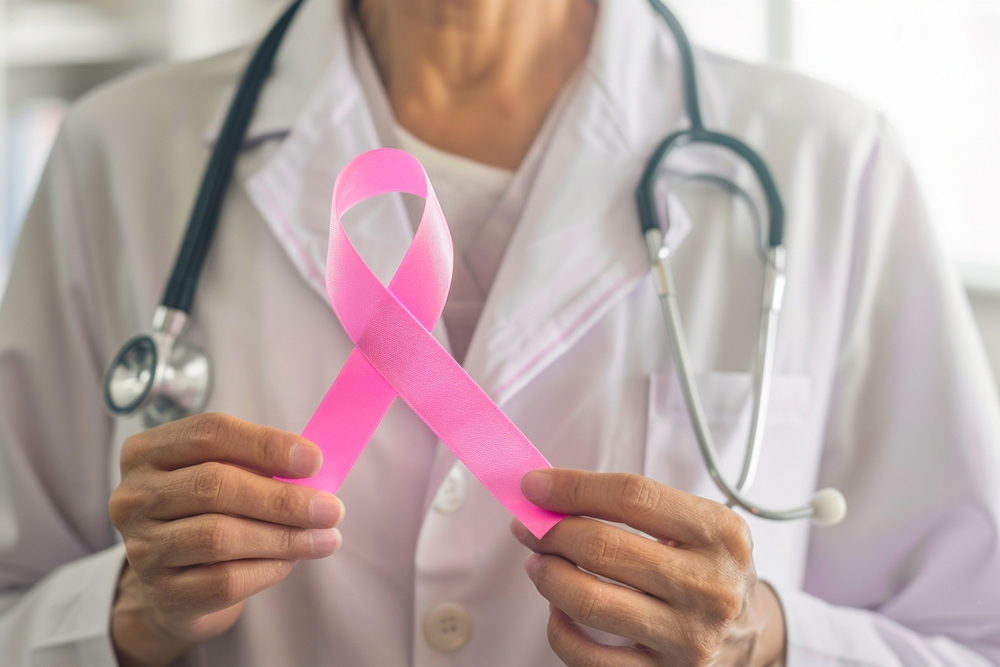
Winner of the Women’s Cancer Innovation Award at the 2026 Femtech World Awards, Namida Lab is working to tackle gaps in breast cancer screening and detection through the development of an innovative tear-based test called Aria.
Catching breast cancer early depends on accessible diagnostics, with research showing that geographic inaccessibility is the most significant barrier to early detection and diagnosis.
Equally, surveys show that almost 50 per cent of US women who are eligible for an annual mammogram do not receive one every year.
Namida Lab is working to address these gaps with its breast cancer screening test, Auria.
By identifying biomarkers in tears, the-home test offers a cost-effective, accessible way that aims to improve access and uptake.
The test does not diagnose breast cancer, but detects signals early on that indicate breast cancer may be present.
Omid Mogadam, CEO of Namida Lab, speaks to Femtech World about how the company aims to save lives by improving early detection, and what it means to win the Femtech World Women’s Cancer Innovation Award 2026.
The Auria test has a unique way of detecting breast cancer using tears – what was it that inspired you to use tears as a way of detecting breast cancer?
Our work comes from academic research that is around 20 years old. There were a number of breast cancer surgeons at the forefront of trying to find early screening, because they were the ones who had to deal with consequences of finding cancers in later stages.
Two of these surgeons we know: Suzanne Love at UCLA and Suzanne Klimberg at UAMS.
They started looking at biomarkers in alternate fluids other than blood, and Suzanne Love discovered cancer or breast cancer markers in milk of lactating women – nickel aspirate.
Klimberg started looking at tears because the nipple aspirate and tears are both byproducts of blood plasma.
They did clinical trials and found actually that there was a difference between the protein levels in tears of women with and without breast cancer.
That was the basis of the work that we adopted and brought into the company; to actually identify what those markers were, and to validate them through various trials, and then turn that into the product that eventually became Auria.
What makes tears unique is that there’s a lot of dead cells and pieces of other analytes that are circulating in blood.
They are much larger proteins which mask the smaller ones that you’re looking for. These cancer markers are typically small small molecules, and finding them in blood becomes an expensive proposition.
What are the gaps in diagnostic care that need addressing?
Our modern healthcare system is very good at advanced diagnostics in treatments, new treatments, and advanced imaging.
What it’s not good at is engagement, in bringing people in at an early stage.
In order to be able to serve everyone, keep people healthy, and not bankrupt the healthcare systems, you really do need that early engagement, which currently doesn’t exist.
A test like ours uses a signal from your body to tell you that you need to engage the system, and that is very powerful.
The result of our test is not whether you have breast cancer, it says that there is a signal that says there might be breast cancer – so, you need to follow up and engage sophisticated imaging, diagnostics, and treatment in the healthcare system.
As a result, more people will screen, and we will find cancers in earlier stages.
Right now, in the U.S. half the mortality in breast cancer is in women under the age of 45, and a lot of them have never been screened. They come in with later stage cancers and we need to flip that statistic.
Our test is recommended for someone without symptoms, and who may not be a high risk person. If you’re high risk, you need to be in a high risk screening programme, but this is for people of average risk with no symptoms.
Can you explain the science behind how the screening test works with proteins in tears to detect the possibility of breast cancer being present?
Looking at the early cancer detection technologies, there are a lot of products that use circulating tumor DNA and methylated DNA.
These all all fall under the same category of DNA tests, and they look for the DNA shedded cells from tumours.
There is a negative to using ctDNA or methylated DNA for early cancer detection because, in early cancer detection, there’s not enough of those shed cells because the tumor has not formed or has formed it very small and it’s not shedding.
This means that these types of tests do very well in later stages of cancer.
For earlier stages, you shouldn’t be looking for DNA. That’s why we focus on proteins.
We’re looking for proteins that surround the formation of cancer. In breast we’re looking for breast inflammation, and vascularization proteins, which always exist in the body.
So, those are the proteins that we’re looking for, and we’re looking for elevation of those proteins. We have had several rounds of discovery in order to identify those proteins.
The very first one, we took human tears and mapped all of the protein markers that are in them.
Once we had that database, then we started looking at breast cancer and the relevance of elevation of these proteins, and which will be elevated in a statistically meaningful way for women with breast cancer.
We went through several rounds of studies to see which ones are actually highly significant, and those were the ones that we built our assay around.
What challenges do women face when looking to access early screening for breast cancer?
The inconvenience of early screening for women exists everywhere.
For example, the “danger” age for breast cancer is the busiest time of a woman’s life when they may have family obligations, aging parents, children or a career.
There is also the scarcity of resources. There are some health systems in the U.S. in larger cities where there is a six to nine month wait to get a mammogram, and if you miss your appointment, you are back in the back of the queue and have to wait another six to nine months.
Equally, there is currently a shortage of radiologists using imaging, and there is also the compression of mammograms on the breast tissue which can cause pain and inconvenience, which is also not very good for women with dense breasts or with breast implants.
In a large country like the United States, you know most of the imaging centers are concentrated in cities.
If you live anywhere between 30 to 40 miles, which is normal commuting distance in a lot of cities, it’s very difficult to take the whole day off and just go to one appointment and come back. So people miss them.
Additional barriers exist for women in certain cultures such as Hispanic women and Asian women that they don’t want to bother their family with their own issues, so they miss their cancers.
There’s a lot of issues that a convenient at-home collection will solve. Because it’s at home, you can do it any time.
You don’t need to build an infrastructure for it. We use the U.S. Postal Service, for example. That’s our infrastructure of collection.
Auria is designed to complement imaging rather than replacing it. How do you envisage the test fitting into existing healthcare pathways?
Right now, our test is direct to consumers.
We offer them through the healthcare system which currently has two branches. One is insurance covered, which adopts new inventions at a much slower rate. Then there is direct care, which is cash pay healthcare which adopts innovation much more readily.
As well as being direct to consumers, we also provide employers who pay for more than half of the healthcare costs of the country.
They also adopt new inventions much more readily than the healthcare system, and they offer it as supplemental benefits to their employees.
Eventually, we see ourselves becoming integrated into the screening system, as well as moving into other spaces such as the colorectal cancer space.
We will be bringing more patients into the system to get screened. That’s going to be the next phase of screening in cancer.
What would it mean for patients if a simple non-invasive sample could eventually become the entry point for screening for multiple cancers?
Our current product is in breast cancer, but we do have targets for other cancer markers in tears.
Depending on funding, we will expand our R&D programme into those as well.
So right now we have targets for five other cancers plus one for a diagnostic in breast cancer. That test wouldn’t just be a screening, it would be a diagnostic, and that would be a game changer.
What are the plans now for the lab for maybe the next year or two? Do you have any milestones coming up, or any specific developments you’re working on?
In order to get into the regular healthcare system in the U.S. we need FDA clearance.
Right now, our test is a lab-developed test that we sell under a CLIA license. In the next year we’re going to start our studies for the FDA clearance and submit our application there.
We’re going to continue working with more employers next year. Following that, I would like to expand into other studies and other platforms.
We also have a proof of concept: we transferred our tests to disposable cartridges, which would make it even more interesting because then you can get the result at home rather than have to send the sample back to us.
What does it mean to yourself and the team to win the Femtech World Award?
It’s a great honor to be recognised for your work, and it came out of nowhere.
We were just quietly working over here in this corner of the world when we got the good news.
One of the reasons that we’re looking to develop the disposable cartridge is for low-resource countries to be able to afford them.
They need they need different tools for for their populations, and and I hope that in the next next few years that this thinking gets to public health officials in those countries, and they start they start doing their own studies or changing changing the protocols that they are adhering to today.





 Menopause3 days ago
Menopause may not explain rising heart condition in women – study

 Fertility1 week ago
Paracetamol use may impact future fertility, studies suggest

 Entrepreneur1 week ago
Last chance to save on Women’s Health Week and Women’s Sport Summit: Early Bird pricing ends 11 September

 Menopause2 weeks ago
Menopause hormone treatment may ease brain fog, study suggests

 Menopause1 week ago
Cancer drug could tackle osteoporosis menopause weight gain

 Insight3 days ago
Women with birth trauma face 2.5x higher healthcare costs – study

 Menopause2 weeks ago
Menopausal women posing as men to buy testosterone amid NHS access issues
 Cancer3 days ago
Study could explain why obesity is a breast cancer risk factor
2 Comments