




News
Say hello to the first rechargeable breastpump to rent from Ardo medical
The Ardo Bellis is the first rechargeable rental pump available on the market


The Ardo Bellis breast pump is efficient, safe and simple to use. It can be shared between mums due to the closed system technology, protecting the breastmilk and the pump from contamination, making it the perfect pump to rent.
This modern rechargeable breast pump has a unique Power Pumping programme and a Memory Plus function.
Power Pumping – sounds amazing what is it?
Power Pumping mimics a baby cluster feeding at the breast to help increase breastmilk supply.
The fully automated one-hour programme consists of 20 minutes of pumping, 10-minute pause, 10 minutes of pumping, another 10-minute pause, and finally, 10 minutes of pumping.
At the end of each pumping interval, the breast pump will beep to let you know that the 10-minute pause begins, and at the end of each pause the breast pump beeps again – so the mum doesn’t have to think about what to do, the Bellis does it for her.
Memory Plus means saving the pumping sessions!
The mum has had a great pumping session, found the most comfortable settings, the breast milk flows best and wants to replicate it –- Easy with the Ardo Bellis you simply save the whole expressing session!
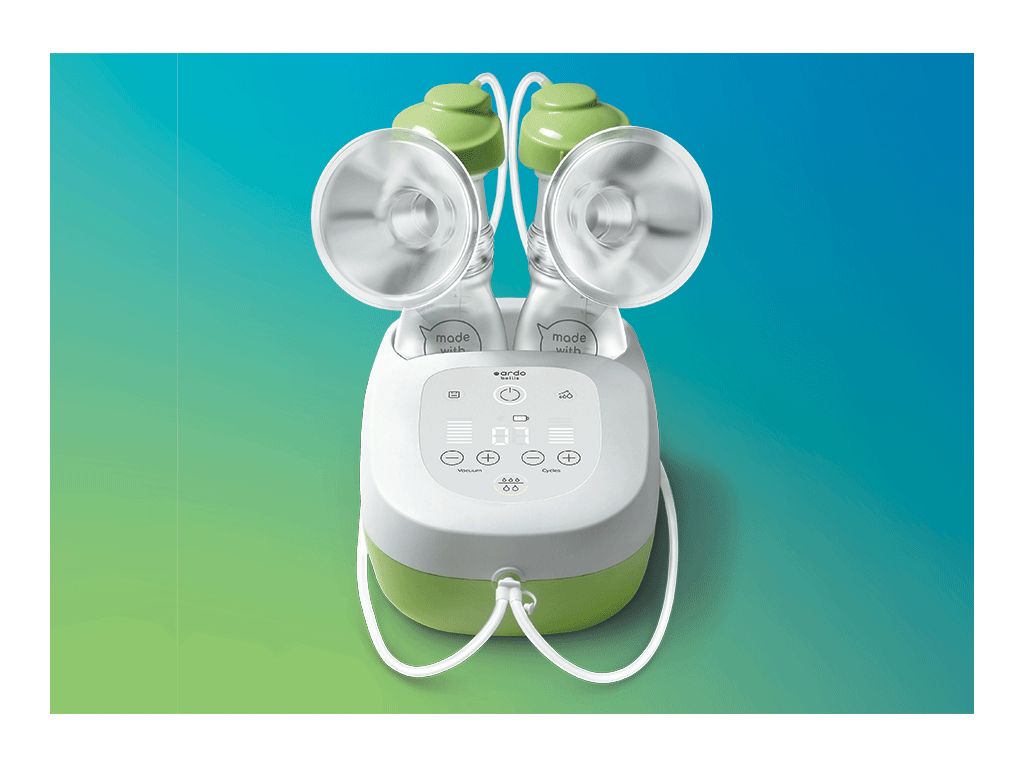
This function allows for a personalised and comfortable expressing experience, the next time the mum turns the pump on, the saved session will automatically replay, genius!
What else is there to know about the Ardo Bellis?
The Ardo Bellis is Swiss Made, a Class IIa medical device, so you can be assured of its credentials. It is also the first rental pump available that is rechargeable which helps when you need to express on the go, or don’t want to be tied to a plug.
Ardo offers the rental service throughout the UK using a national courier system. The pump arrives ready to use, it is fully serviced and cleaned, and includes two new pumpsets for single or double expressing. When the mum is finished, she simply sends it back.
For more information visit ardomedical.co.uk/shop/bellis-14-day-breast-pump-rental/ or watch our YouTube video .
About Ardo medical
Ardo is a Swiss family company which develops premium quality products in the femtech medical technology sector.
These products support premature babies and newborns in their development, accompany mothers through their pregnancy and childbirth, through to breastfeeding and expressing.
Ardo is proud to be an approved supplier to the NHS and is your responsible partner when working with the WHO International Code. Compliance with the WHO Code is of vital importance to us.



Menopause is often absent from women’s electronic health records, a study of nearly 396,000 women has found.
Researchers found menopause appeared almost seven times more often in participant surveys than in electronic health records (EHRs).
The findings suggest important reproductive health information, including age at menopause, may often be missing from health records used for research.

Audrey Hendricks, associate professor of bioinformatics at CU Anschutz and the study’s principal investigator, said: “Ultimately, we cannot study what we do not measure. We cannot treat what we do not know.
“Menopause has enormous implications for women’s health, but if we don’t consistently capture when menopause occurs and other important reproductive health information, we limit our ability to understand how this transition affects disease risk and health outcomes.”
Researchers at the University of Colorado Anschutz analysed data from women taking part in the National Institutes of Health’s All of Us Research Program.
They compared menopause information reported by participants in surveys with menopause diagnoses recorded in their electronic health records.
Around 193,000 menopause observations were identified in survey data, compared with approximately 28,000 diagnoses in EHR data.
Menopause was documented in electronic health records for only about 7 per cent of women in the dataset.
Nearly all participants with a menopause diagnosis recorded in their EHR also reported menopause in survey data. However, substantially fewer women had menopause documented in their health records.
Other important information was also frequently unavailable, including age at menopause, which researchers may use when examining links between menopause and chronic disease risk.
Menopause is a physiological transition that can affect cardiometabolic health and many other aspects of women’s health.
Researchers said relatively little is known about how factors including the timing and type of menopause influence health outcomes across diverse populations.
Large-scale programmes such as All of Us combine participant surveys, electronic health records and genomic data, but menopause-related research depends on relevant reproductive health information being available.
Missing menopause information can make it harder to investigate how the transition relates to health and disease.
The findings may also help researchers using All of Us data define menopause-related study populations, design studies and estimate how many participants are needed.
Hendricks said: “We have an enormous opportunity to use large-scale datasets to understand women’s health across the menopause transition and to identify who may be at greater risk for disease.
“But we need to make sure that the information researchers need is actually being collected.
“We must do a better job of capturing women’s health information, including reproductive health and measures related to menopause.”
Researchers said more complete and consistent collection of menopause and reproductive health information could help future studies examine factors such as age at menopause and their relationship with disease risk and health outcomes.


The fertility rate in England and Wales fell to a record low of 1.39 children per woman in 2025, down from 1.41 a year earlier.
New figures show that parts of London and cities with major universities accounted for many of the areas with the lowest local fertility rates.
The City of London recorded the lowest rate in 2025 at 0.37 children per woman, followed by Cambridge at 0.87 and the London boroughs of Islington and Westminster at 0.90.
The Office for National Statistics (ONS) defines the fertility rate as the average number of live children women would expect to have over their childbearing lives.
Brighton & Hove recorded a rate of 0.95, followed by Southwark at 0.97 and Norwich at 0.98.
Exeter, Oxford and York, along with the London boroughs of Camden and Hammersmith & Fulham, each recorded 1.01 children per woman.
At the other end of the table, Pendle in Lancashire and Luton in Bedfordshire had the highest rate at 1.93.
They were followed by Oldham in Greater Manchester at 1.87, Bradford in West Yorkshire at 1.84 and Barking & Dagenham in London at 1.83.
The overall fertility rate for England and Wales declined from 1.41 in 2024 to 1.39 in 2025.
A rate of around 2.1 is needed for a population to remain stable over time when the impact of migration is excluded.
Twelve of the 25 local authorities with the lowest fertility rates in 2025 were in London.
In Wales, Swansea recorded the lowest fertility rate at 1.18, while Carmarthenshire, the Isle of Anglesey and Newport each had the highest rate at 1.48.
There were 585,396 live births in England and Wales in 2025, down from 594,677 in 2024 and the lowest number since 1977.
Live births fell across every region in England. The West Midlands recorded the largest percentage decline at 3.1 per cent, while the North East had the smallest at 0.3 per cent.
The average age of parents also increased slightly.
Mothers had a provisional standardised mean age of 31.1 in 2025, compared with 31.0 in 2024. Fathers had an average age of 34.0, up from 33.9.
In 1975, the average age was 26.4 for mothers and 29.5 for fathers.
The proportion of births where the mother was born outside the UK also increased, from 20.8 per cent in 2005 to 27.5 per cent in 2015 and 34.6 per cent in 2025.
India was the most common country of birth for non-UK-born mothers in 2025 for the fourth consecutive year.
It was followed by Pakistan, Nigeria and Romania.
In 2025, 56.4 per cent of births were to parents who were both born in the UK, down from 62.7 per cent in 2015.

Hormone therapy started in peri- or early post-menopause was linked to a 22 per cent lower risk of cardiovascular events in women with vasomotor symptoms in a recent study.
The findings came from an observational analysis of 20 years of health data and do not show that hormone therapy caused the reduction in cardiovascular risk.
The association was strongest among Black women and women who started treatment within 10 years of menopause onset, although researchers cautioned that the findings should not guide clinical practice.
The study is the first of its kind in the US to assess the risk of future cardiovascular events among women with vasomotor symptoms who use hormone therapy during peri- and early postmenopause.
Samar R. El Khoudary, professor and chair of the Department of Epidemiology at the VCU School of Public Health and one of the study’s senior researchers, said: “The menopause transition represents a critical window for understanding how hormone therapy may relate to cardiovascular disease risk. Our findings suggest that timing of initiation may influence cardiovascular outcomes.”
The researchers stressed that the findings do not support using hormone therapy to prevent cardiovascular disease.
Potential benefits must also be weighed against risks, including the increased breast cancer risk observed with longer-term use.
The study was not a randomised controlled trial, the gold-standard method for testing biomedical treatments.
Rebecca C. Thurston, associate dean for Women’s Health Research at the University of Pittsburgh School of Medicine and one of the study’s senior researchers, said: “These findings point to women with vasomotor symptoms as those who may show cardiovascular benefit from hormone therapy initiated during the perimenopause and postmenopausal years.
“However, conclusions should be tempered by the observational nature of the study, and findings should not guide clinical practice.”
Vasomotor symptoms, meaning hot flushes and night sweats, affect up to 80 per cent of women during the menopause transition and last for an average of seven to ten years.
Their frequency and severity build through perimenopause and typically peak in early postmenopause.
Hormone therapy replaces oestrogen and progesterone that women’s bodies stop producing after menopause and is currently the most effective treatment for these symptoms.
Clinical trials led by the Women’s Health Initiative in the early 2000s raised concerns about hormone therapy’s impact on heart disease, stroke, breast cancer and other risks, leading to years of reluctance among patients and providers to use the treatment.
El Khoudary said: “Hot flashes and night sweats have a significant impact on a woman’s quality of life and ability to work productively.
“While hormone therapy is an effective treatment for these symptoms, questions have remained about its cardiovascular effects, particularly the importance of when treatment is initiated during the menopause transition.”
More recent research suggests the effects of hormone therapy on the heart and vascular system may vary by age and treatment timing, with women younger than 60 who start treatment closer to menopause onset having different levels of risk.
In 2026, the US Food and Drug Administration removed “black box” warnings from hormone therapy products, reflecting evolving evidence on the benefits and risks of treatment.
Researchers from Virginia Commonwealth University and the University of Pittsburgh analysed data from more than 2,700 women taking part in the Study of Women’s Health Across the Nation (SWAN).
The women reported vasomotor symptoms and had not previously experienced cardiovascular events.
Clinical data collected between 1997 and 2017 were used to examine whether women who started hormone therapy for vasomotor symptoms were more or less likely to experience stroke, congestive heart failure, heart attack or revascularisation procedures than women who did not start treatment.
El Khoudary said: “By using data from the SWAN study, we essentially were able to emulate a series of hypothetical clinical trials to gain a deeper understanding into how hormone therapy taken to mitigate vasomotor symptoms during peri- and early postmenopause influences cardiovascular risk over time.
“It allowed us to examine clinically meaningful cardiovascular disease events over long-term follow-up in a population and treatment window that has been challenging to study prospectively.”
Starting hormone therapy during peri- or early postmenopause was associated with an estimated 22 per cent lower risk of cardiovascular disease events.
Women who began hormone therapy within 10 years of menopause onset had an estimated 27 per cent lower risk compared with women who did not start treatment.
Among Black women, starting therapy during peri- or early postmenopause was associated with an estimated 49 per cent lower risk of cardiovascular disease events.
No clear reduction was seen among women who started therapy more than 10 years after menopause onset or among White women and other racial and ethnic groups.
El Khoudary said: “The differences in cardiovascular outcomes by race and ethnicity are notable, particularly because Black women are more likely to experience severe vasomotor symptoms.
“These findings highlight the need to better understand how hormone therapy timing may influence cardiovascular outcomes across diverse populations.”
It remains unclear why cardiovascular risk differed according to when hormone therapy was started, although researchers believe differences in blood vessel health with age may play a role.











 Hormonal health2 weeks ago
Major UK study could be a ‘game-changer’ for heavy periods and endometriosis

 Entrepreneur1 week ago
KOVE Medical raises €1.7 million to improve safety of foetal surgery

 Fertility2 weeks ago
One week left to apply: W Accelerate with Merck KGaA and M Ventures

 Pregnancy1 week ago
UK study aims to transform maternity care for high-risk pregnancies

 Mental health2 weeks ago
PMDD after SSRIs or hormones: Why the brain may be the missing treatment target

 Diagnosis2 weeks ago
Ark Surgical secures further institutional backing to accelerate US expansion

 Menopause6 days ago
Menopause hormone treatment may ease brain fog, study suggests

 Motherhood2 weeks ago
Thousands of UK women develop undiagnosed PTSD after childbirth each year – study
2 Comments