



News
Menopause makes menstrual cycles longer and less predictable, study finds
The research analysed how cycle and period length, irregular cycles and menstrual-related symptoms change with age


Menopause can make menstrual cycles longer and less predictable, a large study by the women’s health app Flo has found.
The study, which used a dataset of 19 million women, found that from the age of 45, women experience a dramatic increase in cycle length and variability. Prior to 45, cycles progressively shorten, but as women approach menopause, their cycles become more erratic.
This phenomenon has rarely been documented, primarily due to the frequent exclusion of this age group from menstrual cycle research.
The research, according to Flo, has shown a “holistic picture” of the cycle changes that occur across the reproductive lifespan.
All women will experience menopause in their lifetime, and yet, the symptoms and cycle patterns of this life stage are often under-researched.
The study investigated cycle and period length, irregular cycles, the most frequent menstrual-related symptoms, and how all of these factors change with age. It showed:
-
The proportion of individuals with irregular cycles was highest in participants aged 51-55 (44.7 per cent), and lowest in the 36-40 age group (28.3 per cent).
-
Frequency of logging of cramps and acne was lower in older participants, while logs of headache, backache, stress and insomnia were higher.
-
The length of the menstrual cycle and menstrual cycle related symptoms show clear age associated patterns.
-
With increasing age, cycles get shorter and more variable until age 40-44. Periods are longest in women aged 18-25, with an average duration of 5.20 days. They then gradually get shorter and last, on average, only 5.06 days in women aged 41 to 45. After that, periods become longer again, but they also become much more variable in length than in any other age group, indicating transition toward menopause.
-
Irregular cycles were most common among older women with nearly half of women aged 51-55 and nearly one in three aged 46-50 reporting cycle irregularity. This is in line with expectations as cycles become less regular during perimenopause.
-
Across all ages users experienced similar common symptoms, with cramps being the most common symptom logged. Also in the top three were tender breasts and fatigue, but only up to the age of 45, when headache took the place of fatigue.
-
With age, headache, backache, stress and insomnia were logged more often, as was happy mood, which peaked at age 50. Mood swings were highest among youngest and oldest women.
Dr Lubna Pal, professor of obstetrics and gynaecology at the Yale School of Medicine, said: “The importance of this study lies in the chronicling of menstrual cycle and symptom data for a large and diverse population of women spanning in age from early adulthood into perimenopausal years.
“Findings from this epidemiological approach based on real life data allow a more comprehensive perspective on the prevalence of menstruation related phenomenon, and if and how these may vary across stages of reproductive aging.
“The wide-ranging populations’ perspectives offered in this study can help enhance population awareness of what symptoms, if being experienced by a majority, could even be construed as ‘norm’, may even help lessen the trepidations and stigma attached to aging, and can enhance preparedness of healthcare givers in their approach to enquiry, assessment and efforts at optimising care of women across the lifespan.”
Adam Cunningham, senior research scientist on Flo’s science team and lead study author, added: “It was surprising how little research there is about women’s cycles and symptoms, with most research stopping at 40 or 45 years of age.
“At Flo, we are in a prime position to help address this knowledge gap given that we have the largest dataset when it comes to women’s menstrual cycle patterns and symptoms.
“Advancing our understanding of female reproductive health is a core part of our mission and with this research we are one step closer to closing this knowledge gap.”
To receive the Femtech World newsletter, sign up here.





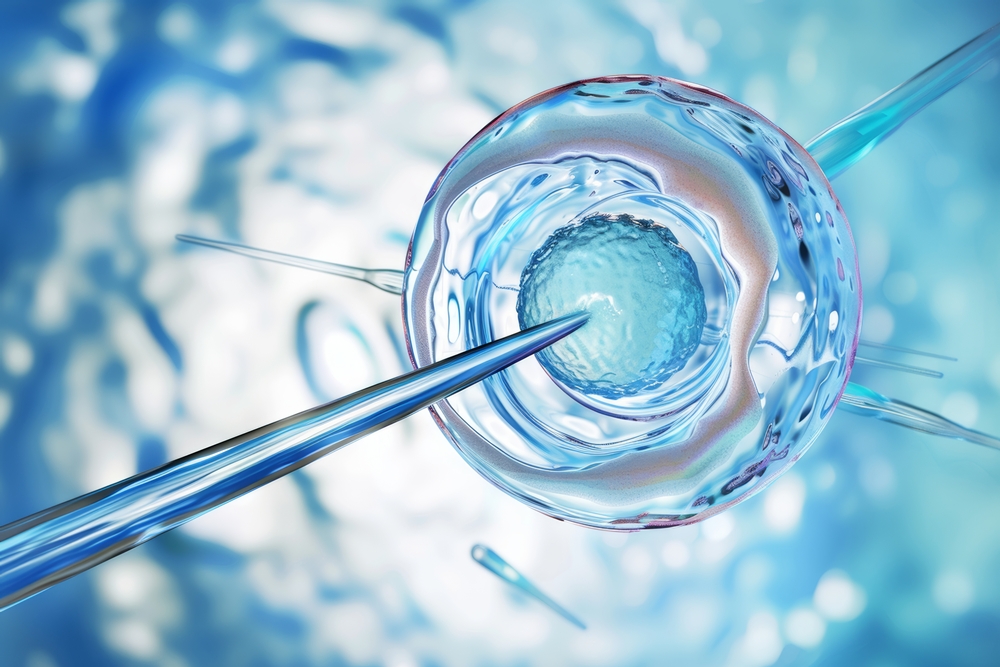
Scientists say they have ‘rejuvenated’ human eggs, in work that could improve IVF success rates for older women.
The team reports that an age-related defect causing genetic errors in embryos may be reversed by supplementing eggs with a key protein.
In eggs donated by fertility patients, microinjection of the protein cut the share showing the defect from 53 per cent to 29 per cent.

The findings were presented at the British Fertility Conference in Edinburgh by researchers from the Max Planck Institute for Multidisciplinary Sciences in Göttingen.
The technique is being commercialised by Ovo Labs, co-founded by professor Melina Schuh, who led the research.
The approach targets problems in meiosis, the process where eggs halve their genetic material before fertilisation.
In older eggs, chromosome pairs can loosen and separate too soon, leading to embryos with too many or too few chromosomes, known as aneuploidy.
The researchers found levels of a protein called Shugoshin 1, which helps hold chromosome pairs together, decline with age. Microinjections appeared to restore this “molecular glue” and reduce errors.
Professor Schuh said: “Overall we can nearly halve the number of eggs with [abnormal] chromosomes. That’s a very prominent improvement.
“Most women in their early 40s do have eggs, but nearly all of the eggs have incorrect chromosome numbers. This was the motivation for wanting to address this problem.
“What is really beautiful is that we identified a single protein that, with age, goes down, returned it to young levels and it has a big effect.
We are just restoring the younger situation again with this approach.
Declining egg quality is a major reason IVF success rates fall steeply with age.
UK figures show an average birth rate of 35 per cent per embryo transferred for patients under 35, dropping to 5 per cent for women aged 43 to 44.
Dr Agata Zielinska, co-founder and co-chief executive of Ovo Labs, said: “Currently, when it comes to female factor infertility, the only solution that’s available to most patients is trying IVF multiple times so that, cumulatively, your likelihood of success increases.
“What we envision is that many more women would be able to conceive within a single IVF cycle.”
The approach would not extend fertility beyond menopause.
The team is in talks with regulators about a clinical trial.
Dr Güneş Taylor, of the University of Edinburgh, who was not involved, said: “This is really important work because we need approaches that work for older eggs because that’s the point at which most women appear.
“If there’s a one-shot injection that substantially increases the number of eggs with properly organised chromosomes, that gives you a better starting point.”















-

 Features4 weeks ago
Cannabis compounds kill ovarian cancer without harming healthy cells, research finds
-

 Insight4 weeks ago
Meta removes dozens of abortion advice and queer advocacy accounts
-

 Insight4 days ago
2025: The year IVF innovation went from lab to life
-

 News3 weeks ago
Can biotech help close the fertility gap? Inside the race to improve egg quality
-

 Features4 weeks ago
University of Leeds IVF spinout raises £3.5m
-

 Insight3 weeks ago
AI-driven digital tool delivers sustained blood pressure reductions, study finds
-

 Insight4 weeks ago
Menopausal hormone therapy may not increase breast cancer risk in women with BRCA mutations
-

 News3 weeks ago
AHA invests in AI aimed at cardiology’s gender bias problem