




Diagnosis
Round up: FDA clearance for AI-powered embryo assessment tool


Femtech World explores the latest developments in the world of technology and women’s health.
30-minute non-invasive test to revolutionise endometriosis detection
A new diagnostic tool for endometriosis will now be available in Canada.
EndoDiagnosis will be the sole distributor in Canada for the ENDOSURE Tier 1 diagnostic test for the condition, which cuts down the average diagnosis time from over eight years to just 30 minutes.
In the past, diagnosing endometriosis required invasive laparoscopic surgery. This often meant that patients endured years of pain and a lower quality of life without a proper diagnosis.
The ENDOSURE test offers a non-invasive option, boasting 99 per cent accuracy in detecting all stages of the disease in less than an hour. This bypasses the need for surgical procedures.
The ENDOSURE Tier 1 test is designed for women of any age and provides results on the spot without the need for referrals or lab work.
Its non-invasive nature not only spares patients from unnecessary surgical procedures but also enables healthcare professionals to concentrate on therapeutic strategies to manage the disease, preserving both quality of life and fertility.
EndoDiagnosis offers training and certification for healthcare providers, professional medical education, and awareness programmes, along with a provider directory to help patients find testing centres.
AutoIVF awarded NIH SBIR grant to advance OvaReady
Fertility technology company AutoIVF has been awarded a Phase IIB Small Business Innovation Research (SBIR) grant from the National Institutes of Health (NIH).
The award is supported by the Eunice Kennedy Shriver National Institute of Child Health & Human Development.
The NIH grant will support commercialisation of AutoIVF’s flagship platform, OvaReady, an automated desktop system intended to streamline the egg identification and preparation process for in vitro fertilization (IVF).
The platform is being developed to support the decentralization of egg retrieval, with the goal of expanding access to fertility care beyond traditional IVF lab settings.
The device is currently in development
“The NIH’s sustained support over the past five years – from early feasibility to commercialization- reinforces the scientific merit and clinical potential of our approach,” said Emre Ozkumur, vice president of R&D at AutoIVF.
“We’re proud to be driving innovations intended to improve care for patients undergoing infertility treatment or fertility preservation.”
“Being selected through the NIH’s highly competitive review process shows the real potential the technology has to improve outcomes for patients, doctors, and the broader fertility field,” said co-founders Drs. Thomas Toth, Michael Alper, and Alan Penzias.
“With decades of experience as IVF physicians, we see OvaReady as a game changer – making it easier and more efficient to identify and prepare eggs for IVF and fertility preservation.”
FDA clearance for AI-powered embryo assessment tool
Reproductive care company Fairtility has confirmed that its CHLOE platform has achieved U.S. Food and Drug Administration (FDA) 510(k) clearance for one of its AI-powered embryo assessment tools, CHLOE Blast.
The clearance makes it the first and only FDA-cleared machine learning AI-powered clinical decision support software for embryo assessment.
The embryo assessment function of CHLOE analyses time-lapse embryo images to enable more objective and consistent evaluations.
Using clinical evidence, the CHLOE suite is designed to enhance the standard of care by improving workflow efficiency and bringing transparency to the IVF patient’s journey.
CHLOE supports embryologists with consistent embryo and oocyte assessments, helps doctors communicate more clearly with patients, provides management with data-driven visibility and empowers patients with greater transparency and engagement.
“This FDA clearance is more than a regulatory milestone,” said Moti Shniberg, founder of Nacre Capital, an investor in Fairtility.
“It reflects Fairtility’s leadership in bringing AI into reproductive medicine and marks the beginning of a new era of standardization, transparency, and improved outcomes for patients and clinics alike.”
PCOS fertility programme to offer tech-enabled coaching
Bellwether Wellness and Zone Labs have announced the launch of PCOSynergy, the first fertility programme for women with Polycystic Ovary Syndrome (PCOS) to unite biomarker technology with the proven science of metabolic engineering.
PCOSynergy shifts the focus from waiting for answers to taking proactive steps women can control today: improving metabolic health, reducing inflammation, and building confidence through structured coaching and tech-enabled tracking.
The programme features weekly video learning and tech-enabled biomarker tracking, group coaching and community support, and personalised one-on-one onboarding and data-informed monthly guidance.
This feature underscores that PCOSynergy provides ongoing individualised coaching, not just initial onboarding.
The platform also introduces a first-of-its-kind coaching-based promise: If participants in the extended programme do not achieve pregnancy, their tuition fees will be refunded.
“This is a game-changing moment for women with PCOS,” explains Christine Updegraff, CEO of Bellwether Wellness.
Together with Zone Labs, we’re delivering the tools, nutritional science, and compassionate support women need to move forward with clarity and confidence.
Approval for companion diagnostic test to identify HER2-ultralow breast cancer
Roche has received CE IVDR approval for two label expansions for its VENTANA HER2 Rabbit Monoclonal Primary Antibody RxDx* assay.
HER2 is a receptor protein expressed in a variety of cancers and serves as a predictive biomarker to help determine if a patient will respond to HER2-targeted therapy.
The VENTANA HER2 test is the first and only companion diagnostic approved to identify patients with HR-positive metastatic breast cancer that are HER2-ultralow.
These patients may be eligible for treatment with ENHERTU (trastuzumab deruxtecan), a specifically engineered HER2-directed antibody drug conjugate (ADC) discovered by Daiichi Sankyo and being jointly developed and commercialised by Daiichi Sankyo and AstraZeneca.
In addition, this test is now the first and only companion diagnostic to aid in the assessment of HER2-positive status to identify biliary tract cancer patients with an immunohistochemistry score of 3+ who are eligible for treatment with Jazz Pharmaceuticals’ ZIIHERA.
The VENTANA HER2 test was used in the DESTINY-Breast06 trial, which demonstrated a significant improvement in progression-free survival with ENHERTU compared to standard of care chemotherapy in patients with HER2-low and HER2-ultralow metastatic breast cancer.
The assay delivers timely, clear and reliable results, driving diagnostic certainty and enabling therapeutic decisions that can lead to better outcomes for patients.
The test is used in combination with the fully automated VENTANA BenchMark slide staining instrument.








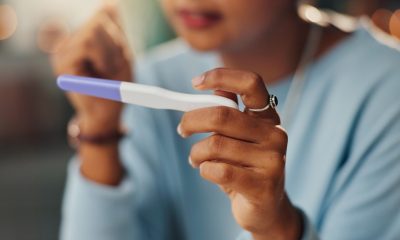






Women with the same medical conditions as men were less likely to receive the same treatment across several specialties, a global research review found.
The review found differences in care for conditions including cardiovascular disease, kidney disease and Parkinson’s, with women less likely to receive some active treatments.
Of 38 studies analysed, 33 found women were less likely than men to be offered active treatment.

Researchers at the University of St Andrews found women with myocardial infarction, heart failure or an irregular heartbeat were more likely to receive medication, while men were more likely to undergo coronary bypass surgery, stenting or other surgical treatment.
Women were also less likely to be prescribed statins.
Men with Parkinson’s were more likely to be referred for deep brain stimulation.
Men with liver failure were more likely to receive a transplant, while women with kidney disease requiring dialysis were less likely to receive permanent access and spent longer using a catheter.
Women were also less likely to receive opioids for pain management.
The researchers found no significant difference between women and men in treatment for stroke or diabetes, while women were more likely to receive treatment for dementia.
None of the studies identified clinical guidelines recommending different treatment based on sex.
Researchers said this suggested the differences could not be explained by the need for different clinical approaches to women’s health.
Dr Andrew O’Malley, who co-led the study, said: “For clinicians, the findings are a prompt to check whether treatment is being offered on clinical grounds rather than assumption.”
He said studies showed doctors more often attributed women’s symptoms to anxiety and made more diagnostic errors with female patients, even when test results were positive.
Dr Miriam Veenhuizen, honorary lecturer in the School of Medicine at St Andrews, said: “While the direction of the findings was not a surprise, the consistency was. The same pattern appeared in cardiology, surgery, transplant medicine and emergency care, and it survived statistical adjustment in most studies.”

Menopause is often absent from women’s electronic health records, a study of nearly 396,000 women has found.
Researchers found menopause appeared almost seven times more often in participant surveys than in electronic health records (EHRs).
The findings suggest important reproductive health information, including age at menopause, may often be missing from health records used for research.
Audrey Hendricks, associate professor of bioinformatics at CU Anschutz and the study’s principal investigator, said: “Ultimately, we cannot study what we do not measure. We cannot treat what we do not know.
“Menopause has enormous implications for women’s health, but if we don’t consistently capture when menopause occurs and other important reproductive health information, we limit our ability to understand how this transition affects disease risk and health outcomes.”
Researchers at the University of Colorado Anschutz analysed data from women taking part in the National Institutes of Health’s All of Us Research Program.
They compared menopause information reported by participants in surveys with menopause diagnoses recorded in their electronic health records.
Around 193,000 menopause observations were identified in survey data, compared with approximately 28,000 diagnoses in EHR data.
Menopause was documented in electronic health records for only about 7 per cent of women in the dataset.
Nearly all participants with a menopause diagnosis recorded in their EHR also reported menopause in survey data. However, substantially fewer women had menopause documented in their health records.
Other important information was also frequently unavailable, including age at menopause, which researchers may use when examining links between menopause and chronic disease risk.
Menopause is a physiological transition that can affect cardiometabolic health and many other aspects of women’s health.
Researchers said relatively little is known about how factors including the timing and type of menopause influence health outcomes across diverse populations.
Large-scale programmes such as All of Us combine participant surveys, electronic health records and genomic data, but menopause-related research depends on relevant reproductive health information being available.
Missing menopause information can make it harder to investigate how the transition relates to health and disease.
The findings may also help researchers using All of Us data define menopause-related study populations, design studies and estimate how many participants are needed.
Hendricks said: “We have an enormous opportunity to use large-scale datasets to understand women’s health across the menopause transition and to identify who may be at greater risk for disease.
“But we need to make sure that the information researchers need is actually being collected.
“We must do a better job of capturing women’s health information, including reproductive health and measures related to menopause.”
Researchers said more complete and consistent collection of menopause and reproductive health information could help future studies examine factors such as age at menopause and their relationship with disease risk and health outcomes.







 Menopause1 week ago
Menopause may not explain rising heart condition in women – study

 Entrepreneur2 weeks ago
Last chance to save on Women’s Health Week and Women’s Sport Summit: Early Bird pricing ends 11 September

 Fertility2 weeks ago
Paracetamol use may impact future fertility, studies suggest

 Insight1 week ago
Women with birth trauma face 2.5x higher healthcare costs – study

 Menopause2 weeks ago
Cancer drug could tackle osteoporosis menopause weight gain

 News7 days ago
Medical cannabis may improve endometriosis symptoms – study

 Cancer1 week ago
Study could explain why obesity is a breast cancer risk factor
 Diagnosis2 weeks ago
FDA approves AstraZeneca breast cancer drug