




Cancer
Healthy women have cells that resemble breast cancer, study finds

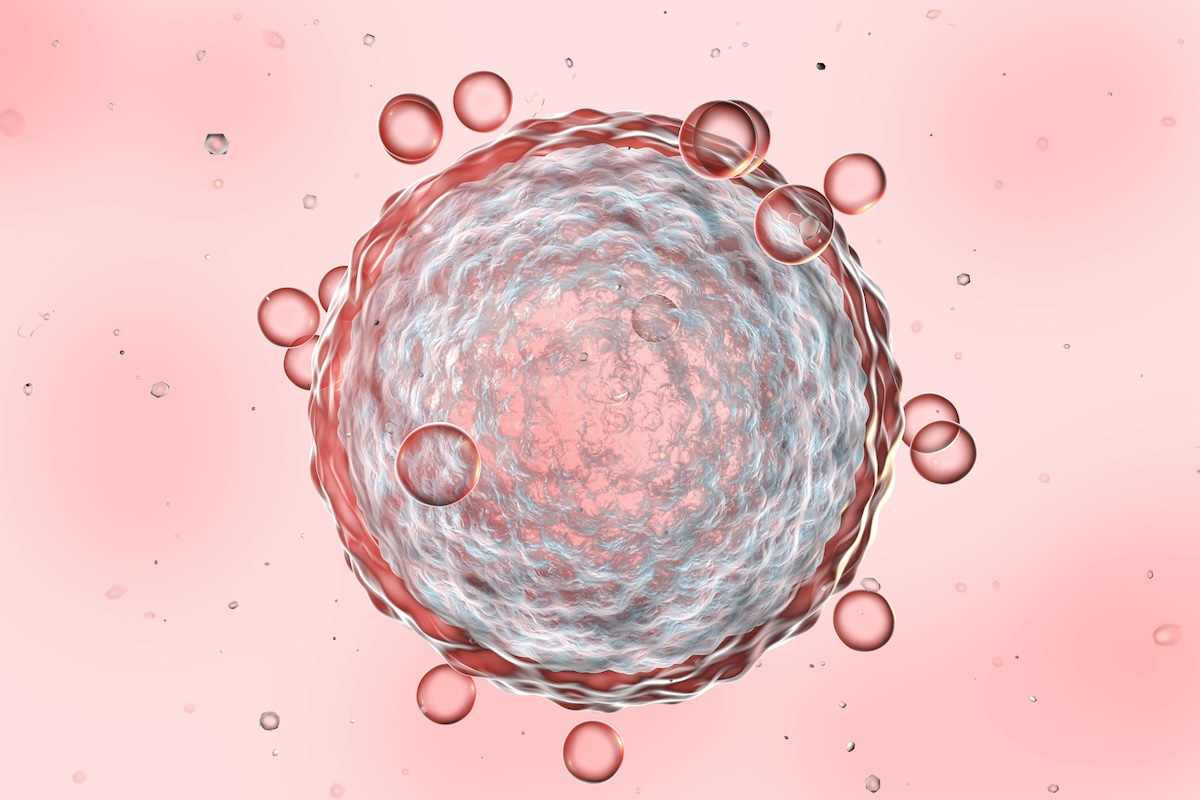
A new study from researchers at The University of Texas MD Anderson Cancer Center finds that, in healthy women, some breast cells that otherwise appear normal may contain chromosome abnormalities typically associated with invasive breast cancer.
The findings question conventional thinking on the genetic origins of breast cancer, which could influence early cancer detection methods.
The study, published in Nature, discovered that at least 3 per cent of normal cells from breast tissue in 49 healthy women contain a gain or loss of chromosomes, a condition known as aneuploidy, and that they expand and accumulate with age.
This poses questions for our understanding of “normal” tissues, according to principal investigator Nicholas Navin, Ph.D., chair of Systems Biology.
As researchers continue to develop earlier detection methods using molecular diagnostics along with ductal carcinoma in situ (DCIS) and biopsies, these findings pose a challenge and highlight the potential risk of identifying false positives, as the cells can mistakenly be confused with invasive breast cancer.
Navin said: “A cancer researcher or oncologist seeing the genomic picture of these normal breast tissue cells would classify them as invasive breast cancer.
“We’ve always been taught that normal cells have 23 pairs of chromosomes, but that appears to be inaccurate because every healthy woman that we analysed in our study had irregularities, bringing up the very provocative question about when cancer actually occurs.”
The study builds upon Navin’s previous work on the Human Breast Cell Atlas, which profiled over 714,000 cells to generate a comprehensive genetic map of normal breast tissue at the cellular level.
For the current study, researchers examined samples from 49 healthy women without known disease who were undergoing breast reduction surgery.
They investigated chromosomal copy number changes in normal breast tissues compared to clinical breast cancer data.
Using single-cell sequencing and spatial mapping, the researchers specifically investigated breast epithelial cells.
Navin points out that epithelial cells, which line and cover the inside and outside of the body, are the cells that are believed to give rise to cancer.
The researchers reported that a median of 3.19 per cent of the epithelial cells in these normal breast tissues were aneuploid and over 82.67 per cent had expanded copy number changes commonly found in invasive breast cancers.
Interestingly, a woman’s age correlated significantly with the frequency of aneuploid cells and number of copy number changes, with older women accumulating more of these cellular changes.
The most frequent changes were additional copies of chromosome 1q and losses of chromosomes 10q,16q and 22, commonly found in invasive breast cancers.
Previous studies have identified specific genes in these regions that also are associated with breast cancer, according to Navin.
The data reveal that these aneuploid cells represent both of the known cell lineages of the mammary gland, which have distinct gene signatures that can either be positive or negative for estrogen receptors (ERs).
One lineage had copy number changes similar to ER-positive breast cancers, while the other appeared to have events consistent with ER-negative breast cancers, highlighting their potentially different origins.
Navin notes that this is a report about rare aneuploid cells found in the normal population and that further longitudinal studies are needed to identify which potential risk factors, if any, may lead to these cells becoming cancerous.
Additionally, epithelial cells are found in many body systems, highlighting the possibility that these findings can translate to other organs.
Navin said: “It just shows that our bodies are imperfect in some ways, and we can generate these types of cells over our lifetime.
“This has pretty big implications not just for the field of breast cancer, but potentially for multiple cancer types.
“This doesn’t necessarily mean that everyone is walking around with precancer, but we need to think about ways to set up larger studies to understand the implications for developing cancer.”




An experimental cancer drug reduced bone loss and body fat in mice modelling post-menopausal changes, early research suggests.
The compound, CADD522, appeared to strengthen bones and help the animals stay leaner after surgery designed to mimic hormonal changes seen after menopause.
The treatment remains at an early experimental stage and has so far only been tested in animals.

The study, led by the University of East Anglia, investigated CADD522, which was originally developed to block a protein involved in the growth and spread of several cancers.
Mice treated with the compound for eight weeks showed significant improvements in bone health. Scans found increased bone volume and better preservation of the honeycomb-like structures inside bones that are crucial for strength and resilience.
Blood tests suggested the treatment stimulated new bone growth without interfering with the body’s normal process of breaking down and rebuilding bone.
Dr Darrell Green, lead researcher from UEA’s Norwich Medical School, said: “Osteoporosis affects around one in three women over the age of 50, leaving sufferers vulnerable to painful fractures that can seriously impact quality of life.
“Current treatments exist, but many are plagued by side effects, safety concerns or inconvenient dosing schedules that make long-term use difficult.”
The researchers also found that mice receiving CADD522 weighed less than untreated mice despite eating the same amount of food.
They had less body fat and fewer fat deposits in their bone marrow, a process commonly seen after menopause and linked to declining bone health.
The team also examined brain tissue and found that the drug appeared to reverse several menopause-related changes in fatty acids.
Levels of omega-3 fats including DHA remained largely intact, while several other lipid abnormalities shifted back towards healthier patterns.
Green said: “We didn’t directly test for memory or thinking ability, but our work raises questions about whether this drug could one day help address wider menopause-related health problems.”
Safety experiments in mice, rats and dogs found that CADD522 could be taken orally and was well tolerated.
The compound also appeared to be metabolised more slowly in human tissue than in rodents, potentially improving its performance in people.
“This is still in the early stages and has so far only been tested in animals but we hope that the benefits will translate to humans to ultimately reduce fracture rates,” added Green.
The research was led by UEA in collaboration with the University of Maryland, the Scintillon Research Institute in San Diego and the University of Stirling.
Safety testing was funded by The Sir William Coxen Trust as part of the development of CADD522 as a childhood cancer treatment.














 Diagnosis2 weeks ago
Major UK study could be a ‘game-changer’ for heavy periods and endometriosis

 Entrepreneur6 days ago
KOVE Medical raises €1.7 million to improve safety of foetal surgery

 Fertility2 weeks ago
One week left to apply: W Accelerate with Merck KGaA and M Ventures

 Pregnancy1 week ago
UK study aims to transform maternity care for high-risk pregnancies

 Menopause2 weeks ago
Quarter of women miss work due to menstual symptoms, survey finds

 Mental health2 weeks ago
PMDD after SSRIs or hormones: Why the brain may be the missing treatment target
 Diagnosis2 weeks ago
Ark Surgical secures further institutional backing to accelerate US expansion

 Hormonal health4 days ago
Menopause hormone treatment may ease brain fog, study suggests