




Ageing
Despite greater need, women are less likely to use mobility aids than men


A new study has found that women are less likely than men to use mobility aids such as walking sticks or wheelchairs despite having a greater need for them.
The study investigated who may be more or less likely to use mobility aids when needed, finding that 61 per cent of more than 8000 participants have has at least one instance of not using a mobility aid despite experiencing difficulty.
It also found that women were 50 per cent more likely than men to transition from not needing a mobility aid to unmet need status during the study period, but were 20 per cent less likely to transition from unmet need to use, according to University College London (UCL).
Speaking to UCL, Jamie Danemayer, first author of the study from UCL Computer Science and UCL’s Global Disability Innovation Hub, said: “Though unmet need for mobility aids like walking sticks and wheelchairs is a prevalent global health issue, it’s unclear how non-clinical characteristics like age, gender, or socioeconomic position might make people more likely to experience unmet need.
“Our analysis suggests that there is a clear gender gap in access to mobility aids. Though our data didn’t ascertain the reason why participants weren’t using mobility aids, other research tells us that women are often more likely than men to face obstacles such as cost barriers as a result of well-documented income disparities between genders.
“Many mobility aids are designed for men rather than women, which we think may be a factor. Using mobility aids can also make a disability visible, which can impact the safety and stigma experienced by women in particular. There’s a critical need for further research to identify and break down the barriers preventing women from accessing mobility aids that would improve their quality of life.”
The authors noted that: “Our analysis identifies sex as a particularly important factor associated with disproportionate unmet MAP need, suggesting targeted efforts to expand MAP use for women could reduce unmet MAP need.
“As access to assistive technology is shown to vary by functional domain and country income, these findings are most relevant within the sphere of mobility products in a high-income setting. The present study nonetheless establishes the importance of non-clinical factors for disparities in MAP need and use.
“This finding is useful for studies in low-income and middle-income countries, where population-level datasets including assistive technology access are more often limited to demographic, socioeconomic, and social factors, and clinical data are more subject to diagnostic availability or ascertainment bias.
“Future research and new data collection in low-income and middle-income settings is necessary, as need and use disparities could have a stronger association with socioeconomic and social factors in these settings.”




Pregnancy and breastfeeding are linked to stronger cognition in postmenopausal women, a long-term study suggests.
Greater cumulative time spent pregnant and time spent breastfeeding correlated with higher overall scores in the study, including verbal and visual memory, in later life.

Researchers analysed annual assessments of more than 7,000 women aged about 70 for up to 13 years using data from the Women’s Health Initiative Memory Study and the Women’s Health Initiative Study of Cognitive Aging.
On average, those who were pregnant for around 30.5 months were expected to have a 0.31 per cent higher global cognition score than those who had never been pregnant.
A lifetime average of 11.6 months of breastfeeding was linked to a 0.12 per cent higher global score.
Each additional month spent pregnant was associated with a 0.01-point rise in overall ability.
Each extra month of breastfeeding showed the same increase, and a 0.02-point gain in verbal and visual memory. Although small, these effects are similar to known protective factors such as not smoking and high physical activity.
The work was led by Molly Fox, an anthropology professor at the University of California, Los Angeles.
Fox said: “Any ways in which we can focus public health outreach or clinical interventions towards higher-risk populations leads to more effective and efficient efforts.”
Participants who had ever been pregnant scored, on average, 0.60 points higher than those who had never been pregnant.
Those who had breastfed scored 0.19 points higher overall and 0.27 points higher for verbal memory than those who had never breastfed.
Women are disproportionately affected by Alzheimer’s disease, a progressive condition that impairs memory and thinking skills, and this is not fully explained by life expectancy differences.
The authors say biology and social factors may both play roles.
They noted that more adult children could contribute to cognitive health by buffering stress, supporting wellbeing or encouraging healthy behaviour.
“If we can figure out, as a next step, why those reproductive patterns lead to better cognitive outcomes in old age, then we can work towards figuring out how to craft therapies, for example, new drugs, repurposed drugs or social programmes, that mimic the naturally occurring effect we observed,” said Fox.
The study team is now working to identify the mechanisms that link reproductive histories to cognitive resilience.
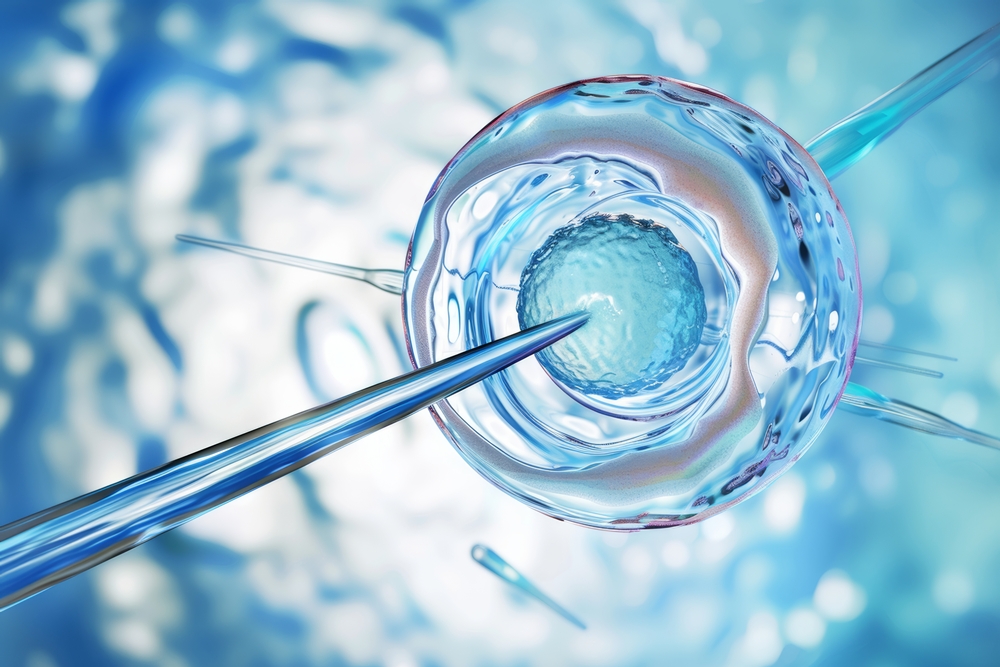
Scientists say they have ‘rejuvenated’ human eggs, in work that could improve IVF success rates for older women.
The team reports that an age-related defect causing genetic errors in embryos may be reversed by supplementing eggs with a key protein.
In eggs donated by fertility patients, microinjection of the protein cut the share showing the defect from 53 per cent to 29 per cent.

The findings were presented at the British Fertility Conference in Edinburgh by researchers from the Max Planck Institute for Multidisciplinary Sciences in Göttingen.
The technique is being commercialised by Ovo Labs, co-founded by professor Melina Schuh, who led the research.
The approach targets problems in meiosis, the process where eggs halve their genetic material before fertilisation.
In older eggs, chromosome pairs can loosen and separate too soon, leading to embryos with too many or too few chromosomes, known as aneuploidy.
The researchers found levels of a protein called Shugoshin 1, which helps hold chromosome pairs together, decline with age. Microinjections appeared to restore this “molecular glue” and reduce errors.
Professor Schuh said: “Overall we can nearly halve the number of eggs with [abnormal] chromosomes. That’s a very prominent improvement.
“Most women in their early 40s do have eggs, but nearly all of the eggs have incorrect chromosome numbers. This was the motivation for wanting to address this problem.
“What is really beautiful is that we identified a single protein that, with age, goes down, returned it to young levels and it has a big effect.
We are just restoring the younger situation again with this approach.
Declining egg quality is a major reason IVF success rates fall steeply with age.
UK figures show an average birth rate of 35 per cent per embryo transferred for patients under 35, dropping to 5 per cent for women aged 43 to 44.
Dr Agata Zielinska, co-founder and co-chief executive of Ovo Labs, said: “Currently, when it comes to female factor infertility, the only solution that’s available to most patients is trying IVF multiple times so that, cumulatively, your likelihood of success increases.
“What we envision is that many more women would be able to conceive within a single IVF cycle.”
The approach would not extend fertility beyond menopause.
The team is in talks with regulators about a clinical trial.
Dr Güneş Taylor, of the University of Edinburgh, who was not involved, said: “This is really important work because we need approaches that work for older eggs because that’s the point at which most women appear.
“If there’s a one-shot injection that substantially increases the number of eggs with properly organised chromosomes, that gives you a better starting point.”










 Insight4 weeks ago
Parents sue IVF clinic after delivering someone else’s baby
 Hormonal health2 weeks ago
US startup builds wearable hormone tracker

 Menopause4 weeks ago
HRT linked to greater weight loss on tirzepatide

 Wellness4 weeks ago
Flo Health and Mayo Clinic publish global perimenopause awareness study
 Fertility2 weeks ago
France urges 29-year-olds to start families now

 Menopause3 weeks ago
Study reveals gap between perimenopause expectations and experience

 Menopause2 weeks ago
Menopause specialist Haver joins Midi Health

 Menopause2 weeks ago
Women with ADHD almost twice as likely to experience perimenopause symptoms, study finds