




Entrepreneur
Recession is looming, but it’s not all bad for femtech start-ups
Although opportunities in women’s health accelerate, investors remain cautious


As the International Monetary Fund (IMF) is signalling the unofficial start of recession, digital health funding slows amid investment uncertainty.
The past six months have brought new challenges for both investors and entrepreneurs. With higher-than-expected inflation, global financial conditions are becoming tighter and the world economy is on the brink of facing one of its weakest years since 1970.
The outlook for the global economy has “darkened significantly” in recent months, said IMF chief, Kristalina Georgieva, predicting a tough 2022, and an “even tougher 2023”.
IMF officials announced that inflation was higher than forecast with prices in the US raising at a 40-year high of 9.1 per cent in June. In Britain inflation has jumped from almost zero during the pandemic to 9.1 per cent and is expected to top 11 per cent by October.
Although modest inflation can be attractive to consumer goods companies, very high inflation rates could make planning and investment decisions harder, analysts say.
Femtech has been a growing area of interest with funding reaching US$2.5bn in December 2021. However, experts believe that investment in the buzzy sector will slow down.
“Femtech is still a very immature market in many ways,” says Becky Warnes, business consultant and NHS advisor. “Getting tech into health systems is going to be very difficult for all start-ups, but particularly for those in femtech.”
According to data from the venture fund, Rock Health, digital health start-ups banked over US$29.1bn in 2021, but femtech companies enjoyed three per cent of the funding.
“Women’s health is a very specific investment vertical,” says Priya Oberoi, angel investor and founding general partner at Goddess Gaia Ventures. “However, women are starting to realise the need for differentiated health care and the demand is going up.
“We are in an era where entrepreneurship has been slightly glamorised and for that reason alone, more start-ups and entrepreneurs will emerge. The process will remain the same. What is going to change is the speed of the investment.”
Indeed digital health funding fell in the first half of 2022, according Rock Health, suggesting that a drop in funding could be caused by start-ups looking to trim costs and reduce positions.
The report has shown that investment fell significantly in the first quarter of 2022, with digital health start-ups raising US$6bn compared with US$7.3bn in the fourth quarter of 2021.
The funding slowdown means the environment is shifting and start-ups need to learn how to navigate the new economic landscape and adapt to competition.
“Investors will be willing to invest where there’s historical return on their investment and where there is going to be a real profit,” says Warnes.
“Femtech has certainly many values-driven driven businesses, but I think when it comes to putting money on the table, investors will look for start-ups with valid solutions to valid problems.”
For Tess Cosad, former research analyst and founder of the London-based femtech start-up, Bea Fertility, the economic consequences of the pandemic are complex.
“At the seed stage, we are all having to figure out how to contend with smaller rounds, lower valuations and longer runway.
“Any business that was going to take longer to get to profitability is now going to struggle to raise more capital. There is definitely potential for some incredible companies to come out of this and I’d love to see more investors ‘taking a risk’ and backing more women’s health companies.”
Oberoi advises entrepreneurs to start talking to investors earlier on.
“Make sure your pitch deck is very clear and that your lexicon illustrates what you are trying to solve with much more clarity. Find out what’s the economics of solving those problems and use those statistics to build a global picture.
“Start-ups are doing a brilliant job. Now they need to adapt and think more carefully about their numbers, their unit economics and ultimately, about what they are trying to achieve.”









Entrepreneur
Last chance to save on Women’s Health Week and Women’s Sport Summit: Early Bird pricing ends 11 September

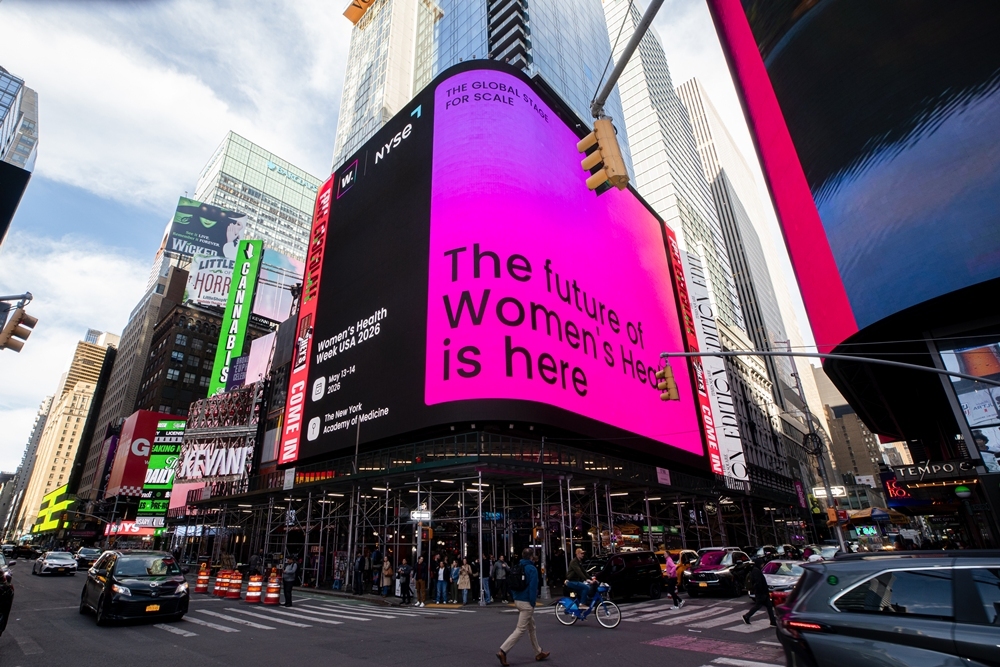
Early bird pricing for W Group’s two flagship October summits – Women’s Health Week Europe 2026 and Women’s Sport Summit Europe 2026 – closes on 11 September.
Both events take place at Emirates Stadium, London, bringing together founders, investors, corporates, and industry leaders shaping the future of women’s health and sport.
Women’s Health Week Europe 2026
7-8 October | Emirates Stadium, London
This year’s edition will be Women’s Health Week Europe biggest one yet: with 700+ attendees, 80+ speakers, and 20+ sponsors, it will also feature two stages – a Global Stage covering market trends and policy, and a Scale Stage focused on company-level growth and commercialisation. WHW takes place across two days of content, business matchmaking, and dealmaking.
Agenda highlights include:
- Where Capital Flows: Funding Trends in Women’s Health – with Merete Clausen (EIF), Ekaterina Gianelli (Calm/Storm), Henriette Hessen (Verdane), Jemma Day (British Business Bank), Ravit Warsha Dor (Telus Global Ventures), Tim Davis (LSEG)
- Six Feet Under-funded: Surviving the Valley of Death in Women’s Health – with Patric Stenberg (Gesynta Pharma), Valentina Milanova (Daye), Amber Vodegel (28x)
- The Women’s Health Label – Gift or Curse? · Live Debate – with Juan Camilo Arjona Ferreira (organon), Marissa Fayer (DeepLook Medical), Christian Lautner (Heal Capital), Annie Theriault (CBIV), Ida Tin (Clue)
- Passport to Scale: Taking Your Women’s Health Business Global – with Vanessa Carpenter (Femtech Across Borders), Annie Theriault (CBIV), Victorine Lançon (Daya Ventures), Dr Mridula Pore (Peppy)
Early bird pricing (ends 11 September):
| Ticket type | Early bird | Standard |
| Startups, Scaleups, Investors, Non-Profits, Government | £599 + VAT | £699 + VAT |
| Corporates, Payors & Providers | £1,799 + VAT | £1,999 + VAT |
| Service Providers & Consultants | £3,299 + VAT | £3,499 + VAT |
Register for Women’s Health Week Europe | See the full agenda for WHW
Women’s Sport Summit Europe 2026
6 October | Emirates Stadium, London
The first-ever Women’s Sport Summit expands W Group’s expertise in connecting key decision-makers to the sports industry.
WSS brings together rights holders, brands, investors, athletes, and media to accelerate commercial growth across the sector.
Agenda highlights include:
- From capital to crowd: the women’s sport cycle at scale – with Omar Shaikh (Arsenal FC), Nicole McWilliams (Google), Kerstin Lutz (Mercury13), Jo Currie (BBC Sport)
- Women’s sport through the investor lens: what gets funded – and why – Hugo Sever (APEX Capital)
- Rethinking ROI: what are we measuring that doesn’t actually matter? – Fi Watherston (Metro Bank), Silvia Keiser (Billie Jean King Cup), Gabriel Akin-Odujobi (Crux Football), Tammy Parlour (WST)
- Beyond the 90 minutes: matchday as a commercial product, not just a fixture – Maggie Murphy (Aston Villa Women FC), Sam Feasey (Diageo/Guinness), Molly Miller (OneFootball), Megan Feringa (The Athletic/The New York Times)
Early bird pricing (ends 11 September):
| Ticket type | Early bird | Standard |
| General Pass | £299 + VAT | £399 + VAT |
| Service Providers & Consultants | £1,799 + VAT | £1,999 + VAT |
Register for Women’s Sport Summit Europe | See the full agenda for WSS
Attending both events?
For group tickets or to attend both summits this October, contact Callum, W Group’s Client Success Lead, at [email protected].


KOVE Medical has raised €1.7 million to support first-in-human studies of an implantable device designed to reduce preterm birth risk after foetal surgery.
The University of Zurich spin-off is developing a device designed to close defects left by surgical instruments following fetoscopy, a minimally invasive procedure performed inside the womb.

Fetoscopies can treat life-threatening conditions before birth but require surgical instruments to pass through the uterine wall and amniotic sac.
This can weaken the protective membrane, causing fluid leakage or rupture and often leading to preterm birth.
KOVE Medical said in a statement on LinkedIn: “This is a crucial step forward for our company, and we are incredibly grateful for the strong support and trust from our syndicate of visionary angel investors.”
KOVE Medical says its device closes the defect at the end of the procedure, stabilising the membrane and preventing complications. The aim is to make in-utero interventions safe enough to become a standard method of care.
The company plans to use the seed funding to reach first-in-human studies, a key milestone for a medical device seeking regulatory approval.
The CHF1.6m round was backed by a syndicate of angel investors.

The Women’s Health Innovation Summit (WHIS), the event uniting the global women’s health ecosystem, has just announced 18 new speakers joining the agenda for its 2026 summit, taking place October 13–15 at Encore Boston Harbor.
The latest additions bring further depth across pharma, clinical research, health systems, venture, and policy, reinforcing WHIS’s role as the only platform where the full women’s health ecosystem convenes under one roof.
Newly confirmed speakers include:
- Kelle Moley, MD – VP, Women’s Health Early Phase Clinical Development, Cardiometabolic Research, Eli Lilly & Company
- Justine Levin-Allerhand – Executive Partner, Chief Corporate Development Officer & COO, Flagship Labs, Flagship Pioneering
- Sebnem Yildirimoglu, MD, PMP – Executive Director, Women’s Health Strategy, Premier Research
- Terri Stewart – Head of Global Healthcare & Government Affairs, EMD Serono
- Dr. Morag Grassie – Executive Director, Blavatnik Fund for Innovation, Yale
- Sandra Butler – Director, Design Impact, Mass General Brigham
- Zhenya Lindgardt – Chief Executive Officer, Sera Prognostics
- Sadie Morahan – Head of US Revenue, Withings Health Solutions
- Angela Drew, PhD – Vice President, Regulatory Strategy, Premier Research
- Dr. Stephanie Lahr – CMIO, Aqurio
- Michelle Andrews – Contributing Writer, KFF Health News
- Charlotte Williams – CEO, My Bump Hub
- Clint Dart, MS – Director, NIH Women’s Health Data Coordinating Center, Premier Research
- Cass Sanford – US Venture Advisor, FemTech Lab
- Megan Mukuria – Founder & CEO, ZanaAfrica
- Tiffany Inglis, MD, FACOG – Chief Medical Officer, Sera Prognostics
- Angelean Hendrix, PhD – Vice President, Pharmacometrics and MIDD, Premier Research
- Amanda Ducach – CEO & Co-founder, EmaEQ
“WHIS is where the women’s health industry comes together to take action,” said Poppy Howard-Wall, Event Director at WHIS.
“This latest wave of speakers reflects exactly the kind of cross-sector expertise our attendees expect – from global pharma and clinical research leadership to venture, health systems, and grassroots innovation.
“It’s this breadth that makes WHIS the room where things actually move forward.”
Bringing the Full Ecosystem Together
These additions join a growing 2026 agenda spanning four content tracks that reflect the full lifecycle of healthcare innovation, from early-stage research and development through to patient delivery, system transformation, and commercial scale.
Attendees can expect over 1,000 senior decision-makers, 120+ expert speakers, four dedicated stages, and more than 10 hours of curated 1:1 meetings.
Full speaker and agenda details are available at whisusa.com/speakers-2026.
About WHIS
The Women’s Health Innovation Summit is the only platform uniting the full women’s health ecosystem – providers, payers, employers, pharma leaders, investors, and innovators -to increase deal flow, expand reimbursement, improve access, and deliver better outcomes for women at every stage of life.





 Menopause6 days ago
Menopause may not explain rising heart condition in women – study

 Fertility1 week ago
Paracetamol use may impact future fertility, studies suggest

 Entrepreneur2 weeks ago
Last chance to save on Women’s Health Week and Women’s Sport Summit: Early Bird pricing ends 11 September

 Mental health6 days ago
Women with birth trauma face 2.5x higher healthcare costs – study

 Menopause2 weeks ago
Cancer drug could tackle osteoporosis menopause weight gain

 News5 days ago
Medical cannabis may improve endometriosis symptoms – study

 Cancer6 days ago
Study could explain why obesity is a breast cancer risk factor

 Cancer2 weeks ago
FDA approves AstraZeneca breast cancer drug