




News
Research paves way for non-invasive stool test and novel therapy for endometriosis


Promising findings by researchers at Baylor College of Medicine and collaborating institutions could lead to the development of a non-invasive stool test and a new therapy for endometriosis.
The study appeared in the journal Med.
Dr Rama Kommagani, associate professor in the Department of Pathology and Immunology at Baylor.
The researcher said: “Endometriosis develops when lining inside the womb grows outside its normal location, for instance attached to surrounding intestine or the membrane lining the abdominal cavity. This typically causes bleeding, pain, inflammation and infertility.
“Generally, it takes approximately seven years to detect endometriosis and is often diagnosed incorrectly as a bowel condition.
“Thus, delayed diagnosis, together with the current use of invasive diagnostic procedures and ineffective treatments underscore the need for improvements in the management of endometriosis.”
“Our previous studies in mice have shown that the microbiome, the communities of bacteria living in the body, or their metabolites, the products they produce, can contribute to endometriosis progression,” Kommagani said.
“In the current study, we took a closer look at the role of the microbiome in endometriosis by comparing the bacteria and metabolites present in stools of women with the condition with those of healthy women. We discovered significant differences between them.”
The findings suggested that stool metabolites found in women with endometriosis could be the basis for a non-invasive diagnostic test as well as a potential strategy to reduce disease progression.
The researchers discovered a combination of bacterial metabolites that is unique to endometriosis.
Among them is the metabolite called 4-hydroxyindole.
“This compound is produced by ‘good bacteria,’ but there is less of it in women with endometriosis than in women without the condition,” said first author Dr. Chandni Talwar, postdoctoral associate in Kommagani’s lab.
“These findings are very exciting,” Talwar said.
“There are studies in animal models of the disease that have shown specific bacterial metabolite signatures associated with endometriosis.
“Our study is the first to discover a unique metabolite profile linked to human endometriosis, which brings us closer to better understanding the human condition and potentially identifying better ways to manage it.”
Furthermore, extensive studies also showed that administering 4-hydroxyindole to animal models of the disease prevented the initiation and progression of endometriosis-associated inflammation and pain.
“Interestingly, our findings also may have implications for another condition. The metabolite profile we identified in endometriosis is similar to that observed in inflammatory bowel disease (IBD), revealing intriguing connections between these two conditions,” Kommagani said.
“Our findings support a role for the microbiome in endometriosis and IBD.”
The researchers are continuing their work toward the development of a non-invasive stool test for endometriosis.
They are also conducting the necessary studies to evaluate the safety and efficacy of 4-hydroxyindole as a potential treatment for this condition.






UK femtech investment has risen by more than 194 per cent over the past decade, with deal activity and funding both increasing, new research has found.
The number of deals increased from 18 in 2015 to 53 in 2025, while total funding rose from £9.4m to more than £100m over the same period.
Despite the growth, deal volume and value remain relatively low compared with other parts of the health and care market. Healthcare recorded 69 deals in 2015 and 171 in 2025.

More companies have raised funding over the past decade, while investment values have also increased. Average deal size more than doubled from £527,000 in 2015 to £1.9m in 2025.
Some of the largest funding rounds last year included SheMed at more than £37m, Gaia at £12m, emm at £6.8m and Hertility at £5.9m, with the majority of investors based in the UK.
The research found femtech remains largely early-stage, with seed investments accounting for most deals.
However, venture capital involvement has increased over the past decade, which the research said showed the market was becoming more mature. The number of VC deals rose by 600 per cent.
Vicky Protano, corporate partner at Mills & Reeve, which conducted the research, said: “Over the last decade, the UK femtech ecosystem has expanded, both in terms of deal activity and funding levels. This positive upward trend demonstrates growing investor confidence in femtech and increasing institutional interest in the sector.
“Whilst companies in femtech have relied heavily on angel investors and angel networks to fund their growth ambitions, dynamics are shifting, with more venture capital and PE investors appearing in funding rounds. However, this is just the beginning and there is still more to do. While the sector has experienced strong growth, more work needs to be done to create the right funding environment that is balanced and evenly spread across the UK.”
The research found most deals had taken place in London. While the capital has strengthened its position as the UK’s main hub for femtech start-ups, regional clusters are gradually emerging elsewhere.
Protano said: “Whilst London clearly remains a dominant location for women’s health businesses and investment – both in terms of deal activity and total funding – there is a gradual move to regional expansion outside of the capital, with the South West, South East and the East of England showing increased investment activity in the femtech sector. What the data also highlights is a growing North/South divide, with areas such as the North East, North West, and Yorkshire & Humber significantly underrepresented in the national figures.
“As a national firm, we are also witnessing that similar divide. More investments are being made into women’s health businesses based in the South – and more businesses are, often as a result, locating themselves there, rather than in the North. This is representative of the investment landscape as a whole. However, growth in the femtech sector is being supported by growing regional innovation hubs, the increasing influence of university spin-outs, as well as improved support for start-ups at a regional level.”
She added: “Looking at the positives, we have advised and are continuing to advise on some significant investments in the sector. This further evidences the growing nature of femtech, with sector specific investors also coming to the market.”
Examples include Northern Gritstone’s investment in IVF technology business IVF Micro and Phoenix Private Equity’s investment in London Gynaecology, a provider of private gynaecology clinics.
Other deals include an EKA Ventures-led investment in tech-enabled postnatal care company Hesta Health and Amulet Capital’s acquisition of TFP Fertility.
September marks 10 years since the term “femtech” was coined by Ida Tin, co-founder and chief executive of Clue, one of the first period-tracking apps for women, and founder of think tank Femtech Assembly.
The global market grew to US$9.12bn in 2025 and is projected to reach US$41.4bn by 2034.
Despite that growth, women’s health is still not treated as a priority and significant gender inequalities remain globally in research, trials, diagnosis and treatment, continuing to disadvantage women.
Tin said: “I want men with money and power to get femtech on their radar. The business opportunity is there. The societal economic argument is there.”
Charlotte Lewis, commercial health lawyer at Mills & Reeve who specialises in healthtech and women’s health, said: “For far too long, ongoing disparities in women’s healthcare across the UK have adversely impacted women’s health outcomes, often resulting in prolonged diagnosis and treatment – some of which are well publicised, including the time it takes to diagnose women’s health issues such as endometriosis and rising maternal mortality rates.
“However, we are seeing the landscape beginning to shift in a more positive direction. Our experience is that this is helped by more open discussion and conversations which highlight the issues.
“The data around the sector is valuable and growing and demonstrates the progress that is being made from an investment point of view, creating a better environment where digital innovation can thrive, with a renewed focus on prevention through market-leading consumer-driven products.
“The UK has a real opportunity to transform women’s healthcare into a model of fairness, accessibility, and excellence, and femtech businesses have a crucial part to play in achieving this transformation. As a firm, Mills & Reeve is passionate and dedicated to continuing to influence and support this transformation.”
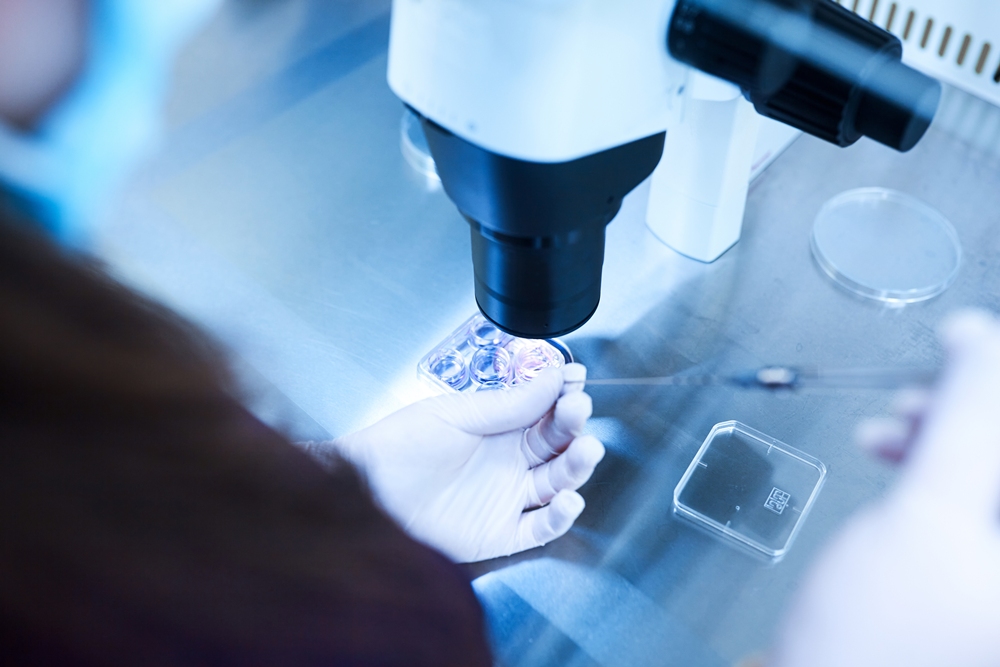
Common IVF preparation techniques used before embryo transfer have no proven effect on pregnancy rates, according to a review.
Researchers said evidence for the widely used practices remains uncertain because available studies are limited and generally of low quality.
Embryo transfer is the final and most vulnerable stage of IVF, when an embryo is placed into the womb. Only around one in three transfers results in pregnancy.
Practice varies between clinics, with some routinely using preparation techniques such as adjusting bladder fullness while others do not consider them necessary.
Dr Ryosuke Akino, practising obstetrician-gynaecologist from Kato Ladies Clinic, said: “To an extent, this is a case of tradition driving practice rather than the evidence.
“Current practices in this area often reflect local protocols, clinician preference, and historical convention rather than strong, high-quality evidence.”
The Cochrane review analysed 11 studies involving 2,524 women undergoing embryo transfer.
Researchers looked at three preparation techniques used by fertility clinics: having women arrive with a full bladder to straighten the angle between the uterus and cervix, removing cervical mucus and using a technique called afterloading.
Afterloading is a technique used to guide the embryo through the cervix.
The review found no reliable evidence that any of the three approaches improved pregnancy rates compared with standard care.
Researchers rated the evidence as low or very low certainty because the trials were small and had methodological weaknesses. They found no grounds to recommend any of the techniques over standard care.
There was also limited information about possible side effects.
The review team, which included methodologists and practising obstetrician-gynaecologists, said full bladder preparation and cervical mucus removal were generally considered safe, with no clear evidence of harm or major complications.
Dr James Brown, obstetrician-gynaecologist from Women’s Health and Research Institute Australia, said: “While these techniques are generally considered safe, it’s still important to test their effectiveness.”
Akino and Brown added: “A full bladder can be uncomfortable, although it may ease catheter insertion in certain uterine positions and reduce procedural difficulty.
“Mucus removal is usually quick, but if done roughly and causes bleeding, it may affect the woman’s experience.
“Overall, the risks are minor and relate mostly to discomfort and procedural factors rather than clinical harm.”
The authors said embryo transfer has changed relatively little despite major advances elsewhere in IVF.
Research has instead focused more heavily on embryo quality and genetic factors, which have a greater bearing on treatment success than transfer technique.
Embryo transfer also depends heavily on the person carrying out the procedure and can be difficult to standardise, making large, rigorous clinical trials harder to design.
Researchers said women may also be reluctant to risk valuable embryos by taking part in randomised studies comparing different transfer techniques.
Dr Noyuri Yamaji from Showa Medical University in Japan said: “Sixteen years of research still haven’t answered a basic IVF technique question.
“This is a critical step in the IVF process and these small changes and techniques have the possibility to make a massive difference, but we won’t know more until more robust, better-quality trials are conducted.”
All the studies assessed were carried out in high-income countries, meaning the findings may not necessarily apply to other healthcare settings and populations.
The authors said further research could be particularly valuable in resource-limited settings, where these procedures are inexpensive and simple to change and basic procedural standardisation could matter more than advanced technical modifications.


By Aleena Ashraf, neuroscientist, published author and part of Véa’s Clinical Advisory Board
Menstrual data is missing a critical layer: the mind.
The menstrual cycle won’t be fully understood until we track the mind alongside the body.
We measure the body exceptionally well.
Just three period-tracking apps, Clue, Flo and Period Tracker, have been downloaded over 200 million times combined.
Dates, symptoms, mood and fertility windows are all diligently monitored.
Still, logging when a period starts doesn’t document what it’s like to live inside a cycle.
A recent survey reported 61.9 per cent of participants used period-tracking apps for more than two years, yet only surface-level data could be observed.
Mental clarity, motivation, resilience, mental load, none of this gets recorded.
Which is why the data can’t answer one of the most common questions women ask themselves: why does the same task feel manageable one week and impossible the next?
Get this right and the payoff is significant: more precise, predictive and personalised care.
Neuroscience and the menstrual cycle
The menstrual cycle isn’t only a reproductive process.
It’s a neurobiological rhythm that the brain actively regulates.
Ignoring that means overlooking the system driving much of what gets logged as “mood”.
After menstruation, rising estradiol lifts serotonin and dopamine, sharpening mood, motivation and mental efficiency.
This is the phase where pushing hard toward a goal tends to feel the easiest.
Later, progesterone takes over and increases GABA, the brain’s calming neurotransmitter.
The body shifts toward rest and recovery: slower pace, more introspection and less drive for risk.
The brain isn’t weaker in one phase and stronger in another. It’s continuously realigning to match hormonal change.
This isn’t a drop in capability but a shift in cognitive mode.
Hormonal changes aren’t disruptive – they’re informative.
The subjective experience of every woman living through them is exactly where current data systems fall short.
The lived experience is missing
What it actually feels like to think and function differently across the month remains almost entirely undocumented.
Women keep pushing through their cycle to meet constant demands at work and at home.
The cost doesn’t show up immediately but builds quietly, then surfaces as burnout, anxiety or withdrawal.
The turning point is rarely dramatic. It lives in small, recurring thoughts:
“Why does this feel harder today?”
“Why can’t I think straight?”
“Why is everything triggering me?”
During the luteal phase, irritability is usually treated as a symptom to control or tolerate.
There is lower tolerance for social demands, heightened sensitivity to routine tasks and occasional emotional outbursts.
But tracked over time against the cycle’s stages, it stops looking random.
It becomes a measurable signal of cognitive and emotional load.
The same is true for the urge to withdraw.
Read in isolation, it looks like disengagement, a dip in performance or a personal shortcoming.
Read longitudinally, it frequently lines up with the phase where the brain is shifting toward introspection and recovery.
Rather than seeing it as avoidance, it’s regulation.
Picture a professional in a high-pressure role.
In one phase of her cycle she is sharp, decisive and efficient.
In another, she is re-reading the same email, struggling to focus and disproportionately overwhelmed by routine tasks.
Without context, that looks like inconsistency.
With context, it’s a pattern that can be understood, anticipated and supported.
Journaling reveals the missing layer
Journaling is already a proven way to surface this deep layer.
It’s well established for improving mental health and stress regulation.
A 2022 systematic review reported a 9 per cent decrease in anxiety levels through writing.
But its potential goes further than that.
Journal entries build a longitudinal record of how someone’s inner state and hormone-linked rhythms evolve across the cycle, across roles, across time.
The problem is journaling can be hard to sustain without structure.
It’s also tricky to know what to write, as it’s self-directed.
Insights end up buried in raw writing, disconnected from the neurological pattern actually driving it.
Véa is a digital platform that guides women to document their lived experience over time, surface recurring trends and put words to what they’re going through.
It develops freeform writing into systematic self-reflection through a framework supported by neuroscience.
This captures snapshots of how women are thinking and feeling across different phases of the cycle.
Guided support peels back layers of cognition and emotion, surfacing what current menstrual data misses.
No single narrative gets imposed on every user.
Instead, the method leaves room for genuinely different perspectives of productivity to emerge.
Performed well, this turns journaling into a system of signals, not a pile of disconnected entries.
Done responsibly, privately and anonymously, this kind of data could help understand more about female health.
It isn’t diagnostic and it isn’t here to label anyone. But it can feed clinical understanding and future research alike.
What changes if we take this seriously
Treat the menstrual cycle as a neurological framework rather than a purely reproductive one, and the entire model of care begins to change.
It’s possible to identify strain earlier.
Work can be paced differently.
For clinicians, it means treatment plans that account for cyclical variation in symptoms and inner state.
For researchers, it gives a richer dataset that moves past static and linear measurements toward dynamic patterns.
For employers, it’s a chance to build more personalised ways of working around shifting cognitive load.
For families, it’s a reason to recognise and redistribute the invisible load carried by female homemakers.
This also fits within the broader shift toward preventative healthcare.
Catch the early signs and intervention can happen before burnout or more serious conditions take hold.
The menstrual cycle may be one of the richest data systems we have, if we are willing to read it correctly.
Learn more about Véa at veajournal.com










 Entrepreneur2 weeks ago
Fertility startup American Baby Company secures US$4m

 Wellness2 weeks ago
AstraZeneca drug approved for breast cancer in EU

 Insight2 weeks ago
Natural Cycles receives sixth FDA clearance for fertility algorithm
 Wellness5 days ago
Cancer patient receives ‘landmark’ treatment in world-first

 Hormonal health2 weeks ago
Type 2 diabetes rising among young women, experts warn

 Insight2 weeks ago
Experimental treatment significantly slows progression of fatal brain disease in women, study finds

 Sponsored Content1 week ago
The room is filling up at WHW Europe 2026 with super early bird pricing ending this Friday

 Insight1 week ago
Johnson & Johnson offers to pay US$5.5bn to settle talc cancer lawsuits