




News
US start-up raises US$2.32m to address pelvic health concerns
The Flyte intravaginal device aims to treat stress urinary incontinence and strengthen pelvic floor muscles


The US women’s health start-up Pelvital has raised US$2.32m in funding to address “unanswered” pelvic health issues.
Minnesota-based Pelvital aims to restore pelvic health with its first product Flyte, an FDA-cleared intravaginal treatment for stress urinary incontinence (SUI) and weakened pelvic floor muscles.
The device, originally developed by physicians from the Arctic University of Norway, uses mechanotherapy, a treatment modality that when paired with an active pelvic floor contraction stimulates tissue regeneration and the creation of neuromuscular memory.
The company will use the funding to speed up the commercialisation of Flyte and raise awareness of pelvic health issues.
“Completing this round is an important step in continuing Pelvital’s unwavering dedication to provide women with innovative solutions for pelvic health, including the treatment of SUI,” said Lydia Zeller, president and CEO of Pelvital.

“This funding will play a crucial role in accelerating our commercialisation of Flyte with a strong emphasis on expanding payor coverage and enhancing clinical education and clinician awareness.”
With this final close, Zeller said, Pelvital would welcome new investors including Pier 70 Ventures, Life Science Angels, Tech Coast Angels Orange County, and Blue Pacific Fund.
Preetha Ram, managing partner at Pier 70 Ventures, would join the Pelvital board of directors.
“Joining Pelvital’s board alongside this investment round is truly an honour,” Ram shared.
“Pier 70 and I are thrilled to be part of this transformational opportunity, as Pelvital’s mission aligns beautifully with our dedication to support disruptive technologies that shake up the status quo in healthcare.
“Pelvital’s pioneering work is shaping a future where women’s health receives the attention and innovation it deserves with novel medical devices like Flyte.”
Oscar Moralez, founder and managing partner of Boomerang Ventures who led the investment round, said: “We are thrilled for the successful completion of this round as we aim to tackle the most pressing healthcare challenges.
“Our participation aims to address the chronic underfunding in women’s healthcare. Investing in Flyte, a truly groundbreaking treatment, addresses underserved pelvic health issues like SUI and contributes to raising vital awareness.”
Two published clinical trials have validated Flyte’s safety, efficacy and durability of treatment effect for women with SUI.
Most recently Pelvital published a paper in Therapeutic Advances in Urology, showing that 71 per cent of study participants achieved dry or near dry conditions as evidenced by a reduction in 24-hour pad weight after using Flyte for between two and 12 weeks.
To receive the Femtech World newsletter, sign up here.










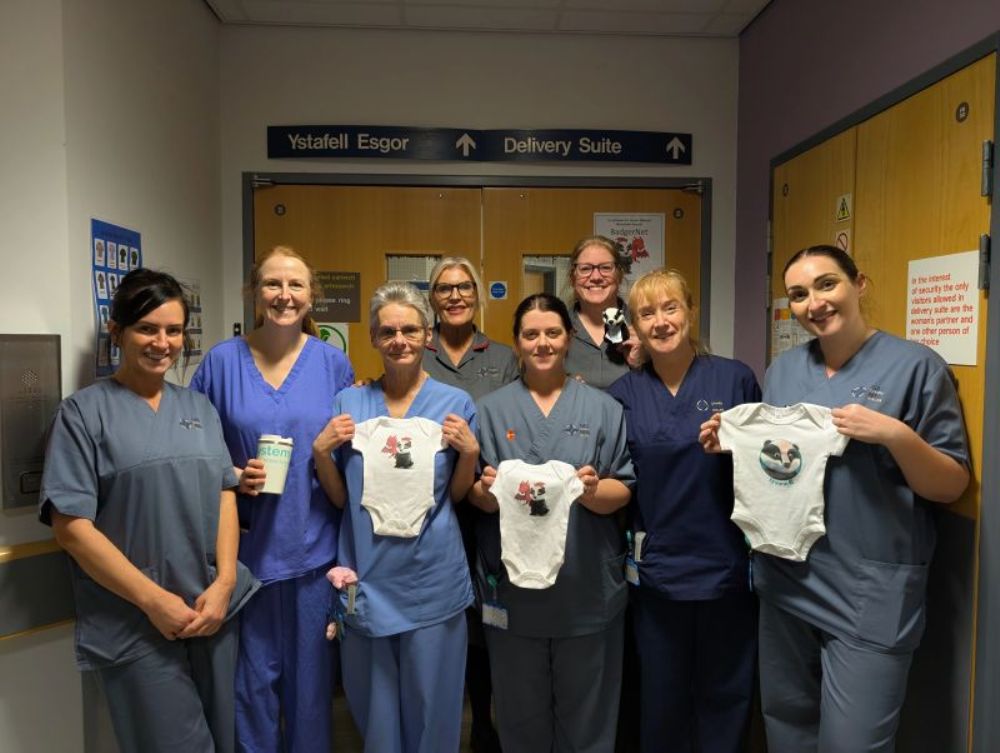
System C has completed the national rollout of BadgerNet Maternity across all seven NHS Health Boards in Wales. This is the first time any UK nation has unified its maternity care under a single digital record and patient-facing app.
With approximately 26,000 babies born annually in Wales, BadgerNet connects maternity information across organisational boundaries in the country.
Expectant parents can access their records, maternity appointments and key updates digitally through a single app, wherever they receive care while clinicians have secure access to the right information at the point of care.
The national three-year agreement across all Heath Boards replaces a patchwork of separate local systems and eliminates the need for paper hand-held notes.
Anthony Tracey is director of digital at Hywel Dda University Health Board, the final of the Welsh Health Boards to go live with BadgerNet.
He said: “The rollout of BadgerNet across Wales is a vitally important step forward in modernising our maternity services and providing a consistent service across the country.
“By giving expectant parents direct access to their information and enabling clinicians to share data more effectively, we are strengthening safety, transparency and consistency in maternity care nationwide.”
For expectant parents, the single digital maternity record transforms how they engage with their care.
Instead of carrying paper notes and repeating information at every appointment, parents can access key details, appointments and updates digitally, supporting more informed conversations and shared decision-making.
The result is greater transparency, fewer administrative frustrations and a more joined-up experience throughout pregnancy and into the postnatal period, regardless of which health board they fall under.
For clinicians and Health Boards, the joined-up approach reduces duplication and streamlines handovers across teams and sites. Information is digitally captured once and made available securely wherever it is needed, helping to minimise errors, reduce time spent tracking down notes and support more efficient multidisciplinary working.
At a national level, linking maternity data across Wales creates a foundation for safer, more consistent care.
Aggregated, standardised information enables earlier identification of trends and variation, supports evidence-based policy decisions and enhances long-term service planning.
With a comprehensive view of maternity activity and outcomes across the country, Wales is now better positioned to raise standards for parents, babies and families.
Guy Lucchi, managing director of healthcare at System C, added: “Delivering a truly national approach across all seven Health Boards is a significant achievement for Wales.
“One shared system means information flows with the patient, not the organisation.
“That reduces duplication, supports earlier identification of risk and frees up valuable clinical time.
“Crucially, linking maternity data at a national level provides powerful insight to drive improvement. Health Boards can benchmark, plan services with greater confidence and ensure resources are targeted where they are needed most, while expectant parents benefit from clearer communication and a more connected experience of care.”

















 News4 weeks ago
Women’s digital health market set to reach US$5.28 billion in 2026 – report

 Insight4 weeks ago
Why the UK’s fertility rate keeps falling – and what it means if you’re trying now

 Wellness4 weeks ago
Women’s HealthX unveils Northwell Health, Corewell Health, Biogen & more to headline Chronic Disease stage

 Opinion3 weeks ago
What Maternal Mental Health Month reveals about where postpartum support actually breaks down

 Fertility4 weeks ago
Toxins and climate harms having ‘alarming’ effect on fertility, research warns

 News3 weeks ago
NIH Grant terminations disproportionately impact minority scientists, research finds

 Adolescent health3 weeks ago
WUKA brings Period-Positive Pool Party to London Aquatics Centre to keep girls swimming through puberty

 Fertility4 weeks ago
Researcher explores weight loss jab impact on PCOS