




Special
6 things a gynaecologist wants you to know about endometriosis
By Dr Nitish Narvekar, fertility consultant at King’s Fertility and consultant gynaecologist at King’s College Hospital NHS Foundation Trust


Despite the fact that endometriosis affects an estimated one in 10 women and girls globally, the condition is still widely misunderstood.
This Endometriosis Awareness Month, Dr Nitish Narvekar, clinical director and consultant gynaecologist at King’s College Hospital NHS Foundation Trust, discusses why endometriosis goes undiagnosed for years and shares what you should know about the condition.
What is endometriosis?
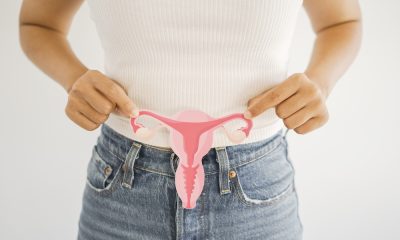
Endometriosis is a chronic debilitating inflammatory condition affecting up to 10 per cent of patients in their reproductive (puberty to menopause) years which equates to approximately over 1.5 million in the UK and 176 million globally.
The disease, where endometrial-like tissue grows outside the uterus, costs approximately £8bn per year to the UK economy in healthcare costs and loss of amenity.
Whilst the classic symptom is pelvic pain of varying intensity, duration and location, it can present with a range of other symptoms and conditions.
Signs and symptoms of endometriosis
- Pain before and/or during periods (dysmenorrhea)
- Pain during or after sex
- Pain on opening bowels
- Pain on passing urine
- More frequent or urgent need to open bowels especially during periods
- More frequent or urgent need to pass urine or waking up many times at night to pass urine
- Blood in stools
- Blood in urine
- Cyclical chest pain and/or cough
- Fatigue
- Infertility > 6 months, especially if any of above is also present
Diagnosis is often delayed by eight to nine years due to lack of awareness by patients and care providers in all settings. Therefore, it is not uncommon for patients to be first diagnosed often fortuitously when undergoing a pelvic USS (ultrasound scan) or MRI (magnetic resonance imaging) when investigating other conditions, for example infertility.
USS is type of scan which uses high-frequency sound waves to create images of internal tissues/organs, whereas MRI uses strong magnetic fields and radio waves to produce such images.
Endometriosis and infertility
Whilst endometriosis is found in up to 50 per cent of patients with infertility, it is usually causative in patients with active disease and/or involvement of the fallopian tubes or ovaries. Whilst medical hormonal therapies are effective, they are not compatible with fertility and therefore many patients with complex endometriosis have to resort to surgery to improve fertility outcomes.
However, surgery carries attendant risks of trauma to bowel and urinary tract (also known as complications), and moreover, patients may experience delays in resuming fertility whilst recovering fully from surgery especially if it is complex.
Laparoscopy and endometriosis
Laparoscopy is a type of surgery which allows a surgeon to use keyhole cuts and a camera for procedures inside the tummy or pelvis. It is the “gold standard” test for diagnosis and treatment of endometriosis and although invasive in nature is highly safe and effective.
Robotic surgery and endometriosis
Robotic surgery is a type of keyhole surgery undertaken using specialised camera and instruments which are inserted through keyhole cuts but unlike in laparoscopy these are controlled by a surgeon who sits at an ergonomically designed console away from the patient but otherwise in the same theatre.
Robotic surgery has been successfully introduced for routine gynaecological use in selected NHS clinics, for example King’s Fertility, and given its advantages, which include reduced complication rates and blood loss and faster recovery, has revolutionised surgical care of patients including when compared with traditional laparoscopy.
Whilst robotic surgery should be available to all patients, its use is limited by higher costs and limited availability and therefore at present reserved for managing patients with complex surgical and anaesthetic needs.
Another lesser known and heralded advantage of robotic surgery over and above other forms of surgery, including laparoscopy, is the greater ergonomics and intuitiveness it provides which in-turn results in reduced surgeon fatigue especially for complex cases. This in the long-run will improve working life and retention of surgeons at a time of greatest need within the NHS.
The pros of robotic surgery
- Greater precision
- Superior 3D HD vision
- Minimum tissue trauma
- Nerve sparing
- Lower blood loss and complications
- Less post-operative pain
- Reduced hospital stay
- Quicker recovery
- More ergonomic for the surgeon and reduced surgeon fatigue
The cons of robotic surgery
- Higher capital costs
- Rigorous quality and safety controls
- Only available in select clinics and hospitals
What should women do?
All patients, including adolescents, should familiarise themselves with symptoms and signs of endometriosis and seek a GP appointment accordingly.
Where appropriate, patients should seek a high-quality pelvic USS, but, equally be aware that a negative USS does not rule out endometriosis and therefore, in case of persistent symptoms, seek additional MRI and/or laparoscopy and/or empirical treatments.
Patients with endometriosis should seek referral to a fertility clinic to discuss the nature of their condition and its impact on fertility. Many, but not all, fertility clinics provide high quality pelvic USS during initial diagnostic work-up and therefore benefit from quicker and more accurate diagnosis of endometriosis including deep and/or complex endometriosis.
Women with ovarian endometriosis and even otherwise, should consider preserving fertility by recourse to egg/embryo freezing where applicable.
Patients with severe and/or complex forms of endometriosis should request referral to their local BSGE (British Society of Gynaecological Endoscopy) accredited endometriosis centre. Where possible they should enquire about availability of robotic surgery in such centres.
To receive the Femtech World newsletter, sign up here.











Former US first lady Dr Jill Biden visited Imperial College Healthcare NHS Trust and Imperial College London to explore work on women’s health and antimicrobial resistance.
The visit was hosted by professor the Lord Darzi of Denham, who chairs the Fleming Initiative and directs Imperial’s Institute of Global Health Innovation.
Dr Biden, chair of the Milken Institute’s Women’s Health Network, spoke about the impact scientists, clinicians, innovators and investors can have on improving women’s healthcare.

Dr Biden stressed the importance of “collaboration, prevention and education” in improving women’s health globally.
At the museum, Dr Biden and Esther Krofah, executive vice-president of health at the Milken Institute, heard about the worldwide significance of the discovery and the contribution of women who, during wartime Britain, grew penicillin in bedpans to support early experimentation.
The discussion also explored how AMR is a key women’s health issue, with women disproportionately affected in low and middle-income countries, and in high-income settings where women are more likely than men to be prescribed antibiotics.
Dr Biden was shown an architectural model of the Fleming Centre in Paddington, which will bring together research, policy and public engagement to address AMR worldwide.
The second part of the visit brought together Imperial clinicians, researchers and innovators for a roundtable on women’s health priorities, including improving diagnosis, equity in maternity care and support during the menopause transition.
Participants highlighted wide variation in the quality of care for conditions affecting women and called for fairer access to services, with the postcode lottery named as a priority to address.
Professor Tom Bourne, consultant gynaecologist and chair in gynaecology at Imperial’s Department of Metabolism, Digestion and Reproduction, described how AI could improve diagnostic accuracy for conditions such as endometriosis.
Equity emerged as a central theme.
Professor Alison Holmes, professor of infectious diseases at Imperial College London and director of the Fleming Initiative, highlighted persistent gaps in women’s representation in clinical trials, including antibiotic studies, which limits the ability to optimise care and treatments.
Dr Christine Ekechi, consultant obstetrician and gynaecologist at Imperial College Healthcare NHS Trust, drew on national maternity investigations to underline the importance of valid data, meaningful engagement with affected communities and rebuilding trust.
Menopause and midlife health were also identified as priorities for clinical research.
Professor Waljit Dhillo, consultant endocrinologist and professor of endocrinology and metabolism in Imperial’s Department of Metabolism, Digestion and Reproduction, described a new treatment for hot flushes, including for women unable to take hormone replacement therapy, such as those with a history of breast cancer.
The discussion then turned to bringing innovation into health systems. Innovators shared how data and technology are being used to close gaps in women’s health, while noting challenges in accessing funding to grow and scale.
Dr Helen O’Neill and Dr Deidre O’Neill, co-founders of Hertility Health, described predictive algorithms using self-reported data to help diagnose gynaecological conditions at scale.
Embedded into clinical workflows, the technology could reduce waiting times, identify conditions earlier and improve outcomes. They noted how “we have cures for the rarest genetic conditions but don’t even have the answers to common women’s health issues.”
Dr Lydia Mapstone, Dr Tara O’Driscoll and Dr Sioned Jones, co-founders of BoobyBiome, outlined work creating products that harness beneficial bacteria found in breast milk to support infant health.
By isolating and characterising key microbial strains, BoobyBiome has created synbiotics, combinations of beneficial bacteria and the food that nourishes them, to make these benefits accessible to all babies.
Speakers throughout the visit stressed the need to reduce variation in care quality and outcomes for women, strengthen prevention and education, and address power and equity in women’s health.
Professor the Lord Ara Darzi said: “It was a privilege to welcome Dr Biden and the Milken Institute to Imperial to meet some of the outstanding researchers, clinicians and innovators advancing women’s health.
“Imperial’s unique combination of clinical excellence and world-leading research positions us at the forefront of tackling the biggest health challenges facing society and the UK’s ambition for innovation demands nothing less.
“For too long, the health needs of women and girls across their life course have not received the attention they deserve.
“By working together across borders and disciplines, we can transform equitable access to care, accelerate the detection and treatment of disease, and ultimately improve health outcomes for millions of women in the UK and around the world.”






 Menopause6 days ago
Menopause may not explain rising heart condition in women – study

 Fertility1 week ago
Paracetamol use may impact future fertility, studies suggest

 Entrepreneur2 weeks ago
Last chance to save on Women’s Health Week and Women’s Sport Summit: Early Bird pricing ends 11 September
 Insight7 days ago
Women with birth trauma face 2.5x higher healthcare costs – study

 Menopause2 weeks ago
Cancer drug could tackle osteoporosis menopause weight gain

 pain conditions6 days ago
Medical cannabis may improve endometriosis symptoms – study
 Cancer6 days ago
Study could explain why obesity is a breast cancer risk factor
 Diagnosis2 weeks ago
FDA approves AstraZeneca breast cancer drug
1 Comment