



Hormonal health
Opinion: Women don’t need a refreshed health strategy – we need action


By Justyna Strzeszynska, founder of menstrual health platform Joii
The Government’s announcement that it will renew the Women’s Health Strategy is, on the surface, good news.
The original strategy in 2022 was historic – the first time women’s health had been acknowledged as something that required its own plan.

It raised awareness, started conversations and encouraged women to come forward and talk about their health.
But awareness alone hasn’t changed much on the ground.
Women are still waiting years for diagnoses, gynaecology waiting lists are still some of the longest in the NHS and many women are still being told their symptoms are ‘just part of being a woman’, especially when it comes to periods, pain or fatigue.
If the Government is going to refresh this strategy, we need to be honest about what didn’t work last time and what has to change now.
One issue with the previous strategy was the way it focused on specific conditions.
Endometriosis and PCOS were rightly brought forward and the advocacy behind that has been extraordinary. But women’s health can’t work like a spotlight, where each year a new condition is added based on who campaigns most effectively.
Some of the most common and life-disrupting conditions still sit in the background.
Heavy menstrual bleeding affects one in three women. Fibroids affect up to one in three by age 50. Adenomyosis is thought to affect one in ten.
These aren’t rare conditions, they are everyday realities. Yet they receive less attention, less funding and far fewer structured care pathways.
They also disproportionately affect Black women, who are more likely to have severe symptoms and less likely to be believed.
If a renewed Women’s Health Strategy is going to address inequality, then these conditions can’t remain an afterthought.
The other major issue is how diagnosis actually happens.
Right now, if you go to your GP with heavy bleeding or pelvic pain, the first questions are usually ‘how much blood do you think you’re losing?’ and ‘how bad is the pain, on a scale of 1 to 10?’
Most women have never been taught what ‘normal’ bleeding looks like and their pain has become background noise. Many also feel unsure or embarrassed about describing symptoms accurately.
So women hesitate, clinicians hesitate and referrals get delayed. That’s how we end up with eight-year diagnostic journeys.
If we want to reduce waiting lists and speed up diagnosis, we need to fix the front door.
First, we need to give GPs standardised tools to measure menstrual bleeding and symptom impact.
One of the biggest barriers to diagnosing menstrual health conditions is that we still rely on women to estimate their bleeding and pain with no reference points.
Most women, and especially young girls, don’t know what counts as heavy bleeding and many have normalised symptoms that could actually be clinical red flags.
Without standard measurement, clinicians can’t triage effectively and women fall into long cycles of ‘wait and see’.
The renewed strategy should introduce validated digital and clinical tools, so patients and clinicians are working from the same evidence, not guesswork.
Second, expand and standardise Women’s Health Hubs so access isn’t determined by postcode.
Women’s Health Hubs already exist in most of England, which is a strong start, but not all hubs offer the same services, capacity or quality of care.
Some are genuinely transformative while others function more as signposting centres.
To actually reduce the backlog and speed up diagnosis, hubs need to be properly resourced and consistent, with clear referral pathways from primary care.
The refreshed strategy should set national standards for what every hub must deliver so accessing timely assessment isn’t dependent on where a woman happens to live.
Finally, there needs to be a shift towards treating menstrual and pelvic conditions as chronic, not occasional episodes.
Conditions like endometriosis, adenomyosis, fibroids, PCOS and chronic pelvic pain don’t follow single-appointment cycles yet our system is structured as if they do.
Women are often seen once, reassured and discharged, only to start the entire referral process again when symptoms worsen. This wastes NHS time and leaves women feeling unheard.
The renewed strategy needs to support ongoing monitoring and follow-up, recognising these conditions as long-term health issues requiring continuous management, not episodic care.
Most importantly, the refreshed strategy must come with clear timelines, ringfenced funding and actual accountability.
Otherwise, we end up with another web page and a press release, instead of change.
Women are already doing their part by speaking up.
Now the system needs to meet them.











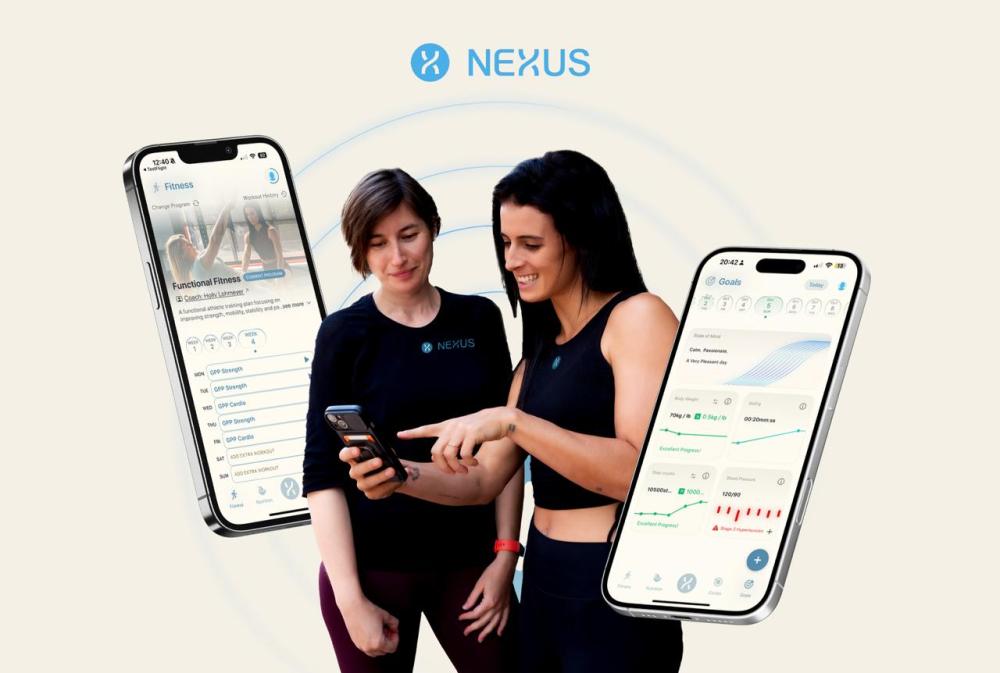
The first AI-powered health companion designed exclusively for women is launching in the UK today.
Nexus provides a unified fitness, nutrition, medication and cycle tracking solution alongside a personal digital health coach.
Unlike other health apps built for isolated concerns, Nexus recognises that women’s health is interconnected.
Powered by a proprietary AI model and guided by Nova, the in-app AI health coach, Nexus connects the dots between every aspect of a woman’s wellbeing, from hormonal cycles to nutrition and mental health, and provides personalised, evidence-based guidance in real time.
Co-founder Leo Tyson has worked with over a thousand women in his role as a personal health coach, but wanted to support even more women through their health journeys.
Tyson said: “Nexus gives every woman a health coach in her pocket and the knowledge to become her own expert.
“I would see women desperate for guidance but unable to afford one-on-one coaching.
“They would try to patch together information from different apps or cheaper coaches, often making things worse rather than better.
“At the same time, the sector has been missing an integrated platform that understands women’s health is not just their cycles, but their whole health story.
“Our mission with Nexus is to give every woman at every life stage the personalisation, clarity and support of a one-to-one health coaching, at an accessible price.”
The launch draws on extensive research in Nexus’ white paper The Period App Problem, which revealed that many women feel disappointed by menstrual tracking apps that fail to deliver meaningful, personalised insights.
Nexus bridges this gap with a female-specific onboarding process offering over 50,000 unique combinations of personalised wellness insights.
With Nova, users also have access to an AI coach that truly knows them, offering adaptive, actionable guidance grounded in science and tailored to each woman’s unique physiology and life stage.
The vision behind Nexus is to give women control over their own health data, using it to improve conversations with healthcare providers, reduce medical gaslighting and accelerate diagnosis times through advocacy and education.
At the heart of Nexus lies a proprietary large language model (LLM) and peer-reviewed health database, built specifically for women.
This architecture blends medical research, clinical guidelines and user data to generate precise recommendations, far surpassing the capabilities of off-the-shelf AI systems.
Nexus is available on the App Store from today (10th October).
Mental health
Black and Latinx women more likely to experience serious complications in planned repeat caesareans

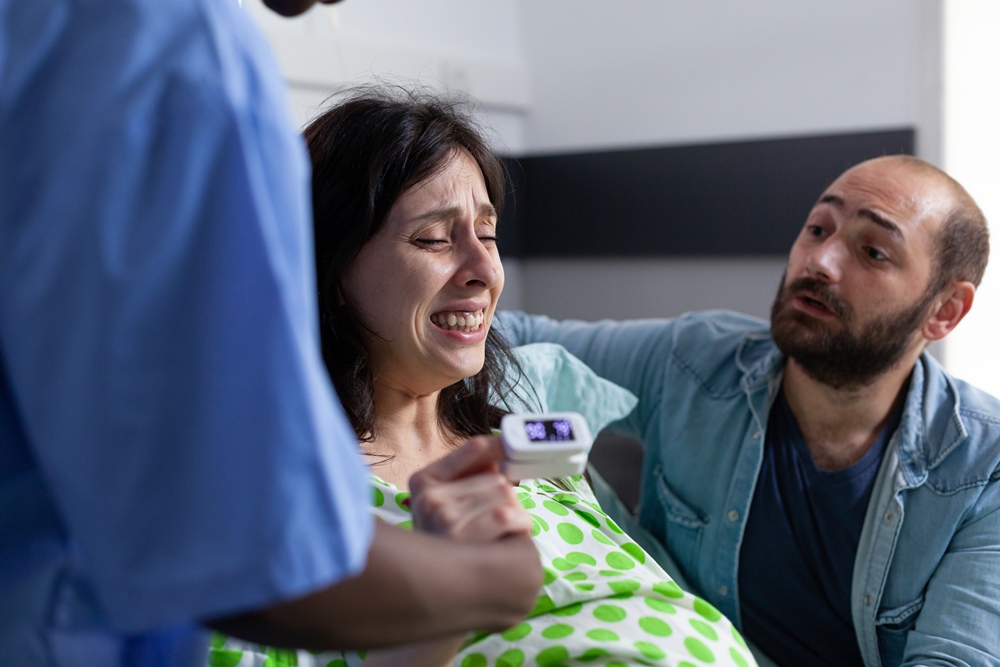
Black and Latinx women are more likely to face serious complications during planned repeat caesareans than White women, new US research has found.
While complication rates were similar across all racial and ethnic groups for vaginal births after a previous caesarean, disparities emerged in outcomes for those having planned repeat surgery.
Researchers examined severe maternal morbidity – serious complications during childbirth that can have lasting health effects – across 72,836 births between 2012 and 2021 among people who had previously delivered by caesarean.

The team analysed data from the Massachusetts Pregnancy to Early Life Longitudinal Data System, focusing on births following an earlier caesarean.
The 21 complications tracked include outcomes such as hysterectomy (removal of the womb), heart attack, embolism (blood vessel blockage), kidney failure, eclampsia (seizures in pregnancy linked to high blood pressure), sepsis (a life-threatening infection), and complications related to anaesthesia.
Laura Attanasio is associate professor of health policy and management and lead author of the study.
She said: “There’s been increasing recognition in recent years that the US has this rising rate of severe maternal morbidity, which can have a negative impact on one’s health in the future.”
It also can be considered a near miss for maternal mortality, or death, which is also high in the US relative to other wealthy countries, though rare.
The study examined three birth scenarios: vaginal birth after caesarean (VBAC), planned repeat caesarean, and unplanned repeat caesarean – where someone intends to deliver vaginally but ultimately requires surgery.
Attanasio said: “Among White birthing people, severe maternal morbidity rates were similar for VBAC and for planned repeat caesarean.
“But for Black and Latinx birthing people, planned repeat caesarean had a higher rate of severe maternal morbidity compared to VBAC.”
Among all groups, the highest rate of complications occurred during unplanned repeat caesareans.
In this category, however, disparities between racial and ethnic groups were not observed.
The study population was 56.8 per cent White, 20.1 per cent Latinx, 11 per cent Black and 12.1 per cent who identified as another race or ethnicity.
The researchers used hospital discharge and birth records to identify medical issues and demographic data including race, ethnicity and parental birthplace.
They adjusted for medical risk factors more commonly associated with marginalised groups, suggesting other influences may be contributing to the differences in outcomes.
Attanasio hypothesised that “quality of clinical care can be worse for people from marginalised racial and ethnic groups, either because they’re being cared for in settings that are lower resourced and less able to provide quality care, or in some cases they could be receiving worse care in the same setting as White birthing people due to structural or interpersonal racism.”
The findings suggest the need to identify and address factors contributing to higher complication rates among Black and Latinx individuals during planned repeat caesareans.
“Future work should identify interventions to improve quality of care and promote equity for this population,” the researchers said.

New research has revealed that the use of combined oral contraceptives (OCs) is associated with a threefold increase in the risk of cryptogenic ischaemic stroke (CIS) in young women.
The findings add to a growing body of evidence linking hormonal contraception to vascular risk in women of reproductive age.
Cryptogenic ischaemic stroke, which is stroke with no identifiable cause, accounts for up to 40 per cent of all ischaemic strokes in young adults. Despite its prevalence, the contribution of sex-specific risk factors, such as contraceptive use, has remained underexplored.
While prior studies have associated combined OCs with stroke risk, this is among the few studies to focus specifically on cryptogenic stroke in young women.
The Searching for Explanations for Cryptogenic Stroke in the Young (SECRETO) study included 268 women aged 18 to 49 years with CIS and 268 age-matched stroke-free controls across 14 centres in Europe. Of the participants, 66 patients and 38 controls were using combined OCs. After adjusting for age and established comorbidities such as hypertension, smoking, migraine with aura, and abdominal obesity, OC use was associated with an adjusted odds ratio of 3.00.
No significant interactions were found between OC use and these risk factors, suggesting that the increased stroke risk may operate independently of other known contributors.
“Our findings confirm earlier evidence linking oral contraceptives to stroke risk,” said Dr. Mine Sezgin, Department of Neurology, Istanbul University, and lead author of the study.
“What’s particularly notable is that the association remains strong even when accounting for other known risk factors, which suggests there may be additional mechanisms involved – possibly genetic or biological.”
Most OC users in the study were taking ethinylestradiol-based formulations, with a median dose of 20 microgrammes. Other types of oestrogen, such as estradiol hemihydrate and estradiol valerate, were also recorded.
“We calculated the equivalent oestrogen dose for each patient to ensure consistency,” Dr Sezgin said.
“While our data provides important initial insights, larger studies are needed to determine if certain formulations carry different levels of risk. This knowledge could help guide more personalised contraceptive choices for women.”
While the researchers note that further prospective studies are needed, they advise clinicians to exercise caution when prescribing combined OCs to women with known vascular risk factors or a history of ischaemic stroke.
“Our findings should prompt more careful evaluation of stroke risk in young women, particularly those with additional risk factors,” said Dr. Sezgin.
Moving forward, the researchers plan to explore biological and genetic mechanisms underlying the observed association between combined OC use and increased stroke risk to better understand how hormonal contraceptives may independently elevate stroke risk.











 Entrepreneur2 weeks ago
Three sessions that show exactly where women’s health is heading in 2026

 Menopause4 weeks ago
California plans US$3.4m menopause care overhaul

 Menopause3 weeks ago
Watchdog bans five ads for women’s heath claims

 Pregnancy2 weeks ago
How NIPT has evolved and what AI NIPT means in 2026

 Menopause4 weeks ago
Menopause has no lasting impact on cognition, research finds

 Entrepreneur3 weeks ago
WHIS USA 2026 announces first ticket release for landmark Women’s Health Innovation Summit

 News2 weeks ago
Two weeks left to make your mark in women’s cardiovascular health

 Opinion3 weeks ago
Q1 momentum: Female founders are advancing, but the system still hasn’t caught up
6 Comments