




Fertility
Inception Fertility partners with tech companies to advance reproductive medicine
The partnership will lead to more studies to evolve and improve fertility care


Inception Fertility’s clinical research team have partnered with technology companies on four fertility studies to elevate the patient experience and enhance pregnancy outcomes.
Led by Alice Domar, PhD, chief compassion officer at the US fertility company Inception, the clinical research team is designed to give the company tools to better understand and treat a range of fertility issues, empowering aspiring parents through improved education and more precise treatment options.
Inception is the largest provider of fertility services and practices in North America and uses technology, innovation and vertical integration to help patients undergoing IVF, looking for donors or partnering with a gestational carrier.
It draws participants from its ecosystem of companies to take part in new studies that have the potential to elevate sciences and advancements in assisted reproductive technologies.
“Inception proudly leads the industry once again through thoughtful and impactful studies that will help us, and the entire fertility community, understand some of the most complex aspects of fertility care, including mental health,” said TJ Farnsworth, founder and CEO of Inception Fertility.
“Our partnerships with leading technology companies allow us to keep fertility patients, including their experiences and outcomes, at the centre of our mission.”
Current studies include the OTO Device Research Study, Gameto Research Study, Lotus Research Study, and Oura Research Study.


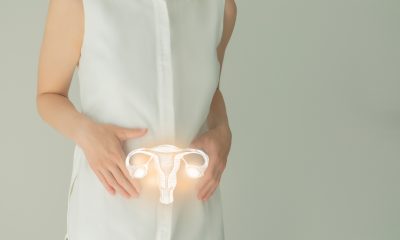



AI could transform ovarian care by personalising cancer and fertility treatment, but more clinical validation is needed before routine use.
A systematic review and meta-analysis found AI models showed high diagnostic accuracy for ovarian cancer when combining data such as ultrasound scans and blood test results.
Across 81 studies, AI models correctly identified ovarian cancer in around nine out of 10 cases, with pooled rates of 89 to 94 per cent.

They were also highly accurate at ruling out ovarian cancer when it was not present, with specificity of 85 to 91 per cent.
The analysis also found that explainable AI tools could predict complete surgical cytoreduction in advanced ovarian cancer.
Complete surgical cytoreduction means removing all visible cancer during surgery, which can be an important goal in treatment planning.
The tools achieved a pooled AUC of 0.87. AUC is a measure of how well a model distinguishes between different outcomes, with higher scores showing stronger performance.
In reproductive medicine, AI algorithms helped physicians optimise ovarian stimulation protocols and predict follicular growth during IVF.
Ovarian stimulation is the use of hormones to encourage the ovaries to produce eggs, while follicles are the small sacs in the ovaries where eggs develop.
The review found AI could reliably model ovarian response in IVF with a pooled AUC of 0.81.
However, researchers said challenges remain in translating promising research findings into routine clinical practice.
They identified substantial variation across studies, driven by retrospective study designs, variable AI systems and a lack of standardised validation.
Only 22 per cent of analysed studies reported prospective, multicentre external validation, where models are tested forward in time across multiple healthcare settings.
The authors called for rigorous validation to help close the gap between research and routine clinical practice, alongside standardised methodological and reporting frameworks, smooth integration with clinical workflow and robust governance to support responsible and ethical AI use.
They concluded: “Artificial intelligence is a transformative force in the management of ovarian conditions.
“In gynaecologic oncology, AI enhances every phase of care, from early detection and accurate diagnosis to prognostic stratification and surgical planning.”
In reproductive medicine, AI personalises ovarian stimulation and refines the diagnosis of heterogenous endocrine disorders such as PCOS.
PCOS, or polycystic ovary syndrome, is a hormonal condition that can affect periods, skin, weight and fertility.


Femtech World is thrilled to reveal the shortlist for the Fertility Innovation Award.
The award, sponsored by FinDBest IVF, celebrates a pioneering product, service or initiative that is transforming fertility care and support.
FinDBest IVF is a global B2B digital platform created to simplify and accelerate how IVF and ART manufacturers connect with trusted, pre-vetted distributors around the world.
This year’s nominees represent a remarkable breadth of approaches to fertility care: from clinic-floor breakthroughs to at-home hormone intelligence to truly borderless access.
Three companies made the cut, with each tackling a real, persistent barrier in reproductive health.
Congratulations to the shortlist and many thanks to everyone who entered.
Fertility Innovation Award Shortlist

HRC Fertility’s Needle-Free IVF is a pioneering advancement designed to transform one of the most challenging aspects of fertility treatment: daily hormone injections.
Developed by board-certified reproductive endocrinologist Dr Rachel Mandelbaum, this innovative approach reimagines how stimulation medications are delivered during IVF and egg freezing, dramatically improving the patient experience while maintaining the same trusted clinical outcomes.
Inspired by feedback from patients who struggled with the injection process, Dr Mandelbaum adapted an innovative drug-delivery system commonly used in other areas of medicine and applied it to reproductive care

Mira is a hormonal health technology company that provides lab-grade hormone testing and AI-driven insights to help women and couples understand their fertility.
The platform has already supported more than 200,000 couples on their fertility journeys worldwide, helping over 60,000+ users achieve pregnancy.
For some users, pregnancy rates have reached up to 89 per cent within six months, demonstrating how accurate hormone data can significantly improve fertility outcomes.

Founded in 2021 by Marija Skujina, a Certified Fertility Nurse Specialist accredited by the European Society of Human Reproduction and Embryology, with nearly 15 years of clinical experience at one of the world’s top IVF clinics, and having navigated her own fertility journey as a patient, Marija built the clinic she had always wished existed.
Plan Your Baby began with a bold, but simple mission – make best quality fertility and pregnancy available anywhere.
Plan Your Baby has created a new generation fertility and pregnancy clinic with patients accessing expert consultations remotely, while blood tests and ultrasound scans are available at over 450 locations across the UK, eliminating the exhausting travel burden that often forces people to take days off work, relocate appointments, or abandon treatment altogether
What happens now
The shortlist will be judged by a representative from category sponsor FindBestIVF, with the winner announced at a virtual event on June 19.
Winners will receive a trophy and be interviewed by a Femtech World journalist.











 News4 weeks ago
Women’s digital health market set to reach US$5.28 billion in 2026 – report

 Insight4 weeks ago
Why the UK’s fertility rate keeps falling – and what it means if you’re trying now

 Wellness4 weeks ago
Women’s HealthX unveils Northwell Health, Corewell Health, Biogen & more to headline Chronic Disease stage

 Opinion3 weeks ago
What Maternal Mental Health Month reveals about where postpartum support actually breaks down

 Fertility4 weeks ago
Toxins and climate harms having ‘alarming’ effect on fertility, research warns

 News3 weeks ago
NIH Grant terminations disproportionately impact minority scientists, research finds

 Adolescent health2 weeks ago
WUKA brings Period-Positive Pool Party to London Aquatics Centre to keep girls swimming through puberty

 Hormonal health4 weeks ago
Researcher explores weight loss jab impact on PCOS